BREAKING: U.S. Resumes Strikes on Iran. A Clean Exit Is Unlikely. Tucker and John Mearsheimer React.
YouTube · TQvZaBQuT80
Quick Read
Summary
Takeaways
- ❖US military strikes on Iran have not achieved stated objectives; instead, Iran has gained control of the Strait of Hormuz.
- ❖The US economy is deeply intertwined with global energy markets, making it vulnerable to conflicts in the Persian Gulf despite domestic energy resources.
- ❖America's moral authority has eroded as its government openly engages in actions previously condemned, such as targeting civilian infrastructure and assassinations.
- ❖US foreign policy, particularly regarding Iran and Ukraine, is heavily influenced by the Israel Lobby and other ethnic groups, compromising American sovereignty.
- ❖The Ukraine conflict carries a serious risk of nuclear escalation due to Russia's perception of an existential threat and Western provocation.
- ❖Mearsheimer predicts a long-term frozen conflict in Ukraine, with Russia controlling significant eastern territories and NATO's influence diminishing.
- ❖Israel's aggressive actions, supported by the US, are seen as self-destructive and are severely damaging its global reputation.
- ❖Donald Trump faces immense pressure to de-escalate the Iran conflict due to economic consequences but is constrained by Israeli resistance.
Insights
1Erosion of US Power and Sovereignty
The US's repeated failures in the Middle East, particularly in the conflict with Iran, demonstrate the limitations of American military and economic power. The host and guest argue that US leaders are not truly sovereign, with foreign policy decisions often dictated by external influences like the Israel Lobby, rather than American national interests.
What we are actually learning is the limits of United States in what it can do and how it can impose its will abroad. () It has become suddenly clear to everyone... that the United States is not sovereign... American leaders are not actually in charge of America. () This administration has conceded that the President of the United States did not decide when and where this war would happen... Benjamin Netanyahu decided when and where this war would happen. ()
2Iran's Strategic Gains Amidst Conflict
Despite US military strikes, Iran is emerging stronger from the conflict. It has gained control over the Strait of Hormuz, a critical global shipping lane, and is enhancing its regional and international standing by linking de-escalation to the cessation of Israeli actions in Lebanon and Gaza.
Iran did not lose this war. In fact, by the only metric that really matters, Iran is winning the war... Iran controls the Strait of Hormuz. () If current trends continue, it seems very clear that Iran will emerge from this war stronger. () This fact alone makes Iran a global player in the globalized economy. ()
3US Economic Vulnerability to Global Conflicts
Despite possessing vast domestic energy reserves and advanced extraction technology, the US is not energy independent. Global market prices (e.g., Brent crude) dictate domestic fuel costs, giving countries like Iran significant leverage over the US economy.
It's a little confusing to learn, but it's true, it turns out that despite being energy independent, the United States is not energy independent at all. () The price of Brent crude set on the world market determines the price of gasoline in your town. Which is another way of saying Iran has enormous power over the United States economy. ()
4Erosion of US Moral Authority
The US government has abandoned its pretense of moral superiority by openly engaging in actions like assassinations and targeting civilian infrastructure, without apology. This shift undermines its global standing and sets a dangerous precedent, as 'what you do will be done to you.'
The third area in which American dominance has clearly and radically eroded is its moral power... The US government no longer pretends it doesn't do certain things it never used to do, like explicitly assassinate people. () When you destroy civilian infrastructure, you are intentionally killing them. And so, while the US government in war destroyed civilian infrastructure, on a massive scale by the way, during World War II, it's happened before but it has never happened this openly and unapologetically. ()
5Israel Lobby's Influence on US Foreign Policy
John Mearsheimer reiterates his long-standing argument that the Israel Lobby significantly influences US foreign policy, pushing for wars in the Middle East (e.g., Iraq, Iran) and even the Ukraine conflict, often against America's best interests.
Mearsheimer, through careful observation, concluded that in the modern era, more often than not, it goes to fight wars, big wars, and it does so on behalf of Israel. () Israel, and especially the lobby, were key driving forces behind the decision to invade Iraq. () The people who pushed for the war in Iran have spent the last five years pushing the United States to fight a war with Russia. ()
6Risk of Nuclear Escalation in Ukraine
Russia views NATO expansion into Ukraine as an existential threat. Continued Western-backed Ukrainian attacks on Russian territory are increasing pressure on Putin to escalate, potentially leading to conventional strikes on NATO members or even tactical nuclear weapon use to signal a 'red line.'
The Russians are convinced that they have to put a stop to these operations... This has led to a growing debate inside Russia that the only way out is to launch Russian attacks directly against European countries or NATO members, using conventional weapons initially. () If conventional weapons don't work to stop the ongoing attacks on the Russian homeland, then the necessary step for Russia to take is to launch limited, tactical nuclear attacks against some NATO countries. ()
7US Military's Slow Adaptation to Technological Change
Despite its massive budget, the US military is criticized for its slow response to evolving warfare technologies, such as drones, which have become decisive in conflicts like Ukraine. This raises questions about its effectiveness in modern engagements.
I don't understand how the United States, after four years of the Ukraine war, can be so far behind in drone technology and why we have all these aircraft carriers under construction when it's clear that aircraft carriers cannot be the primary vehicle by which we project our power in the world. () We didn't realize until quite recently... that drones matter that much. ()
Bottom Line
The US government's open embrace of previously condemned tactics (assassinations, civilian targeting) not only undermines its moral standing but also sets a precedent that could be turned against its own highly complex and vulnerable civilian infrastructure.
This creates a dangerous cycle where the US, with its vast and intricate infrastructure, becomes highly susceptible to the very tactics it legitimizes, making its citizens potential victims.
Nations and non-state actors observing this shift may adapt their strategies to target critical infrastructure, knowing the US has implicitly sanctioned such actions, potentially leading to a new era of asymmetric warfare focused on societal disruption.
The perception of US leaders as non-sovereign, with major foreign policy decisions dictated by external entities, risks radicalizing the American populace by undermining faith in democratic processes and the efficacy of voting.
If citizens believe their votes don't matter in critical foreign policy decisions, it could lead to increased political extremism, violence, and a breakdown of peaceful mechanisms for change, mirroring instability seen in other parts of the world.
This creates an opening for populist movements that explicitly promise to restore national sovereignty and prioritize domestic interests, potentially leading to significant shifts in political leadership and foreign policy orientation.
Iran's successful leveraging of its control over the Strait of Hormuz and its stance on the Israeli-Palestinian conflict is rapidly transforming it from a 'rogue state' into a legitimate regional power that other nations must engage with as a peer.
This shift fundamentally alters the geopolitical landscape of the Middle East, potentially leading to new alliances and trade relationships that bypass traditional US-aligned partners, and further eroding US influence in the region.
Businesses and nations seeking stable access to Persian Gulf trade routes may increasingly find themselves negotiating directly with Iran, potentially leading to a re-evaluation of sanctions regimes and new economic partnerships that challenge the existing global financial order.
Key Concepts
Offensive Realism (John Mearsheimer's theory)
States are primarily driven by a desire to maximize their relative power and security in an anarchic international system. This explains why great powers are inherently aggressive and seek regional hegemony, and why states constantly fear and compete with each other. Mearsheimer applies this to Russia's actions in Ukraine (seeing NATO expansion as an existential threat) and the US's attempts to maintain its unipolar dominance.
Blowback
Unintended and negative consequences of a covert operation or foreign policy action that rebound on the country that initiated it. This model is evident in the podcast's argument that US actions in Iran and Ukraine are strengthening adversaries and eroding American power and stability.
Imperial Overstretch
A theory suggesting that empires tend to collapse because they overspend on military expansion and maintaining too many overseas commitments, leading to economic decline and internal decay. The discussion about the US military budget, its global commitments, and the economic strain aligns with this concept.
Lessons
- Re-evaluate US Foreign Policy Drivers: Citizens and policymakers should critically examine the actual motivations behind US foreign policy decisions, questioning whether they genuinely serve American national interests or are influenced by external lobbies and emotional biases.
- Prioritize Domestic Infrastructure Security: Given the erosion of moral authority and the precedent of targeting civilian infrastructure, the US must urgently assess and fortify its own critical civilian infrastructure against potential retaliatory attacks.
- Demand Accountability for Geopolitical Failures: Hold leaders and foreign policy experts accountable for predictions and strategies that have led to diminished US power, economic vulnerability, and increased global instability, rather than perpetuating failed approaches.
Quotes
"What we are actually learning is the limits of United States in what it can do and how it can impose its will abroad."
"Iran did not lose this war. In fact, by the only metric that really matters, Iran is winning the war."
"The US government no longer pretends it doesn't do certain things it never used to do, like explicitly assassinate people."
"The people who pushed for the war in Iran have spent the last five years pushing the United States to fight a war with Russia."
"If conventional weapons don't work to stop the ongoing attacks on the Russian homeland, then the necessary step for Russia to take is to launch limited, tactical nuclear attacks against some NATO countries."
"When you feel great powers are pushed into a corner, you should never underestimate the risks they are willing to take."
"If you treat your kids the way Goldberg treats Israel, they'd all end up in rehab."
Q&A
Recent Questions
Related Episodes
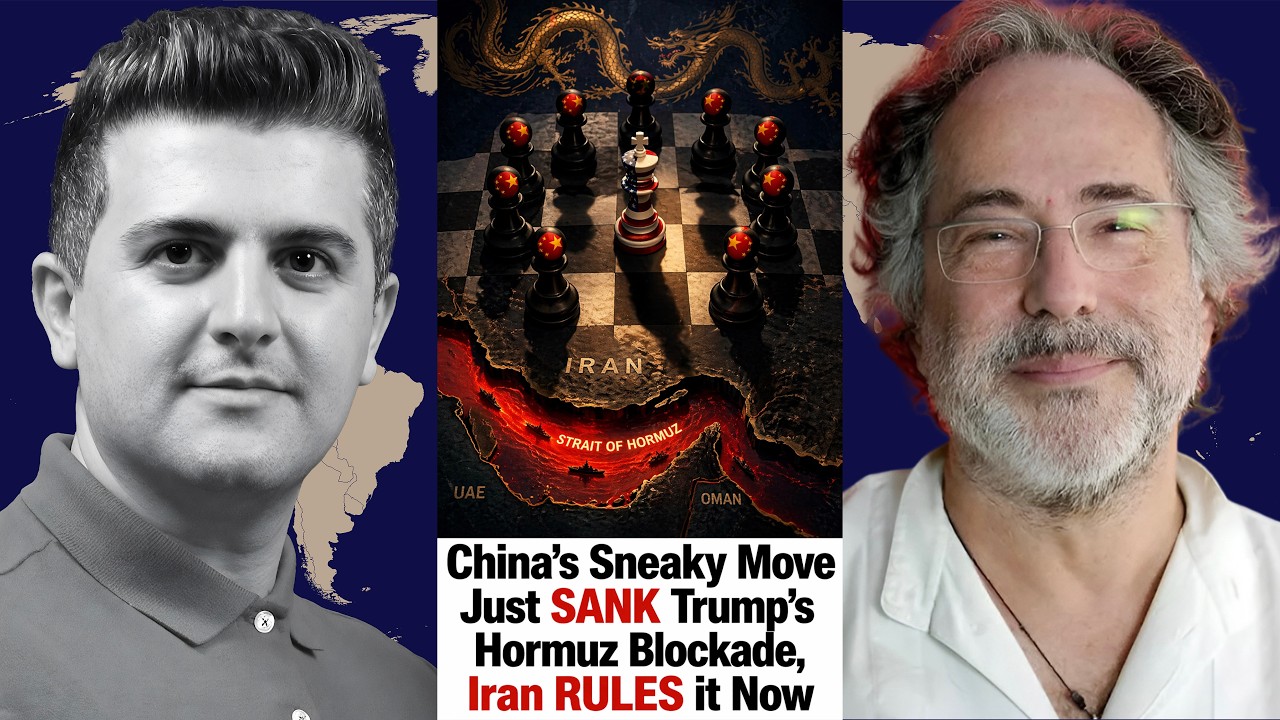
Pepe Escobar: “Total Failure”: Trump’s Blockade Just Backfired Disastrously
"Pepe Escobar argues that the US blockade against Iran, spearheaded by Donald Trump, has utterly failed and backfired, accelerating global economic chaos and challenging US geopolitical dominance."
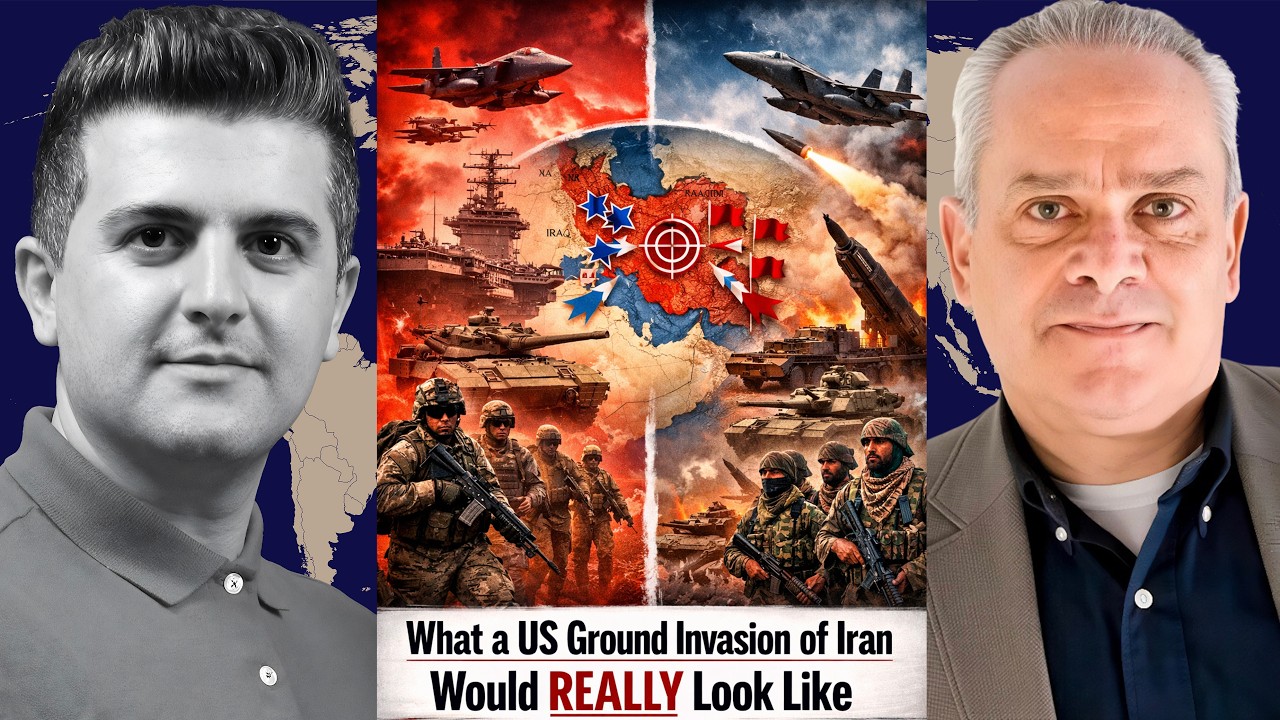
Col. Jacques Baud: What a US Ground Invasion of Iran Would REALLY Look Like
"Colonel Jacques Baud dissects the strategic futility of a US ground invasion of Iran, arguing that current troop levels are insufficient and such an action would backfire, exposing US allies and potentially leading to Iran's nuclearization."

Patrick Henningsen: Hezbollah JUST Fired Back at Israel - Iran Vows to “Crush” All Attacks
"Patrick Henningsen argues that the US and Israel initiated an illegal war against Iran, driven by Trump's incompetence and Israeli influence, leading to an inevitable escalation with severe global economic repercussions."

Alex Krainer: US STRIKES Iran – Iran RETALIATES Against Kuwait, Bahrain & Jordan!
"Amidst escalating US-Iran conflict and Iranian retaliation against regional US allies, this episode argues that US foreign policy is deeply controlled by an 'Anglo-Zionist conspiracy' led by the Rothschild banking dynasty, prioritizing Israeli interests over American ones."