Roland speaks to Northern Va. Baptist Town Hill
YouTube · TcYiO7cUCg4
Quick Read
Summary
Takeaways
- ❖Black-owned media is in decline, with major outlets like BET and TV One lacking news shows and being owned by entities hostile to Black interests.
- ❖The speaker asserts a clear plan exists to 'defund Black America,' targeting institutions from academics to civil rights groups, as outlined in Project 2025.
- ❖The Supreme Court is enabling discrimination through 'race-neutral' rulings, ignoring overt racist statements and impacting voting rights and immigration.
- ❖Many Black institutions, including churches, are criticized for failing to address systemic attacks, focusing on 'hooping and preaching' over substantive action and political engagement.
- ❖Effective boycotts require a strategic plan, negotiation, and escalation, not just an immediate call to action, as demonstrated by the failure of the Target boycott.
- ❖Black leaders and organizations are often criticized for accepting 'crumbs' (e.g., $300,000 from Target, small ad buys) instead of demanding proportional economic investment (e.g., 5% of PepsiCo's $3 billion ad budget).
- ❖A micro-level, data-driven organizing strategy, focusing on specific zip codes, voter registration, and community needs (like after-school tutoring), is proposed as a biblical and effective model for change.
Insights
1Decline of Black-Owned Media and Information Vacuum
Traditional Black-owned media outlets like Ebony, Jet, and Essence have either ceased to exist or are no longer what they once were. Major platforms like BET are now owned by right-wing entities with no news shows, and TV One also lacks news programming. This creates a significant vacuum for substantive information, leaving the Black community reliant on entertainment and gossip, and unprepared for critical political and economic challenges.
Ebony today is not what it was... Jet no longer exists. Essence is not what it was... BET is no longer blackowned... owned now by the right-wing Ellison family... They have no news shows whatsoever. TV1... has no news shows as well.
2Systematic Plan to Defund Black America
There is a 'clear and defined plan to defund Black America' by targeting every institution, including academics, economics, political, social, civil rights, and legal groups. This strategy, articulated in 'Project 2025,' is actively being executed, leading to significant funding cuts for Black non-profits and the erosion of gains made over the last 60 years.
There is a clear and defined plan to defund black America. They are targeting every institution... It was in project 2025.
3Supreme Court's 'Race-Neutral' Rulings Enable Discrimination
The Supreme Court, referred to as the 'Extreme Court,' is issuing rulings that claim to be 'race-neutral' despite clear evidence of racial bias in statements and outcomes. This approach, exemplified by Justice Alito's opinion on Temporary Protected Status for Haitians, allows discriminatory actions to proceed by ignoring overt racist language and its impact, effectively giving license to discriminate.
Sam Alita who literally says that... 'None of the cited statements by either the president or the secretary was overtly racial and in substance all expressed policy views that could rest on race neutral justifications.' Elena Kagan cited what they said: 'Haitians are eating the dogs... Haiti is a hole country... poisoning the blood of our country.'
4Critique of Black Institutions' Inaction and Lack of Strategy
Many Black institutions, including the church, fraternities, sororities, and professional organizations, are failing to mobilize effectively against systemic attacks. They are criticized for focusing on 'personal gratification' or 'trivial activity' rather than the collective good, holding conferences without substantive political engagement, and engaging in 'convenient boycotts' without a strategic plan, leading to guaranteed failure.
How can a group of black preachers gather at a Hampton Ministers Conference and you do not have substantive conversations about the very attack on black America... The black church represented the base of black life... that mantle has been abandoned... too many scared folks standing in pullpits... focused more about personal gratification.
5The Power of Micro-Level, Data-Driven Organizing
Effective political and social change requires a shift from broad, unmeasurable efforts to micro-level, data-driven organizing. This involves collecting specific voter data (name, address, phone, email, social media) for everyone in a gathering, identifying specific precincts or small geographic radii, and then systematically engaging those individuals multiple times (Republicans touch voters 12 times, Democrats 4, 6+ is effective) to register, educate, and mobilize them on specific issues.
Reverend James Meeks did in Chicago... he did a voter registrant training at the church... 'Church over. Stay seated. We going to train everybody right here. Sign up while you here.'... Republicans on average touch their voters 12 times. Democrats on average touch their voters four times. The data shows when you touch somebody at least six times, there's a higher likelihood they're going to vote.
Bottom Line
The anti-DEI movement has drastically cut funding for Black non-profits, with some seeing 80-90% reductions, and corporations are being pressured by figures like FCC Commissioner Brendan Carr to abandon DEI initiatives or face merger/acquisition blocks.
This directly impacts the operational capacity of organizations vital to Black community support and development, forcing them into precarious financial situations and hindering their ability to address systemic issues.
This creates an urgent need for internal community funding mechanisms and strategic advocacy to protect and restore DEI initiatives, potentially through legal challenges or collective economic pressure on corporations that cave to anti-DEI demands.
Black leaders and organizations often accept 'crumbs' from corporations and political campaigns (e.g., $300,000 from Target, small ad buys) while billions of dollars in potential 'Black spend' (advertising, legal, PR, catering) are left on the table.
This perpetuates economic disempowerment and prevents the Black community from leveraging its collective purchasing and voting power for substantial returns, hindering the growth of Black-owned businesses and media.
Black civil rights groups and media entities should form a united front to collectively bargain with major corporations and political campaigns, demanding a guaranteed percentage (e.g., 5% of media budgets) of their total spend be directed to Black-owned businesses and media, with clear metrics and accountability.
The definition of a 'minority bank' has been changed by the Trump administration to include 'disadvantaged' white individuals, diluting resources and opportunities intended for historically marginalized groups.
This directly undermines economic initiatives designed to uplift minority communities, redirecting crucial capital and support to groups not originally intended, further eroding economic equity.
Advocacy groups must challenge these redefinitions legally and politically, while simultaneously working to establish and support truly Black-owned financial institutions and alternative funding mechanisms that are immune to such policy shifts.
Key Concepts
Micro-Level Organizing
Instead of focusing on large, macro-level initiatives, effective change starts with targeted, small-scale efforts within specific communities or precincts. This involves collecting granular data (name, address, phone, email, social media, top issues) and assigning individuals to organize within their immediate geographic areas (e.g., zip codes, 0.25-0.5 mile radius around a church).
The Nehemiah Model of Rebuilding
Drawing from the biblical story of Nehemiah rebuilding the wall of Jerusalem, this model emphasizes surveying damage, creating a concrete plan of action, mobilizing people to work on specific sections ('zip codes'), and maintaining vigilance against 'haters' while building. It's about focused, collective effort with clear responsibilities.
Collective Bargaining for Economic Leverage
Instead of individual Black entities or organizations negotiating for small, isolated deals, the strategy calls for collective negotiation on behalf of the entire Black community. This means demanding a proportional share of corporate spending (e.g., advertising, legal, PR, catering) and political campaign budgets, rather than accepting token donations or small ad buys.
Lessons
- Implement a micro-level organizing strategy: Collect comprehensive data (name, address, phone, email, social media, top 5 issues) from every participant at community gatherings, then organize them by zip code or small geographic radii.
- Utilize existing capacity for voter registration: Instead of external events, conduct voter registration training sessions immediately after church services or community meetings, allowing attendees to become qualified registrars on the spot.
- Demand collective economic leverage: Black organizations must unite to collectively negotiate with corporations and political campaigns, demanding a proportional share of their total spend (e.g., 5% of advertising budgets) for Black-owned businesses and media, rather than accepting token donations.
- Educate on civic processes: Organize 'Citizenship Education Training Sessions' in every zip code, covering City Hall 101, School Board 101, County Commissioner 101, State 101, and Federal 101 to empower community members with political knowledge.
- Activate retired educators: Churches should identify retired educators within their congregations and ask them to volunteer one day a week to provide after-school tutoring and meals for children in the surrounding 0.25-0.5 mile radius, leveraging existing resources.
- Become poll watchers and greeters: Actively participate in elections beyond just voting by training to become poll watchers or greeters to ensure fair processes and advocate for voters at the local level.
Micro-Level Community Organizing for Political and Economic Power
**Data Collection & Mapping:** At every gathering, collect name, address, phone, email, social media, and top 5 issues from attendees. Use this data to map participants to their specific zip codes and precincts.
**Targeted Precinct/Zip Code Focus:** Assign individuals or small groups to focus solely on organizing within their own zip code or a 0.25-0.5 mile radius around their church/community hub. This ensures localized, manageable efforts.
**In-Place Voter Registration & Education:** Leverage existing community gatherings (e.g., church services) to conduct immediate voter registration training. Empower attendees to become registrars and educate their neighbors on local, state, and federal politics (City Hall 101, School Board 101, etc.).
**Sustained Voter Engagement:** Implement a strategy to 'touch' voters at least six times (e.g., door-knocking, phone calls, emails) to increase turnout, focusing on registered non-voters identified through public data.
**Collective Economic Negotiation:** Form a united front of Black organizations to collectively bargain with corporations and political campaigns. Demand a significant, measurable percentage of their total spend (advertising, legal, PR, catering, etc.) be directed to Black-owned businesses and media, rather
Notable Moments
Roland Martin describes how his independent media platform grew from 157,000 YouTube subscribers in 2018 to nearly 2 million, supported by 47,000 donors, without a paywall, to ensure information accessibility.
This demonstrates a successful model for building independent, Black-owned media that prioritizes community access and direct support over traditional corporate structures, directly addressing the decline of Black-owned media.
Roland Martin recounts a conversation with a sister who complained about having to wait two weeks for a nail appointment at a Black-owned shop during a boycott, highlighting her demand for a 'convenient boycott.'
This anecdote powerfully illustrates the lack of understanding and commitment to the sacrifices required for effective collective action, exposing a mindset that prioritizes personal convenience over strategic struggle.
Roland Martin details how a text message sent to 6-8 people resulted in 250,000 live viewers for a 'State of the Union' coverage, raising $85,000 for students in two hours, and making his channel the 5th most-watched globally on YouTube that night.
This provides compelling evidence for the power of micro-level organizing, demonstrating how small, targeted efforts can cascade into massive, impactful results, challenging the notion that only large-scale, formal campaigns can achieve significant change.
Quotes
"The problem that we have today is we are seeing significant amounts of gossip and entertainment and comedy... but when things are going crazy, then people say, 'Well, I didn't know this was going on,' that's because your attention was elsewhere."
"There is a clear and defined plan to defund black America. They are targeting every institution. They are targeting academics, economics, political, social, civil rights groups, legal groups. And that is their agenda."
"The black church represented the base of black life. It was black religious life. It was black family. It was economics. Uh it was all of that. And that mantle has been abandoned."
"The point of a boycott is it's supposed to be inconvenient. The point of a boycott is you have to act."
"We are allowing people... to come in to get their black stamp of approval. They leave a crumb and then we are excited."
"The work is in you sticking your hand out. God said, 'I got you. I'm just waiting for y'all, Northern Virginia, to stick your hand out.'"
Q&A
Recent Questions
Related Episodes

The Immortal Jim Crow. 'Goon Squad' Defamation Suit. Google Race Discrimination Case. #TheBreakdown
"This episode exposes the enduring grip of systemic racism through a Mississippi defamation suit, Google's racial discrimination settlement, and a deep dive into how Jim Crow's legacy still shapes Black America today."
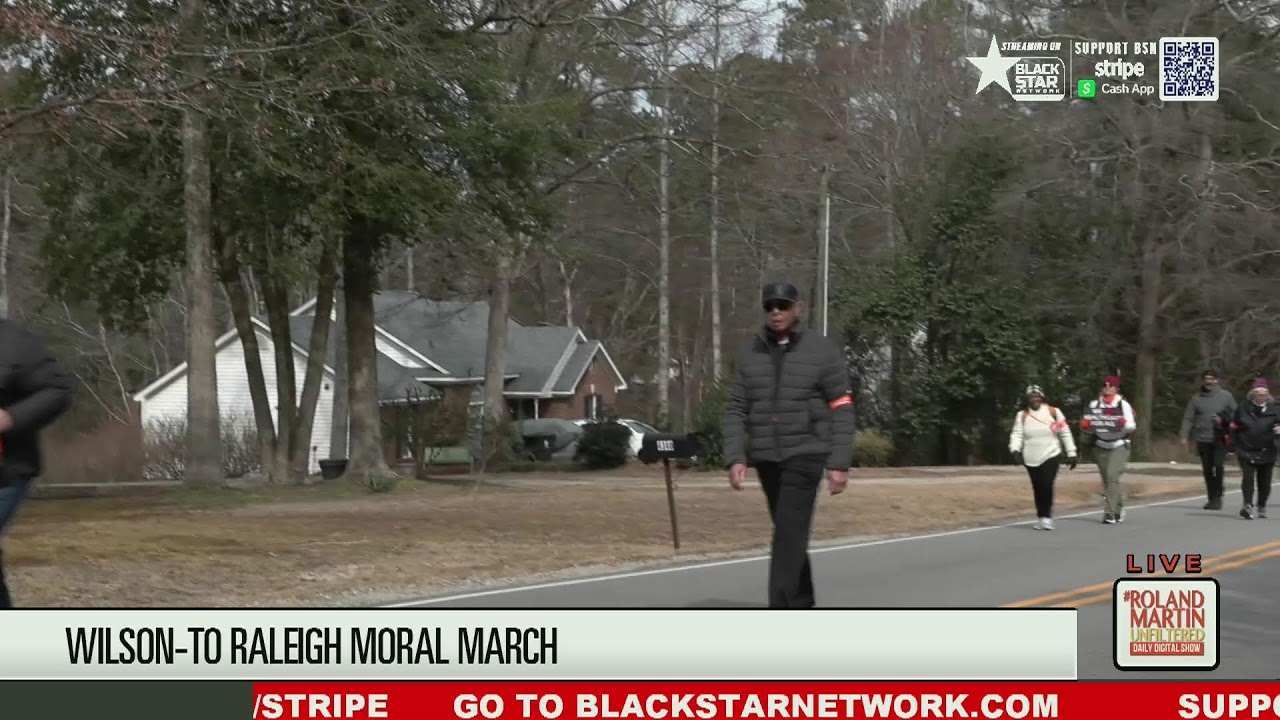
NC Early Voting Push. Cancer Alley Win. NFL Shuts Out Black Coaches.Trump Nominee’s “White Identity”
"Roland Martin Unfiltered dissects systemic racism in politics, sports, and environmental justice, revealing how Black communities are fighting back against gerrymandering, corporate exploitation, and hiring discrimination."
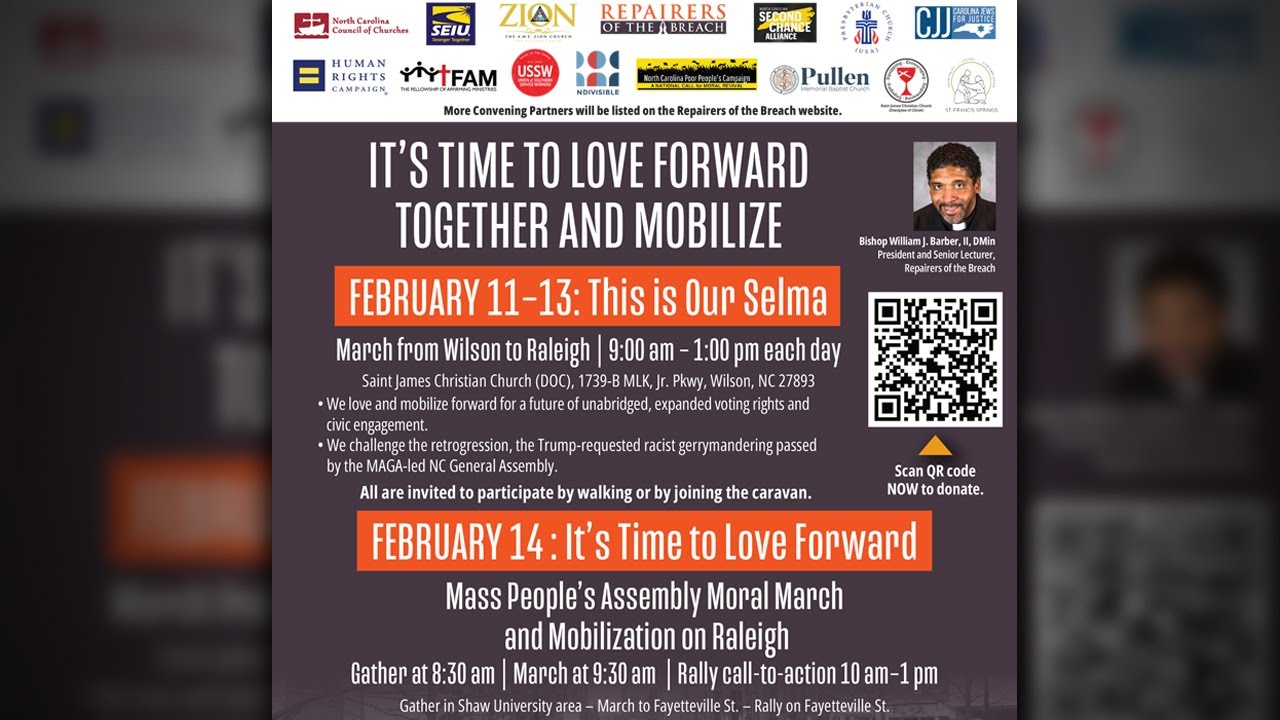
Love Forward Together Mass People’s Assembly & Moral March Mobilization | Day 2
"This episode documents Day 2 of the 'Love Forward Together' march in rural North Carolina, a mobilization against voter disenfranchisement and redistricting, emphasizing community unity and persistent activism."

NC Targets DEI. Trump Blocks Housing Bill. Minority Banks Face New Rules. Kohen Wiley Protests
"This episode exposes how current political actions, from changes in minority bank definitions to attempts to regulate college athlete earnings and block foreign aid, are systematically undermining Black economic power, voting rights, and social justice."