
LIVE TRUMP ECONOMY CRUSHING Workers | LIVE With Chicago Auto Workers
YouTube · TzWScYHHLBU
Quick Read
Summary
Takeaways
- ❖UAW Local 551 members report that 2023 strike wage gains were immediately offset by rising inflation, leaving them 'almost at the level of economy where we can survive' (04:36).
- ❖Companies are backing out of commitments to invest in American plants, with examples like Stellantis in Belvidere shutting down a promised facility (03:15, 30:51).
- ❖The National Labor Relations Board (NLRB) is reportedly unable to hold a quorum due to a lack of members, preventing unions from pursuing legal action against companies (03:47).
- ❖Workers criticize government spending on overseas wars while domestic issues like homelessness and veteran support are neglected (08:20, 16:55).
- ❖A key strategy for future 2028 contract negotiations is 'no concessions' and securing stronger language for job security and American investment (13:58, 30:40).
- ❖Union members emphasize the power of collective action, highlighting benefits like job protection, medical benefits, and the ability to fight for fair wages against corporate power (36:48).
Insights
1Inflation Negates Strike Gains for Auto Workers
UAW Local 551 members, including Jason Wowski and Erica Walker, report that while their 2023 strike secured much-needed wage increases, these gains were quickly absorbed by rampant inflation. The rising costs of gas, food, and other essentials mean workers are barely keeping pace with the economy, rather than getting ahead. Some even feel financially worse off than a decade ago.
Jason Wowski states, 'the raise that we got kind of put us back on track, but it didn't put us above anything. It just kind of almost got us caught up with everything that we lost throughout those years' (). Erica Walker adds, 'I've noticed it seemed like I was kind of doing better financially before the contract. Actually, 10 years ago, I feel like than I am now' ().
2Corporate Backtracking and NLRB Dysfunction
Companies, particularly within the 'Big Three' auto manufacturers, are reportedly backing out of commitments to invest in American production and are shutting down plants they promised to support. This corporate behavior is exacerbated by a dysfunctional National Labor Relations Board (NLRB), which currently lacks enough members to hold a quorum, effectively preventing unions from pursuing legal action or hearings against these breaches of agreement.
Jason Wowski notes, 'some of the big three, they're backing out from their promises to keep products in America and and they're shutting down plants' (). He adds, 'we're down to what two two members of the was it the NLRB, right? ... we can't even hold a quorum. So, they can't even hold um a hearing' ().
3Government Priorities and Domestic Neglect
Workers express deep frustration over the government's perceived misallocation of resources, particularly spending billions on overseas conflicts while neglecting pressing domestic issues. They highlight the plight of homeless veterans and the lack of support for struggling citizens, arguing that the government operates like a business prioritizing profit (or external interests) over its own citizens' well-being.
The host mentions the government spent 'over 25 billions uh on just the Iran war alone abroad instead of spending that money on helping the people in uh the country' (). Jason Wowski states, 'with all the money that's being spent overseas... we can't even help out our homeless veterans here, it's it's really sick' ().
4The Power of Local Politics and Collective Action
Tucson Watson advocates for focusing on local political engagement, urging citizens to actively choose and hold accountable mayors, governors, congressmen, and aldermen. This local focus, combined with the collective power of unions, is presented as the most effective way to drive change and ensure elected officials represent the interests of the working class.
Tucson Watson suggests, 'We need to choose our mayors, our governors, our congressmen, our centimes, senators, our aldermen. We need to go out there. We need to pick our own aldermans, senators, and and and everybody in these political position that's in your neighborhood cuz that's where it starts at' ().
5Future Union Strategy: No Concessions and Stronger Protections
Looking ahead to the 2028 contract negotiations, UAW members are committed to a strategy of 'no concessions.' Their primary goals include securing American investment, ensuring job security, and implementing stronger contractual language to protect workers from companies reneging on agreements or from the impacts of technological advancements like AI. They seek to prevent future stagnation and ensure continuous progress for the working class.
Lenny Faria states, 'In 2028 when we're up for a new contract, the number one goal is to get everything and give up nothing' (). Jason Wowski adds, 'We're looking for American investment. We're looking for commitment... We need we need more strength uh language wise in order to be able to to fight them in the legal battle' ().
Bottom Line
The host frames the current U.S. government as being run 'like a business, a failed businessman,' drawing a direct parallel between corporate exploitation of workers and the government's perceived neglect of its citizens.
This perspective suggests that the same adversarial dynamics seen in labor negotiations (companies prioritizing profit over workers) are now mirrored at a national governance level, leading to widespread economic struggle for the middle and lower classes.
This framing could galvanize a broader movement of citizens and workers to demand accountability from government officials, using union negotiation tactics and collective action as a model for political engagement.
A UAW member (Tucson Watson) attributes some voting patterns against self-interest to sexism, specifically the reluctance of some voters to support a female presidential candidate, even if it means electing a 'not qualified' male candidate.
This highlights a deep-seated societal bias that can override economic self-interest in political decisions, suggesting that factors beyond policy and class struggle significantly influence electoral outcomes.
Addressing such biases through education and advocacy could unlock new political alignments and empower candidates who genuinely represent the interests of the working class, regardless of gender.
Key Concepts
The Package Deal of Voting
When voting, people often consider candidates or policies as a 'package deal.' Voters must prioritize what's most important to them (e.g., heated seats vs. fuel economy in a car analogy) and weigh pros and cons logically, rather than making decisions based solely on emotion or a single moral point, which can lead to voting against one's broader interests (24:09).
Lessons
- Prioritize logical, long-term thinking over emotional responses when making political decisions, evaluating candidates and policies as a 'package deal' based on overall impact on your life and community.
- Engage actively in local politics by choosing and holding accountable mayors, governors, and local representatives, as change often starts at the community level.
- Consider joining or forming a union to leverage collective power for better wages, benefits, job security, and protection against arbitrary corporate actions, recognizing union dues as a valuable investment in your future.
Notable Moments
A UAW member expresses profound sadness and anger over the current economic situation, stating, 'Lately, I haven't been happy. Lately, I've been sad. Lately, I've been angry.'
This personal confession underscores the severe emotional and psychological toll that economic instability and perceived government neglect take on working individuals and families, moving beyond mere financial statistics to human impact.
Quotes
"The raise that we got kind of put us back on track, but it didn't put us above anything. It just kind of almost got us caught up with everything that we lost throughout those years."
"We're down to two members and we can't even hold a quorum. So, they can't even hold um a hearing to see if if the company has done anything out of hand or whatever. So, who do we really go to?"
"I'm a citizen. I'm not a customer. And in the country where I live, I deserve to be happy. I deserve to have rights. I deserve to have whatever I want and whatever I dream because this is America."
"I bleed red, but my collar is blue. So, that just kind of that kind of sums it up, right? I don't I don't make my decisions based upon my emotions. I'm not going to sell I'm not going to buy something knowing that it's going to come with something that's completely against my morals."
"The world does not want a woman for the president. Period. They will vote for somebody like Donald Trump who's not qualified as a president than to give a chance to somebody who's actually qualified if she's if it's a female."
"Anytime you vote against your own beliefs, it's simply to pretty much say, um, your hate is stronger than your love."
"If it wasn't for unions, we wouldn't have this 40-hour work week... all of our safety rights and everything was all formed upon the unions when we had that that big uh movement, the union movement."
Q&A
Recent Questions
Related Episodes

Republicans Don't Even Pretend to Care About Debt (w/ Jessica Riedl) | Mona Charen Show
"Both Republican and Democratic parties have abandoned fiscal responsibility, leading the U.S. towards an inevitable debt crisis exacerbated by demographic shifts and ineffective policy approaches."
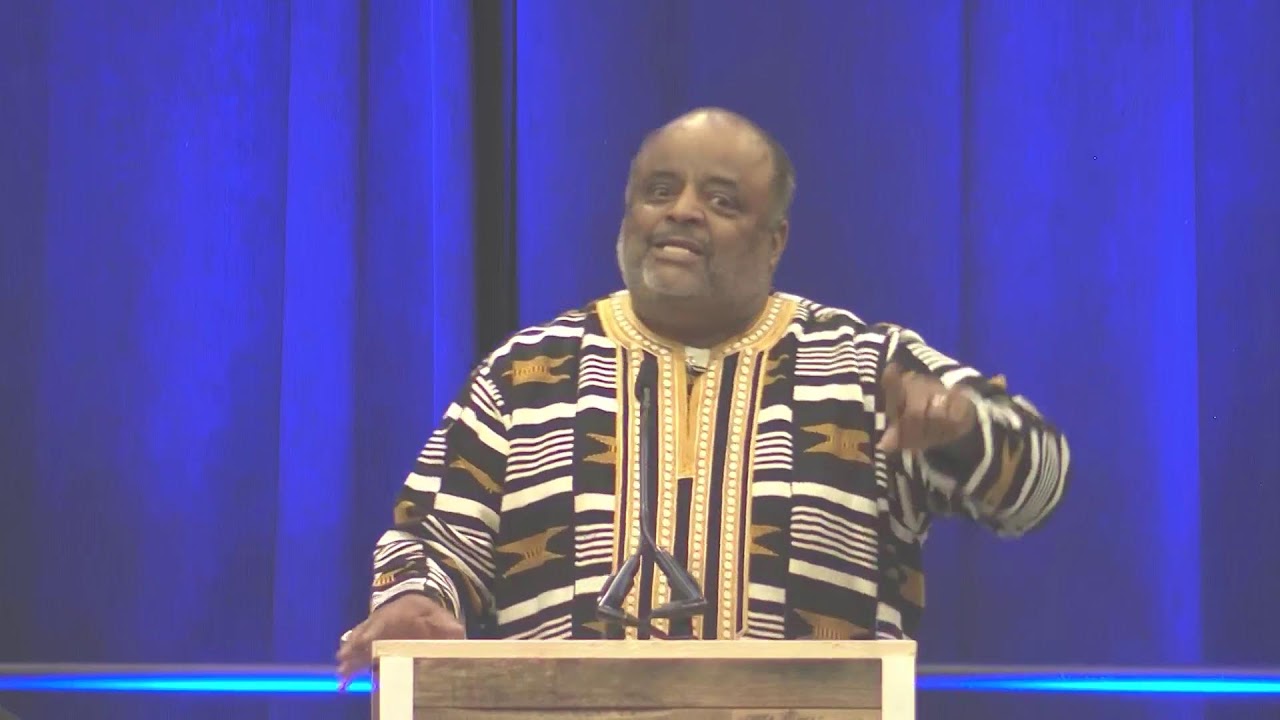
Roland speaks at Columbus Educ. Assoc. MLK Dinner
"Roland Martin challenges the audience at an MLK dinner to move beyond passive celebration and engage in active, sustained political and economic struggle, emphasizing that 'rest time is over' for those seeking real societal change."

Barber Lays Out the Math of Power. 7,000 Votes Control Congress & How We Nationalize State Movements
"Bishop William Barber reveals how a mere 7,000 votes determined the current Congress and outlines a data-driven strategy to nationalize state movements by mobilizing infrequent, low-wage voters."

Black Men Created America’s First Paramedics. Freedom House’s Hidden History
"Discover the untold history of Freedom House, where Black men in Pittsburgh founded America's first paramedic service in 1966, revolutionizing emergency medicine despite facing pervasive systemic racism and institutional sabotage."