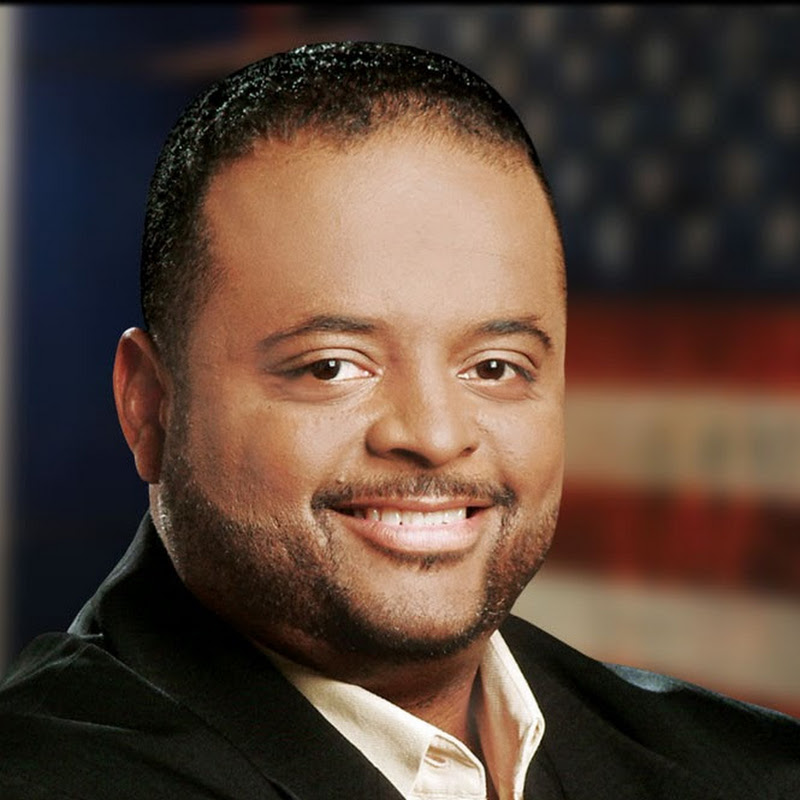
Roland, Howard Bryant talk "Kings and Pawns: Jackie Robinson and Paul Robeson in America"
YouTube · UALLSafBDU8
Quick Read
Summary
Takeaways
- ❖Paul Robeson, a 'Renaissance man' and the 'number one Black voice in America,' was intentionally erased from history, not accidentally forgotten.
- ❖Jackie Robinson's testimony against Paul Robeson before HUAC in 1949 was a strategic move orchestrated by Branch Rickey and the government to counter Robeson's influence.
- ❖Branch Rickey's decision to integrate baseball was primarily a business strategy, not a purely progressive act, initially seeking non-American Black players.
- ❖Black leadership, including the NAACP, strategically distanced itself from Robeson and global anti-colonial movements to avoid being labeled 'anti-American' during the Cold War.
- ❖The 'illusion of merit' often masks a preference for 'comfort' in hiring and societal decisions, where white comfort can supersede financial gain or actual talent.
- ❖The historical tactic of demanding Black Americans 'put their blackness aside' for 'national unity' has been consistently used to silence dissent and maintain the status quo.
Insights
1The Intentional Erasure of Paul Robeson
Despite being a globally renowned singer, athlete, lawyer, actor, and activist—a true Renaissance man and the 'number one Black voice in America'—Paul Robeson was systematically written out of American and Black history. This erasure was not accidental but a massive, intentional campaign to silence his progressive, anti-capitalist, and pro-Soviet views during the Cold War.
The host notes Robeson's extensive talents and influence (-). Guest Howard Bryant highlights that many Black people, even in recent years, had not heard of Robeson (-) and emphasizes the 'massive campaign required to erase him' (-).
2Jackie Robinson as a Strategic Pawn Against Robeson
The US government and figures like Branch Rickey strategically placed Jackie Robinson in opposition to Paul Robeson. Robinson, who was not a prominent political figure before this, was used as a 'Black anti-communist' to publicly criticize Robeson and prove American patriotism, thereby undermining Robeson's powerful voice and isolating him.
Bryant states, 'You've got two of the most titanic black American figures... and they were placed in opposition to each other in front of the entire country' (-). He explains that to counter Robeson's 'big voice,' they 'go to baseball. You go to Jackie Robinson' (-). The host notes the specific directive: 'We need Robinson to take this man out' (-).
3Branch Rickey's Complex and Self-Serving Motivations for Integration
Branch Rickey, often celebrated as a progressive ally for integrating baseball, had complex motivations. He initially had no intention of upsetting American segregation and actively sought Latino players from Mexico, Venezuela, Cuba, and the Dominican Republic to integrate baseball without challenging the US racial status quo. His ultimate decision to sign American Black players like Robinson was a last resort after failing to find suitable non-American talent, driven by the realization that American Black players were simply superior.
Bryant reveals that Rickey 'had no intention of integrating. He hated black baseball' (-) and 'spent $25,000 scouring Mexico and Venezuela in Cuba in the Dominican Republic looking for the right player to integrate' (-). He concludes, 'If Branch Ricky had had his way, he would have left American segregation just the way it was' (-).
4The Strategic Decoupling of US Civil Rights from Global Anti-Colonialism
During the Cold War, Black leadership in the United States, including organizations like the NAACP and the Urban League, deliberately decoupled the American Civil Rights Movement from the burgeoning African independence and anti-colonial movements. This was a strategic decision to avoid being labeled 'anti-American' or 'communist' by the US government, even though figures like Robeson were actively connecting these struggles.
Bryant states, 'black leadership in the United States really did decouple from those movements because they didn't want to be called anti-American' (-). He notes Robeson was the figure who 'could couple all of these people together. And for a lot of for that reason, a lot of people felt he needed to be destroyed' (-).
5The Enduring Tactic of Silencing Dissent Through Patriotism
A recurring tactic to silence prominent African Americans who challenge systemic issues of race and class is to question their patriotism. By demanding they 'drape themselves in the flag' and 'put their blackness aside' for 'national unity,' dissenters are pitted against other Black figures and labeled as unpatriotic or communist, thereby undermining their message and isolating them.
The host notes, 'what white America has always said to the Negro... please do us a favor and I need you to put your blackness aside... cause of national unity' (-). Bryant confirms Jackie Robinson's motivation: 'I didn't want white people to view us as unpatriotic' (-).
Bottom Line
The 'wow moment' for the host was discovering that Paul Robeson and Jackie Robinson, two titans of Black America, never actually met, despite their public opposition and shared geography.
This highlights the effectiveness of the strategic manipulation by external forces, which successfully created a public rivalry and division between two figures who, in different circumstances, might have been allies, without them ever having direct interaction.
This absence of direct interaction underscores the importance of primary source research and challenging assumed narratives, as well as recognizing how media and political forces can construct relationships that don't exist in reality.
The historical pattern of Black leaders being attacked for criticizing American foreign policy (Robeson, MLK) reveals a consistent boundary imposed by white power structures on Black activism.
This demonstrates that calls for racial justice are tolerated only when they remain within domestic bounds and do not challenge broader geopolitical or economic interests, indicating a deep-seated fear of unified global Black liberation movements.
Activists today can learn from this historical pattern by anticipating such attacks when expanding their critiques beyond national borders and by building international solidarity that is resilient to 'anti-American' accusations.
Key Concepts
Strategic Erasure
The deliberate and systematic removal of influential figures or narratives from historical records and public consciousness, often for political or ideological reasons, as seen with Paul Robeson.
Illusion of Merit vs. Hiring for Comfort
The concept that while discussions often center on merit, actual decisions in institutions (e.g., hiring, integration) are frequently driven by a desire for comfort and maintaining the existing power structure, even at the expense of talent or financial gain.
The Continuum of Struggle
The idea that the challenges and strategies employed by Black leaders and activists throughout history (e.g., Du Bois, Robeson, Robinson, MLK, Malcolm X, Kaepernick) represent an ongoing, interconnected lineage of resistance against systemic oppression, often facing similar tactics of division and silencing.
Lessons
- Actively seek out and critically evaluate historical narratives, especially those concerning marginalized groups, to uncover erased or manipulated stories.
- Recognize and challenge the 'illusion of merit' in institutional decisions, understanding that comfort and maintaining the status quo often outweigh genuine talent or progress.
- Support and build independent Black institutions (e.g., media, economic ventures) to ensure agency over narratives and counter systemic exclusion from mainstream platforms.
Notable Moments
The revelation that Paul Robeson and Jackie Robinson, despite being placed in public opposition, never actually met.
This highlights the extent to which their public 'rivalry' was a manufactured political strategy rather than a personal conflict, demonstrating the power of external forces to shape narratives and relationships without direct interaction.
The discovery of previously unreleased transcripts from the December 3, 1943, baseball winter meetings, where Paul Robeson addressed owners about integration.
This document provides concrete evidence of Robeson's early efforts to integrate baseball and reveals Branch Rickey's initial strategic maneuvering, challenging the long-held narrative of Rickey as a purely benevolent figure.
Quotes
"It is crazy to me that this Renaissance man who [was a] singer, athlete, lawyer, actor, activist, all of this is essentially written out not only American history but Black history."
"You've got two of the most titanic black American figures... and they were placed in opposition to each other in front of the entire country. And I kept it moving."
"You can't erase somebody like that by accident. Time didn't just erase him... it's intentional."
"If you have somebody that big who's also that erased, the massive campaign required to erase him, what it took to actually erase him."
"When you just do the numbers, the raw numbers, black people can't win at the capitalist game and yet we sell empire to each other all the time."
"The black man who is willing to criticize another black person publicly will have a job for life."
"We are reminded in so many heartbreaking ways that it does not love us."
"That tactic has always been used to pit African-Americans against one another, and to silence the agitators for change."
Q&A
Recent Questions
Related Episodes
DeSantis Map Sued in Florida. Tennessee Targets Black District. FBI Raids Louise Lucas
"This episode exposes aggressive Republican gerrymandering efforts in Florida and Tennessee, a politically charged FBI raid on a Virginia Democratic leader, and disproportionate death penalty sentences against Black individuals in Tarrant County, Texas, framing them as a systemic assault on Black political power and civil rights."

Trump Impact On Black America. SCOTUS Birthright Citizenship Case. Alabama College DEI probe
"This episode dissects the multifaceted impacts of Trump-era policies on Black America, from economic destabilization and civil rights rollbacks to an inspiring narrative of an entrepreneur rebuilding her life and community."

LIVE! Love Forward Together Mass People’s Assembly & Moral March Mobilization In Raleigh, NC
"Thousands marched across North Carolina in the 'This Is Our Selma' movement, led by Reverend William Barber, to combat gerrymandering, voter suppression, and advocate for a proactive, love-driven vision of social and economic justice."
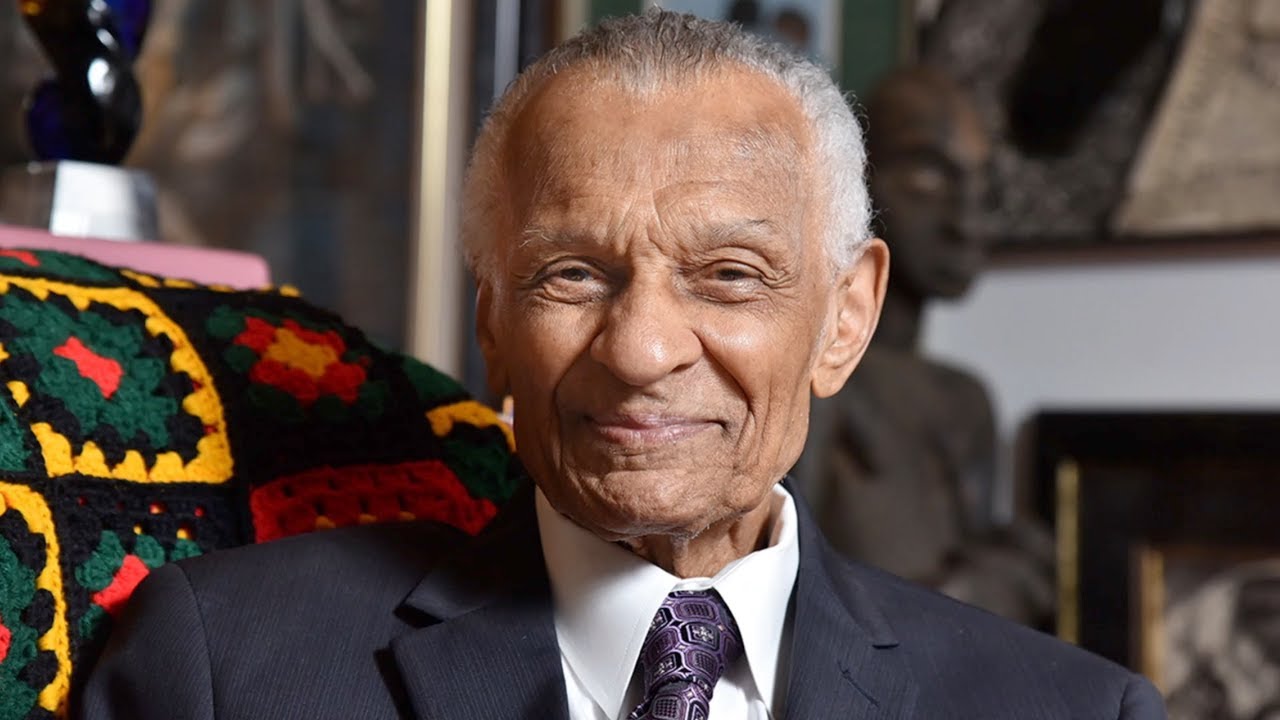
Rev. C.T. Vivian talks MLK and staring death in the face. #MLKDay2026
"Civil Rights icon Rev. C.T. Vivian reflects on a lifetime of struggle, from facing childhood bullies to confronting Jim Clark, and shares his profound insights on the continuous fight for freedom and the true cost of a movement."