BREAKING: War Warnings Rise — U.S. Forces Deploy, Iran Prepares for Escalation | TBN Israel
YouTube · UKlLQv7-p2g
Quick Read
Summary
Takeaways
- ❖US military forces, including aircraft carriers and air defense systems (Patriot, THAAD), are deployed to the Middle East, conducting readiness exercises.
- ❖Israel's Prime Minister Netanyahu warns of 'unprecedented force' if Iran attacks, with close coordination between IDF and US Central Command.
- ❖Iran is conducting psychological warfare, threatening widespread regional retaliation through proxies like the Houthis and Hezbollah.
- ❖Internal protests in Iran are met with extreme violence, including live fire, mass arrests, and alleged use of chemical weapons, with casualty estimates ranging wildly.
- ❖The delay in a US strike is attributed to concerns over regional escalation, strengthening Iran's Revolutionary Guards, and severe damage to global energy markets.
- ❖Regional powers (Saudi Arabia, UAE, Turkey) are actively trying to prevent an all-out war, fearing chaos, refugee crises, and economic instability.
Insights
1US Military Buildup and Readiness
The United States has deployed significant military assets, including the aircraft carrier Abraham Lincoln and escort ships capable of launching cruise missiles, into the Central Command's operational area. US Air Forces in the region are conducting special military readiness exercises. This posture is described as enabling rapid transition from planning to execution within days if ordered, and includes deploying advanced air defense systems like Patriot and THAAD to protect US bases and regional partners.
An additional fleet is making its way to the Middle East. US Central Command announced a readiness exercise by the United States air forces in this region... American aircraft carriers are on standby... The American aircraft carrier Abraham Lincoln is already inside the operational area... air defensive systems were deployed, including Patriot and also THAAD...
2Iran's Psychological Warfare and Proxy Threats
Iran is waging a psychological war, using media propaganda with images of missiles and fighter jets targeting American and Israeli leaders. The Revolutionary Guards are deploying naval fleets and distributing videos to deter the US. Senior Iranian officials explicitly state that any American attack would be met with a 'far more destructive' response, involving proxies like the Houthis, Hezbollah, and Iraqi militias, ensuring a 'broad long war' rather than a limited blow.
Iran is waging a psychological war against the United States with repeated threats... The revolutionary guards in Iran are issuing threats. And all of their proxy forces are ready to strike Israel. I'm talking about, the Houthis, and a long list of terrorist organizations...
3Brutal Suppression of Iranian Protests
Internal protests in Iran continue, met with extreme violence by the Revolutionary Guards and security forces. Leaked reports and human rights organizations indicate tens of thousands of casualties, mass arrests, and executions. There are reports of security forces using live fire and potentially chemical weapons against protesters, leading to severe injuries and deaths. The regime also uses Chinese-supplied surveillance technologies for repression.
The scale of the massacre is also enormous and leaked reports indicate tens of thousands that are unalived in the suppression of protests by the revolutionary guards... Human rights organizations are publishing heavy numbers, thousands unalived since the start of the protest and hundreds of executions in one month... Footage from Sabazerva shows security forces in protective suits and vehicles with warning signs suggesting the use of chemical weapons...
4Reasons for US Strike Delay
The delay in a US strike on Iran is not due to military limitations, as forces are ready. Instead, it stems from concerns about the 'day after': the potential for wide regional escalation, the strengthening of the Revolutionary Guards as a dominant force in a wartime scenario, and severe damage to global energy market stability and the economy.
It appears that an American strike on Iran is being delayed but not because of a military limitation but due to concerns over wide regional escalation. the strengthening of a revolutionary guards as a dominant governing force in a wartime scenario and severe damage to energy market stability and the global economy are on the line.
5Regional Actors Push for De-escalation
Countries like Saudi Arabia, the United Arab Emirates, and Turkey are actively trying to prevent an American attack on Iran. Saudi Arabia and the UAE have sent messages that they will not allow their territory or airspace to be used for an attack. Turkey fears chaos, a refugee wave, and instability on its border, reinforcing its own border and preparing emergency plans.
Saudi Arabia via Crown Prince Muhammad bin Salman is sending a message to Iran's president. We will not allow our territory or our airspace to be used for an attack against Iran. The United Arab Emirates sends a similar message... Turkey is also entering the picture here. Its foreign minister warns that a strike would be a mistake move and speak about preferring diplomacy...
Bottom Line
Iran is leveraging Chinese surveillance technology, including facial recognition and network monitoring, to suppress internal protests and control information traffic.
This demonstrates a deep technological cooperation between China and Iran, providing the Iranian regime with advanced tools for authoritarian control, making it harder for internal dissent to organize and for external actors to support protest movements effectively.
Western nations could focus on developing and deploying counter-surveillance technologies or secure communication methods to aid populations under such repressive regimes, or sanction companies providing such technologies.
The US military posture is designed for 'flexibility' and 'options,' not necessarily a predetermined strike, allowing for deterrence, limited actions, or broader scenarios.
This indicates a strategic ambiguity aimed at keeping Iran guessing while maintaining readiness. It suggests that while a strike is possible, diplomatic or less kinetic options remain on the table, contingent on Iranian actions and geopolitical calculations.
Analysts should focus on subtle shifts in rhetoric and deployment patterns to discern the US's true intent, rather than assuming an imminent, inevitable attack. Companies in defense or intelligence could develop tools for real-time analysis of such 'flexible' postures.
The alignment of interests between Turkey and Saudi Arabia, driven by fears of regional chaos and economic instability from an Iran conflict, is creating a 'new reality' in the Middle East.
This emerging alliance could significantly alter regional power dynamics, potentially reducing Iranian influence through diplomatic and economic means rather than direct military confrontation, and could stabilize oil markets.
Businesses and investors should monitor this evolving regional alignment for new trade routes, infrastructure projects, and investment opportunities in a potentially more stable, non-Iranian-dominated Middle East. Diplomatic efforts could leverage this alignment to push for broader regional security frameworks.
Key Concepts
Psychological Warfare
Both the US and Iran are employing psychological tactics, using military displays and media propaganda to influence decision-makers and public perception, creating a sense of inevitable confrontation while simultaneously engaging in indirect diplomacy.
Regime Survival Strategy
The Iranian regime's actions, both internal (brutal suppression of protests, continuity plans) and external (nuclear ambitions, regional proxy threats), are framed as a strategy to ensure its survival against both internal dissent and external military pressure.
Multi-Front Conflict Environment
The Middle East is viewed as a complex environment where an action in one area (e.g., a US strike on Iran) can rapidly trigger reactions across multiple fronts, involving various state and non-state actors, making 'limited blows' unlikely.
Lessons
- Recognize the dual nature of Iran's strategy: external threats and proxy activation coupled with brutal internal repression, making any external intervention highly complex.
- Understand that US military deployments are designed for strategic flexibility, not necessarily an immediate strike, allowing for various deterrence and response options.
- Support initiatives aimed at humanitarian aid or freedom for the Iranian people, as the regime's internal crackdown is severe and widespread, with disputed but high casualty figures.
Notable Moments
Footage from Sabazerva, Iran, showing security forces in protective suits and vehicles with warning signs, suggesting the use of chemical weapons against protesters.
This highly disturbing report, if verified, indicates an extreme level of violence and disregard for human rights by the Iranian regime against its own citizens, escalating the severity of internal repression.
The host reporting live from Mount Hermon in northern Israel, a strategic mountain bordering Syria and Lebanon, to demonstrate Israel's preparedness for a multi-front conflict.
This 'boots on the ground' reporting emphasizes Israel's direct vulnerability to Iranian proxies and its proactive measures to secure its borders, reinforcing the perception of an immediate, tangible threat.
Quotes
"If Iran makes the grave mistake of attacking Israel, we will respond with a force that Iran has never seen before."
"We have a huge fleet in the Mediterranean and I hope that we won't have to use it."
"We will not allow our territory or our airspace to be used for an attack against Iran."
Q&A
Recent Questions
Related Episodes

Larry Johnson & Col. Wilkerson: 4 US Warships Tried to Enter Strait of Hormuz – Then Iran Launched
"A critical analysis reveals escalating US-Iran military confrontations in the Strait of Hormuz, a stark disconnect in diplomatic rhetoric, and a significant geopolitical realignment in the Middle East away from US influence."
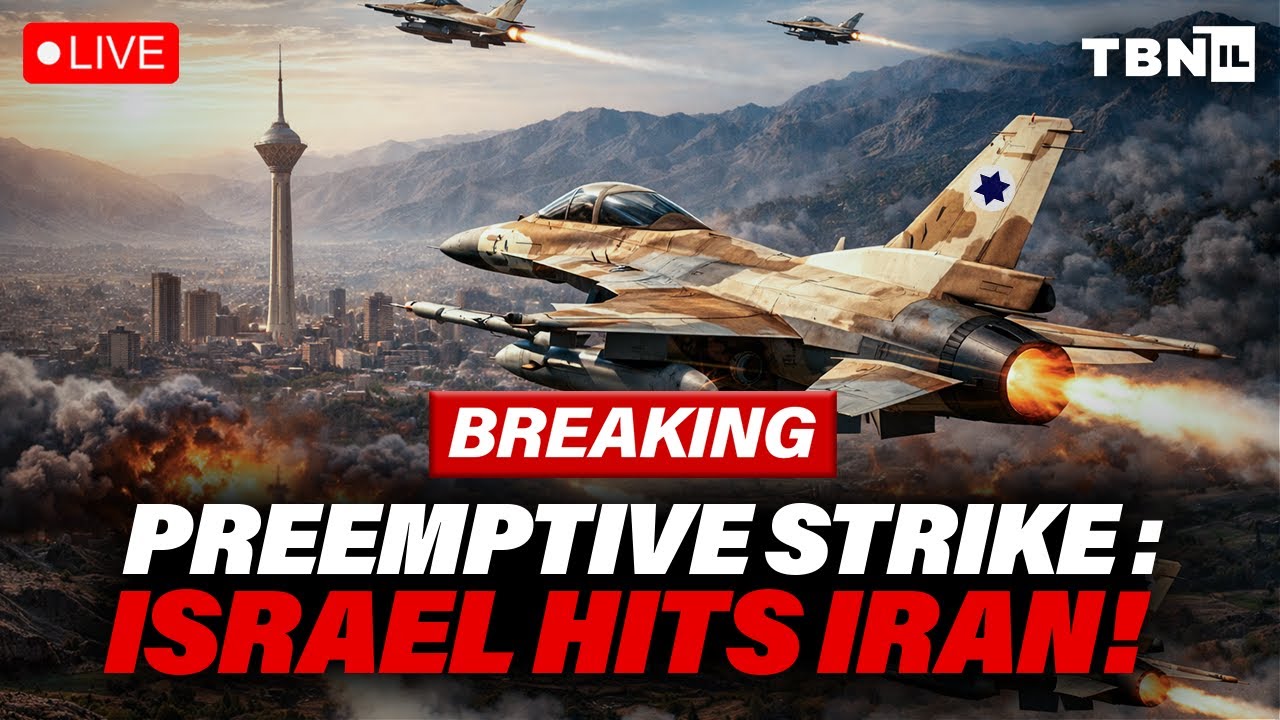
BREAKING: Israel Preemptive Strike on Iran - Explosions in Tehran LIVE! | | TBN Israel
"Israel and the United States launched a coordinated preemptive strike against Iran, targeting regime and military assets, triggering immediate Iranian missile retaliation against Israel and US bases in the region."

🚨 BREAKING: Iran Ceasefire Talks FAIL - U.S. Navy To Blockade Hormuz
"Ceasefire talks between the US and Iran have collapsed, leading to immediate US Navy action to blockade the Strait of Hormuz and heightened military readiness from both sides."
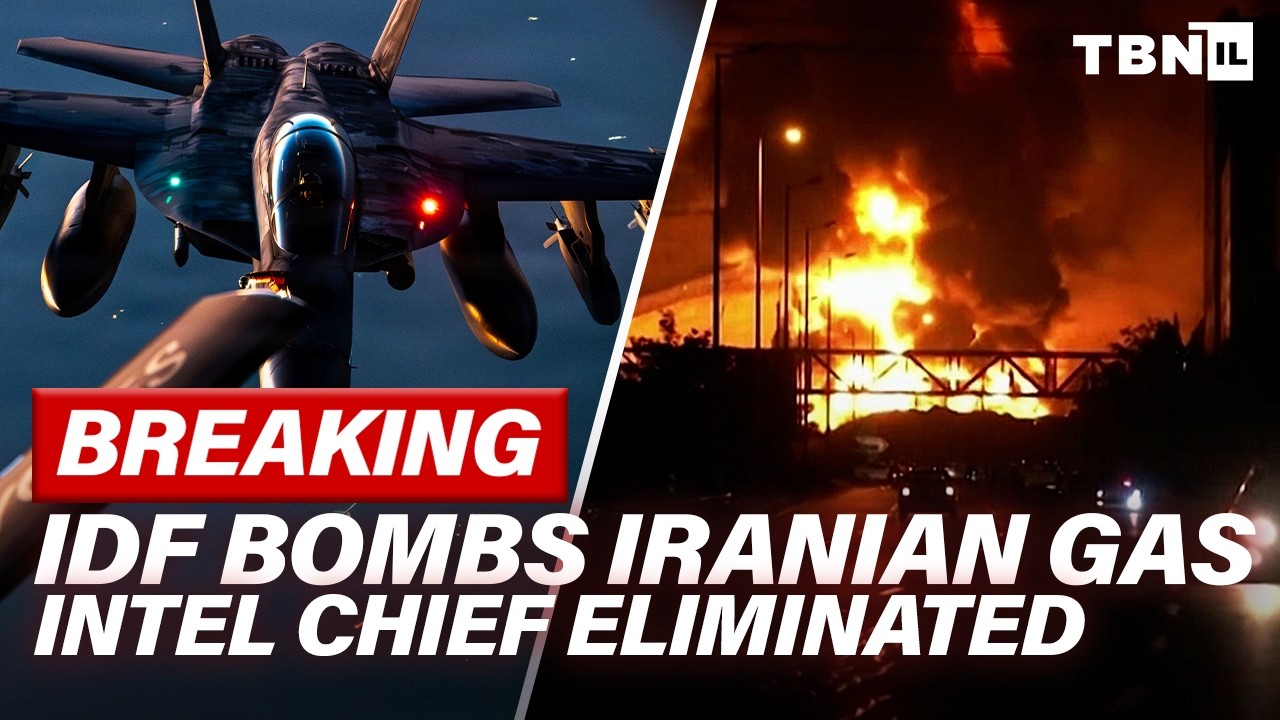
BREAKING: Israel BOMBS Major Iran Gas Site; Top Mullah ELIMINATED; Iran Vows VENGEACE | TBN Israel
"Israel and the United States have escalated their 'Roaring Lion War' against Iran, striking its largest gas facilities, eliminating key intelligence and military figures, and disrupting missile production, while Iran threatens a broader energy war in the Gulf."