BREAKING: Trump Targeted By IRAN? U.S. CHOKES IRGC | TBN Israel
YouTube · UOky6PMGoHo
Quick Read
Summary
Takeaways
- ❖The US is implementing a strategy of economic attrition against Iran, including a naval blockade, freezing crypto funds, and pressuring refineries.
- ❖Trump canceled negotiation talks with Iran, leading to an improved Iranian proposal within 10 minutes, demonstrating US leverage.
- ❖Iran is experiencing a severe leadership crisis, with internal power struggles and confusion about key figures' status.
- ❖The naval blockade is creating a critical oil storage problem for Iran, forcing difficult choices like reducing production or selling at steep discounts.
- ❖Iran faces significant internal energy and water crises, leading to public dissatisfaction and fear of widespread protests.
- ❖The US has deployed three aircraft carriers to the Middle East, a show of force not seen since 2003, to enforce its blockade and deter escalation.
- ❖US 'shoot to kill' orders for Iranian boats threatening shipping in the Strait of Hormuz mark a new, aggressive rule of engagement.
- ❖The US blockade on Iran directly impacts Hezbollah's financial resilience, as its funding flows from the Revolutionary Guards are disrupted.
- ❖Washington is considering punitive measures against NATO allies, like Spain and Britain, that did not support the US effort against Iran.
- ❖Global shipping costs, particularly tanker rates and insurance premiums, are rising due to increased risk in the Strait of Hormuz, while US energy exports benefit.
Insights
1US Economic Attrition Strategy Against Iran
The United States has shifted its approach to Iran from deep bombings to a comprehensive economic suffocation. This involves a naval blockade in the Strait of Hormuz, freezing crypto funds, pressuring Chinese refineries, and sanctioning Iranian vessels and middlemen. The objective is to damage Tehran's ability to function, repair infrastructure, and finance its military system and proxies without igniting a broader regional conflict.
The White House has moved to a different track: a naval blockade, blocking smuggling routes, freezing crypto funds, pressuring refineries in China, and drying up the cash of the revolutionary guards. The goal: to damage Thran's ability to function, repair, damage, and fund its military system without setting the entire region on fire.
2Iran's Desperation and US Diplomatic Leverage
Following the cancellation of negotiation talks in Islamabad, Iran submitted a significantly improved proposal within 10 minutes, according to Trump. This rapid response demonstrates the depth of Iran's desperation under economic and military blockade, confirming that the US holds the diplomatic upper hand and is willing to abandon talks if its terms are not met.
Trump said that immediately after he canled the trip, within only 10 minutes, Iran sent a new document that was much better. According to Trump, that's not a small detail. That's a picture of the balance of power. Washington is not chasing Thran. Thran is rushing to improve documents when the American president closes the door.
3Internal Chaos and Leadership Crisis in Iran
Iran is grappling with a severe leadership crisis, characterized by internal power struggles and a transition from a religious theocracy to a military dictatorship of the Revolutionary Guards. The dysfunction of key figures and confusion over their status (e.g., Muchapah's portrait on a memorial wall for 'eliminated leaders') indicate a vacuum preventing decisive action on war or agreements with the US.
The chaos at the top of the Iranian leadership is pushing the end of the wall further away. Iran is in the middle of a severe leadership crisis and a transition from a religious theocracy into a weak military dictatorship of the revolutionary guards... and add to that the death of Ali Kam and the dysfunction of his successor Muchapa.
4Naval Blockade's Impact on Iran's Oil Storage
The US naval blockade is not only preventing oil sales but also creating a critical technical problem for Iran: where to store its surplus oil. With Iran producing 1.5 million barrels per day in excess of domestic consumption, its storage capacity of 30 million barrels can be filled in just 16-17 days. This forces Iran to choose between costly options like reducing production (damaging wells long-term) or selling at painful discounts with high shipping costs.
If the daily surplus reaches 1.8 million barrels, then a storage capacity of 30 million barrels can be filled in only 16 to 17 days. And here economic pressure becomes engineering pressure. When there is nowhere to send the oil, the regime has to choose between three difficult options. Reduce production, shut down wells, or sell indirectly at painful discounts with very high insurance and shipping costs.
5US Military Buildup and New Rules of Engagement
The US has deployed three aircraft carriers (USS Abraham Lincoln, USS Gerald R. Ford, USS George H.W. Bush) to the Middle East and Indian Ocean, a force not seen since 2003, comprising over 200 aircraft and 15,000 personnel. This coercive diplomacy is backed by a 'shoot to kill' order for Iranian boats threatening shipping or laying mines in the Strait of Hormuz, signifying a new, aggressive stance and immediate military response to miscalculations.
For the first time since the American invasion of Iraq in 2003, three American aircraft carriers are operating at the same time in the Middle East and in the Indian Ocean... Trump does not publish a public shoot to kill order unless he wants the enemy to understand one thing. One miscalculation can become an immediate military event.
Bottom Line
Iran's internal energy and water crises, exacerbated by sanctions and blockade, could trigger widespread public unrest, potentially leading to regime instability from within, rather than solely from external pressure.
This suggests that the US 'chokehold' strategy is not just about economic pain but also about leveraging existing societal vulnerabilities, making the regime's control more precarious.
For analysts, monitoring Iranian domestic indicators like resource scarcity and public sentiment offers a more nuanced understanding of the regime's fragility and potential flashpoints.
The US strategy is inadvertently strengthening its position as a global energy supplier, as disruptions in the Strait of Hormuz drive up shipping costs and push Europe and Asia to seek alternative, reliable sources.
This geopolitical conflict has a significant economic upside for the US, transforming its energy exports into a strategic card and potentially reshaping global energy trade routes.
Energy companies and investors should monitor US export capacity and infrastructure development, as well as shifts in global demand patterns, to capitalize on this evolving market dynamic.
Opportunities
Develop advanced mine detection and neutralization technologies for maritime security.
The increased threat of naval mines in critical shipping lanes like the Strait of Hormuz creates a demand for more efficient and robust systems to locate and neutralize these devices, protecting commercial shipping and military assets.
Invest in or develop alternative energy shipping routes and infrastructure.
As the Strait of Hormuz becomes riskier and more expensive, there will be a growing need for alternative routes or methods to transport oil and gas, reducing reliance on conflict-prone chokepoints. This could include pipelines, rail, or new shipping lanes.
Specialized maritime insurance and risk assessment services for high-risk zones.
With rising tanker rates and insurance costs in areas like the Strait of Hormuz, there's a market for highly specialized insurance products and real-time risk assessment services tailored to vessels operating in volatile geopolitical regions.
Key Concepts
Economic Suffocation / Chokehold Strategy
This model describes the US approach of applying sustained, multi-faceted economic pressure (blockades, sanctions, financial targeting) to cripple an adversary's ability to fund operations, maintain infrastructure, and sustain its regime, without resorting to direct military conflict. The goal is to induce internal collapse or force concessions.
Coercive Diplomacy
This refers to the use of military and economic power as leverage to persuade an adversary to change its behavior. The US deployment of significant naval power and strict economic sanctions, coupled with a willingness to walk away from negotiations, exemplifies this model by demonstrating capacity for force while seeking a diplomatic outcome on its terms.
Lessons
- Monitor global energy prices and shipping costs, particularly those related to the Strait of Hormuz, as they directly reflect geopolitical tensions and US-Iran dynamics.
- Evaluate the stability of supply chains that rely on maritime routes through the Middle East, considering potential disruptions from naval blockades or increased threats.
- Stay informed about US foreign policy shifts and economic sanctions, as these can rapidly alter market conditions and create both risks and opportunities in global trade and finance.
Notable Moments
Trump revealed Iran sent an improved proposal just 10 minutes after he canceled negotiation talks in Islamabad, highlighting US leverage.
This incident underscores the effectiveness of the US 'diplomacy of decision' and economic pressure, forcing Iran to quickly concede or risk being abandoned at the negotiating table.
The US deployed three aircraft carriers to the Middle East and Indian Ocean, a show of force not seen since the 2003 Iraq invasion.
This massive military deployment signals a serious commitment to enforcing the blockade and a readiness for immediate military action, escalating the stakes in the region.
Iranian President Pazakan asked citizens to reduce electricity and energy consumption, turning on 'two lights instead of ten'.
This seemingly small domestic request is a major admission of Iran's internal energy crisis, revealing the direct impact of sanctions and blockades on daily life and the regime's fear of public dissatisfaction.
Quotes
"The goal to damage Thran's ability to function, repair, damage, and fund its military system without setting the entire region on fire."
"If Iran wants an agreement, it must turn directly to the White House on American terms."
"A strong regime does not get confused about who's alive and who's dead."
"When a regime feels it's losing control, it can choose an arrangement, an agreement, but it can also choose a gamble."
Q&A
Recent Questions
Related Episodes

Patrick Henningsen: Hezbollah JUST Fired Back at Israel - Iran Vows to “Crush” All Attacks
"Patrick Henningsen argues that the US and Israel initiated an illegal war against Iran, driven by Trump's incompetence and Israeli influence, leading to an inevitable escalation with severe global economic repercussions."

Pentagon Prepares For EXTENDED War With Iran
"This episode dissects the geopolitical maneuvers surrounding potential US-Iran conflict, revealing strategic leaks, Netanyahu's diplomatic sabotage playbook, and the true intent behind economic sanctions."

Alex Krainer: US STRIKES Iran – Iran RETALIATES Against Kuwait, Bahrain & Jordan!
"Amidst escalating US-Iran conflict and Iranian retaliation against regional US allies, this episode argues that US foreign policy is deeply controlled by an 'Anglo-Zionist conspiracy' led by the Rothschild banking dynasty, prioritizing Israeli interests over American ones."
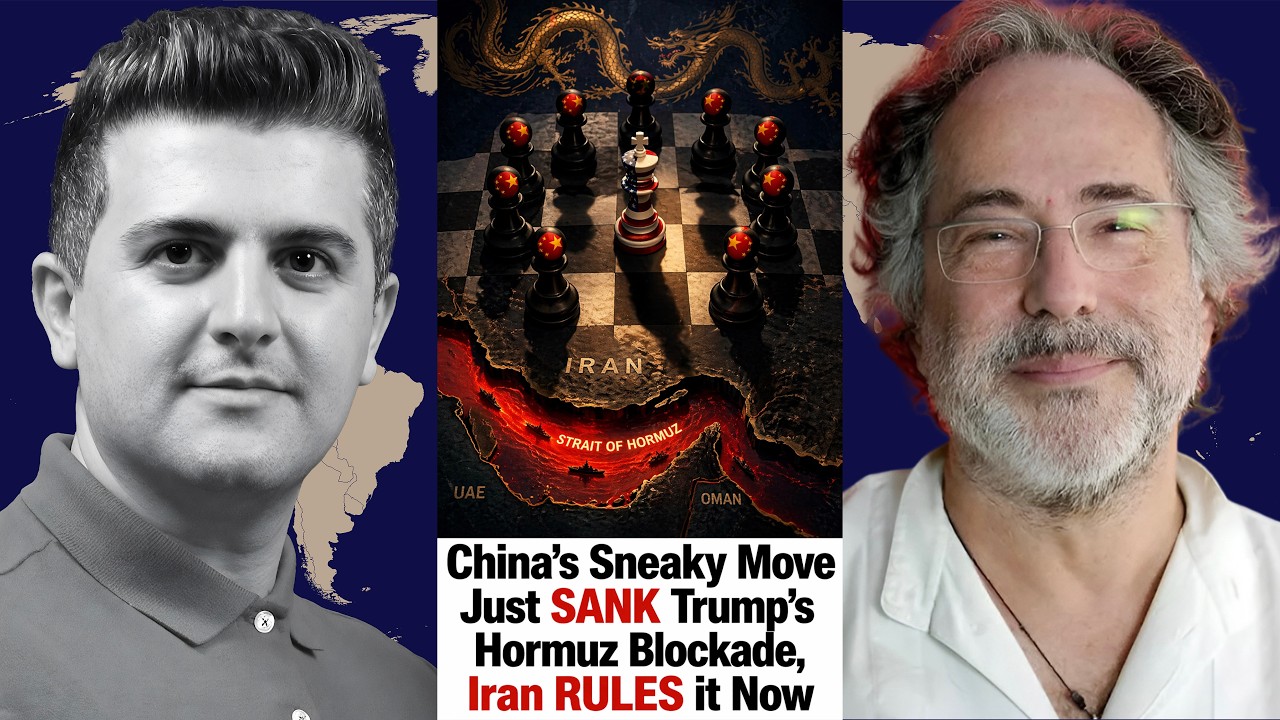
Pepe Escobar: “Total Failure”: Trump’s Blockade Just Backfired Disastrously
"Pepe Escobar argues that the US blockade against Iran, spearheaded by Donald Trump, has utterly failed and backfired, accelerating global economic chaos and challenging US geopolitical dominance."