BREAKING: Houthi Fortress BOMBED; IRGC Strikes Hormuz Ships; U.S.-Iran Deal Near? | TBN Israel
YouTube · UPCu1SAPuwE
Quick Read
Summary
Takeaways
- ❖The United States and Iran are reportedly nearing a memorandum of understanding to freeze uranium enrichment, gradually remove sanctions, and open nuclear negotiations under supervision, alongside reopening the Strait of Hormuz.
- ❖Despite talks of a ceasefire, Iran has attacked US forces over 10 times and commercial vessels nine times since the ceasefire went into effect, leading to direct clashes where US helicopters destroyed six Revolutionary Guard boats.
- ❖The US naval blockade on Iran remains in full force, causing significant economic damage through lost income, raging inflation, and technical difficulties from closing oil wells due to storage issues.
- ❖A secret Houthi fortress in Yemen, including Iranian operation rooms and ballistic missile assembly sites, was destroyed in a precise, unclaimed operation, signaling exposure for Iran's proxies.
- ❖The conflict is framed as a 'war of perception,' where Trump's unpredictable approach and economic pressure are more effective against Iran than traditional diplomacy, confusing the regime and tightening the economic noose.
- ❖Gulf states like the UAE are pushing for a tougher stance against Iran, imposing sanctions on countries like Pakistan and Egypt for not aligning, while Saudi Arabia advocates for controlled pressure, creating internal Arab world tension.
- ❖Israel and the UAE are increasing defense cooperation, including Israeli assistance in air defense and interceptions, as Iran's threats push more regional countries towards shared security interests with Israel.
Insights
1US-Iran Agreement Framework Details
The US and Iran are reportedly close to a memorandum of understanding that would freeze Iran's uranium enrichment (potentially for 12-15 years), remove highly enriched uranium from the country, commit Iran to never obtaining nuclear weapons, and allow enhanced, surprise inspections. In return, the US would gradually remove sanctions and release frozen Iranian funds. This framework aims to end the 'hot war' and initiate a 30-day negotiation period.
The American president stated that progress in the context led to stopping the naval move in order to understand whether an agreement can be signed. Amongst the points that are being discussed is an Iranian commitment to freeze the uranium enrichment. The length of that freeze is still disputed. Iran wants a much shorter period. The United States demanded much more. Now the discussion is about a long range, possibly 12 to 15 years. There's also discussion of Iran removing highlyenriched uranium from the country.
2Naval Blockade's Economic Impact on Iran
The US naval blockade on Iran is inflicting severe economic damage, leading to significant income loss, rampant inflation, and a critical oil storage problem. This forces Iran to close oil wells, causing technical and economic damage that is difficult to reverse quickly. This sustained economic pressure is viewed as a more potent weapon than direct military strikes, threatening the regime's stability from within.
Iran is losing income. Inflation is raging. The revolutionary guards still need money, fuel, salaries, and loyalty. And if Iran cannot export oil, then there is also a storage problem. When there is nowhere to store oil, they have to start closing wells. And that's already technically and economically damage that is hard to reverse quickly.
3Strategic Bombing of Houthi Fortress in Yemen
A series of powerful, unclaimed explosions destroyed strategic Houthi compounds in Sana and southern Yemen, including an Iranian joint operations room and ballistic missile assembly sites. These strikes targeted the Houthi's operational backbone, weakening their ability to threaten international shipping lanes in the Bab el-Mandeb strait. This operation demonstrates a strategy of exposing and striking Iran's proxies to relieve pressure on other fronts.
It has now been revealed that in the past month, the secret fortress of the Houthis was destroyed with deadly precision. A series of powerful explosions shook strategic Houthi compounds in Sana and southern Yemen over the past month. According to reports, a joint Iranian operation rooms and ballistic missile assembly sites used to attack vessels were hit. The interesting part is that no one has taken responsibility for the complex operation that struck this terrorist organization.
4Shifting Gulf State Alliances and Israeli Cooperation
Iranian attacks have created a fracture within the Arab world, with the UAE pushing for a tougher line against Iran and imposing sanctions on non-aligned countries, while Saudi Arabia favors controlled pressure. This shared threat is driving increased defense cooperation between Israel and the Emirates, including Israeli assistance in interceptions and air defense systems, signaling a new regional order built on operational necessity rather than diplomatic declarations.
The connection between Israel and the Emiratis is now becoming a major part of the story. Prime Minister Netanyahu spoke with Muhammad bin Zad. Israel's ambassador to the Emirati spoke about relations that are growing and flourishing, especially in the field of defense. Reports about Israeli assistance in interceptions and about Israeli air defense systems in the region point to a new reality. Iran tried to isolate Israel. Instead, it is pushing more countries to understand that its threat is shared.
Bottom Line
The US strategy under Trump deliberately employs unpredictability and mixed signals (threats vs. deals) to disorient adversaries like Iran, making it harder for them to apply traditional pressure points or control the narrative.
This 'trolling' approach, while unconventional, is presented as highly effective in the Middle East, where direct, clear language is understood, even if it's reversed threats. It forces Iran into emergency meetings and leaves them celebrating 'fake victories' while economic pressure mounts.
Other nations or entities facing similar, unpredictable adversaries could study this 'Trump doctrine' of strategic ambiguity and economic strangulation as an alternative to conventional diplomatic or military responses.
The real 'explosion' in the conflict with Iran is economic, not military, leading to internal civilian pressure and fear of renewed protests, which the regime tries to hide through propaganda and increased repression.
This suggests that external pressure, particularly economic blockades, can be a potent tool for regime change or significant policy shifts by leveraging internal dissent, rather than direct military intervention.
International efforts could strategically support the Iranian people through 'free communication' and 'breaking internet blocks' to amplify internal pressure, turning a military conflict into a battle for the regime's legitimacy from within.
Key Concepts
Economic Warfare
The strategy of using financial pressure, blockades, and sanctions to cripple an adversary's economy, leading to internal instability and weakening their ability to fund military operations or proxies, as opposed to direct military confrontation. This podcast argues it's more effective against Iran than traditional strikes.
War of Perception
Modern conflicts are heavily influenced by how events are framed and perceived by global audiences and internal populations, not just by absolute military strength. Trump's unpredictable actions are seen as a deliberate strategy to control the narrative and confuse adversaries.
Lessons
- Monitor global oil prices closely as they are highly sensitive to developments in the Strait of Hormuz and US-Iran negotiations, impacting investment and supply chain stability.
- Recognize that geopolitical conflicts, particularly in the Middle East, are increasingly fought through economic pressure and perception management, not just conventional military force, requiring a broader analytical framework.
- Assess the implications of shifting regional alliances, such as increased Israeli-Emirati defense cooperation, as these new partnerships can alter security dynamics and create new market opportunities or risks.
Notable Moments
US Apache and Shiha combat helicopters destroyed six fast boats of the Revolutionary Guards after they threatened commercial ships in the Strait of Hormuz.
This demonstrates direct and deadly naval clashes despite ceasefire talks, highlighting the ongoing volatility and the US's willingness to use force to protect shipping.
A secret Houthi fortress, including Iranian operation rooms and ballistic missile assembly sites, was destroyed in Sana and southern Yemen, with no party claiming responsibility.
This signals a covert, precise operation targeting Iran's proxy network, indicating a broader strategy to weaken their capabilities and secure freedom of navigation in the Bab el-Mandeb strait.
The container ship San Antonio, belonging to French company CMA CGM, was hit while crossing the Strait of Hormuz, wounding crew members and damaging the vessel.
This incident escalated the threat from harassment to actual strikes on major commercial shipping, directly impacting global trade routes, insurance rates, and supply chain security.
Quotes
"Trump may not speak Persian, but he has definitely started speaking Middle Eastern, and it is driving the Iranians crazy."
"In the Middle East, sometimes it's enough to stay alive in order to declare a historic victory. But the Naval Bade is a different story."
"If you have an army and you're faced with an existential threat that is promising, not sane, promising that they plan to destroy you and your way of life, well, you need to fight for yourself and you need to stand up for yourself."
"The story ends with a clear answer that the United States reigns supreme when it comes to being the global policeman. that the Chinese and the Russians are not playing in the same league."
"In the Middle East, sometimes the silence after an explosion says more than any official statement."
Q&A
Recent Questions
Related Episodes
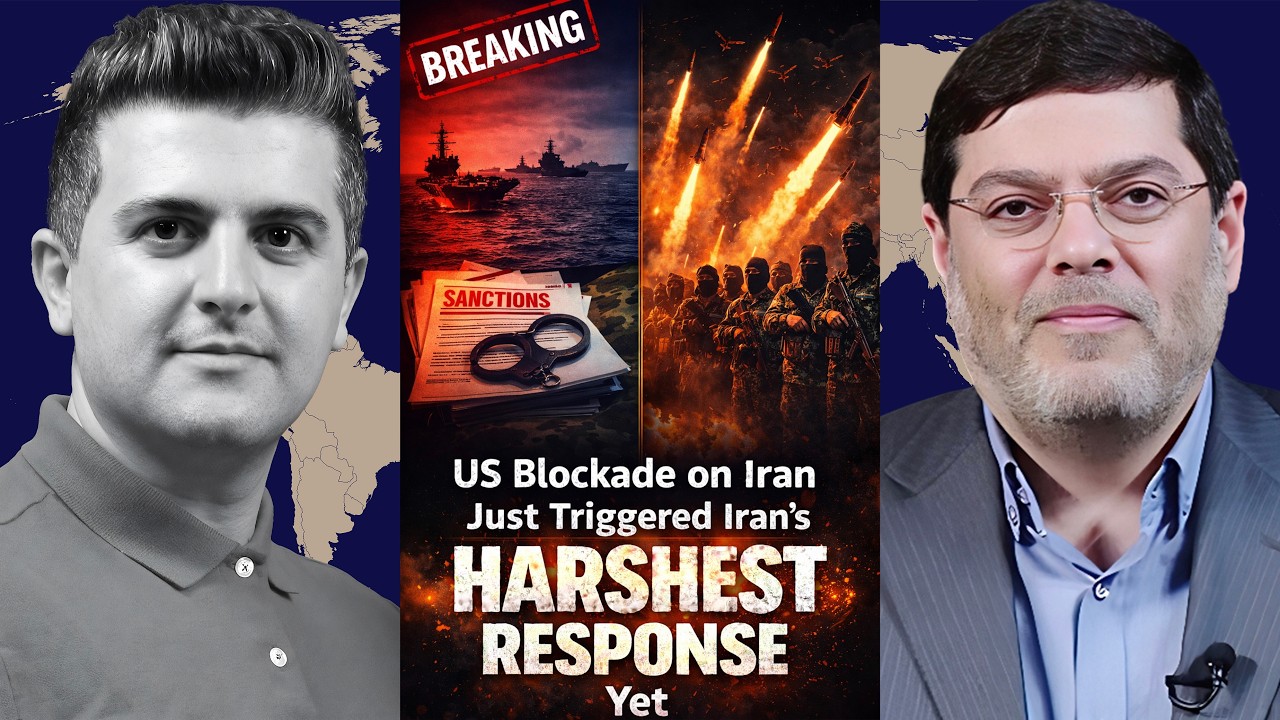
Seyed M. Marandi: US Blockade on Iran Just Triggered Iran’s HARSHEST Response Yet
"An Iranian professor details how US demands and an imposed blockade triggered Iran's harshest response, exposing American strategic missteps and the vulnerability of Gulf Arab states."
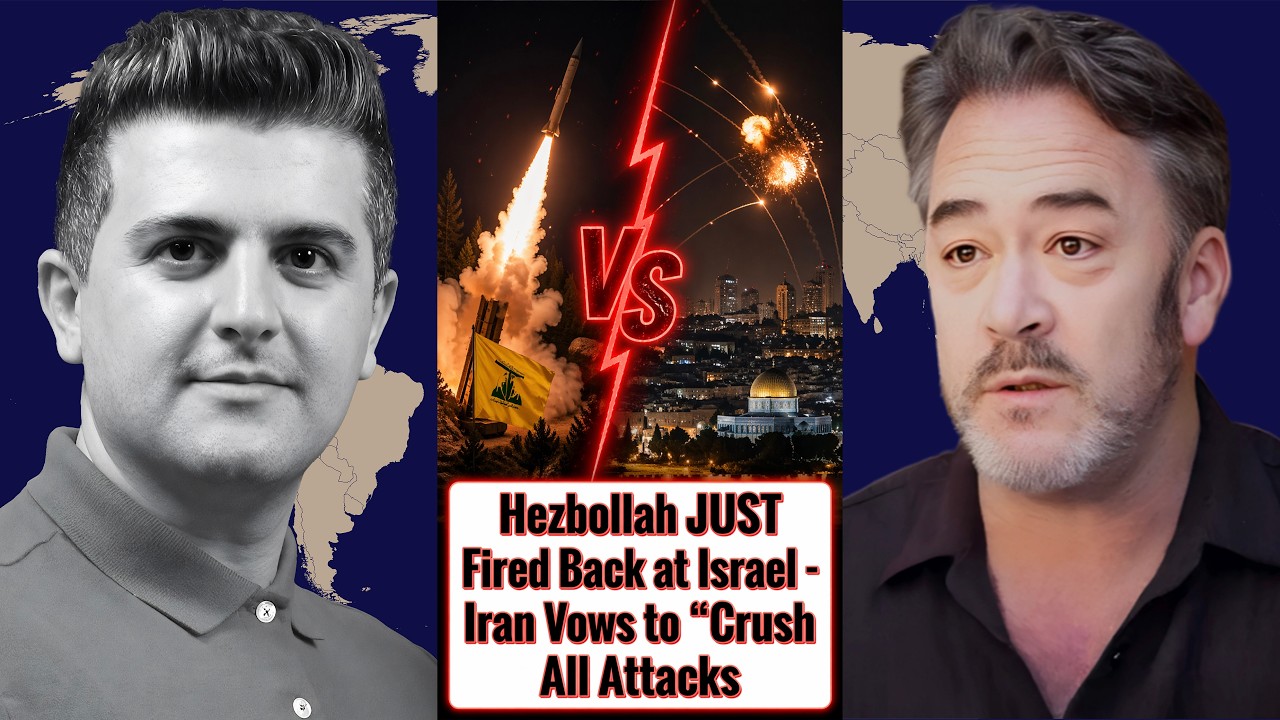
Patrick Henningsen: Hezbollah JUST Fired Back at Israel - Iran Vows to “Crush” All Attacks
"Patrick Henningsen argues that the US and Israel initiated an illegal war against Iran, driven by Trump's incompetence and Israeli influence, leading to an inevitable escalation with severe global economic repercussions."
Robby Soave GOES OFF On ANNOYING Liberal Black Woman Making Emotional Trump Deranged Arguments!
"The host dissects a heated foreign policy debate, arguing that 'left-wing' emotionalism and 'Trump derangement' prevent a rational understanding of US sanction strategies against Cuba and Iran."
BREAKING: U.S. Weighs INVADING Iran Oil Island; Gulf Energy Crisis Grows | TBN Israel
"As the US and Israel systematically dismantle Iran's military and leadership, the conflict escalates into an energy war, with the US considering ground invasion of Iran's critical Karag oil island to secure global oil routes."