
Patrick Henningsen: Iran’s CHILLING Message to Trump – Ships Turning Back Near Hormuz
YouTube · URbe64VhXkU
Quick Read
Summary
Takeaways
- ❖The US initiated recent diplomatic calls with Russia and a ceasefire with Iran, suggesting a reactive, rather than proactive, stance.
- ❖Russia and Iran share a common understanding of Western aggression and are strategically aligning their interests.
- ❖Iran possesses advanced missile technology, including mid-flight redirect capabilities, posing a significant threat to US naval assets, especially with AI-driven targeting data.
- ❖The withdrawal of a US carrier strike group (USS Gerald Ford) from the region indicates potential military overstretch or feasibility issues for a sustained campaign against Iran.
- ❖US economic indicators (e.g., GDP) are declining, making a prolonged military conflict politically unviable for the current administration.
- ❖Sanctions, while effective against Syria, are proving insufficient to cripple Iran due to its robust domestic industry, resilience, and overland alliances with countries like Iraq and Russia.
- ❖The US and Israel operate as a "fused" military actor, coordinating attacks and leveraging each other's actions for strategic advantage, often using US-focused conflicts as a distraction for Israeli actions in Lebanon and Palestine.
- ❖Iran has successfully "internationalized" the conflict, generating global economic pressure that is impacting the US and Europe.
- ❖The US political class, across both parties, lacks genuine anti-war sentiment and is increasingly out of touch with the public and geopolitical realities.
- ❖Trump's legacy is predicted to be the US president who lost control of the Middle East, akin to Anthony Eden's role in the decline of the British Empire.
Insights
1US Diplomatic Overtures Signal Panic, Not Strength
The speaker contends that the US initiated recent phone calls with Russia and a ceasefire with Iran, interpreting these actions as a sign of panic from the White House following a meeting between the Iranian Foreign Minister and Vladimir Putin. This suggests the US is reacting to, rather than controlling, the geopolitical narrative and events.
The most important question, Nima, is who initiated the call? ... I think the answer to both of those questions is the same. It's the United States. So, it's very important who initiated the call. And I think it was... a panic phone call from the White House after the meeting with Abbas Araghchi and Vladimir Putin in St. Petersburg.
2Iran's Advanced Missile Capabilities Threaten US Naval Power
Iran possesses high-altitude missiles capable of mid-flight redirection and hitting moving targets, likely naval vessels. Combined with Russia's satellite data and AI-driven analysis (similar to US 'shadow fleet' tracking), Iran can profile US destroyers and aircraft carriers, making them vulnerable the longer they remain in the region.
He said, you know, we have we have missiles high-altitude missiles that can redirect mid-flight and can change direction multiple times and hit moving targets. So, I'm sure he was referring to naval vessels in that sense. So, in the age of AI, that is just basically, Nima, a question of data. ... it can predict movement up to 95% probability.
3US Military Campaign Against Iran Faces Significant Hurdles
The US military's margin of error and strike window for an attack on Iran are diminishing due to a lack of forward staging facilities and the recall of a carrier strike group (USS Gerald Ford). This suggests a potential two-week 'hammer blow' campaign would be short, costly, and difficult to sustain, making a clear victory unlikely.
Their margin of error militarily is much less, and also their strike window would also be less. So, you're looking at a two-week campaign... The USS Gerald Ford was recalled this weekend or early this week back to Norfolk, Virginia.
4Sanctions Ineffective Against Resilient Iran, Unlike Syria
The speaker differentiates Iran from Syria, stating that sanctions and economic warfare tactics, while effective in collapsing the Syrian state over 12 years, will not work against Iran. Iran's resilience stems from its stronger domestic industry, robust institutions, and overland alliances with trading partners like Iraq and Russia.
They haven't worked against Russia. And but they did they did work against Syria. But it took it took 12 years... They're not going to get that result with Iran. Iran is more similar to Russia in this sense is that it's it's a much bigger, much more resilient... has more resilient institutions. It has a much more resilient domestic industry... And also, it has overland allies and trading partners, namely Iraq, Pakistan... Russia's not far away from Iran.
5US and Israel Operate as a Fused Military Entity
Contrary to Western public perception, the US and Israel are not independent actors but are 'absolutely fused together and working as one kind of effort,' coordinating military attacks on Iran and Lebanon. This deception allows the US to play a 'performative diplomatic game' while Israel leverages US-focused conflicts as a distraction.
US and Israel are joint partners. They're coordinating their military attacks on Iran. And the US is coordinating with Israel to to attack Lebanon. They're not independent actors not at all. ... this part of the deception of all this is to get the public in the West to separate the United States from Israel militarily when in fact they're absolutely fused together and working as one kind of effort.
6US Policies Inadvertently Empower Russia and Iran
The 'disastrous policy' of both the Biden and Trump administrations, particularly their aggressive stances, has inadvertently strengthened Russia and Iran. These nations are learning to be more capable, independent, and are improving their military-industrial complexes, leading to a new era of power for them.
But from the point of view of Russians and Iranians, they're just learning how capable they are and how can be you know, more powerful, how can they change their future. ... how they made Russia a superpower power it's even stronger than before it was it was before this war started in Ukraine. And Iran. I see the same thing happening to Iran.
Bottom Line
Global capital is rapidly shifting from West to East, particularly to Asia, as a direct consequence of the West's economic warfare tactics, such as the weaponization of the US dollar and sanctions.
This shift indicates a fundamental reordering of the global financial landscape, potentially diminishing the economic power of Western nations and bolstering the influence of Eastern economies like China, making BRICS nations more attractive.
Investors and businesses should re-evaluate their long-term strategies, considering increased investment and partnerships in Asian markets and economies less reliant on the US dollar, anticipating a multipolar economic future.
The US empire is 'destroying itself from within' by prioritizing propaganda and fictional narratives over reality, leading to a breakdown of its own systems, including financial instability within its military branches.
This internal decay suggests a systemic vulnerability that could accelerate the decline of US global hegemony, making its foreign policy less effective and its domestic stability precarious.
Governments and international organizations should prepare for a potentially less stable global order, where traditional US leadership is unreliable, fostering independent diplomatic and economic ties to mitigate risks associated with US internal crises.
Key Concepts
Pyrrhic Victory
A victory that comes at such a great cost that it is tantamount to a defeat. The speaker applies this to potential US military actions against Iran, arguing that even if the US 'wins' by destroying Iranian infrastructure, the economic and reputational costs would be so immense as to weaken the US strategically.
Lessons
- Monitor geopolitical developments in the Middle East and Eastern Europe closely, as the speaker predicts escalating conflicts and economic instability that could impact global markets and supply chains.
- Diversify investment portfolios and business partnerships, considering the predicted shift of global capital towards Eastern economies and the increasing resilience of nations like Russia and Iran against Western economic pressures.
- Critically evaluate mainstream media narratives on international conflicts, seeking out alternative analyses to gain a more comprehensive understanding of geopolitical realities and potential biases in reporting.
Notable Moments
Pete Hegseth, the US Secretary of Defense, struggled to articulate a coherent objective for the 'second round of war' against Iran, particularly after claiming Iran's nuclear facilities were already obliterated, exposing a narrative collapse.
This moment highlights the perceived intellectual and strategic bankruptcy within the Trump administration's foreign policy, where officials cannot logically defend their war aims, undermining public trust and revealing a disconnect between stated goals and military realities.
Barack Obama, the architect of the JCPOA, remained completely silent on the escalating conflict with Iran, not even issuing a tweet.
Obama's silence is interpreted as a significant indicator of a lack of genuine anti-war opposition within the Democratic establishment, suggesting a bipartisan consensus on aggressive foreign policy despite public perception or past diplomatic achievements.
Quotes
"The US started the war in Ukraine. That's the point. The US did, the EU did, NATO did. They started the war in Ukraine."
"When the Iranians and the Russians get together, they're in a very similar chess match. And their interests converge."
"Iran has done something that's to me extraordinary that I don't I don't know if anyone's been able to do this in a military conflict before. ... Iran has done this globally. That they brought the war to everybody in the world."
"Trump's legacy will be the US president that lost control of the Middle East and had to leave."
"The empire is destroying itself from within in order to preserve the propaganda perspective of these geopolitical theaters."
Q&A
Recent Questions
Related Episodes
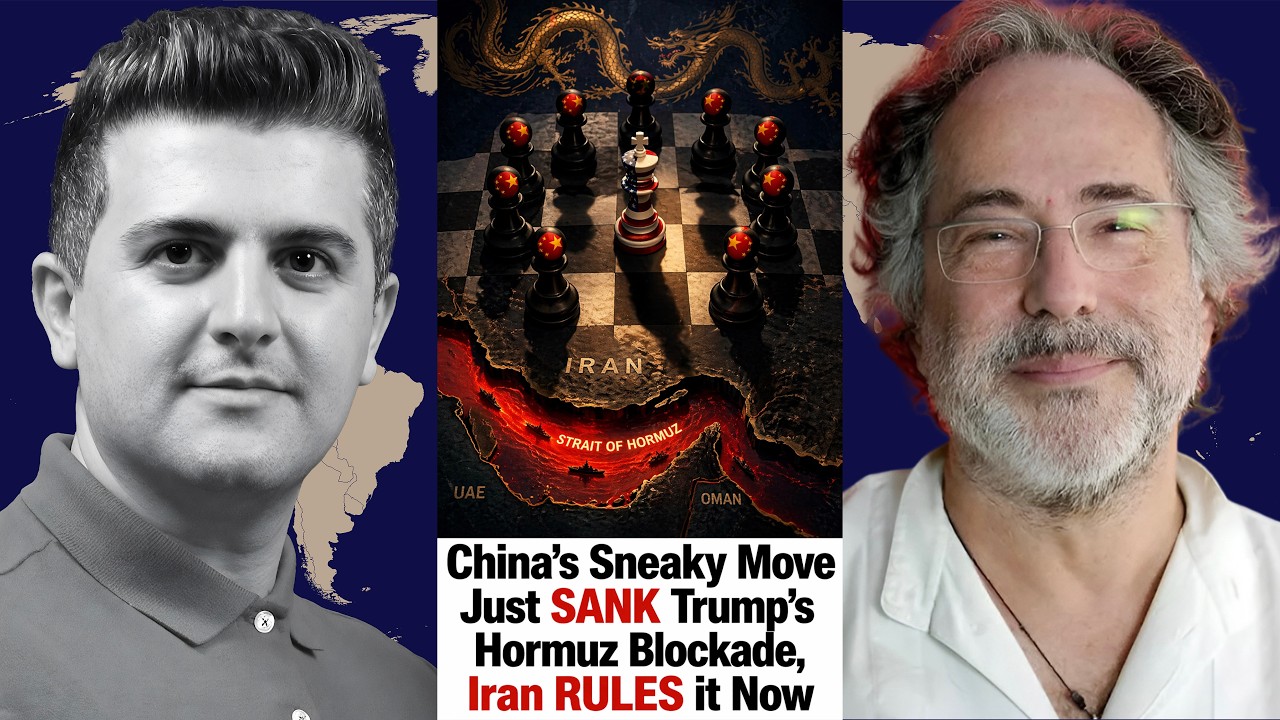
Pepe Escobar: “Total Failure”: Trump’s Blockade Just Backfired Disastrously
"Pepe Escobar argues that the US blockade against Iran, spearheaded by Donald Trump, has utterly failed and backfired, accelerating global economic chaos and challenging US geopolitical dominance."
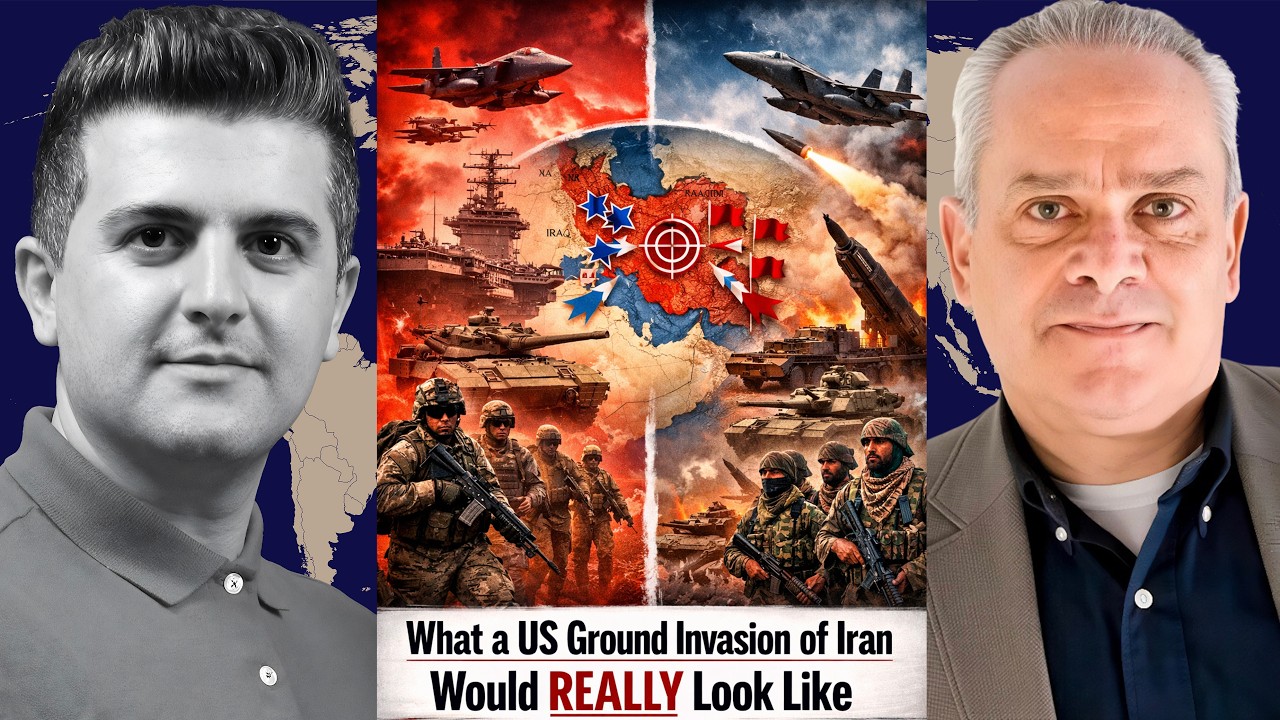
Col. Jacques Baud: What a US Ground Invasion of Iran Would REALLY Look Like
"Colonel Jacques Baud dissects the strategic futility of a US ground invasion of Iran, arguing that current troop levels are insufficient and such an action would backfire, exposing US allies and potentially leading to Iran's nuclearization."

Patrick Henningsen: Hezbollah JUST Fired Back at Israel - Iran Vows to “Crush” All Attacks
"Patrick Henningsen argues that the US and Israel initiated an illegal war against Iran, driven by Trump's incompetence and Israeli influence, leading to an inevitable escalation with severe global economic repercussions."

Iran Update: Israel’s Newest Bombing Campaign, the Oncoming War With China and How to Avoid It
"Colonel Wilerson reveals how the US and Israel are actively bombing China's strategic infrastructure in Iran, escalating a covert economic war that Beijing intends to win without direct military conflict by dismantling the dollar's global dominance."