BREAKING: U.S. Delays Iran Strike; Trump Claims Talks; Hormuz Crisis Deepens | TBN Israel
YouTube · Uiz_9R0ildQ
Quick Read
Summary
Takeaways
- ❖The US announced a 5-day postponement of strikes on Iranian energy infrastructure, citing 'good and productive talks' with Iran.
- ❖Iran's foreign ministry and parliamentary committee spokesman vehemently denied any negotiations, claiming a US 'defeat' and vowing the Strait of Hormuz would remain closed.
- ❖Israel was informed of the US-Iran contacts and continues its strikes against Iranian military, nuclear, and missile targets, including in Tehran, despite the US pause.
- ❖Analysts interpret Trump's move as a strategic 'poker game,' potentially aimed at influencing markets or preparing for a more focused military objective.
- ❖The US strategic objective appears to be shifting from toppling the Iranian regime to the more achievable goal of opening the Strait of Hormuz and taking control of Karag Island, which handles 90% of Iranian oil exports.
- ❖A significant US military force, including 4,500 sailors and marines, F-35s, and armored vehicles, is deploying to the region, indicating preparation for a potential Karag operation.
- ❖Trump's announcement caused immediate drops in global oil prices and a turnaround on the Tel Aviv stock exchange, suggesting a deliberate market manipulation aspect to his statements.
- ❖Iran is engaging in its own perception war, framing the US delay as a victory and a sign that Trump 'blinked first'.
Insights
1US Delays Strikes, Claims Talks; Iran Denies Everything
President Trump announced a 5-day delay in planned strikes on Iranian energy infrastructure, stating 'good and productive talks' with Iran had occurred. However, Iran's Foreign Ministry and parliamentary security committee spokesman immediately and forcefully denied any negotiations, calling Trump's statement a 'defeat' and asserting that the Strait of Hormuz would remain closed. This creates an 'open clash between two versions of reality,' suggesting back-channel communications that Iran is unwilling to publicly acknowledge.
Trump's announcement of a 5-day grace period and productive talks (, ). Iran's denial: 'We reject any negotiations. The United States has failed.' (, , ).
2Israel Continues Strikes Despite US Pause
Despite the US decision to postpone strikes, Israel continues its military campaign against Iranian targets. Israel was updated on the US-Iran contacts but maintains its operational tempo, using the '5 days' to strike regime, nuclear, and missile stockpiles. This highlights a strategic divergence where Israel prioritizes sustained pressure while the US explores diplomatic options.
Israel was updated on talks and expected to postpone strikes (), but 'the IDF is still attacking in Iran' (), striking military industries, manufacturing facilities, and targets in Tehran (, ).
3Strategic Shift: Hormuz and Karag Island as Primary Objectives
The US objective appears to have shifted from the challenging goal of regime change to the more achievable aim of opening the Strait of Hormuz and gaining control over Karag Island. Karag Island is critical as it handles approximately 90% of Iranian oil exports. Controlling this island would cut off the regime's primary financial lifeline, impacting its ability to fund proxies and internal repression, providing a 'clear image of victory' without a full invasion.
Reports indicate opening the strait has become the 'supreme objective' (, ). 'Whoever controls Karag strikes the regime's main oxygen pipeline.' ().
4Significant US Military Buildup in the Region
The United States is deploying substantial military assets to the Middle East, including 4,500 sailors and marines, F-35 aircraft, and armored landing vehicles, in addition to existing aircraft carriers and nuclear submarines. This buildup is framed not merely as a show of presence but as 'the building of an option,' ready to become an 'execution force' if diplomatic efforts fail, particularly around Karag and Hormuz.
US pouring 'significant forces' including 4,500 sailors and marines, landing teams, F-35s, and armored vehicles (, ). Pentagon accelerated deployment of additional units (, ).
5Trump's Market Manipulation and Perception War
Trump's announcement of talks immediately impacted global markets, causing oil prices to drop sharply and influencing stock exchanges. This suggests a deliberate strategy to 'negotiate with the market,' reducing pressure on the White House and American consumers, thereby increasing his maneuvering room. Simultaneously, Iran is engaged in its own perception war, framing the US delay as a sign that Trump 'blinked first' to project steadfastness to its public and proxies.
Trump 'managed to announce that the war was calming down, issue a dramatic threat, and then walk it back' (). Oil prices fell to $103 for Brent and $90 for crude (, ). Iran's denial aimed to 'preserve an image of standing firm' ().
Bottom Line
The US is potentially negotiating with an 'alternative or fragmented layer of rule' within Iran, rather than the official regime, explaining the stark contradiction in public statements.
This suggests a sophisticated, covert diplomatic strategy aiming to exploit internal divisions within Iran, rather than a straightforward negotiation with the known leadership. It implies a deeper, long-term play for internal change.
Intelligence agencies and geopolitical analysts should focus on identifying and understanding these potential 'alternative channels' and their influence within Iran, as they represent a non-traditional pathway for conflict resolution or regime transformation.
Israel has demonstrated the capability to expand its maritime campaign beyond the Persian Gulf, striking Iranian naval capabilities in areas like the Caspian Sea (Bandar Anazli).
This significantly broadens the potential theater of naval operations, indicating that Iran's naval assets are vulnerable even outside its traditional zones of influence. It complicates Iran's defensive strategy and reduces its ability to project power through its navy.
Nations concerned with Iranian maritime aggression could explore joint intelligence and operational strategies to counter Iranian naval presence across a wider geographic area, leveraging Israel's demonstrated long-range capabilities.
Key Concepts
Geopolitical Poker Game
Donald Trump is framed as an 'excellent poker player' using dramatic threats, last-minute delays, and conflicting public statements to surprise adversaries (Iran's Revolutionary Guards) and manipulate perceptions, both diplomatically and economically. The 5-day pause is presented as a strategic window to test Iran's willingness to concede or to prepare for a more targeted military action.
Division of Labor (US-Israel)
A clear operational dynamic exists where the United States explores political-military pressure and potential diplomatic solutions, while Israel continues active military operations against Iranian targets. This allows for simultaneous diplomatic maneuvering and sustained military pressure on the ground, reducing Iran's 'breathing room' without necessarily aligning on every public statement.
Center of Gravity (Military Strategy)
The Strait of Hormuz and Karag Island are identified as the 'center of gravity' for the entire campaign against Iran. Instead of a broad, difficult objective like regime change, focusing on these choke points offers a more achievable, faster, and visible victory by cutting off Iran's main oxygen pipeline (oil exports) and its ability to finance internal repression and proxies.
Lessons
- Monitor global oil prices and shipping routes in the Strait of Hormuz closely, as these are key indicators of the success or failure of US diplomatic and military pressure on Iran.
- Analyze official statements from the US and Iran for subtle cues and contradictions, recognizing that public denials from Iran may mask ongoing back-channel negotiations or internal power struggles.
- Observe the deployment and positioning of US military assets in the Middle East, particularly around the Persian Gulf, as this indicates the readiness for a potential military operation focused on Karag Island or the Strait of Hormuz.
- Track Israeli military actions against Iranian targets, as these provide insight into Israel's independent strategic objectives and its willingness to maintain pressure irrespective of US diplomatic pauses.
Notable Moments
Trump's dramatic 5-day postponement of strikes on Iran, announced just hours before an ultimatum was to expire, citing 'good and productive talks'.
This sudden reversal created immediate global confusion and market reaction, signaling a high-stakes strategic maneuver rather than a simple de-escalation.
Iran's immediate and forceful denial of any negotiations, directly contradicting Trump's claims and calling it a 'defeat' for the US.
This highlights a significant 'clash of realities' and suggests either covert talks Iran cannot publicly admit to, or a deliberate US attempt to create a perception of diplomatic progress.
The identification of the Strait of Hormuz and Karag Island as the 'supreme objective' for the US, shifting focus from regime change to a more achievable economic chokehold.
This redefines the potential scope and intensity of the conflict, focusing on a critical global energy bottleneck rather than a full-scale invasion, with profound implications for global trade and oil prices.
Quotes
"Donald Trump is an excellent poker player because it seems that the revolutionary guards in Iran were surprised as well."
"The battle continues. Another defeat for the devil. Trump and the United States have failed again."
"If the campaign ends in some arrangement and the Hormuz card remains in Iranian hands, the regime will see it as a permanent asset and not as an episode."
Q&A
Recent Questions
Related Episodes

BREAKING: Iran Threatens To END Talks; U.S. Vows Retaliation; Hezbollah Collapsing? | TBN Israel
"Iran is leveraging Hezbollah and the Strait of Hormuz to manipulate US negotiations, while Israel asserts its right to dismantle Hezbollah's eroding but still dangerous infrastructure in Lebanon, independent of international talks."

Bibi DEMANDS Ground Troops As Marines Rushed to Iran
"Benjamin Netanyahu is pushing for US ground troops in Iran, framing air strikes as insufficient, while the US rushes Marines to the region and struggles to secure the Strait of Hormuz against surprisingly capable Iranian defenses."
BREAKING: Israel BOMBS Major Iran Gas Site; Top Mullah ELIMINATED; Iran Vows VENGEACE | TBN Israel
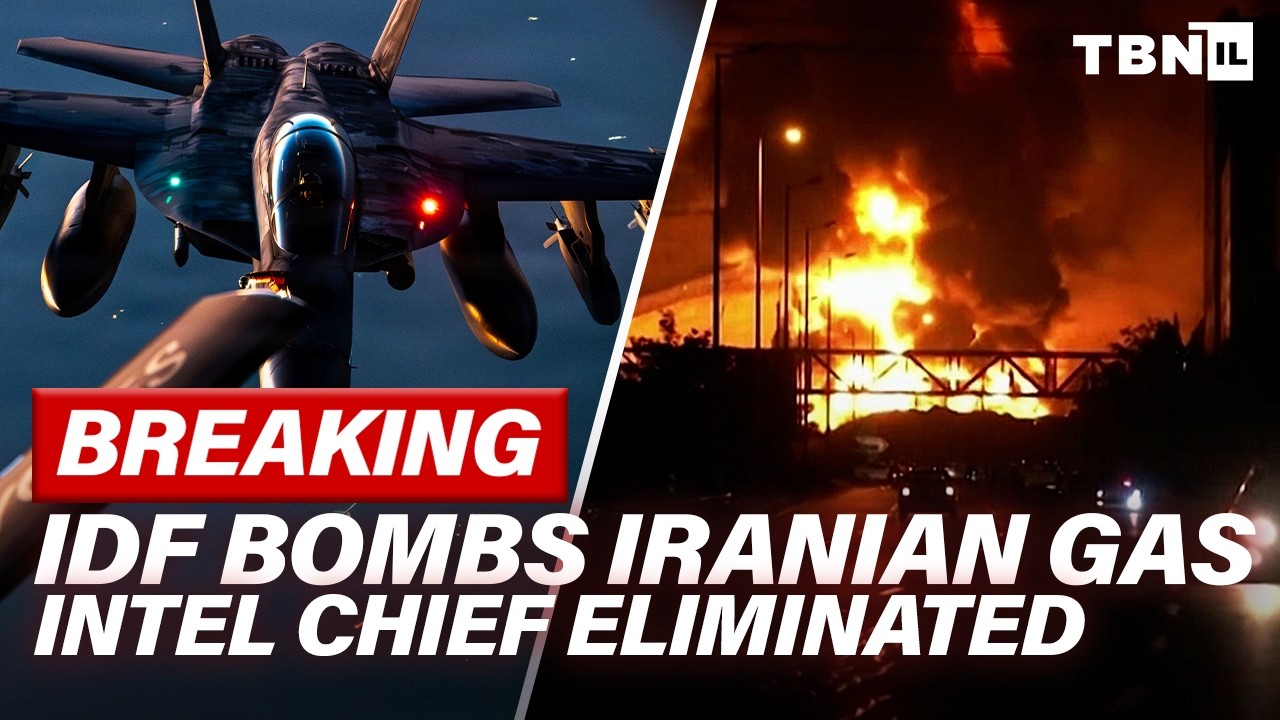
"Israel and the United States have escalated their 'Roaring Lion War' against Iran, striking its largest gas facilities, eliminating key intelligence and military figures, and disrupting missile production, while Iran threatens a broader energy war in the Gulf."

Pentagon Prepares For EXTENDED War With Iran
"This episode dissects the geopolitical maneuvers surrounding potential US-Iran conflict, revealing strategic leaks, Netanyahu's diplomatic sabotage playbook, and the true intent behind economic sanctions."