
DISTURBING Similarities to Nancy Guthrie’s Disappearance | Nancy Woodrum Case
YouTube · UjYoSMFiqRY
Quick Read
Summary
Takeaways
- ❖Nancy Woodrum, 62, disappeared from her Paso Robles home in May 2018, leaving a bloody scene, similar to the Nancy Guthrie case.
- ❖Both cases involved unknown male DNA at the crime scene, no CODIS match, and victims described as kind, older women living alone on sprawling, rural properties with poor cell service.
- ❖Investigators in the Woodrum case systematically ruled out 24 wedding guests, a disgruntled realtor, a contractor, and the victim's estranged son, all of whom initially appeared suspicious.
- ❖The breakthrough came from Google geofence analysis, which placed painter Carlo Fuentes' phone inside Woodrum's bedroom at the time of her disappearance.
- ❖Fuentes, who had no prior criminal record, confessed to sexually assaulting and suffocating Woodrum, driven by a fetish for older women, and then disposed of her body 60 miles away.
- ❖His confession was vital; without it, Detective Clint Cole believes Woodrum's remains would likely never have been found due to the remote disposal site.
- ❖The host urges anyone with information on the Nancy Guthrie case to contact the FBI, emphasizing the potential for a significant reward and the critical role of public tips.
Insights
1Eerie Parallels Between Woodrum and Guthrie Disappearances
The Nancy Woodrum and Nancy Guthrie cases share disturbing similarities: both older women disappeared from their beds on sprawling, rural properties, leaving behind blood, missing bedding, and unidentified male DNA. Neither case yielded a CODIS match, and both victims were described as kind, well-liked individuals. Their homes also had poor cell service, a detail that played a role in the Woodrum investigation.
Host Ashleigh Banfield repeatedly highlights these direct comparisons, noting the 'haunting similarities' (), 'unknown male DNA in both crime scenes' (), and 'pockets with very little cell service' ().
2Google Geofence Analysis as a Breakthrough Investigative Tool
When traditional leads exhausted, investigators in the Woodrum case utilized Google geofence analysis, a relatively new technique at the time. By creating a precise digital fence around Woodrum's bedroom for the time of her disappearance, they identified a device that shouldn't have been there, ultimately leading them to the perpetrator, Carlo Fuentes.
Detective Clint Cole explains how they built a 'little rectangular square around Nancy's property' () and narrowed the timeframe to find 'two phone hits... literally inside the wall' () of Nancy's studio, leading to Carlo Fuentes' identification.
3Perpetrator's Motive and Method in the Woodrum Case
Carlo Fuentes, a painter who worked for Woodrum, developed a sexual interest in her, interpreting her kindness as flirting. He entered her home, assaulted her, and, realizing she could identify him, suffocated her with a pillow. He then transported her body 60 miles to a remote location he knew from family outings, disposing of her remains.
Fuentes confessed to developing a 'sexual interest in Nancy' () and having a 'preference for older women' (). He admitted to letting himself in, punching her when she tried to call 911, sexually assaulting her, and then using a pillow to 'silence her and he suffocates her' (). He chose the disposal site because he 'had been there prior with his wife and child because it was a beautiful area with wild flowers' ().
4Challenges of Media Scrutiny and Police Secrecy
Detective Cole highlights the immense pressure from local media and social media during the Woodrum investigation. He emphasizes the strategic decision to keep details 'very close to the vest' to avoid tipping off the suspect, even if it meant enduring public criticism.
Cole states, 'the local news was enough. It was stressful enough just, you know, paying attention to social media. They're not doing anything. They're not saying anything.' () He adds, 'whatever we said publicly, we were telling the suspect' (), justifying their secrecy.
Bottom Line
The killer, Carlo Fuentes, turned his phone on while in Nancy Woodrum's bedroom to check messages from his wife, who was 'blowing up his phone' due to his infidelity. This brief connection to Woodrum's Wi-Fi was crucial for the geofence analysis.
This detail illustrates how seemingly minor actions or personal habits (like checking a phone during a crime) can leave critical digital footprints, inadvertently providing key evidence for investigators.
Law enforcement can leverage these digital breadcrumbs by understanding how various apps and phone settings interact with location services and Wi-Fi, even when a perpetrator attempts to hide their presence.
Carlo Fuentes stopped at a church for 20 minutes on his way to Nancy Woodrum's house to commit the murder, which police interpret as him 'wondering if he's going to go through with it' or 'asking for forgiveness in advance.'
This reveals a chilling psychological aspect of the perpetrator, suggesting a moment of internal conflict or a ritualistic attempt to absolve himself before committing a heinous act, rather than a purely impulsive crime.
Understanding such psychological patterns, even if not directly actionable, can contribute to profiling and potentially identifying individuals who exhibit similar pre-crime behaviors.
Lessons
- Understand that even if a phone is turned off, newer models may still transmit location data, and Google apps can track location regardless of phone type.
- Report any suspicious behavior, even if it seems minor or you're unsure. The Woodrum case shows how early observations (like a vehicle stopped in a strange place or a spouse's 'wondering') could have accelerated the investigation.
- If you have information regarding the Nancy Guthrie case or any other unsolved disappearance, contact authorities like the FBI (1-800-CALL-FBI), as even anonymous tips can be crucial, especially with significant reward money available.
Notable Moments
The initial discovery of Nancy Woodrum's disturbed bedroom, with blood on the carpet, wall, and a decorative pillow, immediately escalated the missing person call to a serious crime investigation.
This established the violent nature of her disappearance and provided critical forensic evidence, including the unknown male DNA.
Nancy Woodrum's estranged son, Chad, refused to provide a DNA sample, despite his mother being missing and the financial incentive of her $2 million property, making him a prime suspect.
This highlights how suspicious behavior, even without direct evidence, can significantly complicate investigations and consume valuable resources, as Chad was eventually cleared by DNA from discarded beer bottles.
Carlo Fuentes' confession was so complete and detailed that Detective Cole described it as 'Hoover Dam opens up and everything comes out,' leading police directly to Woodrum's body.
This illustrates the immense value of a confession in solving cases, especially when remains are disposed of in remote areas where they might otherwise never be found.
Detective Clint Cole, who solved the Woodrum case, also worked on the high-profile Kristen Smart cold case, demonstrating his expertise in complex disappearance investigations.
This adds credibility to his insights and the investigative techniques discussed, particularly his perspective on media scrutiny and strategic information control.
Quotes
"Two women, both disappeared from their beds, both absolutely mysterious."
"It revealed the presence of unknown male DNA. Same like in the Nancy Guthrie case, right? Unknown male DNA in Nancy Guthri's case, unknown male DNA in Nancy Woodram's case."
"He admitted that he had developed a sexual interest in Nancy, right? Said that he had a preference for older women."
"No, not out there. Uh we actually flew a helicopter along that roadway... and they couldn't see her. ... No, I don't believe we would have ever found Nancy's remain without [his confession]."
"Whatever we said publicly, we were telling the suspect... and so we kept everything very close because it's just the way, my opinion, things should be done."
Q&A
Recent Questions
Related Episodes

True-crime cases with recent developments | 48 Hours Full Episodes
"This episode reconstructs four complex true-crime cases, detailing the harrowing searches for missing persons, the challenges of prosecuting murders without bodies, and the enduring quest for justice in cold cases spanning decades."

The Root Beer Float Murder | Full Episode + Post Mortem
"A seemingly natural death of a husband is unmasked as a calculated poisoning plot by his wife and stepdaughter, revealed only after an unrelated burglary exposes a trail of incriminating text messages."
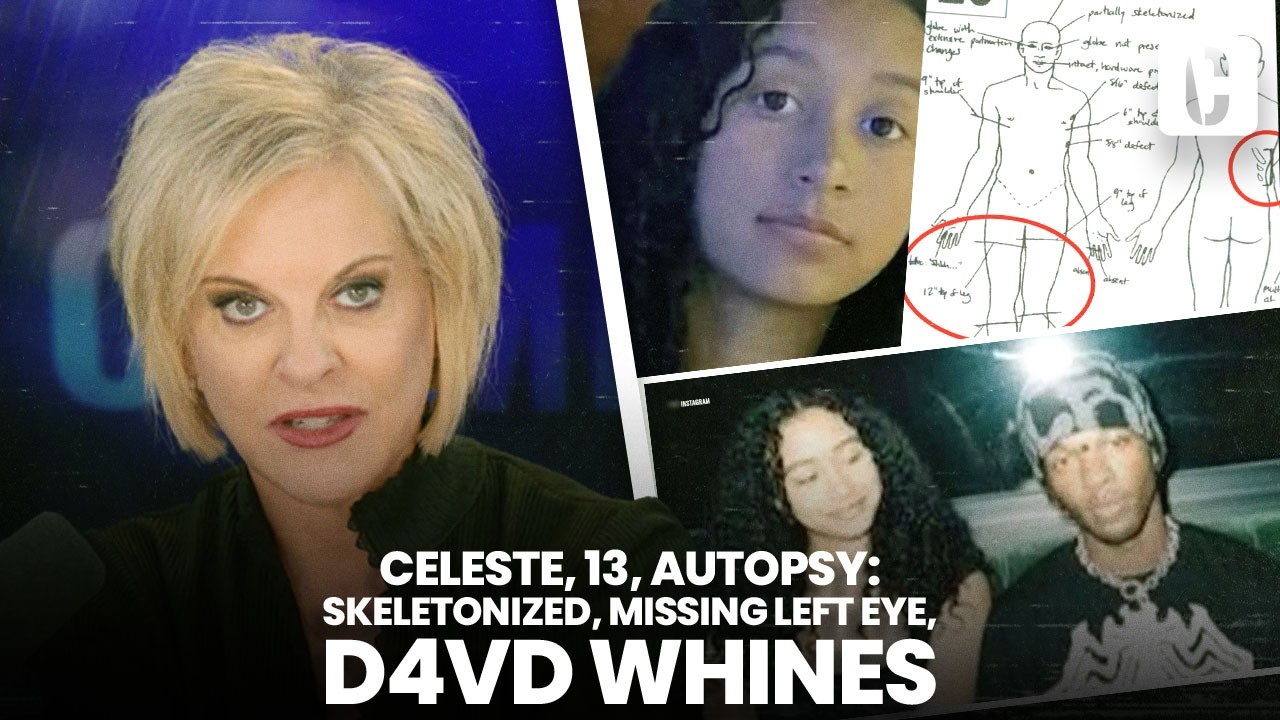
CELESTE, 13, AUTOPSY: SKELETONIZED, MISSING LEFT EYE, D4VD WHINES
"A 13-year-old girl, Celeste Rivas, was found partially skeletonized with a missing left eye, traces of meth and MDMA, and fatal stab wounds, while the accused musician David Anthony Burke (D4VD) complains about jail conditions."
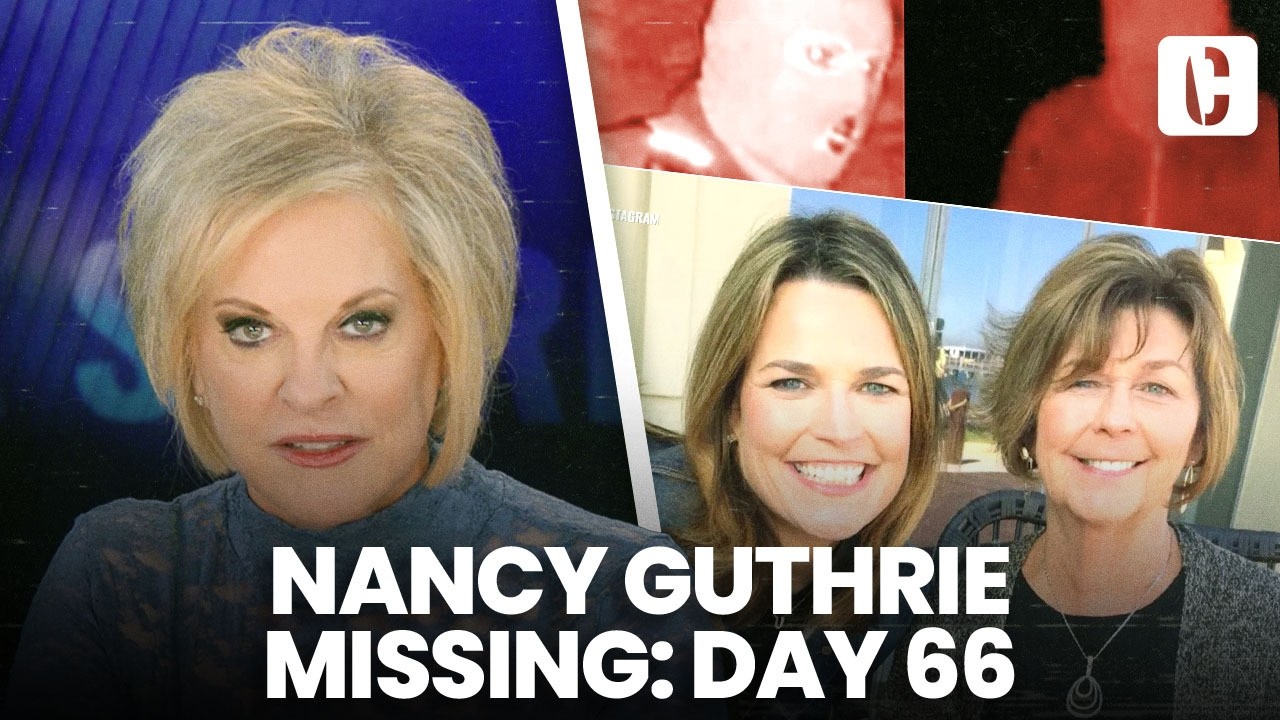
SAVANNAH GUTHRIE'S MOM MISSING: DAY 66
"On day 66 of Nancy Guthrie's disappearance, investigators grapple with two distinct sets of Bitcoin ransom notes, digital tracing challenges, and potential physical evidence like shoe coverings, as new, dubious claims emerge from a 'hyena' seeking payment for information."