Crude Capitalism: Trump's War on Iran Disrupts Global Systems, from Agriculture to Oil to Shipping
YouTube · VC0A0UYOjd0
Quick Read
Summary
Takeaways
- ❖Iran's blockage of the Strait of Hormuz has caused global price surges in oil, natural gas, and fertilizer.
- ❖Kharg Island is Iran's primary oil export terminal, handling 90% of its oil exports.
- ❖Gulf states are major global suppliers of basic chemicals (e.g., one-third of world's helium) and fertilizers (e.g., one-third of world's exports of urea).
- ❖The majority of Gulf oil and gas exports now flow eastward, primarily to China, which accounts for 25% of global oil imports.
- ❖China has strategically built up petroleum reserves, anticipating potential supply disruptions from the Gulf.
- ❖Dubai's Jebel Ali port is a critical global logistical hub, handling significant trade between China, Europe, and Africa, and serving as a frequent port for the US Navy.
- ❖The ongoing crisis threatens severe humanitarian impacts, including shortages of food and medical supplies, particularly in already famine-prone countries like Sudan and Yemen.
- ❖The long-term avoidance of the Red Sea by shippers after Houthi attacks suggests a similar fate could befall the Strait of Hormuz if the conflict persists.
Insights
1Kharg Island's Strategic Importance
Kharg Island serves as Iran's essential oil export terminal, from which approximately 90% of Iran's oil exports depart. Any attempt to seize or control this island represents a direct effort to choke Iran's primary economic lifeline and a critical point within the Strait of Hormuz.
Kharg Island is essential oil export terminal for Iran. About 90% of Iran's oil exports depart from that island.
2Gulf States' Diversified Economic Role Beyond Crude Oil
The Gulf states are no longer just 'oil spigots' but have significantly diversified their economies down the value chain. They are major manufacturers and exporters of basic chemicals, such as helium (supplying about a third of the world's helium, mostly from Qatar), and essential fertilizers like urea (Saudi Arabia is the world's largest exporter, Oman ranks fourth). These products are critical for industries ranging from semiconductors and medical equipment to global agriculture.
They're no longer simply exporters of crude oil. They are manufacturers of basic chemicals. They're manufacturers of basic fertilizers... About a third of the world's helium comes from the Gulf... About a third of the world's fertilizer exports come from the Gulf. Saudi Arabia, for instance, is the world's largest exporter of urea.
3Eastward Shift in Global Energy & Trade Flows
Over the last decade, the primary direction of oil and gas exports from the Gulf has shifted overwhelmingly eastward, particularly to China, which now accounts for around 25% of the world's oil imports. This reorientation means that disruptions in the Gulf disproportionately impact East Asian economies, which have become the center of global energy consumption.
The oil exports and gas exports from the region now flow overwhelmingly eastward, in particular to China. China takes around 1/4 of the world's oil imports. One in four every one in four barrels of oil go to China.
4China's Strategic Petroleum Reserve Build-Up
Recognizing its heavy reliance on Gulf energy, China has deliberately and rapidly accumulated strategic petroleum reserves over the past few years. This build-up is widely understood by experts as a pre-emptive measure to mitigate the impact of scenarios like the current strangling of oil supplies from the Gulf region.
What we've seen in the last few years is a very deliberate attempt by the Chinese government to build up their petroleum reserves, their strategic reserves. And I think most observers I think are fairly clear that this is precisely because they envisaged a scenario like the one that we're seeing today.
5Gulf as a Critical Global Logistical Hub
Beyond commodity exports, the Gulf has emerged as a key logistical hub for world trade. Jebel Ali port in Dubai is one of the largest container ports globally, playing a vital role in facilitating trade flows, including 60% of China's trade with Europe and Africa. It also serves as the most frequently visited port by the US Navy outside the US, highlighting its military-strategic importance.
Jebel Ali port in Dubai is one of the largest container ports in the world... 60% of China's trade with Europe and Asia goes through the United Arab Emirates... Jebel Ali is actually the most frequently visited port by the US Navy outside of the US.
6Humanitarian Crisis from Supply Chain Disruptions
The economic consequences of the war extend to a severe humanitarian crisis, particularly in the Global South. Disruptions to supply chains and potential shortages of essential commodities like fertilizers (critical for food production) and medical supplies are impacting already vulnerable countries such as Sudan, Yemen, and Afghanistan, where populations face famine or near-famine conditions.
Save the Children was already reporting last week that almost half a million children are being deprived of life-saving medical supplies because of the closure... we're not just talking about potential spikes in food prices... but also potentially key shortages in the commodities that are necessary to produce food like fertilizers... Many of the countries that are going to be most potentially impacted by this are already in conditions of famine or near famine states like, for example, Sudan as you mentioned, and of course, Yemen.
Bottom Line
The Gulf region supplies approximately one-third of the world's helium, a critical gas for semiconductor industries and medical equipment. Disruptions here cause global shortages beyond just energy.
This highlights a non-obvious vulnerability in high-tech manufacturing and healthcare supply chains, demonstrating that geopolitical conflicts in the Gulf have far-reaching implications for advanced industries globally.
Companies reliant on helium should diversify their sourcing strategies or explore alternative technologies to reduce dependence on a single, geopolitically volatile region.
The Red Sea's long-term avoidance by shippers after Houthi attacks in late 2023, even after immediate threats subside, suggests a similar enduring impact could affect the Strait of Hormuz.
Even if the current conflict is resolved, the perceived risk of future attacks could lead to fundamental, long-term shifts in global shipping routes, increasing costs and transit times permanently.
Logistics and shipping companies should develop contingency plans for permanent rerouting and explore investments in alternative trade corridors or land-based transport solutions to mitigate future 'risk premiums' on critical waterways.
Key Concepts
Choke Point Vulnerability
The concept that narrow maritime passages, like the Strait of Hormuz, are critical 'choke points' where disruptions can severely impact global trade, energy, and commodity flows, demonstrating the fragility of interconnected supply chains.
Diversified Economic Integration
The understanding that regions often stereotyped for a single commodity (e.g., Gulf states for oil) are deeply integrated into global value chains across multiple sectors (e.g., chemicals, fertilizers, logistics), meaning disruptions have far broader and less obvious consequences.
Lessons
- Businesses with supply chains reliant on Gulf-sourced chemicals (e.g., helium, ammonia) or fertilizers should immediately assess their inventory levels and explore alternative geographic sourcing to mitigate potential shortages and price spikes.
- Global logistics and shipping companies must re-evaluate their risk models for critical maritime choke points like the Strait of Hormuz, considering the potential for long-term route avoidance and increased insurance premiums, similar to the Red Sea.
- Policymakers and international aid organizations should prioritize pre-positioning humanitarian aid, especially food and medical supplies, in regions highly dependent on Gulf trade routes to avert escalating crises in vulnerable nations.
Quotes
"Weaponizing the Strait of Hormuz is not an act of aggression against one nation. It is economic terrorism against every nation. Every consumer. Every family that depends on affordable energy and food."
"Maybe me. Maybe me. Me and the Ayatollah, whoever the Ayatollah is, whoever the next Ayatollah..."
Q&A
Recent Questions
Related Episodes

Patrick Henningsen: Hezbollah JUST Fired Back at Israel - Iran Vows to “Crush” All Attacks
"Patrick Henningsen argues that the US and Israel initiated an illegal war against Iran, driven by Trump's incompetence and Israeli influence, leading to an inevitable escalation with severe global economic repercussions."
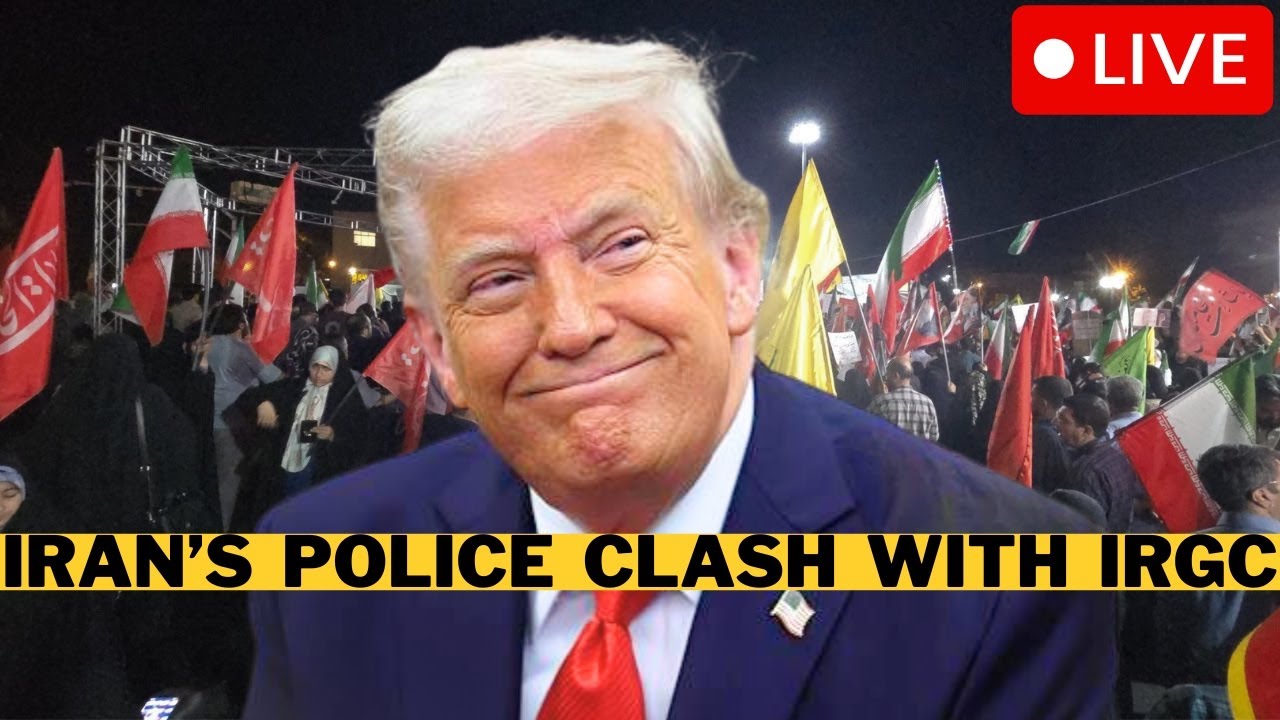
BREAKING: Protests ERUPT In Iran Over IRGC Surrendering To Trump - Infighting Clashes In Tehran
"Iran is experiencing severe internal infighting and protests as hardline IRGC elements clash with government figures over a perceived 'surrender' to the US, while mainstream Western media misrepresents the situation."
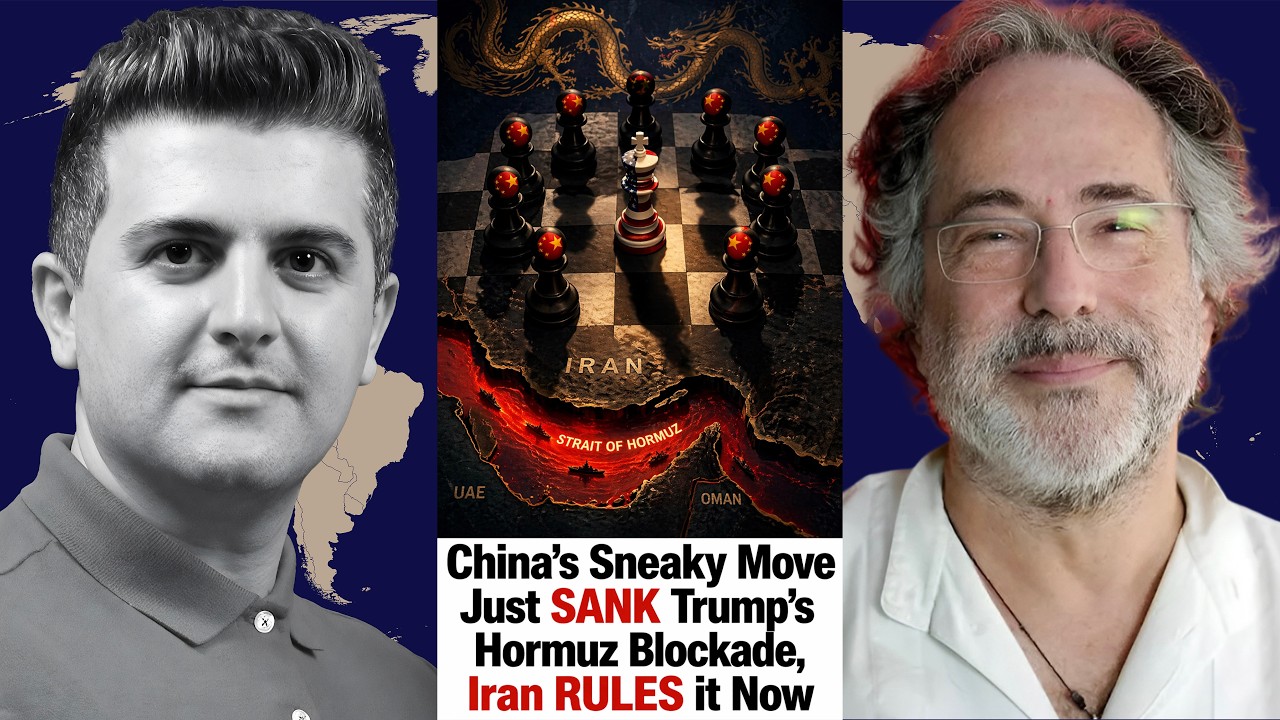
Pepe Escobar: “Total Failure”: Trump’s Blockade Just Backfired Disastrously
"Pepe Escobar argues that the US blockade against Iran, spearheaded by Donald Trump, has utterly failed and backfired, accelerating global economic chaos and challenging US geopolitical dominance."

🚨 TOTAL F*CKING CHECKMATE 😂😂😂
"The host argues that Trump's 'ceasefire' with Iran was a calculated '5D chess' move to orchestrate a global energy market reshuffle, while simultaneously lambasting 'woke' domestic policies and the 'freefall' of anti-Trump conservative figures."