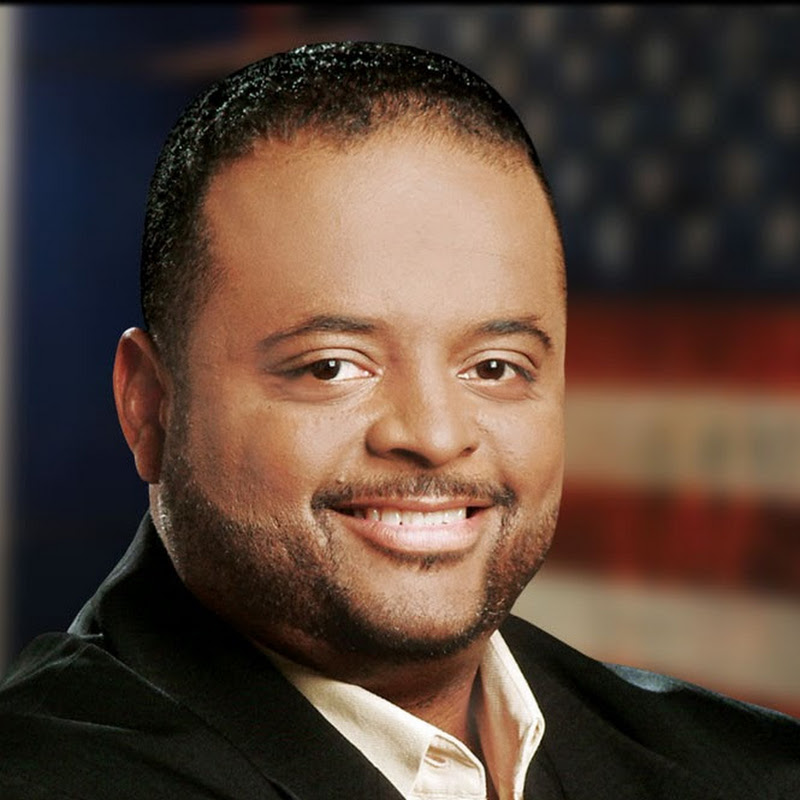
Afroman Wins Lawsuit. Government Shutdown Airpot Closures. Staten Island Black Angels |#TheBreakdown
YouTube · VE3fPrV0H6Q
Quick Read
Summary
Takeaways
- ❖Rapper Afroman won a defamation lawsuit against Adams County Sheriff deputies, affirming free speech rights for artists using personal experiences in their music.
- ❖A partial government shutdown caused TSA officers to miss paychecks, leading to airport security delays and potential closures of smaller airports.
- ❖Black-owned whiskey brand Uncle Nearest filed for Chapter 11 bankruptcy to restructure debt and is suing its lender for defamation and trade libel.
- ❖The USPS faces a potential cash shortage by 2027, urging Congress to raise borrowing limits and allow higher postage rates.
- ❖Philanthropist Mackenzie Scott donated $42 million to Elizabeth City State University, an HBCU, contributing to over $1.2 billion in HBCU donations.
- ❖The Alabama Supreme Court ruled police can demand physical ID during a stop if dissatisfied with verbal answers, raising concerns about officer overreach.
- ❖Tamar Lanier won ownership of 1850 daguerreotypes of her enslaved ancestors from Harvard, setting a precedent for descendants reclaiming historical artifacts.
- ❖The 'Black Angels' were hundreds of Black nurses who risked their lives treating tuberculosis patients on Staten Island from the 1930s-1960s, contributing significantly to modern medicine.
- ❖House Democrats used a discharge petition to force a vote on funding DHS agencies (like TSA, FEMA, Coast Guard) while withholding funds from ICE during a government shutdown.
Insights
1Afroman's Free Speech Victory Against Law Enforcement
Rapper Joseph Foreman, known as Afroman, won a defamation lawsuit filed by seven Adams County Sheriff deputies. The deputies sued over music videos where Afroman used home security footage to mock their raid of his home, featuring songs like 'Lemon Pound Cake' and calling deputies 'crooked cops.' Afroman's win is framed as a victory for America's freedom of speech, potentially empowering other artists to use their platforms to discuss experiences with law enforcement without legal repercussions.
Afroman used home security footage to mock a police raid, leading to a defamation lawsuit by deputies. He stated, 'America won. America still has freedom of speech. It's still for the people by the people.' The videos garnered over three million views.
2Government Shutdown Impacts TSA and Fuels Political Strategy
A partial government shutdown primarily affecting the Department of Homeland Security (DHS) caused 50,000 TSA officers to work without pay, leading to missed paychecks and a 10% absentee rate. This resulted in significant airport security delays and the potential closure of smaller airports. House Democrats, led by Hakeem Jeffries, launched a plan using a discharge petition to force a vote on funding most of DHS, including TSA, FEMA, and the Coast Guard, while explicitly withholding funds from ICE due to concerns about its conduct. This strategy aimed to put Republicans on the defensive regarding public safety and worker pay.
TSA officers missed their first full paycheck, and 10% did not show up to work on March 15th. Acting Deputy TSA Director Adam Stall warned of potential airport shutdowns. House Democratic leader Hakeem Jeffries stated their plan was to fund DHS agencies but not ICE, saying, 'Republicans have decided to force TSA agents to work without pay... rather than get ICE under control.'
3Uncle Nearest Whiskey's Legal Battle and Chapter 11 Reorganization
The black-owned whiskey brand Uncle Nearest, founded by Fawn and Keith Weaver, filed for Chapter 11 bankruptcy to restructure its debt and end a court-ordered receivership. Concurrently, the Weavers sued their lender, Farm Credit Mid-America, for defamation, alleging the bank engaged in a smear campaign by falsely suggesting insolvency and missing inventory. Fawn Weaver asserts the company's enterprise value is $529 million, refuting the bank's claims of defaulting on over $100 million in loans and overvaluing inventory.
Uncle Nearest filed for Chapter 11 bankruptcy. The Weavers sued Farm Credit Mid-America for defamation, trade libel, and tortious interference. Fawn Weaver stated the company's estimated enterprise value is $529 million against $102.6 million in disputed loan principal.
4The Overlooked Contributions of Staten Island's 'Black Angels'
Hundreds of Black nurses, known as the 'Black Angels,' worked at Staten Island's Sea View Hospital from the 1930s to the early 1960s, caring for patients during the deadly tuberculosis crisis. They stepped in when white nurses refused, risking their lives daily. These women were not only caregivers but also integral to the clinical trials that led to breakthroughs in tuberculosis treatment, administering medications and meticulously noting patient reactions, which was crucial for developing the vaccine.
Journalist Ariama Long's article highlights the 'Black Angels' who worked at Sea View Hospital. White nurses walked off the job in 1929, leading to Black women stepping up. Dr. Edward Robitzek, a researcher, stated that without the information provided by these nurses, the trials would not have been completed.
5Descendant Reclaims Ancestral Photos from Harvard, Setting Precedent
Tamar Lanier won ownership of two of the earliest known photographs of enslaved people in the United States from Harvard University after a six-year legal battle. The 1850 images depict her direct ancestors, Renty and Delia Taylor, commissioned by a Harvard biologist for racist pseudoscientific research. Lanier's victory is a landmark settlement, blazing a trail for other descendants to fight for what rightfully belongs to their families, challenging institutional ownership of artifacts tied to slavery.
Tamar Lanier, a direct descendant of Renty and Delia Taylor, challenged Harvard's ownership of the 1850 daguerreotypes. She stated, 'This landmark settlement is not just a victory for my family. It's a victory for every descendant who has carried the weight of a stolen past and dared to demand it back.'
Bottom Line
The Alabama Supreme Court's ruling, allowing police to demand physical ID if verbally unsatisfied, creates a legal loophole for potential racial profiling and arbitrary arrests, particularly impacting Black individuals who may be targeted by 911 calls based on race.
This ruling erodes individual rights against unreasonable searches and seizures, empowering officers to escalate encounters based on subjective dissatisfaction rather than probable cause, making it harder for individuals to assert their rights without facing arrest.
Advocacy groups and legal organizations can use this ruling to highlight systemic issues in policing and push for legislative changes or further legal challenges to protect civil liberties and prevent discriminatory practices.
The Democratic strategy of using a discharge petition to selectively fund government agencies (TSA, FEMA) while defunding ICE during a shutdown demonstrates a refined approach to political leverage, forcing Republicans to publicly choose between popular services and controversial immigration enforcement.
This tactic shifts the narrative and political pressure, making it difficult for the opposing party to blame Democrats for service disruptions when a clear, partial funding solution is on the table. It highlights the internal power dynamics and legislative tools available to minority parties.
Other political groups can analyze this strategy for future legislative battles, identifying key public services that can be used as leverage points to advance specific policy agendas or expose ideological divides within opposing parties.
Lessons
- Understand your rights regarding identification during police encounters, especially in light of rulings like Alabama's, and know when to seek legal counsel.
- Support black-owned businesses like Uncle Nearest, recognizing the unique financial and legal challenges they may face, and follow their legal battles to understand broader systemic issues.
- Advocate for historical recognition and repatriation of artifacts or records related to enslaved ancestors, drawing inspiration from Tamar Lanier's successful case against Harvard.
- Engage with political processes by contacting representatives to express views on government funding, particularly concerning essential services like TSA and controversial agencies like ICE.
Quotes
"I didn't win. America won. America still has freedom of speech. It's still for the people by the people."
"Without that information, they never would have finished the trials and never would have come up with vaccine."
"This landmark settlement is not just a victory for my family. It's a victory for every descendant who has carried the weight of a stolen past and dared to demand it back."
"We can fund TSA, fund the Coast Guard, fund FEMA, fund our cyber security professionals, or continue to allow ICE to brutalize and in some cases kill American citizens or to violently target law-abiding immigrant families."
"But he knew how to wield power. Correct. And he was very powerful and very effective and he would marshall those who had bigger voices, right? But what he did behind the scenes is what ultimately put wins on the books."
Q&A
Recent Questions
Related Episodes

Trump Indictment FALLS APART INSTANTLY?!?!
"This episode dissects three controversial legal actions by the Department of Justice and FBI, revealing patterns of perceived politicization, questionable legal theories, and potential incompetence within federal agencies."

The Afroman Trial - Part 1- Defamation and redefining the Streisand effect?
"Legal analyst Emily D. Baker dissects the Afroman defamation trial, revealing questionable judicial conduct, flawed plaintiff strategies, and the redefinition of public figure free speech through viral 'diss tracks'."
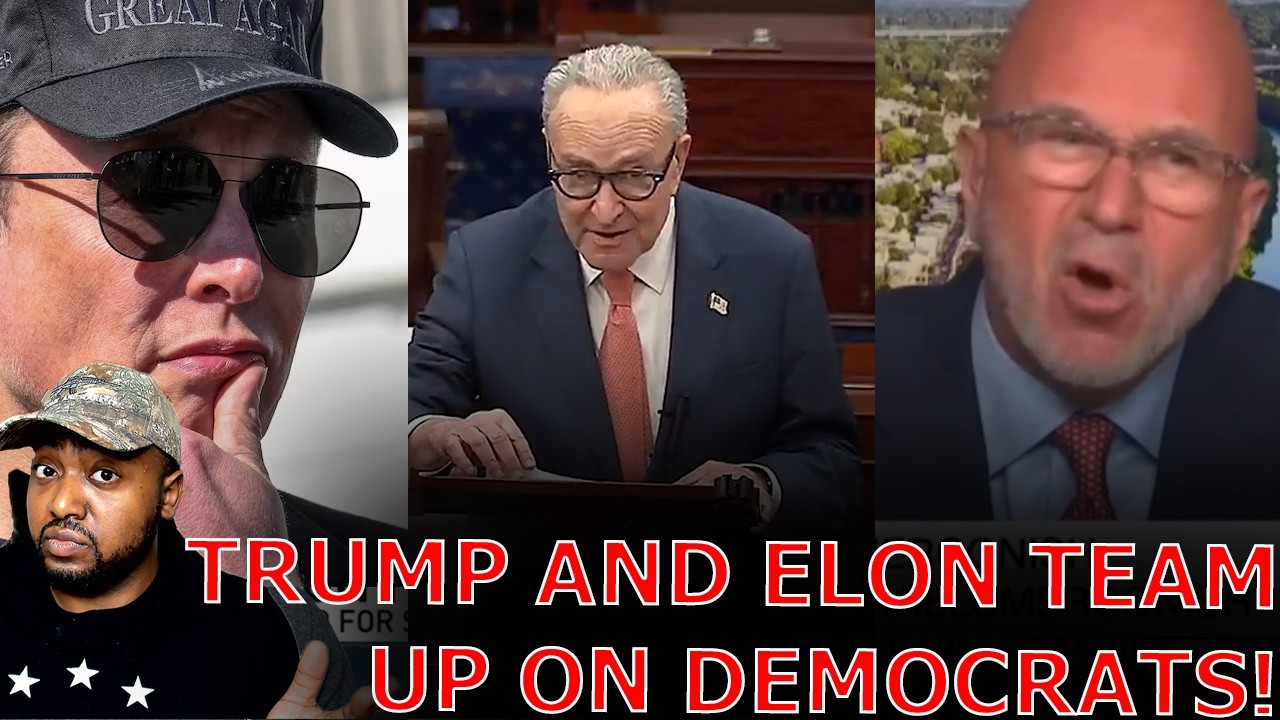
Liberal Media TURNS AGAINST Democrats As Stunt BACKFIRES After Trump And Elon Musk Pull Chess Move!
"The host argues that Democrats' government shutdown strategy, aimed at defunding ICE and virtue signaling, backfired as airport chaos mounted, prompting counter-moves from Trump and Elon Musk, and even criticism from liberal media outlets."
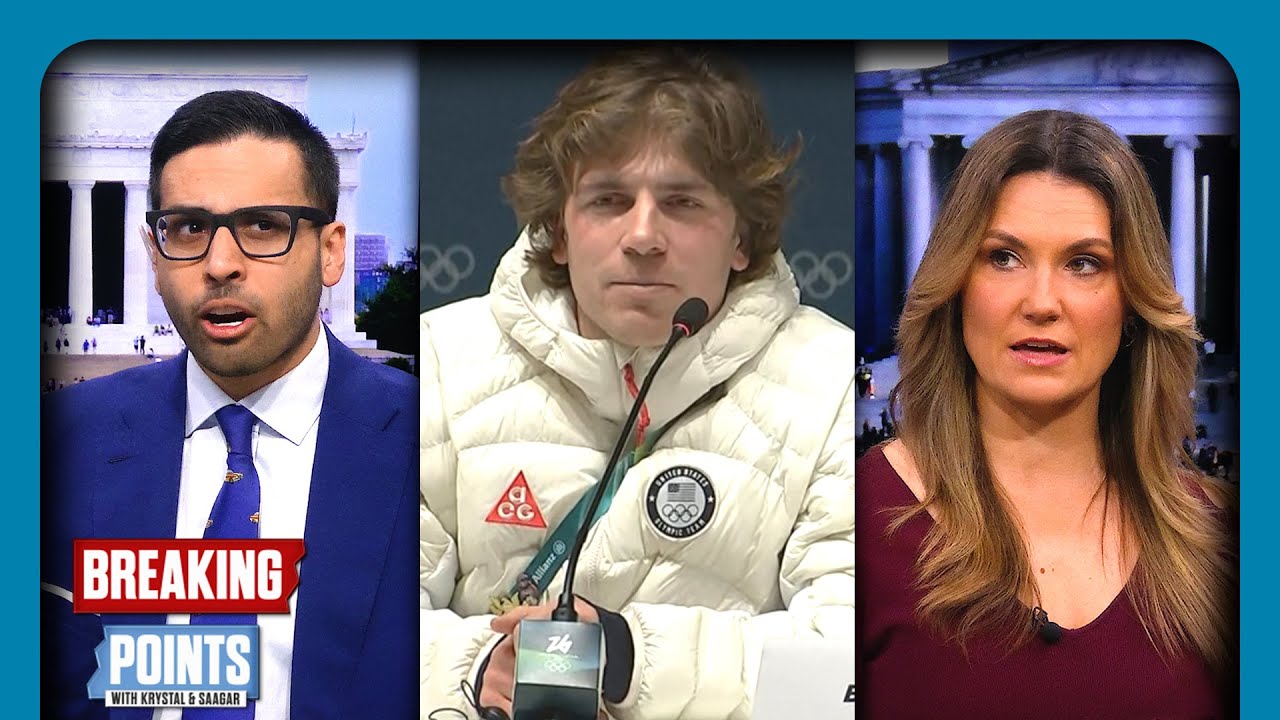
Krystal And Saagar REACT Olympic Athletes Trash America
"Krystal and Saagar dissect the right-wing outrage over American Olympic athletes expressing mild criticism of the US, arguing it exposes a 'fragility' in those demanding unquestioning patriotism."