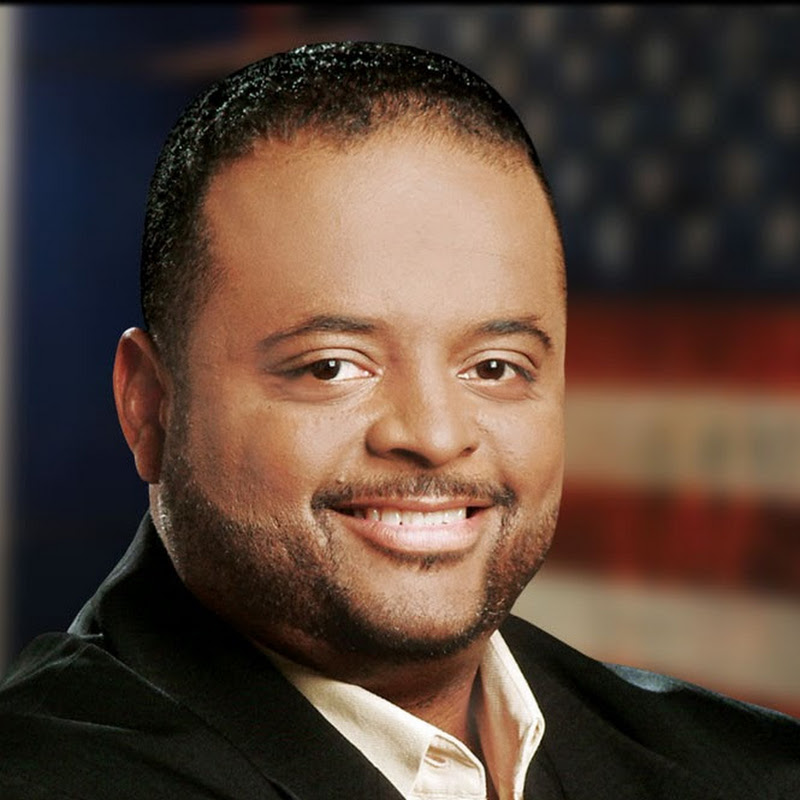
SAVE Act Vote Threatens Voting Rights. Bondi Deflects on Epstein. Black Unemployment Still Higher
YouTube · VKC78zZf1XU
Quick Read
Summary
Takeaways
- ❖The proposed 'SAVE Act' is framed as a voter suppression tactic, requiring birth certificates or passports for voting, which would disproportionately affect marginalized groups.
- ❖Official jobs reports for the past year were significantly downgraded, showing an average of only 15,000 jobs created monthly, with Black unemployment remaining at 7.2%.
- ❖Attorney General Pam Bondi's testimony before the House Oversight Committee was characterized by deflection and refusal to answer direct questions about DOJ actions and the Epstein case.
- ❖Congressional Black Caucus and civil rights leaders assert that the Trump administration's policies are devastating to Black America across civil rights, voting rights, and economic justice.
- ❖Black faith leaders and community organizers are urged to implement strategic, localized voter education and mobilization efforts, focusing on specific precincts and elections.
- ❖White evangelicals show strong support for Donald Trump, contrasting sharply with Black Protestants who overwhelmingly view his ethics negatively.
Insights
1The 'SAVE Act' as a Voter Suppression Mechanism
Republicans are advancing the 'SAVE Act' in the US House, which mandates proof of US citizenship (passport or birth certificate presented in person) to vote. This measure would eliminate convenient voting options like mail-in or online voting for over 90% of Americans and disproportionately impact 140 million Americans without passports and 69 million married women whose birth certificates may not reflect their legal names. Virginia Congressman Don Beyer and the host frame this as a modern-day poll tax designed to limit voter participation, especially among rural communities and people of color.
The bill requires proof of US citizenship via passport or birth certificate in person; 140 million Americans lack passports; 69 million married women lack updated birth certificates. Congressman Don Beyer's speech on the House floor.
2Dismal Economic Performance and Disproportionate Black Unemployment
The latest jobs report revealed a significant downgrade in job creation for the previous year, with only about 15,000 jobs added per month on average, totaling 180,000 jobs for the entire year. This figure is described as 'very low.' While January saw 130,000 new jobs, these were primarily in the healthcare and social services sectors, not the manufacturing jobs the administration claimed to prioritize. The overall Black unemployment rate stands at 7.2%, with Black men at 7.3%, significantly higher than the national average of 4.3%.
Morgan Harper, Director of Policy and Advocacy at the American Economic Liberties Project, cited revised data showing 15,000 jobs/month average last year, 130,000 jobs in January, and Black unemployment at 7.2% (Black men 7.3%) vs. national 4.3%.
3Attorney General Pam Bondi's Deflection and Alleged DOJ Corruption
During a House Oversight Committee hearing, Attorney General Pam Bondi repeatedly deflected questions, particularly regarding her involvement in the Jeffrey Epstein case and the Department of Justice's (DOJ) alleged 'weaponization' against journalists and political opponents. Representative Jasmine Crockett accused Bondi of prioritizing political prosecutions over prosecuting pedophiles and misusing taxpayer resources. Congressman Matt Gaetz highlighted the DOJ's hiring of a January 6th participant, Jared Weise, who was pardoned by Trump despite being indicted for assaulting police officers, questioning the DOJ's commitment to law enforcement integrity.
Rep. Jasmine Crockett's questioning of Pam Bondi regarding Epstein files, DOJ arrests of journalists (Don Lemon, Georgia Fort), and dismissed cases against political figures. Rep. Matt Gaetz's questioning about Jared Weise's hiring and pardon.
4Call for Strategic, Micro-Targeted Black Political Mobilization
Roland Martin and Reverend Dr. Frederick Douglas Haynes III advocate for a shift from general political discussions to highly organized, micro-targeted voter education and mobilization within Black communities. They emphasize leveraging existing organizational structures like D9 fraternities/sororities, Prince Hall Masons, Eastern Star, and churches to conduct local town halls, precinct-level voter outreach, and provide logistical support for voting. The goal is to build political power by focusing on specific elections (e.g., school board, DA, city council, state legislature) and connecting policy impacts directly to voters' lives.
Discussion between Roland Martin and Eugene Craig, and later with Rev. Dr. Frederick Douglas Haynes III, emphasizing local organizing, precinct-level data, and specific election targeting. Rev. Haynes' quote: 'We got to build power and we got to battle.'
5Contrasting Views on Trump's Ethics Among Christian Denominations
A Pew Research study reveals a stark contrast in how white evangelicals and Black Protestants view Donald Trump's ethics. While 40% of white evangelicals express extreme or very high confidence in Trump's ethical conduct, only 7% of Black Protestants share this view. This disparity highlights a fundamental difference in how faith influences political alignment, with Black Protestants largely rejecting the Republican agenda due to its perceived 'anti-Jesus' policies and hypocrisy.
Pew Research study cited by Roland Martin and Eugene Craig: 40% of white evangelicals confident in Trump's ethics vs. 7% of Black Protestants.
Bottom Line
The Republican strategy of voter suppression, exemplified by the 'SAVE Act,' is a direct response to their inability to win elections based on policy and popular support, indicating a perceived weakness rather than strength.
This suggests that strong, organized voter turnout can overcome these legislative barriers, as the measures are designed to shrink the voting population to secure narrow victories.
Democrats and civil rights organizations can frame these legislative efforts as an admission of political weakness, motivating increased voter registration and turnout by highlighting the direct threat to democratic participation.
The current political discourse often focuses on 'resistance' and 'grievances' rather than articulating a clear, positive vision for the future, which can lead to voter fatigue and disengagement.
Effective political movements need to 'write the vision to make it plain,' offering concrete policy proposals and a compelling future narrative rooted in 'love and purpose' to inspire sustained action.
Leaders should develop and communicate specific, actionable policy platforms (e.g., 'Elect me, your healthcare is coming back') that directly address voter concerns and provide a clear reason for engagement beyond opposing the 'other side.'
Lessons
- Engage in local, micro-targeted voter education and mobilization within your community, leveraging existing organizational structures like churches and civic groups.
- Identify and support candidates for local, state, and federal offices who articulate a clear, positive vision and concrete policy plans, rather than just opposing the 'other side.'
- Familiarize yourself with your state's primary election dates and voter registration deadlines, and actively encourage early voting to counteract potential voter suppression tactics.
Strategic Grassroots Political Mobilization for Black Communities
**Educate and Inform Locally:** Organize town halls and discussions within churches, D9 organizations, and other community groups to explain public policy impacts (e.g., City Hall 101, County Government 101, School District 101) and connect them to voting.
**Target Precinct-Level Engagement:** Utilize church membership rosters and local election data to identify registered voters in specific precincts. Conduct door-to-door outreach to ensure people understand voting locations, deadlines, and the importance of their vote.
**Provide Voting Logistics:** Organize transportation (cars, vans) for community members to polling places, especially during early voting and on election day, to overcome barriers like reduced polling sites or travel distances.
**Develop a Long-Term Electoral Strategy:** Move beyond single election cycles. Identify specific target seats at all levels (school board, DA, city council, state legislature, Congress) and groom future leaders accountable to the community, planning for elections years in advance (e.g., 2027, 2028, 2030).
Notable Moments
Congressman Matt Gaetz confronts Attorney General Pam Bondi about the DOJ hiring Jared Weise, a January 6th participant pardoned by Trump, who was indicted for assaulting police officers.
This exchange highlights alleged hypocrisy within the DOJ under the Trump administration, raising questions about its commitment to law enforcement and its handling of political allies.
Reverend Dr. Frederick Douglas Haynes III and Roland Martin advocate for a 'build and battle' approach, emphasizing the need for Black communities to strategically build political power while battling voter suppression.
This frames political engagement as a continuous, dual effort of constructive community building and aggressive defense against systemic obstacles, moving beyond reactive protest to proactive power generation.
Quotes
"The Save Act is a modern-day poll tax because every ID that you would have to use to register and to vote with, maybe one exception, costs money."
"Donald Trump once asked Black America the question, 'What the hell do you have to lose?' The answer is everything under his administration."
"If all you do is resist and you just rehearse constantly a litany of the offenses of the other people, don't know where you are. In fact, if you're not careful, you'll actually be continuing to lift up the adversarial persons and nobody will know your own strength, what you stand for. So we have to flip that because the Bible says you got to write the vision to make it plain. People don't run with resistance, they run with vision."
"Authoritarianism lives on lies. So one of the greatest thing you can do in a time of authoritarianism and neo-fascism is tell the truth. Number two, they live on division. So one of the greatest things you can do is unify people because that scares them. Number three, they live on hate. But they are afraid of people unified in a transformative love that is seeking to build a beloved community."
Q&A
Recent Questions
Related Episodes

Trump RUSHES Election Scheme as Midterms HAUNT HIM
"The hosts and guest expose the SAVE Act as a deceptive voter suppression tactic, drawing a stark contrast between the protection of gun rights and the erosion of voting rights."

All Roads Lead To the South: Nat’l Day Of Action For Voting Rights | Mass Rally | Montgomery, AL
"A mass rally in Montgomery, Alabama, ignites 'Freedom Summer 2026' to combat the Supreme Court's decimation of Black political power and demand unprecedented voter mobilization across the South."
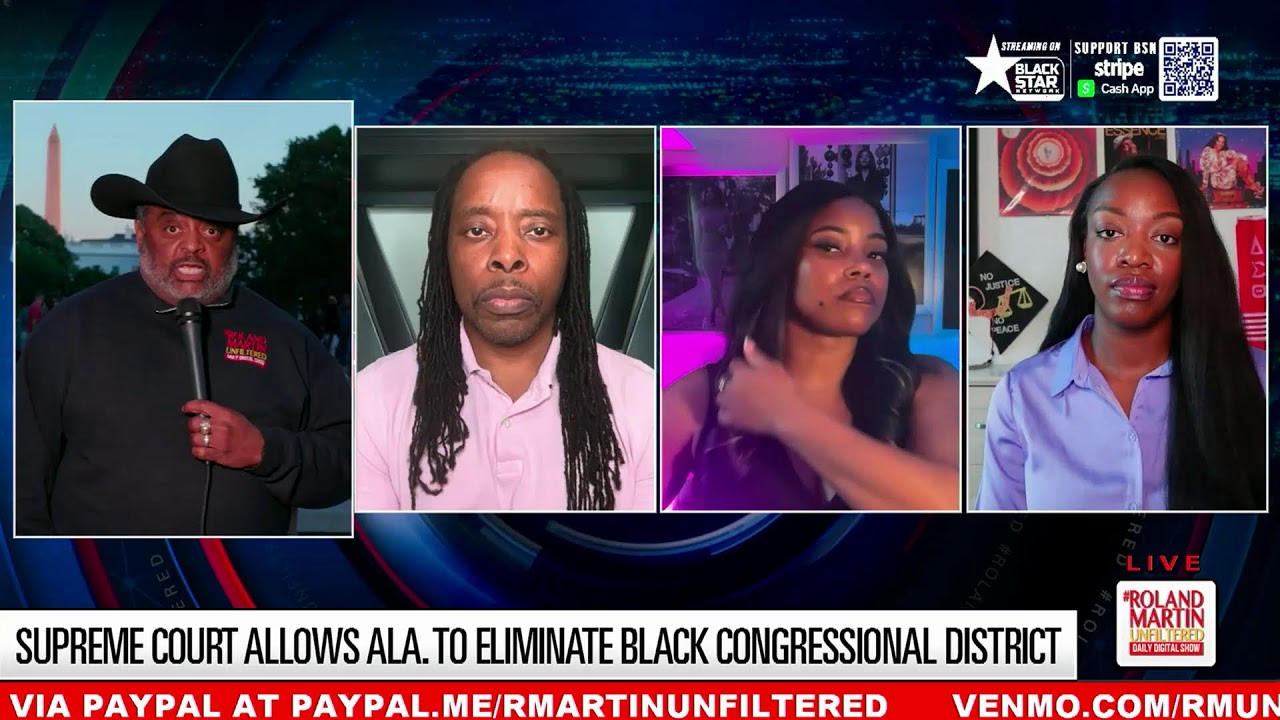
Moral Monday at BLM Plaza. Cleo Fields Sounds Alarm on Louisiana & Gary Chambers Pushes Turnout
"Activists and faith leaders gathered at Moral Monday to denounce 'policy violence' in various forms, from war and budget cuts to voter suppression and healthcare denial, urging sustained mobilization against a 'hijacked' democracy."
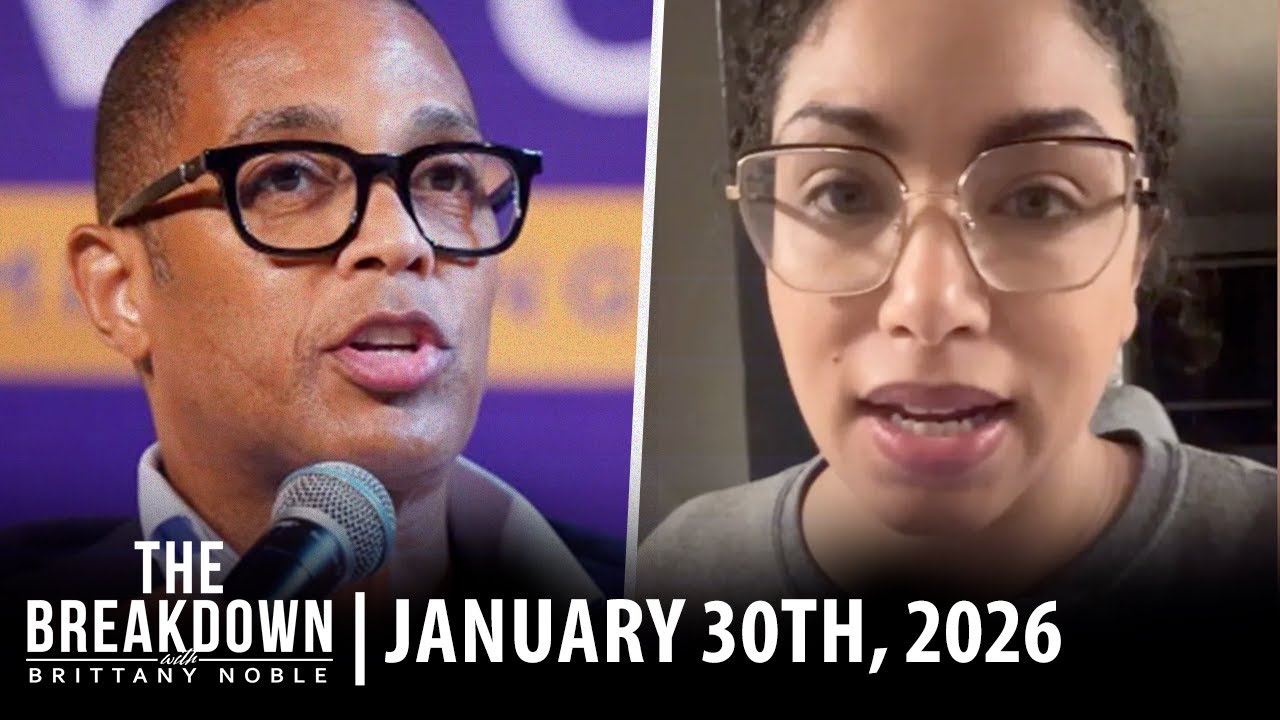
rump’s DOJ arrests journalists Don Lemon, Georgia Fort
"Federal agents arrested prominent journalists Don Lemon and Georgia Fort for covering a church protest, sparking widespread condemnation and raising critical questions about First Amendment rights and the weaponization of the Justice Department."