SCOTUS BETRAYS AMERICA, Rules There IS NO ELECTION DAY | Timcast IRL
YouTube · VaIlkvTWXVI
Quick Read
Summary
Takeaways
- ❖The Supreme Court ruled there is no specific deadline set by Congress for when a ballot can be cast or received, allowing ballots to be counted after Election Day if postmarked by that day (00:00:10).
- ❖Justice Amy Coney Barrett's majority opinion is interpreted as effectively eliminating 'Election Day' as a definitive conclusion for elections, despite existing federal law (2 USC 7) (00:00:32).
- ❖The host argues this ruling enables states to indefinitely extend ballot counting, leading to prolonged uncertainty and potential for 'legal fraud' (00:02:55).
- ❖Justice Alito's dissent highlighted that mail-in ballots can be recalled via USPS, creating a 'grace period' for voters that in-person voters do not have (00:03:09, 00:12:52).
- ❖The host suggests the ruling could lead to states refusing to seat elected Republicans by claiming elections are unconcluded (00:01:42, 00:22:04).
- ❖California's lax signature verification rules (e.g., Mickey Mouse, smiley face) are cited as an example of existing vulnerabilities exacerbated by the ruling (00:04:38, 00:14:48).
- ❖The host believes the ruling will lead to a 'Democrat sweep' in future elections, followed by 'nuclear bombs in politics' like subpoenas and legal bills (00:17:40).
- ❖The host proposes that a future President Trump could issue an executive order instructing USPS to not deliver mail-in votes, disrupting the process and forcing a contingent election (00:24:37).
Insights
1Supreme Court Ruling Eliminates Definitive Election Day
The Supreme Court, in an opinion written by Justice Amy Coney Barrett, ruled that Congress has not set a specific deadline for when a ballot must be received. This means ballots can be counted after Election Day if postmarked by Election Day, effectively redefining 'Election Day' as merely the day of intent expression, not the conclusion of voting.
The most, I would say, pressing, of course, is that mail-in votes, particularly absentee ballots, can be counted after election day, if they're postmarked by election day. But the actual ruling in the opinion is that there is no deadline set by Congress as to when a ballot can be cast or received. Basically, the majority with the opinion written by Amy Coney Barrett is that uh we don't have elections. ()
2Ruling Creates Opportunity for 'Legal Fraud' and Political Manipulation
The host argues that by removing a clear deadline, the ruling allows states to indefinitely extend ballot counting, providing 'ample time to find votes' and potentially manipulate outcomes. This could lead to situations where election results flip weeks after Election Day, eroding public trust and enabling partisan tactics like refusing to seat elected officials.
Now, it would be quite egregious if they did, but they could pull some shenanigans and refuse to sit Republicans in Republican districts because they haven't received all the ballots yet. It is a ridiculous ruling. () ... we might have to wait two or three months to figure out who actually is going to win an election, allowing them ample time to find votes. ()
3USPS Ballot Recall Undermines Finality of Mail-in Votes
Justice Alito's dissent highlighted that individuals can recall mail-in ballots through the USPS if they change their mind after mailing. This grants mail-in voters a 'grace period' not afforded to in-person voters, creating an unfair advantage and undermining the finality of a vote cast.
USPS allows recall. Alto argued an individual could mail in their vote and then if a few days later changed their mind, contact the postal service and have that ballot returned to them so it would not count. () ... if you vote by mail, you can. This means every single person has now the incentive to vote by mail to get a grace period on their decision based on the opinion of Amy Coney Barrett. ()
4Historical Precedent of Election Instability Ignored
Both the majority and minority opinions acknowledged that election integrity issues, including lack of clear deadlines, were a component of the Civil War and led to the 1876 presidential election being decided by committee. The host criticizes Justice Barrett for referencing these historical attempts to set deadlines while still ruling against a definitive one.
where it gets really crazy is that both the majority and the minority in the court recognize that this was a component in the Civil War. No one trusted elections. They were trying to set deadlines. () ... The scary thing is 1876 was when the president was chosen by committee because after the election took place, you had dueling slates of electors. ()
5California's Lax Signature Laws Exacerbate Fraud Concerns
The host points to California's election laws, which permit signatures like a picture of 'Mickey Mouse' or a 'smiley face,' as an example of how existing vulnerabilities in election security, combined with the Supreme Court's ruling, can facilitate 'legal fraud.'
And a signature in California can be a picture of Mickey Mouse. I am not joking. This is not an exaggeration. I'm going to show you the documents as we've done many times in the show. In California, a signature could literally just be a smiley face. () ... If someone says the signature of of this person is a picture of Kirby, they go, 'I can draw Kirby.' And despite the fact the drawings are different, clearly different drawings because they're both discernible as Kirby, it counts as a verified signature. ()
Bottom Line
The future of media and content creation will be dominated by AI-generated 'garbage' that caters to existing beliefs, leading to a decline in the value of truth and authentic human expression for mass audiences.
This suggests that the pursuit of truth or challenging narratives will become increasingly niche, while mainstream media will be flooded with algorithmically optimized, often fabricated content designed for maximum engagement and confirmation bias, making it harder for individuals to discern reality.
For creators focused on authenticity and critical thinking, building a trusted, niche audience that values genuine human interaction and uncompromised perspectives could become a sustainable, albeit non-mass-market, strategy in a saturated AI content landscape.
The concept of 'power' is debated, with one perspective arguing political power is a zero-sum game (one's gain is another's loss), while technological/economic power (like Elon Musk's wealth) is not, as it can be created without directly diminishing others.
This distinction implies that efforts to redistribute political power are inherently confrontational, whereas wealth creation, if genuinely market-driven, can be mutually beneficial. It highlights a fundamental philosophical divide in how societal influence is understood and pursued.
Individuals and movements seeking to empower people might focus on fostering technological and economic innovation that creates new value and opportunities, rather than solely engaging in political struggles over existing power structures, to avoid zero-sum conflicts.
Opportunities
AI-Generated Public Domain Book Publishing
Utilize AI (e.g., Claude, JGBT) to generate new books based on public domain characters and stories (e.g., Nancy Drew, Dracula, Mickey Mouse). The process involves copying original text, generating AI illustrations, publishing on Amazon, and running targeted ads to achieve a profit margin per sale. This can be scaled by creating hundreds of such books.
Key Concepts
Zero-Sum Game (Political Power)
The idea that political power is a zero-sum game, meaning one entity's gain in power inherently means another's loss. This contrasts with economic wealth, which can be created or destroyed, suggesting that political power is a finite resource to be distributed or fought over.
Audience Capture
The phenomenon where media personalities or creators alter their beliefs, opinions, or content to align with what their audience (or the broader popular sentiment) wants to hear, thereby maximizing reach, engagement, and economic gain, rather than adhering to personal conviction or objective truth.
Authenticity vs. AI-Generated Content
The evolving challenge in the digital age where the proliferation of AI-generated content (which is infinite and therefore 'worthless' in economic terms of supply) makes genuine human authenticity and trust increasingly valuable, yet also harder to discern and maintain without 'faking' it for presentation.
Lessons
- Advocate for the 'SAVE Act' or similar legislation to counter universal mail-in voting and establish clear election deadlines, as suggested by former President Trump (00:04:14).
- Consider supporting alternative financial systems like decentralized cryptocurrencies (e.g., Bitcoin) to mitigate the impact of government control over traditional currencies and potential economic instability (00:45:52).
- Engage in critical media consumption, recognizing that a significant portion of online content, especially from large platforms, may be AI-generated or designed for 'audience capture' rather than truth (01:11:50, 01:14:40).
Presidential Strategy to Disrupt Mail-in Voting
Issue an executive order a week before an election stating that the USPS is not a function of US elections and shall not deliver mail-in votes, except for certified absentee ballots under UCAVA (military members).
Instruct USPS employees to discard or set aside non-UCAVA mail-in votes, declaring them illegitimate and not to be handled by election officials.
Anticipate legal challenges; when an executive order is struck down, immediately issue a new, similar executive order to maintain disruption and force continuous litigation, aiming for 'absolute chaos' that could lead to a contingent election.
Notable Moments
Host's visceral reaction to the Supreme Court ruling, calling it 'insane psycho babble and vile nonsense' and suggesting Justice Barrett is 'terrified and cowardly.'
This highlights the extreme emotional and political charge of the ruling for the host, underscoring his belief in its destructive implications for the country.
Discussion of the Venezuelan economic crisis, where hyperinflation led to people carrying 'duffel bags of cash' for simple meals and using Bitcoin to survive.
This anecdote serves as a stark warning about the potential consequences of economic mismanagement and government currency control, linking it to the broader themes of political power and individual freedom.
The host's personal experience with Vice Media, suggesting it was a 'deep state' operation to propagate US interests internationally to younger audiences.
This offers a conspiratorial perspective on media manipulation, reinforcing the idea that even seemingly 'rebellious' outlets can be co-opted for political agendas, further eroding trust in information sources.
Quotes
"Basically, the majority with the opinion written by Amy Coney Barrett is that uh we don't have elections. That despite the fact that Congress did codify a specific day in which you have elections, Coney Barrett says yes, but a day of election is just the day we express our intent, not when election officials determine what our intent was."
"It is obvious to literally every single person the intent of this bill 1875 I believe it's been updated 1934 is that a day for the election was literally everybody shut up on this one day cast their ballot on this one day and they told you at the end of the day who won."
"Amy Coney Barrett may as well just wrote three words. Let's start a civil war. Well, not three words, but uh four words. Let's start a civil war."
"The only thing that is actually a zero- sum game is power. No one can gain power without somebody else losing some. That's the thing that we should actually be concerned about the equity and the distribution of if we're going to be concerned about anything."
"If you want to make a billion dollars, help one billion people. They each give you a dollar. Now you're a billionaire."
"I think you, myself and a handful of others who were around before this AI revolution happened have a massive advantage in this particular marketplace because trust is going to become the deepest and most important currency."
"I think the the establishment uni party's goals over the past 10 20 years has been pretty obvious and that's to create a multicultural United States that is a non country. The United States will effectively like I think their view of the world is there will be a bunch of ethnostates and America will just be open borders for anyone in the world to come."
Q&A
Recent Questions
Related Episodes

HOT TOPICS | WARNING: Donald Trump's Iran War Chaos Has Hit the Point of No Return!
"Don Lemon delivers a scathing critique of Donald Trump's recent actions, framing them as desperate, unconstitutional attempts to consolidate power, undermine democracy, and distract from economic and foreign policy failures, all while questioning his mental stability."

All Roads Lead To the South: Nat’l Day Of Action For Voting Rights | Mass Rally | Montgomery, AL
"A mass rally in Montgomery, Alabama, ignites 'Freedom Summer 2026' to combat the Supreme Court's decimation of Black political power and demand unprecedented voter mobilization across the South."
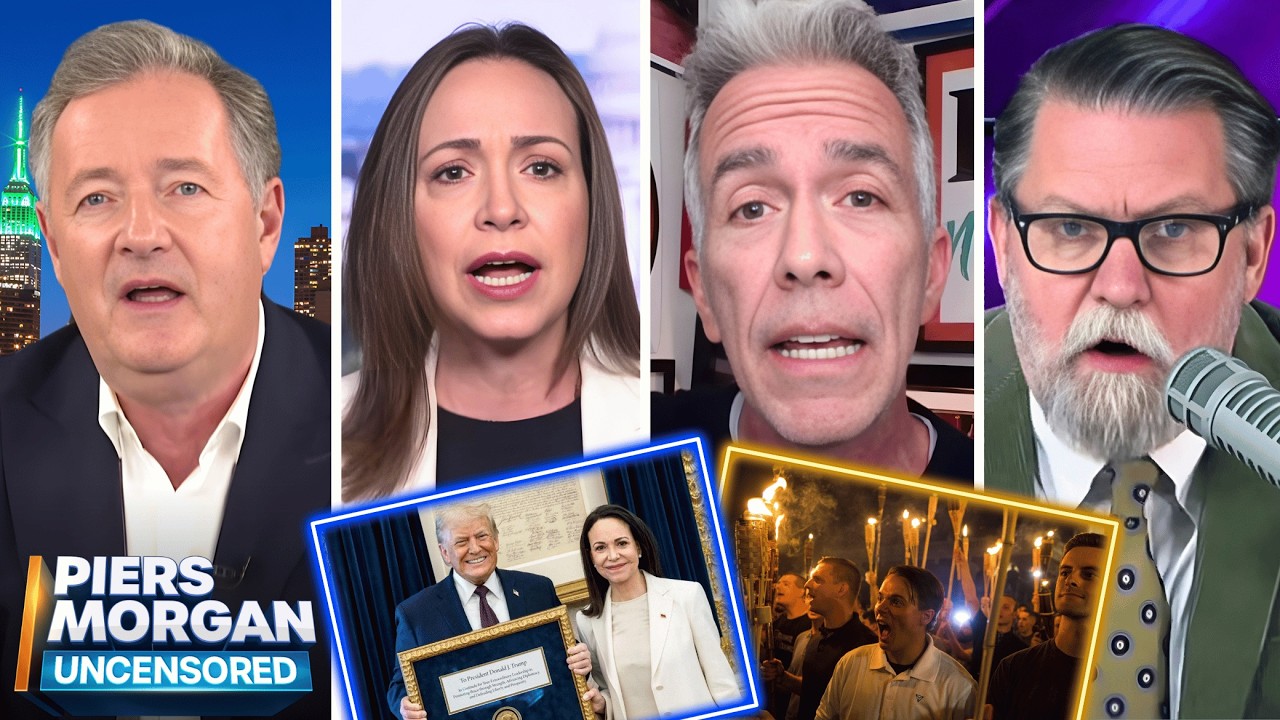
"Fighting Solves EVERYTHING!" Who's To Blame For Political Violence? + Maria Machado On Trump
"This episode dissects the escalating political violence in the US, with panelists fiercely debating the role of partisan rhetoric and media in radicalization, alongside an interview with Venezuelan opposition leader Maria Machado on US intervention and her country's future."
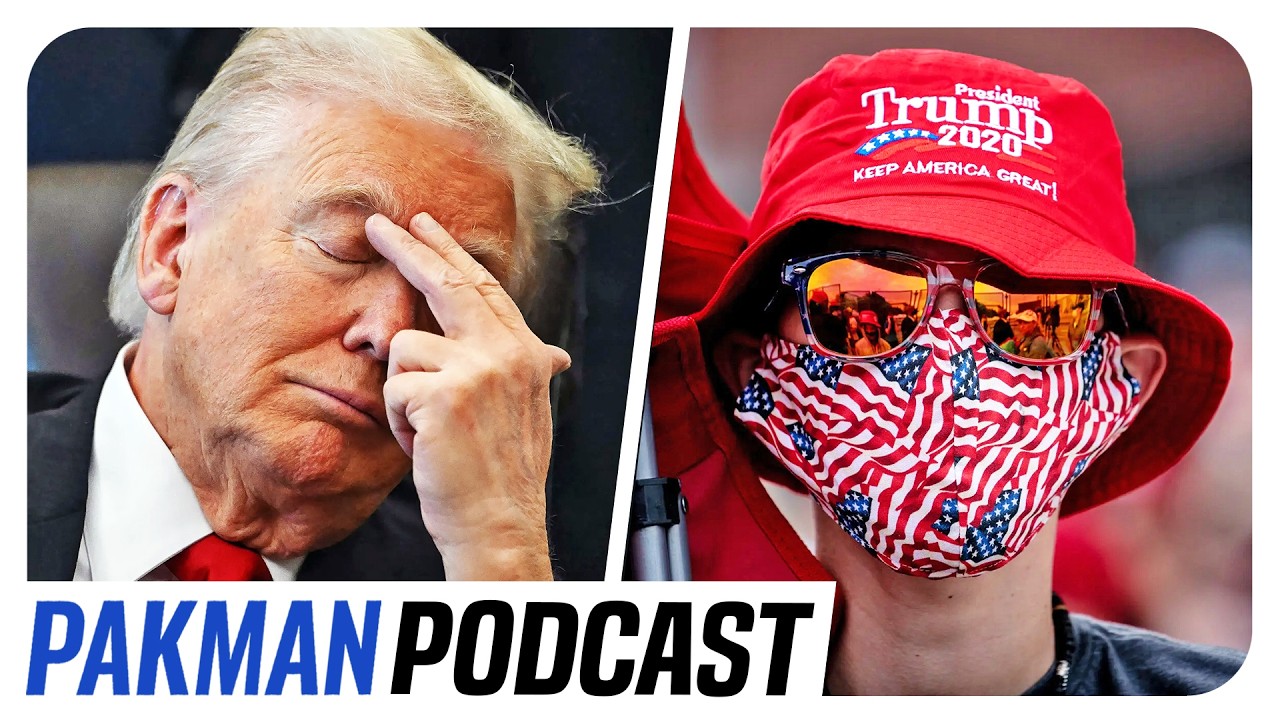
What happens to Trump voters when Trump is gone?
"The David Pakman Show explores the contentious path forward for Trump voters after his political era, exposing alleged corruption, economic misrepresentation, and the necessity of media literacy."