
Karen Read’s First Interview After MURDER ACQUITTAL
YouTube · VdXL-1jZhFs
Quick Read
Summary
Takeaways
- ❖Karen Read describes post-acquittal life as a 'no man's land,' lacking purpose and routine after years of intense legal battle.
- ❖She felt 'misled and taken advantage of' by a documentary crew, receiving no payment despite extensive access.
- ❖Read believes her car's broken tail light was planted at the crime scene by police after they seized her vehicle.
- ❖Lead detective Michael Proctor sent vile text messages mocking her medical condition and appearance, which she viewed as embarrassing to him, not her.
- ❖She perceived Judge Canon as having a personal animosity, citing unfair rulings and dismissive behavior.
- ❖The prosecution's unexpected recommendation of standard probation for her OUI conviction, after seeking life imprisonment, felt like a 'big game' and a 'charade.'
- ❖Read is pursuing multiple civil lawsuits against law enforcement and individuals involved in her case.
- ❖She plans to co-author a book and launch a YouTube channel, 'The Read Files,' to expose corruption and advocate for criminal justice reform.
- ❖Read advises against speaking to law enforcement, as statements can be manipulated and used against a defendant.
Insights
1Post-Acquittal Reality: A Disorienting Void, Not Celebration
Karen Read describes her life after acquittal as unexpectedly un-celebratory, a 'no man's land' filled with a 'big void.' The intense 'fright, anger, and anxiety' that fueled her for years vanished, leaving her without the purpose, routine, job, or home she had before the trial. She likens the experience to the quiet after a snowstorm, feeling like a 'fish out of water' and undergoing a delayed reaction to the 'persecution' rather than the acquittal.
Read states, 'I felt I am still not quite living in an acquittal world... I don't have a routine to go back to. It's not there anymore. I don't have a job. I don't have a home anymore. And I'm just kind of in no man's land.' (-)
2Alleged Police Misconduct: Planted Evidence and Vile Texts
Read asserts that evidence, specifically her car's broken tail light, was planted by law enforcement. She highlights how the crime scene services team found the tail light pieces *after* lead detective Michael Proctor had already seized her car. Furthermore, she reveals Proctor's vile text messages, where he mocked her medical condition ('leaky balloon knot,' 'leaks poo') and called her a 'whack job c***' and 'babe with no ass,' demonstrating extreme bias.
Read recounts her cousin discovering the SERT report: 'The SERT team did not find tail light until after Proctor had the tail light.' () She also quotes Proctor's texts: 'She's got a leaky balloon knot. It leaks poo.' and 'She's a whack job c***.' (-, -)
3The 'Butt Dial' and 'I Don't Recall' Defenses
Karen Read points to the repeated use of 'butt dials' and 'I don't recall' as a coordinated, simplistic defense strategy by the Alberts, McCabes, and Higgins. She argues that 'butt dialing' an answered call, a hang-up, and then another hang-up on both ends is impossible, especially when multiple individuals claim dozens of such 'butt actions' in the middle of the night. This collective lack of detailed memory or implausible explanations indicated a coached narrative.
Read states, 'Jen McCabe said the slew of phone calls to John at quarter of 1, between and , she had over a dozen phone calls to John. She's claiming those were all butt dials. What are the chances these people who were together all night are engaging in, if you count them, somewhere in the neighborhood of 20 butt phone actions.' (-) She also notes, 'Their group thought is simple, but as soon as you require details from these people, their stories are all over the place.' (-)
4Perceived Judicial Bias and Unfair Trial Tactics
Read felt Judge Canon harbored a personal animosity towards her, citing instances where the judge praised other defendants for professional dress but never her, and directly addressed her in court to accuse her of finding proceedings 'funny.' She also highlights how the defense was 'handicapped' by the judge's last-minute ruling on expert witnesses, forcing her legal team to edit their opening statements just minutes before presentation.
Read recalls Judge Canon saying, 'Is this funny, Miss Reed?' after she reacted to a verdict form setup. () She also describes the judge telling her lawyer, Allan, 'You have 10 minutes to sit at the table and edit your opening' regarding the ARCA expert witnesses. (-)
5The Unexpected Sentencing Recommendation
After being acquitted of murder, Read was convicted of OUI. She and her team expected prosecutor Hank Brennan to argue for the maximum two-year sentence, but he surprisingly recommended only one year of probation, the standard for a first-time offender. This abrupt shift from seeking life imprisonment to a lenient recommendation left Read questioning the sincerity of the prosecution's entire case, feeling it was a 'big game' or a 'charade.'
Read states, 'This was almost more shocking than the verdict. Truly shocking... Brennan would ask for the max sentence. And I thought she would split the baby... So, she looks to Brennan and he says, 'The Commonwealth recommends one year probation with a suspended license.' And she looks at him and says, 'Same as every other first-time offender.' And he goes, 'Same as every other first time.' (-)
Bottom Line
The financial and logistical burden of mounting a robust defense against state resources is astronomical, even for a 'logical' case, requiring multiple law firms, expert witnesses, and pro bono student support.
This disparity in resources creates an inherently unfair system, making it nearly impossible for average citizens to defend themselves against powerful state prosecutors, even when innocent.
Advocacy for legal aid reform and funding for independent defense teams could help level the playing field for defendants, ensuring access to comprehensive legal support regardless of financial status.
Post-acquittal, Karen Read is pursuing three concurrent civil lawsuits against individuals and law enforcement entities involved in her case, including a federal suit against the Alberts, McCabes, Higgins, Proctor, Tully, and Buchnik.
These civil actions represent a continued fight for justice and accountability beyond the criminal trial, potentially exposing more evidence and forcing financial repercussions on those she alleges framed her.
The outcomes of these civil cases could set precedents for police accountability and public official conduct, encouraging greater transparency and ethical behavior within the justice system.
Read plans to launch a YouTube channel, 'The Read Files,' and co-author a book to share her full story, aiming to expose corruption and influence criminal justice reform.
This initiative allows her to control her narrative, counter negative media portrayals, and educate the public on the intricacies and alleged abuses within the legal system, potentially galvanizing public support for systemic change.
This approach offers a model for other individuals who have experienced perceived injustices to leverage digital platforms and personal narratives to seek accountability and drive broader societal impact.
Opportunities
Educational YouTube Channel on Criminal Justice Defense
Karen Read and her legal team (Allan Jackson, Nick Roco) are launching 'The Read Files' YouTube channel to detail the complexities, financial costs, and strategic challenges of mounting a criminal defense against state resources. This content can educate the public on their rights and the system's flaws.
Co-Authored Memoir on Systemic Corruption
Karen Read plans to co-author a book with Allan Jackson and a professional writer, focusing on the corruption she experienced in Massachusetts' 'one-party political system' and its impact on her case. The book aims to make an impact on public perception of government and justice.
Lessons
- Never speak to law enforcement without legal counsel, as statements can be manipulated and used against you, regardless of intent.
- Educate yourself on your legal rights and the criminal justice system to understand potential pitfalls and how to protect yourself.
- Cultivate a strong support network of family, friends, and legal professionals, as their emotional and logistical assistance is critical during prolonged legal battles.
Quotes
"I don't have a routine to go back to. It's not there anymore. I don't have a job. I don't have a home anymore. And I'm just kind of in no man's land."
"I believe I was misled and taken advantage of and we gave the documentarian our all... I feel, went out of her way to excise us from enjoying not one dime of these of of the proceeds."
"She's got a leaky balloon knot. You followed that up with the phrase leaks poo, didn't you? I did. Yet she's a babe. Weird Fall River accent though. No ass."
"I cared more about his lies. What he said about me and my anatomy, I it's disgusting, but it did not embarrass me. Michael Proctor does not have the ability to embarrass me."
"The SERT team did not find tail light until after Proctor had the tail light. And he had to get himself out of Canton at 5:45."
"The Commonwealth recommends one year probation with a suspended license. And she looks at him and says, 'Same as every other first-time offender.' And he goes, 'Same as every other first time.'"
"I've taken too many shots at law enforcement to feel protected by law enforcement... I don't feel safe in Massachusetts. I don't feel that the politics are safe."
Q&A
Recent Questions
Related Episodes

Mystery Man Buys D4vd’s Tesla as Other Teen Girls Surface in Case | Celeste Rivas Hernandez Update
"A 14-year-old girl's dismembered body was found in a rising singer's Tesla, but the investigation is plagued by alleged police mishandling, sealed evidence, and a lack of charges, raising questions about justice and transparency."

Amanda Knox and John Ramsey - Megyn Kelly's "Double Feature" of Fascinating Interviews
"This episode features two individuals, Amanda Knox and John Ramsey, whose lives were irrevocably altered by tragic crimes and subsequent wrongful accusations, revealing systemic failures in justice and media manipulation."

The Texas Yogurt Shop Exonerations | "Case by Case" | "48 Hours" Podcast
"Four men, including the late Maurice Pierce, were wrongfully accused and suffered decades of public scorn and legal battles for the 1991 Austin yogurt shop murders, only to be exonerated after DNA evidence identified the real killer, highlighting severe systemic failures and police misconduct."
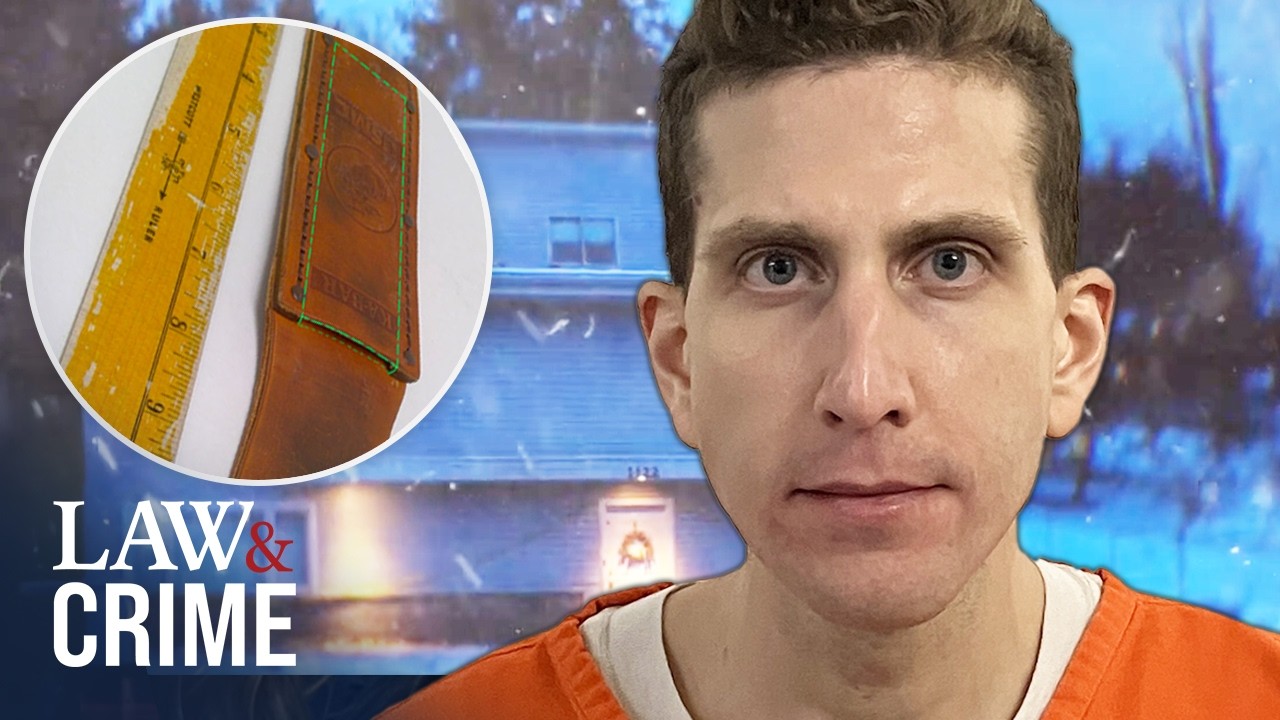
Bryan Kohberger Experts Make EXPLOSIVE Claims in Idaho Murders
"A former FBI agent and author of 'Broken Plea' reveals critical, previously undisclosed issues with evidence in the Bryan Kohberger Idaho murder case, suggesting the plea deal may have circumvented major defense challenges."