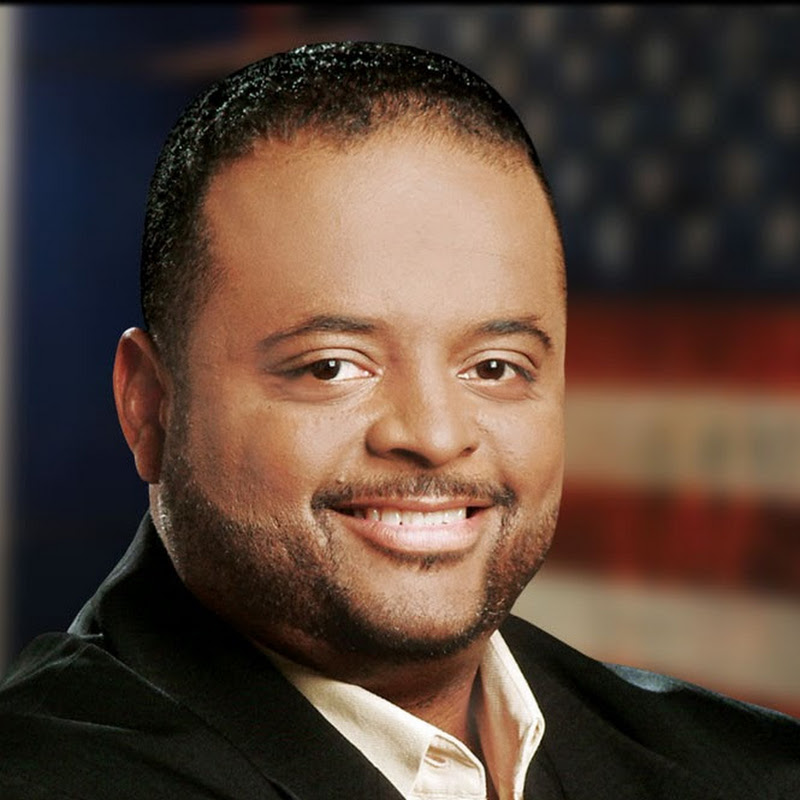
Target boycott organizers hold news conference
YouTube · Vt9W5B_IUDQ
Quick Read
Summary
Takeaways
- ❖Target's market valuation dropped by $12.4 billion and operating income fell by $5.1 billion due to the boycott.
- ❖The 'Mothership 3' (Nina Turner, Tamika Mallerie, Jamal Bryant) initiated the boycott after Target rescinded DEI commitments made post-George Floyd's murder.
- ❖Target has fulfilled 97% of its $2 billion investment pledge to black-owned businesses and committed an additional $100 million in grants to black-led community organizations.
- ❖Significant investments totaling $26 million were made to HBCUs and the United Negro College Fund, including a $10 million gift to a struggling HBCU design school.
- ❖A key demand for Target to establish a relationship with a black bank remains unfulfilled.
- ❖The boycott leaders emphasize the need for a public apology from Target's CEO for the initial 'betrayal' and public harm caused.
- ❖The 'Target Fast' (faith-based component) declares victory and concludes, while other boycott efforts continue.
- ❖Black consumers generate over $1 trillion in economic activity annually, underscoring their collective purchasing power.
Insights
1Target's DEI Reversal and Boycott Genesis
In January 2025, Target announced a rollback of its Diversity, Equity, and Inclusion (DEI) initiatives, including stopping reports to external diversity groups and ending a program for minority-owned businesses. This decision came after the company's CEO, Brian Cornell, had publicly committed to expanding DEI efforts and investing $2 billion in black-owned businesses following the murder of George Floyd. This perceived 'betrayal' by a company that had previously 'invited' the Black community into its 'family' triggered the nationwide boycott.
Target announced on January 24th of 2025 that they will be rolling back their diversity, equity, inclusion initiatives... On January the 25th, we are somebody called on Target... to not bend to bigotry.
2Significant Financial Impact on Target
The boycott resulted in substantial financial losses for Target. The company's market valuation dropped by $12.4 billion, and its operating income fell to $5.1 billion. This was accompanied by falling store traffic and declining sales across three consecutive quarters, demonstrating the direct economic pressure exerted by the organized consumer action.
The company has lost 12.4 billion in the marketplace... falling store traffic, declining sales and operating income dropping to $5.1 billion... according to Bloomberg the valuation of Target has dropped by 12 billion dollar. According to the Wall Street Journal it has been three consecutive cycles quarters where they have not seen a profit.
3Partial Fulfillment of Demands and Remaining Gaps
The boycott presented four key demands: a re-imagination of DEI, engagement with Historically Black Colleges and Universities (HBCUs), honoring the $2 billion investment in the Black community, and investing in Black banks. Target has made significant progress on three of these: 97% completion of the $2 billion investment (with an additional $100 million in grants), and substantial financial contributions to HBCUs ($10 million to Pencil Lewis College, $26 million to UNCF/scholars). However, Target has not yet established a relationship with any Black bank, and a public apology for the initial harm remains unissued.
We asked Target for four things... Target in their commitment for $2 billion has completed 97% of it... they went above that with a $100 million in grants and scholarships... Target has given $10 million to the Pencil Lewis College of Business and Design... they have given upwards of $18 million towards the United Negro College Fund. Another $8 million towards their target scholars... up to this hour Target does not have a relationship with not one black bank.
4The Power of Public Accountability vs. Private Apologies
While Target's new CEO, Michael Fideli, acknowledged a 'breakdown of trust' with Black customers and employees in internal meetings, boycott leaders insist that a public harm demands a public apology. They argue that a billion-dollar company cannot 'harm people in public and then apologize in private,' emphasizing the need for clear, public statements to restore trust and demonstrate genuine commitment.
The new CEO, M Michael Fideli, acknowledged that the company bears responsibility for the breakdown of trust... As a billion-dollar company, you cannot harm people in public and then apologize in private. If the harm was public, then the acknowledgement must be public as well.
Bottom Line
The boycott's success was not just financial but also in validating the Black church's role in modern civil rights, re-engaging a generation that often sees the church as disconnected from community issues.
This highlights an untapped potential for faith-based organizations to drive significant social and economic change by mobilizing large, organized communities for collective action.
Organizations seeking broad community engagement for social justice initiatives should actively partner with faith-based institutions, leveraging their existing networks and moral authority to amplify impact.
The organizers explicitly stated they received no personal financial gain, favors, or special programs from Target, emphasizing 'clean hands' and 'pure heart' to counter public suspicion about leadership.
This transparency is critical for maintaining credibility and trust within activist movements, especially when dealing with large corporations and significant financial outcomes.
Leaders of social justice movements should proactively communicate financial transparency and personal non-gain to build and sustain trust, particularly when engaging with corporate entities or large sums of money.
The boycott's impact was amplified by strategic alliances with other communities, including Latino Freeze and LGBTQ+ groups, who explicitly followed 'black liberation leadership' and refused Target's financial support.
This demonstrates that Black liberation movements can serve as a powerful catalyst for broader intersectional solidarity, where other marginalized groups recognize their own struggles are interconnected.
Advocacy groups should actively seek and articulate common ground with Black liberation movements, framing their struggles as interconnected to build stronger, more effective coalitions for systemic change.
Opportunities
Bullseye Market Initiative
Organize quarterly 'Bullseye Markets' within large community centers or churches, bringing together hundreds of local Black-owned businesses and vendors. This provides a direct-to-consumer marketplace, bypassing large retailers and fostering direct economic support within the community. It also offers fiscal literacy education to young people.
Digital Directory of Black Businesses
Create and widely disseminate a comprehensive digital directory of Black-owned businesses, including those previously stocked by large retailers like Target. This enables consumers to directly support these businesses, especially during boycotts, and promotes a 'buy Black' economy year-round.
HBCU Business Scaling Program
Develop and fund programs at Historically Black Colleges and Universities (HBCUs) that focus on teaching students how to scale businesses, navigate corporate environments, interview effectively, and compete in biased workspaces. This directly addresses the need for Black entrepreneurship to move beyond single-employee operations and access greater capital.
Key Concepts
Collective Economics (Kwanzaa Principle)
The idea that communities, particularly the Black community, can achieve economic strength and self-determination by pooling and consciously directing their resources. This principle was central to the boycott's strategy, demonstrating how aligned purchasing power can influence corporate behavior and create economic impact.
Economic Resistance
The strategic use of consumer spending power (or withholding it) as a tool for social and political change. The Target boycott exemplifies this by leveraging collective refusal to shop to pressure a corporation into reinstating and expanding diversity and equity commitments, proving that 'dollars scream louder than voices.'
Lessons
- Consciously align your purchasing power with your principles by choosing to support companies that demonstrate genuine commitment to diversity, equity, and inclusion, and divesting from those that do not.
- Seek out and support Black-owned businesses directly, utilizing digital directories and community markets, to foster collective economic growth and reduce reliance on corporations that may backtrack on social justice commitments.
- Advocate for corporations to partner with Black banks and financial institutions to expand access to capital for Black entrepreneurs and promote homeownership, addressing systemic economic disparities.
- Demand public accountability and apologies from corporations that cause public harm or betrayal, recognizing that private acknowledgments are insufficient for restoring trust with affected communities.
- Support and participate in organized economic resistance movements, understanding that collective action can lead to significant financial and policy changes in corporate behavior.
Blueprint for Economic Resistance and Corporate Accountability
**Identify Corporate Betrayal:** Pinpoint specific instances where a corporation publicly commits to social justice (e.g., DEI, community investment) and then publicly retracts or weakens those commitments.
**Form a Unified Coalition:** Bring together diverse leaders and organizations (civil rights, faith-based, community groups, labor, other marginalized communities) to present a united front and amplify the message.
**Issue Clear Demands & Deadlines:** Articulate specific, measurable demands for corporate change (e.g., reinvestment, policy reinstatement, new partnerships) and set clear deadlines for response.
**Organize Sustained Economic Pressure:** Mobilize consumers for a boycott or 'fast' (withholding spending), encouraging consistent, visible actions like weekly protests and redirecting purchases to alternative businesses.
**Leverage Media & Transparency:** Utilize social media and independent press (especially Black media) to widely disseminate information, track progress, and maintain transparency about the movement's finances and leadership's integrity.
**Negotiate & Verify Progress:** Engage in direct dialogue with corporate leadership, but critically verify all claimed achievements and investments (e.g., checking receipts, calling partner institutions).
**Demand Public Accountability:** Insist on public apologies and reaffirmations for public harm, ensuring that corporate responses match the scale and visibility of the initial offense.
**Plan for Evolution & Next Fights:** Declare victory on met demands while acknowledging ongoing struggles and preparing for future campaigns against other corporations or systemic issues.
Quotes
"Companies cannot build their brand on the loyalty of communities and then abandon those communities when political pressure rises."
"Sometimes the most powerful sermon is not preached from a pulpit, but practiced through disciplined refusal."
"If the harm was public, then the acknowledgement must be public as well. It must be clear and it must be heard by all of those impacted."
"Black consumers generate more than $1 trillion dollar in economic activity in this country every single year. Our dollars have influence and we have choices."
"What's the point of black people being able to sit at the lunch counter if they don't have access to a hamburger?"
"Target is the only one we invited to the cookout. They were the only ones we felt were kissing cousins. They are the only Fortune 500 company that got a hood nickname. We called them tar because we had let them into the house and so it was not just a abandonment of DEI but we felt as if it was a betrayal to it."
"Our generation has only seen settlements and has never seen victory. And so I wanted this generation to know that there is power in your voice."
"If you want to go fast, go alone, but if you want to go far, go together."
Q&A
Recent Questions
Related Episodes

All Roads Lead To the South: Nat’l Day Of Action For Voting Rights | Mass Rally | Montgomery, AL
"A mass rally in Montgomery, Alabama, ignites 'Freedom Summer 2026' to combat the Supreme Court's decimation of Black political power and demand unprecedented voter mobilization across the South."

Trump Impact On Black America. SCOTUS Birthright Citizenship Case. Alabama College DEI probe
"This episode dissects the multifaceted impacts of Trump-era policies on Black America, from economic destabilization and civil rights rollbacks to an inspiring narrative of an entrepreneur rebuilding her life and community."
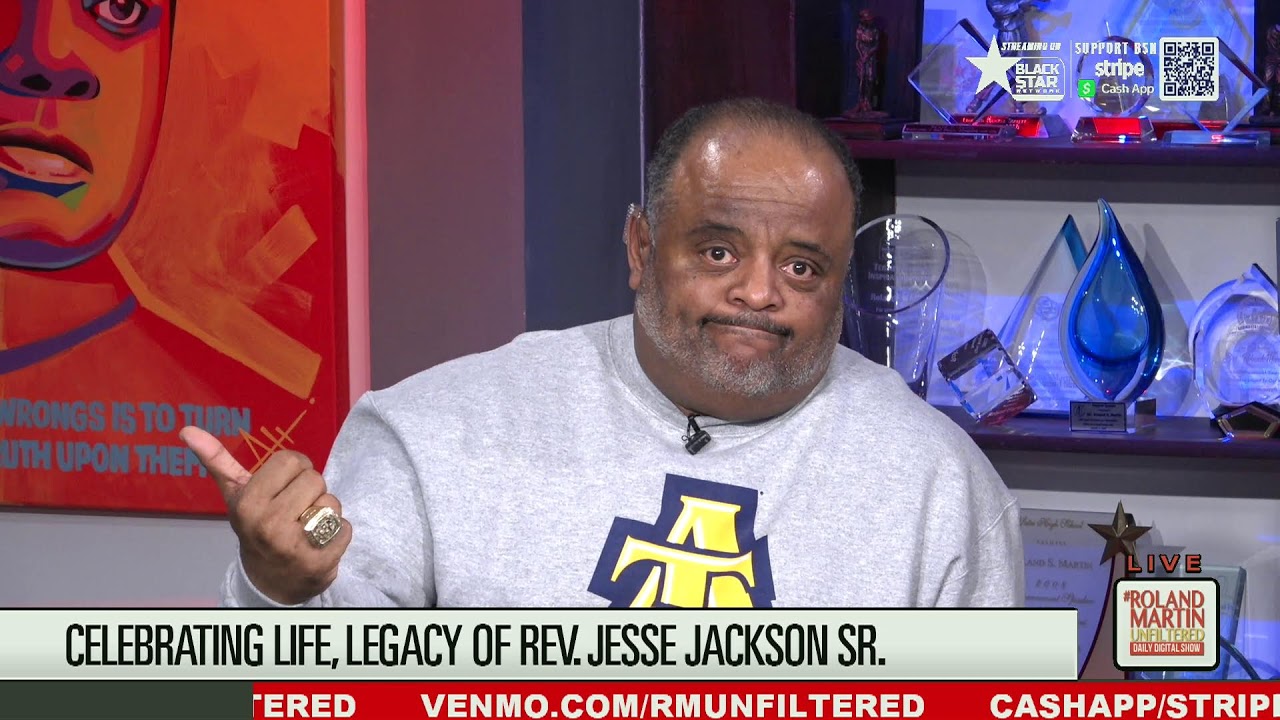
Celebrating the Life and Legacy of Rev. Jesse Jackson Sr.
"This episode unpacks the unparalleled impact of Reverend Jesse Jackson Sr., a towering figure who reshaped American politics, economics, and civil rights through audacious leadership and unwavering commitment to the marginalized."

All-White Jury Convicts Karmelo Anthony. Georgia Election Lawsuit. Tennessee Map Challenge Dropped.
"This episode dissects systemic racial biases in the justice system, politically motivated election law changes, and the dangers of unchecked AI in law enforcement, all while highlighting the ongoing fight for civil rights."