BREAKING: Iran FIRES At Gulf States; U.S. Strikes Back; Nuclear Deal Stalls | TBN Israel
YouTube · VxVPCXqwrkg
Quick Read
Summary
Takeaways
- ❖Iran has adopted a new strategic concept involving direct, controlled friction with the United States to rebuild its deterrence, moving beyond reliance on regional proxies.
- ❖Recent exchanges included US attacks on Iranian radar sites in Goruk and Qassem Island, followed by Iranian ballistic missile strikes towards Kuwait and Bahrain.
- ❖Nuclear deal negotiations are deadlocked over Iran's demand for immediate access to $12 billion in frozen assets and a 90-day timeline for uranium dilution, versus the US demand for 60 days.
- ❖The US is considering using Iran's frozen assets to compensate Gulf states for damages caused by Iranian attacks, escalating the financial attrition war.
- ❖Satellite images confirm Iran restored approximately 50 out of 69 damaged entrances to its underground missile facilities, demonstrating a resilient infrastructure designed to operate post-strike.
- ❖Lebanese President Joseph Aoun publicly criticized Iran, accusing the Revolutionary Guards of using Lebanon as a bargaining chip and stating Lebanese citizens are paying the price for Iranian interests.
- ❖Internal student protests have renewed in Iran, signaling potential broader unrest against the regime amid economic and strategic pressures.
- ❖Israel continues its fight against Hezbollah in Lebanon, viewing it as a critical effort to remove a destabilizing element and build up the Lebanese army and government.
Insights
1Iran's Shift to Direct Deterrence
Iran's Revolutionary Guards have concluded that direct and controlled friction with the United States is necessary to rebuild its deterrence, moving away from a sole reliance on regional proxies. This strategy involves direct attacks on Gulf states hosting US bases, aiming to make the US feel an immediate price for actions against Iran.
The exchange of fire in the Gulf, including US strikes on Iranian radar sites and Iran's response with ballistic missiles towards Kuwait and Bahrain, reflects this new strategic concept. Mati Shoshani states, 'It's a calculated decision... they're more about regional dominance... they pick on the little kid in the neighborhood... hoping that those countries feel the pain and then pressure the US to go into an agreement.'
2Stalled Nuclear Negotiations and Financial Leverage
Negotiations for a nuclear agreement are deadlocked over two key issues: the timeline for diluting enriched uranium (US demands 60 days, Iran 90 days) and the release of frozen Iranian funds. Iran demands immediate access to $12 billion of its approximately $100 billion frozen assets, while the US refuses to pay in advance, fearing it would repeat past criticisms.
The memorandum of understanding includes extending a ceasefire, reopening the Strait of Hormuz, allowing Iran to sell oil, and talks on enriched uranium. However, 'The main disagreements concerns Trump's demand for a 60-day timetable for diluting the uranium compared with an Iranian demand for 90 days, as well as the dispute over the scope and timing of the release of the frozen Iranian funds.'
3US Counter-Leverage: Using Frozen Assets for Damages
The United States is exploring the possibility of using Iran's frozen assets to compensate Gulf states for damages caused by Iranian missile and drone attacks. This strategy aims to turn Iran's demand for funds into a warning, signaling that continued aggression will result in the loss of those assets.
An American official stated, 'Washington is examining the use of Tehran's frozen assets to repair future damages caused by the Revolutionary Guards and perhaps also damages that have already been caused.' The US Treasury Secretary instructed teams to ask Gulf allies for damage assessments.
4Resilience of Iran's Underground Missile Infrastructure
New satellite images reveal that Iran has rapidly restored dozens of entrances to its underground missile facilities that were damaged in previous strikes. This indicates that Iran's infrastructure was built to withstand attacks and maintain operational capabilities, suggesting that strikes cause temporary tactical disruption rather than total victory.
Out of 69 entrances and exits that were hit or blocked in airstrikes, 'the Iranians managed to restore about 50.' This was done with basic equipment like bulldozers, earth graders, and trucks, implying the infrastructure was designed 'to keep operating even after it was hit.'
5Weakening Regional Axis and Internal Pressures on Iran
Iran's regional influence is eroding, with proxies like Hezbollah under pressure and Lebanon's President publicly criticizing Iran for using his country as a bargaining chip. Internally, Iran faces deep economic pressure due to sanctions and an 'erosion of an entire governing model,' alongside renewed student protests, forcing the regime to seek economic relief through an agreement.
Lebanese President Joseph Aoun stated, 'You're not trying to help us. The citizens of Lebanon are paying the price for your interests. This is not your country.' Western research institutes assess Iran's problem is 'the erosion of an entire governing model' and 'signs of unrest in the streets' with student protests.
Bottom Line
Iran's internal power struggles, particularly within the IRGC, are driving a 'regional disruption almost at any cost' strategy, partly influenced by a Twelfth Shia eschatological theology that believes violence and disruption can hasten the appearance of the Mahdi (Messiah).
This religious motivation suggests Iran's actions may not always be purely rational or politically motivated, making traditional diplomatic and military deterrence less predictable and potentially more dangerous, as the regime may view escalation as a path to a desired spiritual outcome.
Understanding this theological underpinning is critical for intelligence agencies and policymakers to anticipate Iranian behavior, identify potential non-negotiable red lines, and craft counter-strategies that account for both political and ideological drivers rather than solely economic or military ones.
The US is actively considering weaponizing Iran's frozen assets by using them to compensate Gulf states for damages caused by Iranian attacks.
This move transforms frozen funds from a mere negotiation point into a direct punitive tool, potentially intensifying Iran's financial distress and further complicating any future agreements. It also strengthens US alliances in the Gulf by demonstrating a commitment to their security.
This creates an opportunity for Gulf states to actively document and assess damages, strengthening their claims and potentially securing financial reparations directly from Iranian assets, thereby reducing their financial burden from conflict and reinforcing their alignment with the US against Iran.
Lessons
- Monitor Iran's internal economic and social stability, as growing unrest could either force concessions or provoke more aggressive external actions to distract from domestic issues.
- Analyze the specific demands and concessions regarding frozen assets and uranium enrichment timelines in any future nuclear negotiations, as these are key indicators of the deal's viability and Iran's strategic intent.
- Assess the implications of Iran's shift to direct deterrence for regional security, particularly for countries hosting US military assets, and evaluate their defensive capabilities against ballistic missile and drone attacks.
Notable Moments
Lebanese President Joseph Aoun publicly criticized Iran, accusing the Revolutionary Guards of using Lebanon as a bargaining chip and stating Lebanese citizens are paying the price for Iranian interests.
This is a significant public rebuke from a regional leader against Iran, highlighting a potential weakening of Iran's proxy network and growing resentment among its supposed allies. It signals a shift in regional dynamics and could open avenues for international support to bolster Lebanese sovereignty against Iranian influence.
Quotes
"Iran has fired more Gulf states during this last war than they did at Israel. And the reason for that is simple. They're more about regional dominance than they are just about fighting Israel or fighting the United States. It's about money, it's about control, it's about power."
"You're not trying to help us. The citizens of Lebanon are paying the price for your interests. This is not your country."
"If Israel or the United States if they attack Iran, the whole region will burn will burn. But the last war exposed that this method has been worn down. The proxies have not disappeared, but they no longer give Iran the same layer of protection."
Q&A
Recent Questions
Related Episodes
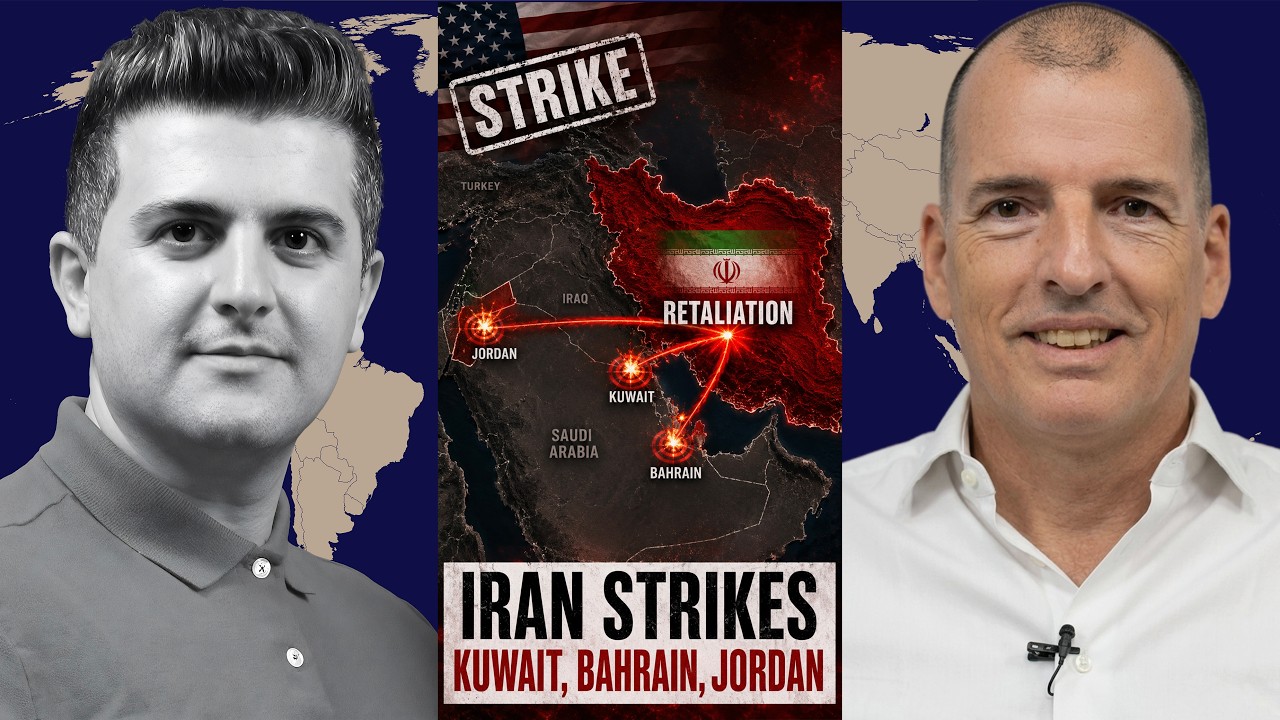
Alex Krainer: US STRIKES Iran – Iran RETALIATES Against Kuwait, Bahrain & Jordan!
"Amidst escalating US-Iran conflict and Iranian retaliation against regional US allies, this episode argues that US foreign policy is deeply controlled by an 'Anglo-Zionist conspiracy' led by the Rothschild banking dynasty, prioritizing Israeli interests over American ones."

Patrick Henningsen: Hezbollah JUST Fired Back at Israel - Iran Vows to “Crush” All Attacks
"Patrick Henningsen argues that the US and Israel initiated an illegal war against Iran, driven by Trump's incompetence and Israeli influence, leading to an inevitable escalation with severe global economic repercussions."
Pepe Escobar: “Total Failure”: Trump’s Blockade Just Backfired Disastrously
"Pepe Escobar argues that the US blockade against Iran, spearheaded by Donald Trump, has utterly failed and backfired, accelerating global economic chaos and challenging US geopolitical dominance."
Col. Jacques Baud: What a US Ground Invasion of Iran Would REALLY Look Like
"Colonel Jacques Baud dissects the strategic futility of a US ground invasion of Iran, arguing that current troop levels are insufficient and such an action would backfire, exposing US allies and potentially leading to Iran's nuclearization."