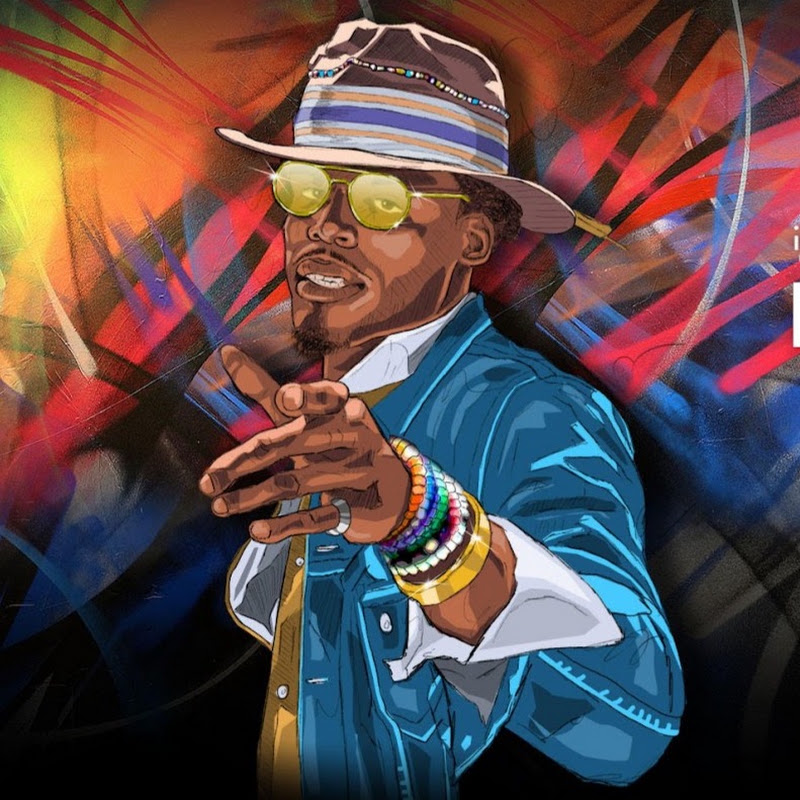
“I'm the Sexiest Man on This Planet” – David Banner Gets Real About Growth & Legacy
YouTube · WZpqTtvgOmM
Quick Read
Summary
Takeaways
- ❖Overcoming depression taught David Banner that people treat you how you treat yourself, leading to a profound journey of self-love.
- ❖Banner asserts he is the 'second sexiest man on Earth' (after Jesus), stemming from a deep, non-egoic self-acceptance.
- ❖He criticizes internal divisions within the Black community, particularly in media and sports, where people 'tear at each other like slaves.'
- ❖Mississippi is a culturally 'slept on' state, being the root of most contemporary American music due to its history of pain and resilience.
- ❖Integration was the 'worst thing that ever happened to black people,' as it thwarted opportunities for self-governance and cultural education.
- ❖Banner redefines 'racism,' stating Black people cannot be racist because they lack the systemic power to oppress others, but rather suffer from a 'lack of racism' (i.e., not prioritizing their own race).
- ❖He advocates for Black people to build their own systems and acquire land, waterways, and media networks to escape being perpetual consumers or talent.
- ❖Banner uses high fashion and luxury items strategically to gain attention and demonstrate that revolutionaries can be wealthy, inspiring youth to pursue success.
- ❖He practices extreme self-discipline through fasting (food and sex) to cultivate mental and spiritual strength, viewing it as a path to self-mastery.
- ❖The next evolution of David Banner involves 'letting go' of being a slave to constant work and being okay with opening doors for others, acting as a 'Moses' rather than a 'Jesus.'
Insights
1The Transformative Power of Self-Love
David Banner's journey through severe depression led him to realize that people treat you exactly how you treat yourself. He advocates for a deep, non-egoic self-love, asserting that it's crucial for personal well-being and for others to respect you. This self-love is rooted in treating oneself with the same care and respect one would advocate for their community.
“About two and a half years ago, I went through the worst depression I ever went through in my life. And I realized that people treat you exactly how you treat yourself... I had to love me. My therapist told me, 'David, why don't you treat yourself the way you want yourself to be treated?'”
2Critique of Integration and Advocacy for Black Ownership
Banner argues that integration was detrimental to Black people, preventing them from building their own institutions and controlling their narratives. He believes true power and respect come from owning land, businesses, and educational systems, rather than seeking acceptance within existing, often oppressive, structures. He uses the example of a tech hub in Jackson, Mississippi, as a model for local, Black-owned development.
“Integration was the worst thing that ever happened to black people... We thwarted the opportunity to teach our own children. We don't have no options on what we teach black kids in public schools... This girl bought up 45% of downtown Jackson. She's going to create a tech hub in Jackson, Mississippi. She couldn't do that nowhere.”
3Redefining Racism and the 'Lack of Racism'
Banner challenges the conventional definition of racism, stating that Black people cannot be racist because they lack the systemic power to enforce prejudice. Instead, he highlights 'black people's lack of racism' (as quoted from Marcus Garvey) as a problem, meaning Black people often fail to prioritize their own race and interests in the same way other groups do.
“You have to have power in order to be a racist... I can't stop white people from shopping at no grocery store, can I? I can't stop them from going to no club or no school. I can't be racist. I don't have no power... Marcus Garvey said he doesn't have a problem with white people's racism. He has a problem with black people's lack of racism.”
4Strategic Use of Image and Wealth for Influence
Banner explains that he uses high fashion, luxury items, and displays of wealth not out of ego, but as a strategic tool to capture the attention of younger generations. By presenting himself as a successful, revolutionary figure, he aims to inspire Black youth and demonstrate that positive activism can coexist with financial prosperity, thereby drawing them to his message.
“I was never into Ferraris and jewelry and all of that kind of stuff. But I realize that our children are. So if I want their attention and I know that's where their attention is, I'm going to go to where my people attention is, as long as it doesn't compromise my manhood or my soul.”
5The Importance of Self-Mastery Through Fasting
Banner emphasizes that true liberation and strength come from controlling one's desires, particularly food and sex. He shares his extensive fasting practices as a means to achieve mental clarity, spiritual connection, and physical resilience, asserting that the ability to say 'no' to these fundamental urges grants immense power.
“If you can say no to food, no to sex, you can do anything... The most I've ever fasted is 22 days on just like water... I fasted from sex while I was the David Banner that y'all know for seven months... It was the strongest I was I've ever been in my life.”
Bottom Line
The historical narrative of Martin Luther King Jr. presented to the public is a 'digestible' and incomplete version, omitting his later radical views on finances and war that were closer to Malcolm X's ideology, and which ultimately led to his assassination.
This suggests that dominant narratives can be manipulated to control public perception and suppress revolutionary ideas, even for revered figures. It implies a need for deeper historical inquiry beyond mainstream portrayals.
Develop educational platforms or media projects that explore the full, unedited histories of influential figures, particularly those whose messages have been sanitized or co-opted, to provide a more complete and empowering understanding of their work.
Superman, who derives power from the sun, cannot logically be white, as white people are 'allergic' to the sun. This highlights a subtle but pervasive form of cultural appropriation and misrepresentation in popular media.
This observation challenges deeply ingrained racial biases in superhero archetypes and media representation. It points to how even fictional characters can reinforce racial hierarchies and erase non-white contributions or inherent strengths.
Create and promote superhero narratives and characters that are authentically rooted in Black physiology, culture, and mythology, leveraging these inherent strengths to build new, powerful archetypes that resonate with and empower Black audiences.
The NBA's constant rule changes and experimentation (e.g., new balls, four-point shots) are a 'game' played by white owners because white players can no longer physically compete at the highest level of the actual game.
This frames sports administration as a subtle form of control and manipulation, where systemic changes are introduced to maintain influence when physical dominance is lost. It suggests that even in seemingly meritocratic fields, power dynamics can shift the rules of engagement.
Investigate and expose the underlying power dynamics and potential biases in sports administration. For Black athletes and entrepreneurs, this implies an opportunity to create independent sports leagues or media platforms that prioritize player welfare and authentic competition over corporate 'games.'
Opportunities
Regional Tech Hub Development
Establish tech hubs in underserved Black communities, like Jackson, Mississippi, by acquiring significant portions of downtown real estate. This creates localized innovation ecosystems, job opportunities, and wealth generation within the community, leveraging lower land costs compared to major cities.
Local Content Production Quota
Implement a mandatory local hiring quota (e.g., 33.3% Georgia residents) for all positions in film and media production companies. This ensures that local talent and crew benefit directly from production activities, fostering regional industry growth and loyalty.
Community-Owned Land & Waterways Fund
Create a collective investment fund for Black communities to acquire significant land and waterways. This initiative aims to build generational wealth, secure resources, and establish self-sustaining communities, moving beyond being consumers to becoming owners of essential infrastructure.
Black Superhero Sci-Fi Film Studio
Launch a film studio dedicated to producing sci-fi movies featuring Black superheroes who are depicted as 'gods' rather than animalistic characters. The goal is to create empowering narratives that challenge existing racial biases in media and inspire Black children to see themselves as powerful and divine.
Key Concepts
Self-Worth as a Foundation
The idea that how others treat you is a reflection of how you treat yourself, and that radical self-love is essential for personal well-being and external respect. This counters a 'martyr complex' where one tries to save others at their own expense.
Suffering as Divine Correction
The belief that suffering is a mechanism for divine correction and growth, and that attempting to 'save' others from their necessary suffering can be counterproductive.
Ownership vs. Integration
A critical perspective that integration into existing systems can be detrimental, advocating instead for building independent, self-owned systems and institutions within the community to achieve true power and self-determination.
Vision-Driven Development
The concept that lack of vision leads communities to 'perish' or become part of others' visions, emphasizing the need for a clear, God-given vision for collective growth and resource acquisition, especially land and infrastructure.
Business is Not Always Impersonal
The argument that while 'business' is often framed as impersonal, it becomes deeply personal and racialized when Black individuals gain significant power or ownership, challenging the notion of a purely 'green man, blue man' (money-driven) world.
Love of the Process vs. Love of the Outcome
The distinction between genuinely loving the craft or activity itself versus being motivated solely by the external rewards (money, fame). True fulfillment and mastery come from loving the process, which ultimately leads to greater, more diverse forms of compensation.
Lessons
- Cultivate radical self-love: Actively treat yourself with the respect and care you desire from others, as this sets the standard for how others will perceive and interact with you.
- Prioritize ownership and system-building: Instead of seeking integration into existing structures, focus on acquiring land, building businesses, and creating independent institutions within your community to foster self-sufficiency and generational wealth.
- Practice self-discipline through fasting: Regularly engage in fasting (from food, sex, or other desires) to strengthen your mental fortitude, spiritual connection, and ability to say 'no,' thereby gaining greater control over your life and choices.
- Educate on comprehensive Black history: Seek out and share the full scope of Black history, including pre-slavery achievements and often-omitted radical perspectives of leaders, to provide a more empowering and accurate understanding of cultural heritage.
- Define your worth and charge accordingly: Understand your value and never 'discount' your services. Be willing to give things for free if it aligns with your purpose, but never be cheap, ensuring you are compensated for your true worth.
The Path to Self-Mastery and Community Empowerment
**Step 1: Embrace Radical Self-Love & Vision** - Overcome past traumas and external expectations by prioritizing self-love. Develop a clear, God-given vision for your life and community, rather than adopting others' visions. Understand that your self-worth dictates how others treat you.
**Step 2: Build Independent Systems & Ownership** - Shift focus from integration to creating and owning your own institutions: businesses, land, media, and educational platforms. Invest in local communities to foster self-sufficiency and control over resources and narratives.
**Step 3: Cultivate Self-Discipline & Spiritual Strength** - Practice rigorous self-control through fasting (food, sex, negative influences) to enhance mental clarity, spiritual connection, and resilience. This mastery over desires is key to personal power and resisting manipulation.
**Step 4: Redefine and Reclaim Narratives** - Challenge conventional definitions (e.g., racism) and historical portrayals (e.g., MLK). Promote comprehensive Black history that highlights pre-slavery achievements and empowers future generations, creating new, authentic cultural archetypes.
**Step 5: Lead with Purpose & Strategic Influence** - Use your platform, wealth, and image strategically to inspire and educate. Be willing to be a 'door opener' for others, guiding them into systems you've built, and always value your spirit over external validation or fleeting fame.
Notable Moments
David Banner recounts overcoming severe depression and realizing that people treat you how you treat yourself, leading to a profound shift towards self-love.
This personal revelation forms the foundation of his philosophy, emphasizing internal validation and self-respect as crucial for mental health and external interactions.
Banner declares himself the 'second sexiest man on Earth' (after Jesus), clarifying it's not ego but a deep, non-arrogant self-love cultivated through personal growth.
This statement highlights his radical self-acceptance and challenges societal norms around male vulnerability and self-perception, framing self-appreciation as a spiritual act.
He criticizes the Black community for 'tearing at each other like slaves' and focusing on trivial matters instead of unity and progress, especially in media and sports commentary.
This moment underscores his concern for internal division and calls for a collective shift towards constructive engagement and mutual support to advance the race.
Banner asserts that Mississippi is the origin of most contemporary American music, rooted in the unique pain and suffering of its Black population, yet remains 'slept on' due to its morbid history.
This insight re-centers the narrative of cultural influence, highlighting the profound yet often uncredited contributions of the South and the impact of historical trauma on artistic expression.
He argues that integration was the 'worst thing that ever happened to black people,' as it led to a loss of control over education, culture, and self-determination.
This is a highly contrarian and provocative stance that challenges a cornerstone of the civil rights movement, advocating for a separatist, self-sufficient model for Black advancement.
Banner redefines 'racism,' stating Black people cannot be racist due to lack of systemic power, and instead, their 'lack of racism' (not prioritizing their own race) is a problem.
This re-frames the discourse on race and power, shifting focus from individual prejudice to systemic oppression and calling for Black people to prioritize their collective interests more aggressively.
He explains that his use of high fashion and luxury items like Ferraris is not for ego, but a strategic move to capture the attention of youth and demonstrate that revolutionaries can be wealthy, inspiring them to learn from him.
This reveals a calculated approach to influence, using symbols of success to attract and educate a generation that might otherwise be disengaged from deeper societal messages.
Banner recounts Michael Jackson's friendship with Paul McCartney turning sour after Jackson bought the Beatles' publishing catalog, illustrating how 'business' becomes 'personal' when Black individuals gain significant ownership.
This anecdote exposes the racialized nature of power dynamics in business, suggesting that white establishments view Black ownership as a threat rather than a mere transaction, especially when it shifts control.
He shares his rigorous fasting practices, including 22 days on water and 7 months of sexual abstinence, to achieve mental clarity, spiritual strength, and self-mastery.
This highlights an extreme form of self-discipline as a path to personal power and liberation, emphasizing control over one's body and desires as a foundation for broader influence.
Banner receives advice from Erica Badu to 'ground himself' in his grandmother's land in Mississippi to reconnect spiritually, demonstrating the power of ancestral connection and place.
This moment underscores the importance of spiritual grounding and ancestral ties for Black identity and well-being, highlighting a non-conventional approach to healing and reconnection.
Quotes
"Some [expletive] need to suffer. That's how God corrects you through your suffering. And sometimes we try to save people who it's not their time to be saved. They need to be in their hole."
"I honestly think I am the second sexiest [expletive] that ever walked this earth. I got to give it up to Jesus first. I let him have that. You know, I don't have that carpenter swag. But after that, that's you, right?"
"When I look at black people in general in America, I think this is the best time in history for us to move forward. While while America is focusing on other things, other sets of people, this is the time for us to come together. But what I'm watching is I'm watching us tear at each other like slaves."
"You can trace most contemporary music in America back to Mississippi... most great music the basis of it is pain. No one is has suffered in North America the way that the the African or the Moorish people have."
"Integration was the worst thing that ever happened to black people. Being enslaved is just losing a war. Like once we integrated, we thwarted the opportunity to teach our own children."
"You have to have power in order to be a racist. I may be a bigot. I mean, I might be that if you want to call me something. I'm not. But I'm just saying what what people won't tell you about the word the the the the word racist is in order for you to be a racist, I can't stop white people from shopping at no grocery store, can I?"
"Marcus Garvey said, 'I have no problem with white people's racism. I have a problem of black people's lack of racism.' If we thought of ourselves and put ourselves first the way that they do, then we would be just fine."
"When children look at us and I'm talking all this positive [expletive] kids see the Ferrari. Kids see the clothes because most people who fight for black people are poor on drugs in jail. The feds didn't got to them. Kids said, 'Oh, you can be a revolutionary drive Ferrari.' Yes, you can. Oh, well, I want to learn how to do that then."
"The reason why the NBA always plays with the game cuz white boys really can't be active in playing the actual game no more. They just don't physically have the talent. So they play with our lives."
"It is business to white people as long as we are always the consumer. As long as we are still the talent... As soon as Michael Jackson bought that publishing, it ain't just business no more. It ain't just a friendship now."
"If you can say no to food, no to sex, you can do anything. That is usually how we manipulate it."
"I don't desire sweets no more, bro. And my trainer told me that the addiction that America uh has put on us is worse than heroin. The addiction for sugar, like pure American sugar, is worse than [expletive] heroin."
Q&A
Recent Questions
Related Episodes
2 Chainz on Marriage, Reinvention & Staying Relevant in Hip-Hop | Funky Friday
"2 Chainz discusses his evolution from a street hustler to a Grammy-winning artist, entrepreneur, and author, emphasizing the importance of intuition, family, and strategic business diversification."
Rev. C.T. Vivian talks MLK and staring death in the face. #MLKDay2026
"Civil Rights icon Rev. C.T. Vivian reflects on a lifetime of struggle, from facing childhood bullies to confronting Jim Clark, and shares his profound insights on the continuous fight for freedom and the true cost of a movement."
Roland speaks at Columbus Educ. Assoc. MLK Dinner
"Roland Martin challenges the audience at an MLK dinner to move beyond passive celebration and engage in active, sustained political and economic struggle, emphasizing that 'rest time is over' for those seeking real societal change."
Stavvy's World #163 - Josh Safdie | Full Episode
"Filmmaker Josh Safdie shares his unconventional casting methods, personal anecdotes about working with unique personalities, and joins the host in offering unfiltered advice to listeners on relationships and workplace harassment."