
Mark Sleboda: The Blow That Broke Trump's Navy: Why the US Just Fled Iran's Waters
YouTube · WfHGO1IBk9c
Quick Read
Summary
Takeaways
- ❖The 'ceasefire' between the US/Israel and Iran largely held, but Israel continued a 'genocidal war' in Lebanon.
- ❖Hezbollah is effectively using fiber-optic FPV drones, immune to electronic warfare, against Israeli forces in South Lebanon.
- ❖The conflict has shifted to a 'geoeconomic game of chicken' over blockades, with Iran controlling the Strait of Hormuz and the US attempting a counter-blockade.
- ❖Iran's control of the Strait of Hormuz is legally plausible under international law, given it's not international waters and Iran claims self-defense.
- ❖US intelligence admits Iran can 'outlast' the US blockade for months, with dozens of vessels bypassing it.
- ❖Global economic consequences of the blockades are hitting US allies hard, with gasoline rationing in Asia and a jet fuel crisis.
- ❖The US 'Project Freedom' to force open the Strait of Hormuz was a psychological failure, leading to Iranian strikes on the UAE's Fujairah bypass pipeline.
- ❖Iran's 'mosquito fleet' of 2500+ fast attack boats, subs, and drones makes direct military confrontation in the Strait of Hormuz highly risky for the US.
- ❖Iran believes it is winning due to US munitions shortages, favorable market dynamics, and upcoming US midterm elections.
- ❖Russia and China are signaling strong support for Iran, with China ready to ignore US sanctions and both benefiting from US resource depletion.
- ❖The US's 'simultaneity' problem (dealing with multiple adversaries at once) is exacerbated by its depleted munitions, giving Russia and China a decade-long strategic advantage.
- ❖The conflict is a 'body blow' to US-led Western global hegemony, risking the petrodollar and global reserve currency status.
Insights
1Iran's Strategic Control of the Strait of Hormuz
Iran has effectively asserted control over the Strait of Hormuz, a critical global energy chokepoint. Despite US attempts to force passage ('Project Freedom'), Iran's military capabilities, including its 'mosquito fleet' of fast attack boats, drones, and missiles, have deterred US naval presence and allowed Iran to selectively blockade traffic. This control is argued to be legally plausible under international law, as the strait is not international waters and Iran claims self-defense.
Iran has established 'rules and tolls' for passage (). The US 'Project Freedom' failed to open the strait, with US ships retreating after Iranian fire (, ). Iran declared extending control to the UAE's Fujairah port ().
2US Military and Economic Vulnerabilities Exposed
The US's attempts to impose a counter-blockade on Iranian ports have been largely ineffective and have exposed significant vulnerabilities. US intelligence itself admits Iran can outlast the blockade. Furthermore, the US's military options are severely limited due to depleted munitions from prior conflicts in Ukraine and Yemen, making a major military escalation against Iran unfeasible without high casualties and low success rates.
Reuters, citing US intelligence, stated Iran can last 'for months' and 'outlast the US blockade' (). Tanker trackers show 'dozens of vessels' bypassing the US blockade (). The US military has presented options to Trump with 'percentages of success' and 'projected casualties' that he is 'not eager to go down' (, ).
3Geopolitical Shift: Russia and China Benefit from US Predicament
The ongoing US-Iran conflict, particularly the US's resource depletion and strategic missteps, is a significant geopolitical boon for Russia and China. Russia benefits economically from rising global energy and commodity prices, while both Russia and China gain a strategic advantage as the US 'wastes' its limited munitions, reducing its capacity to confront them directly for years to come. This situation accelerates the shift towards a multipolar global order.
Russia benefits 'enormously' from rising oil, gas, fertilizer, and aluminum prices (). The US is 'wasting so many of its nearly bare cupboard of munitions' (), meaning Russia and China 'no longer need to fear that the US is going to come picking a fight with them for like the next decade' (). China is cutting back on oil imports and releasing reserves, indicating confidence ().
Bottom Line
Iran's use of fiber-optic FPV drones, immune to electronic warfare, in Lebanon suggests a significant tactical evolution, likely with Russian assistance.
This technology could rapidly proliferate, neutralizing a key advantage of advanced militaries (electronic warfare) and making low-cost, high-impact drone attacks more prevalent in future conflicts.
Defense technology companies should focus on developing countermeasures for fiber-optic guided drones or integrating similar resilient guidance systems into their own platforms.
The US's inability to secure its allies' energy routes (like the UAE's Fujairah bypass) demonstrates a weakening of its security guarantor role in the Middle East.
Regional powers, particularly Gulf Arab states, will increasingly seek multi-vector security options, engaging with Russia and China for military supplies and agreements, rather than relying solely on the US.
Nations like Russia and China can expand their influence and arms sales in the Middle East by offering alternative security partnerships and military technologies.
Key Concepts
Geoeconomic Game of Chicken
This model describes the US-Iran conflict as two parties racing towards a cliff (economic collapse), with the goal being to see which side 'blinks' first. Iran is driving its economy, while the US is driving global energy markets. The party that can endure more economic damage or has more strategic patience wins.
Strategic Simultaneity vs. Sequencing
This model highlights the US's challenge of confronting multiple adversaries (Russia, China, Iran, North Korea) simultaneously. Previously, the US could deal with them separately, but now they are strategically linked. The US is forced into 'strategic sequencing' (picking one to go after), but this has consequences for the strategic balance with the others, as resources wasted in one conflict weaken its position in others.
Mosquito Fleet Doctrine
This refers to Iran's naval strategy of using numerous small, fast, and versatile vessels (fast attack boats, drones, subs) equipped with various weapons (anti-ship missiles, sea mines) to dominate a confined waterway like the Strait of Hormuz, making it extremely difficult and costly for a larger, conventional navy to operate.
Notable Moments
Hezbollah's effective use of fiber-optic FPV drones against Israeli forces in South Lebanon.
This highlights a significant tactical innovation that bypasses conventional electronic warfare, demonstrating the evolving nature of modern asymmetric warfare and potentially signaling a new era of drone combat.
Iran's retaliatory strike on the UAE's Fujairah oil pipeline and port after the US 'Project Freedom' attempt.
This demonstrated Iran's capability and willingness to extend its control beyond the Strait of Hormuz to critical bypass infrastructure, directly impacting US allies and escalating the geoeconomic conflict.
US intelligence anonymously admitting that Iran can 'outlast' the US blockade for months.
This is a rare admission of strategic failure from within the US establishment, undermining the public narrative of US effectiveness and validating Iran's resilience under 'maximum pressure' sanctions.
Quotes
"Iran has limited ability to hit the US back directly other than those military bases of course that it even the western media has now admitted thrashed all over the Middle East. So asymmetrically they're hitting the global economy."
"US intelligence is saying that the US blockade is useless."
"The US tried to force open the Strait of Hormuz with a stunt, this Project Freedom, and Iran punched back and the US gave up."
"The US is wasting so many of its nearly bare cupboard of munitions both offensive standoff munitions and air defense interceptors that Russia and China no longer need to fear that the US is going to come picking a fight with them for like the next decade."
"Strategically, on the strategic level, Iran is now in a better position than they were because they have exercised this nuclear option, the control of the Strait of Hormuz. They've discovered it works. Oh, does it work? And we're not even going to give it back now, right? We're going to keep the vice on this. And why the hell shouldn't we?"
Q&A
Recent Questions
Related Episodes

Patrick Henningsen: Hezbollah JUST Fired Back at Israel - Iran Vows to “Crush” All Attacks
"Patrick Henningsen argues that the US and Israel initiated an illegal war against Iran, driven by Trump's incompetence and Israeli influence, leading to an inevitable escalation with severe global economic repercussions."
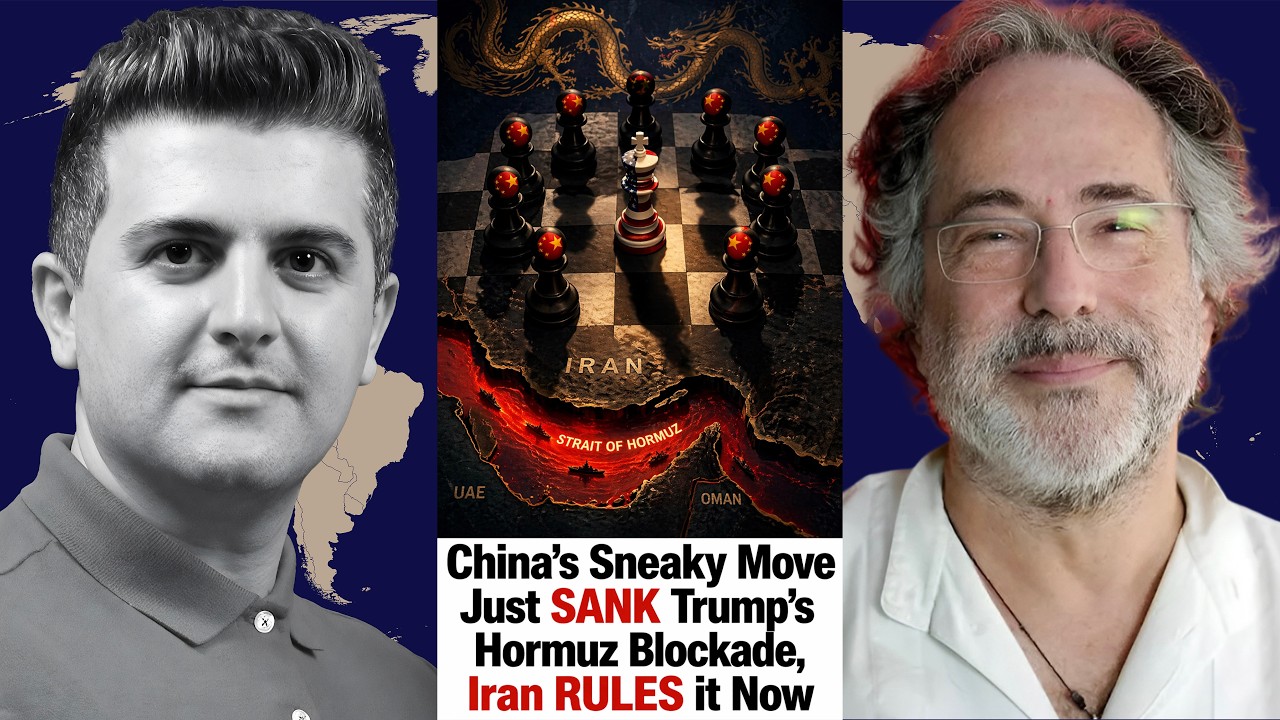
Pepe Escobar: “Total Failure”: Trump’s Blockade Just Backfired Disastrously
"Pepe Escobar argues that the US blockade against Iran, spearheaded by Donald Trump, has utterly failed and backfired, accelerating global economic chaos and challenging US geopolitical dominance."
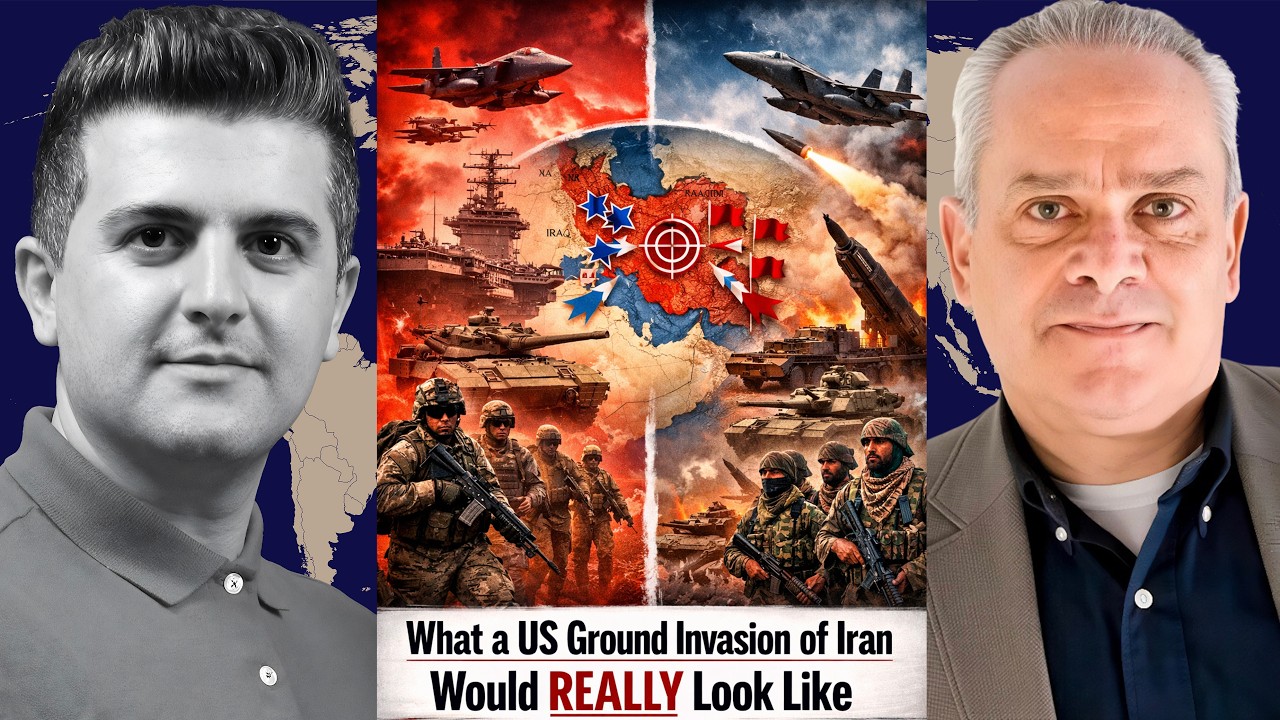
Col. Jacques Baud: What a US Ground Invasion of Iran Would REALLY Look Like
"Colonel Jacques Baud dissects the strategic futility of a US ground invasion of Iran, arguing that current troop levels are insufficient and such an action would backfire, exposing US allies and potentially leading to Iran's nuclearization."

Bibi DEMANDS Ground Troops As Marines Rushed to Iran
"Benjamin Netanyahu is pushing for US ground troops in Iran, framing air strikes as insufficient, while the US rushes Marines to the region and struggles to secure the Strait of Hormuz against surprisingly capable Iranian defenses."