BREAKING: IDF PREPS Iran Strikes; Trump Rejects Deal; Hormuz Blockade BREAKS Tehran | TBN Israel
YouTube · WzBvubMtd-Q
Quick Read
Summary
Takeaways
- ❖IDF and US military forces are preparing for renewed strikes on Iranian infrastructure and energy facilities.
- ❖Iran's latest 14-point proposal is viewed by the US as an unsatisfactory attempt to buy time, omitting any mention of its nuclear program.
- ❖The American naval blockade has caused Iran an estimated $4.8 to $5 billion in lost oil exports, with 31 tankers holding 53 million barrels currently stuck.
- ❖Iran's oil storage facilities are filling up, forcing them to consider shutting down wells, which would cause long-term financial damage.
- ❖Internal cracks are appearing in the Iranian regime, evidenced by conflicting public statements and violations of ceasefire agreements by different factions.
- ❖The US has approved nearly $1 billion in military system sales to Israel, reinforcing regional allies.
- ❖Trump's decision to withdraw 5,000 US troops from Germany is seen as a direct response to German Chancellor Frederick Merz's criticism of his Iran strategy, signaling a rift with Europe.
- ❖Arab commentators are increasingly mocking Iran's 'victory narrative,' suggesting a shift in regional perception of Iran's strength.
Insights
1Imminent Military Action Against Iran
Both the IDF and US military are actively preparing for potential renewed strikes against Iran, specifically targeting infrastructure and energy facilities. Trump has publicly stated that a military option is not ruled out, and IDF officers assess a limited strike operation may be necessary to compel Iran to abandon its nuclear program.
IDF officers assessed that the United States will need to carry out a limited strike operation in Iran in order to subdue the Iranian regime and bring it to its knees. The goal is to force the revolutionary guards into an agreement in which they give up their nuclear program. The Israeli Air Force is prepared to carry out strikes according to plans prepared with the American military. Trump said yesterday on the subject of renewed strikes, 'Maybe it can happen at any moment.'
2Iran's Proposal Deemed a Stalling Tactic
Iran delivered a 14-point proposal to end the war, demanding an end to fighting, removal of US forces, lifting of the naval blockade, release of frozen assets, and compensation. Critically, the proposal omits any mention of its nuclear program, which the US and Israel consider the central issue. This is interpreted as an attempt to gain time and economic relief without addressing core concerns.
Iran published the main points of its proposal to end this war. It seems that the proposal is just another attempt to buy more time because the revolutionary guards sent a 14-point proposal to end the war in response to the American 9-point proposal. Only one thing is not mentioned in this proposal and that relates to the Iranian aggression. The proposal does not mention what will happen to the Iranian nuclear program.
3Naval Blockade's Crippling Economic Impact on Iran
The US naval blockade on Iran's ports has been highly effective, forcing 48 vessels to change course and trapping 31 tankers loaded with approximately 53 million barrels of oil, valued at nearly $5 billion. This prevents money from reaching the Iranian treasury and its proxy groups, and is causing Iran's oil storage facilities to fill up, potentially leading to irreversible damage to oil wells if production is cut.
United States Central Command announces that as part of the blockade on Iran's ports, which has now continued for 20 days, 48 vessels have been forced to change course. According to assessments that are presented in Washington, 31 tankers loaded with about 53 million barrels of oil are stuck without a normal way out. Their value is estimated at nearly $5 billion. Oil comes out of the ground, but it does not leave the country. Storage tanks are filling up.
4Internal Cracks and Weakening Regime in Iran
The combined financial and military pressure is causing internal instability within the Iranian regime. This is manifested by leadership speaking in 'separate voices,' publicly contradicting each other, and violating ceasefire agreements. While not necessarily signaling imminent collapse, these are clear indicators of a weakened state.
It seems that the financial and military pressure combined are really pushing the Iranian regime to a point where they're starting to have cracks within their leadership. We've seen this in the fact that they speak in separate voices. We've seen them commit to a ceasefire agreement in the Strait of Humus only to violate it by a different faction in the regime only hours later.
Bottom Line
The US withdrawal of 5,000 troops from Germany is a direct punitive measure against European criticism of Trump's Iran strategy, indicating a significant rift within NATO regarding Middle East policy.
This move weakens NATO's collective security posture and signals that the US is willing to act unilaterally, potentially isolating Europe and reducing its leverage in future diplomatic efforts concerning Iran.
Other global powers (e.g., China, Russia) could exploit this transatlantic division to advance their own interests in the Middle East or to undermine Western alliances.
Arab commentators are publicly mocking Iran's 'victory narrative,' suggesting a shift in regional perception where Iran is increasingly seen as struggling rather than dominant.
This erosion of Iran's perceived strength could embolden regional adversaries and reduce the effectiveness of its proxy networks, as the 'perception of power' is crucial in Middle Eastern geopolitics.
States seeking to counter Iranian influence could leverage this narrative shift to build stronger regional coalitions or to support internal opposition movements within Iran.
Key Concepts
The Game of Oil and Time
This model describes the strategic standoff between the US and Iran, where the US imposes a naval blockade to choke Iran's oil exports, betting that Iran's economy will collapse before global oil prices or political pressure force the US to relent. Iran, conversely, aims for rising oil prices and increased international pressure on the US to lift the blockade, turning its own economic pain into global leverage.
Lessons
- Monitor global oil prices and shipping routes, particularly in the Strait of Hormuz, as they are key indicators of the effectiveness of the naval blockade and potential for escalation.
- Observe statements from various factions within the Iranian regime for signs of further internal division or desperate actions, which could signal an impending shift in the conflict.
- Track diplomatic efforts by third-party mediators like Pakistan, but prioritize official statements from the US and Israel regarding the nuclear program, as this remains the non-negotiable core issue.
Notable Moments
Trump's statement that a situation with no agreement might be the best option, allowing the US to continue the successful blockade.
This indicates a shift in US strategy, prioritizing sustained economic pressure over a potentially weak diplomatic resolution, and suggests a willingness to endure a prolonged standoff.
The IDF destroying 120 Hezbollah targets in southern Lebanon over one weekend, including command posts and weapon storage facilities.
This demonstrates Israel's systematic campaign to dismantle Hezbollah's infrastructure, signaling that even amidst the Iran crisis, Israel is actively degrading its proxy threats on other fronts.
Quotes
"Maybe we don't need an agreement. Maybe we can just go on without an agreement and if the Iranians misbehave, bam, we'll come at them and bomb them."
"If Iran is really winning, why is the fight to bury its leader?"
Q&A
Recent Questions
Related Episodes

Patrick Henningsen: Hezbollah JUST Fired Back at Israel - Iran Vows to “Crush” All Attacks
"Patrick Henningsen argues that the US and Israel initiated an illegal war against Iran, driven by Trump's incompetence and Israeli influence, leading to an inevitable escalation with severe global economic repercussions."

🚨 TOTAL F*CKING CHECKMATE 😂😂😂
"The host argues that Trump's 'ceasefire' with Iran was a calculated '5D chess' move to orchestrate a global energy market reshuffle, while simultaneously lambasting 'woke' domestic policies and the 'freefall' of anti-Trump conservative figures."
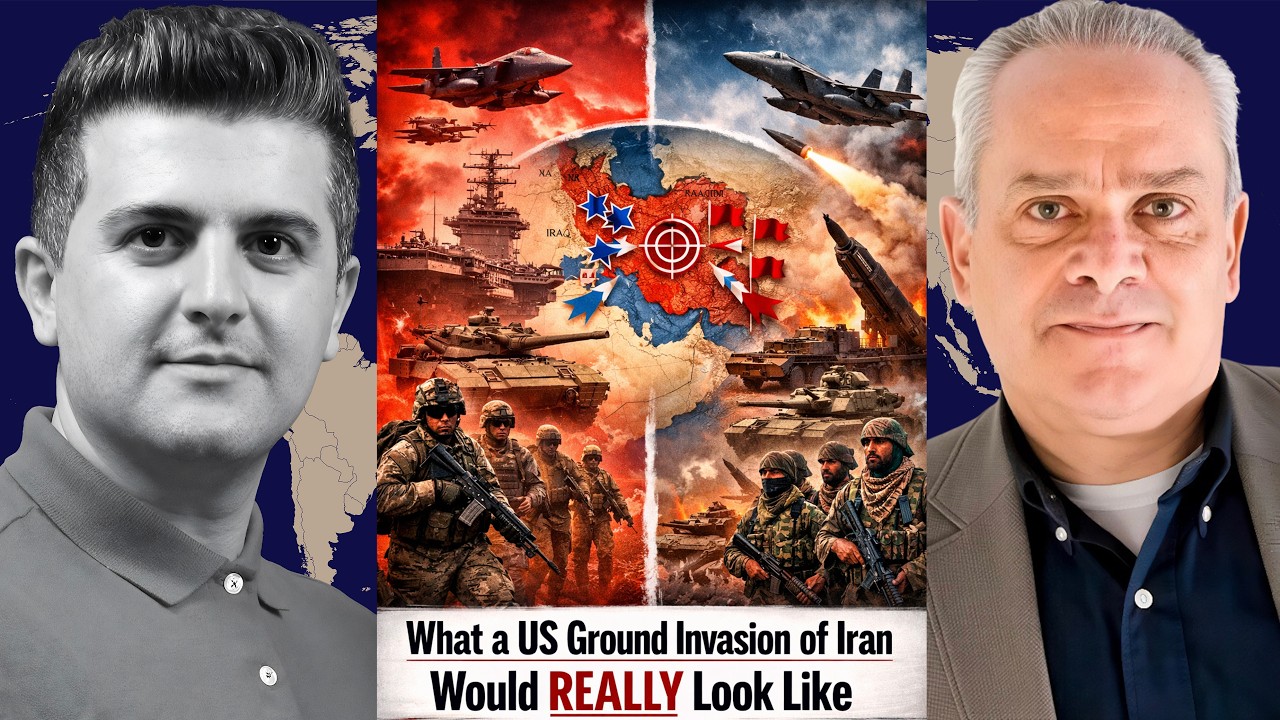
Col. Jacques Baud: What a US Ground Invasion of Iran Would REALLY Look Like
"Colonel Jacques Baud dissects the strategic futility of a US ground invasion of Iran, arguing that current troop levels are insufficient and such an action would backfire, exposing US allies and potentially leading to Iran's nuclearization."

Iran Update: Israel’s Newest Bombing Campaign, the Oncoming War With China and How to Avoid It
"Colonel Wilerson reveals how the US and Israel are actively bombing China's strategic infrastructure in Iran, escalating a covert economic war that Beijing intends to win without direct military conflict by dismantling the dollar's global dominance."