
Trump’s Humiliation in Iran Changes Everything (w/ Bill Kristol) | The Bulwark Podcast
YouTube · XHO7uwbXE0Y
Quick Read
Summary
Takeaways
- ❖Trump's Iran policy is viewed as a 'serious defeat' for the US, allowing Iran to establish control over critical international waters.
- ❖The 'America First' approach is actively dismantling the post-World War II international order, leading to weakened alliances and increased global instability.
- ❖Aggressive Republican gerrymandering in Southern states is a direct challenge to minority voting rights and democratic principles.
- ❖Instances of cabinet members prioritizing personal gain or public relations over their duties, like Sean Duffy's road trip, expose a perceived lack of concern for ordinary Americans.
- ❖Trump's golden statue symbolizes a deep narcissism that could be a political liability, contrasting with public concerns over economic issues.
Insights
1Iran Situation: A Strategic Defeat for the US
Bob Kagan's analysis, supported by Bill Kristol, frames the current situation in Iran not as a minor setback but as a 'serious defeat' for the US. Iran has successfully established the principle that it can close the Strait of Hormuz at its discretion, a move it had avoided for 40 years even during previous conflicts. This fundamentally alters global trade and energy security.
Bill Kristol discusses Bob Kagan's Atlantic article 'Checkmate in Iran' and states, 'Bob is more struck by the severity of that defeat. Also struck by the fact that Iran... Iran's not so eager to let Trump slither away, right? And that's really striking. And Iran feels they have the upper hand.' He adds, 'The one thing they've never done in the last 40 years been intimidated from doing was closing the straight... And now they've established the principle that they can do this. That's a huge defeat.'
2Erosion of the Post-World War II International Order
Trump's 'America First' ideology is systematically dismantling foundational principles of the post-WWII global order, such as freedom of navigation and the reliability of US alliances. This shift encourages other nations to seek self-reliance or alternative alliances, leading to increased global instability and a diminished US standing.
Tim Miller notes, 'This one of like freedom of navigation on the seas is something that just has been the norm in the post-World War II era... and that is now in question.' Bill Kristol elaborates, 'Who needs all this upholding the international order and providing a public good of of uh you know free transit of the seas and holding open straits that are thousands of miles away from us... that is just a recipe ultimately for that's what kind of got us into two world wars.'
3Ukraine's Military Gains and European Stepping Up
Despite initial US aid cuts, Ukraine has made significant military progress, particularly in drone warfare, shifting the battlefield dynamics. The recent loss of Orban in Hungary has unblocked 90 billion euros in EU aid, further strengthening Ukraine's position and demonstrating Europe's increased commitment in the face of perceived US disengagement.
Bill Kristol states, 'Ukraine's progress in the drone and the drone side of things and the progress of drones as a military weapon and the transformation of the battlefield that they have caused is pretty astounding.' He later adds, 'Orban losing is that he'd been blocking the $90 billion of aid from the EU to Ukraine which probably is enough for them for the next year.'
4Aggressive Gerrymandering and Voter Suppression in the South
Republican-led redistricting efforts in Southern states are described as 'grotesque' and 'purely racial gerrymandering,' specifically designed to dilute the voting power of black communities and minimize their representation in Congress. The overturning of Virginia's ballot initiative for redistricting on technical grounds further exemplifies partisan judicial intervention.
Tim Miller discusses the Virginia ruling, 'The courts overturned that.' Bill Kristol describes the Southern situation as 'truly insane... to just have no blacks in our congressional delegation in these states that have 20 25% black.' Tim Miller specifically mentions Tennessee: 'they cut out Memphis into a third a third a third that's they also cut up the black vote a third a third a third right.'
5Cabinet Incompetence and Self-Serving Behavior
The Trump administration's cabinet is characterized by incompetence and a self-serving attitude, exemplified by Secretary of Transportation Sean Duffy announcing a seven-month, corporate-funded 'road trip' while Americans face skyrocketing gas and air travel prices. This behavior is seen as tone-deaf and a significant political vulnerability.
Tim Miller plays a clip of Sean Duffy announcing his 'seven-month road trip' and comments, 'A seven-month road trip for the Secretary of Transportation. We're paying his salary... Well everybody is enraged about uh skyrocketing gas prices. I that to say to call that tonedeaf feels like an understatement.' Bill Kristol calls them 'self-centered and smug and self-satisfied, such jackasses.'
6Trump's Golden Statue: A Symbol of Narcissism and Political Opportunity
The dedication of a 22-foot golden statue of Trump at his golf course is viewed as a clear manifestation of his narcissism and solipsism. While personally gratifying for Trump, this act, along with proposals for a triumphal arch in Washington, presents a political opportunity for Democrats to highlight his self-absorption versus the public's real concerns.
Tim Miller describes the statue as 'a golden calf at Mara Lago' and quotes Pastor Mark Burns denying it's a golden calf but about 'honor.' Bill Kristol notes, 'It's like not a good thing you ought to have to say about something if you're a pastor blessing and consecrating this wonderful grotesque.' He adds, 'Politically it brings home even more it's all all he cares about is himself.'
Bottom Line
Trump's foreign policy failures, particularly in Iran, may paradoxically push him towards 'easier' military interventions in the Western Hemisphere, like Cuba, to secure a 'big win' for his base.
This suggests a potential shift in US military focus, driven by presidential vanity rather than strategic necessity, with unpredictable consequences for regional stability.
Analysts and policymakers should monitor rhetoric and actions regarding Latin American nations, anticipating potential shifts in US military and diplomatic engagement.
The overt and aggressive nature of Republican gerrymandering in the South, specifically targeting black voters, could generate a significant backlash, boosting minority turnout in Senate and presidential elections.
While gerrymandering impacts House races, increased turnout in response to perceived disenfranchisement could swing statewide elections, potentially offsetting some of the intended effects.
Democratic strategists should focus on mobilizing voters around voting rights and racial justice issues, leveraging the outrage generated by these redistricting efforts to drive engagement.
The perceived incompetence and self-serving behavior of Trump's cabinet, exemplified by figures like Sean Duffy, offer a potent political narrative for opponents.
Such instances can effectively counter 'America First' messaging by demonstrating a disconnect between the administration and the everyday concerns of Americans, making it a powerful tool for persuasion.
Opponents should consistently highlight these examples of cabinet conduct, framing them as evidence that the administration cares more about personal gain and image than public service or economic relief.
Key Concepts
America First
A foreign policy doctrine prioritizing domestic interests and bilateral agreements over multilateral institutions and global responsibilities, often leading to isolationism and a reduction in US global influence.
Post-World War II Order
The international system established after WWII, characterized by US leadership, alliances (like NATO), and principles such as freedom of navigation, which is now seen as eroding due to current US policies.
Lessons
- Closely monitor the geopolitical implications of Iran's asserted control over the Strait of Hormuz, as it signals a significant shift in global energy security and maritime freedom.
- Engage in local and state-level activism to counter gerrymandering efforts, particularly those targeting minority voters, by supporting voting rights organizations and advocating for independent redistricting commissions.
- Highlight and critique instances of perceived government incompetence or self-enrichment, such as cabinet members' use of public office for personal benefit, to expose a disconnect between leadership and public concerns.
Notable Moments
Discussion of Bob Kagan's 'Checkmate in Iran' article and its assessment of the US strategic defeat.
This moment sets the tone for the discussion, emphasizing the severity of the geopolitical shift and challenging conventional views of the Iran situation.
Analysis of Trump's 'America First' doctrine dismantling the post-World War II international order.
It explains the broader, long-term consequences of current US foreign policy on global stability and alliances.
Critique of Secretary of Transportation Sean Duffy's seven-month, corporate-funded road trip.
This exemplifies perceived cabinet incompetence and a tone-deaf approach to public concerns about economic issues like gas prices.
The dedication of a 22-foot golden statue of Trump at his golf course.
This event serves as a concrete example of Trump's narcissism and self-aggrandizement, offering a clear political narrative for opponents.
Quotes
"The one thing they've never done in the last 40 years been intimidated from doing was closing the straight. Really kind of striking, isn't it? All these wars going on in the region... They didn't close the straight. That principle, they didn't want to challenge the principle that we upheld with many others of, you know, freedom of passage in international waters. And now they've established the principle that they can do this. That's a huge defeat."
"This one of like freedom of navigation on the seas uh is something that just has been the norm um in the postw World War II era um and and the US through you know sometimes through military power, but also just like projection of strength and um you know, fear uh of from other countries of wanting to incur the wrath of the US. Uh you know, we've had like the these freedom of the seas uh for for commercial ships to travel globally and like that is now in question."
"They're so self-centered and smug and self-satisfied, such jackasses. They don't see how this stuff looks. I I hope it looks bad and I hope people take advantage of it."
"Let me say this plainly. This is not a golden calf. The statue is not about worship. It is about honor."
"Now that your favorite leader is making the draft mandatory, I assume that all of you will be signing up to go fight in Iran. Or do you tough talking only go to the Middle East for comedy?"
Q&A
Recent Questions
Related Episodes

Patrick Henningsen: Hezbollah JUST Fired Back at Israel - Iran Vows to “Crush” All Attacks
"Patrick Henningsen argues that the US and Israel initiated an illegal war against Iran, driven by Trump's incompetence and Israeli influence, leading to an inevitable escalation with severe global economic repercussions."
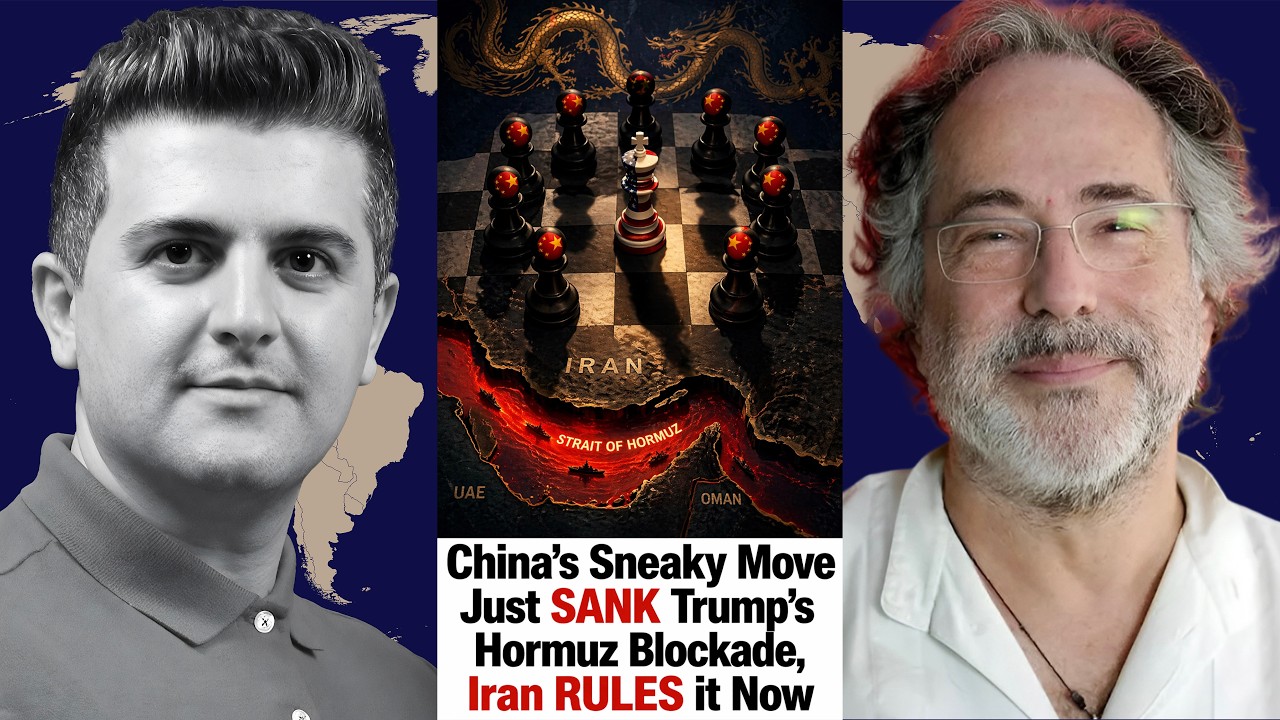
Pepe Escobar: “Total Failure”: Trump’s Blockade Just Backfired Disastrously
"Pepe Escobar argues that the US blockade against Iran, spearheaded by Donald Trump, has utterly failed and backfired, accelerating global economic chaos and challenging US geopolitical dominance."
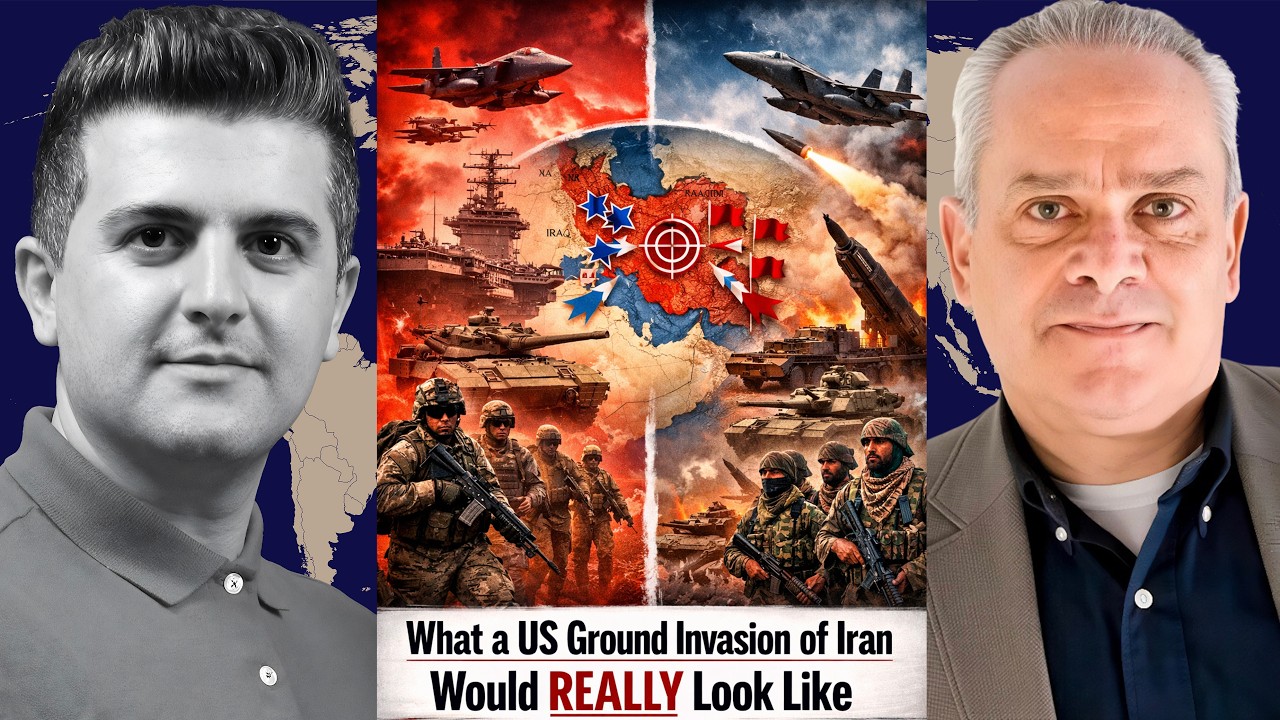
Col. Jacques Baud: What a US Ground Invasion of Iran Would REALLY Look Like
"Colonel Jacques Baud dissects the strategic futility of a US ground invasion of Iran, arguing that current troop levels are insufficient and such an action would backfire, exposing US allies and potentially leading to Iran's nuclearization."

🚨 TOTAL F*CKING CHECKMATE 😂😂😂
"The host argues that Trump's 'ceasefire' with Iran was a calculated '5D chess' move to orchestrate a global energy market reshuffle, while simultaneously lambasting 'woke' domestic policies and the 'freefall' of anti-Trump conservative figures."