
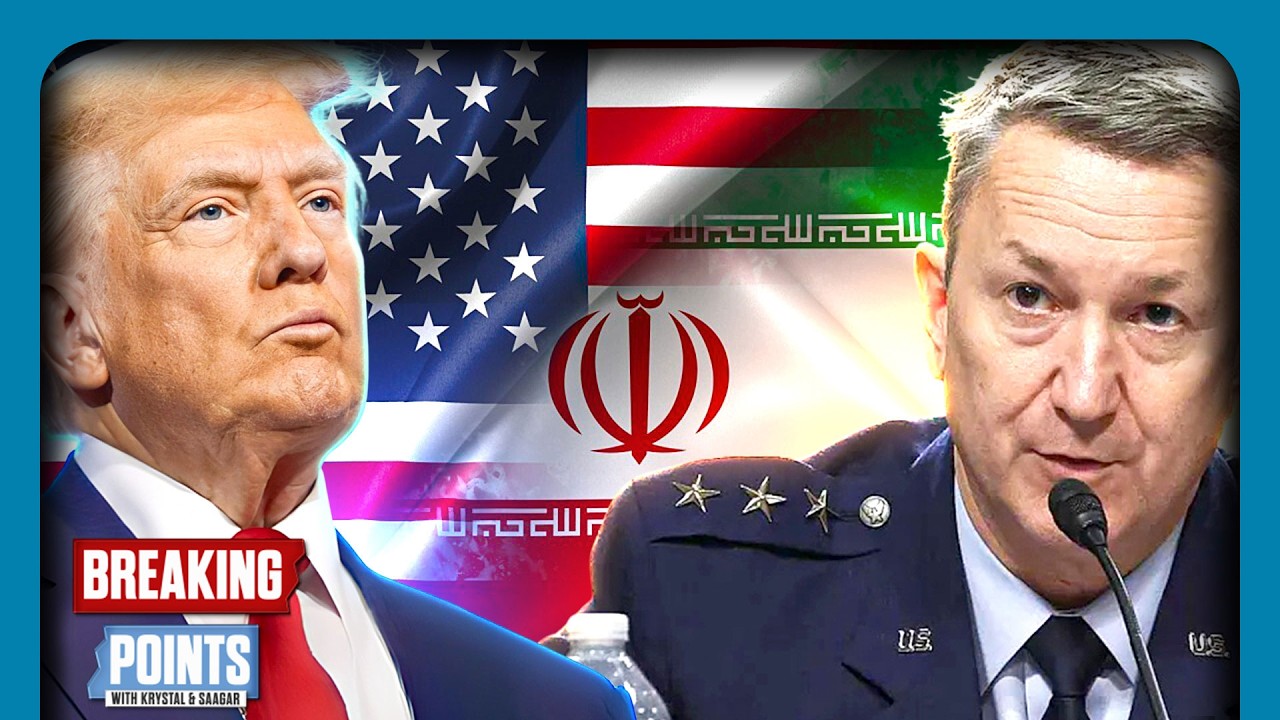
Republicans Rebuke Trump Over Iran, Vote to End War | Command Post
YouTube · XLL0sQGqWLM
Quick Read
Summary
Takeaways
- ❖The War Powers Resolution vote on Iran was largely symbolic, with legal enforceability remaining ambiguous, but it signaled congressional disapproval of the administration's actions.
- ❖President Trump publicly criticized Republican senators who voted for the War Powers Resolution, calling them 'losers,' highlighting internal party division.
- ❖General Christopher Donahue, a highly regarded four-star general, announced a sudden retirement, fueling speculation about political disagreements within the DoD.
- ❖The potential replacement of a four-star command with a three-star at US Army Europe/Africa could degrade its international reputation and influence.
- ❖A flu outbreak at Lackland Air Force Base, a key training and medical hub, occurred shortly after the Secretary of Defense removed mandatory flu shot requirements.
- ❖Soldiers are legally bound to follow lawful orders, but a lack of clear congressional support for military actions can create uncertainty and impact morale.
- ❖The all-volunteer force, while professional, can inadvertently make it easier for politicians to wage wars due to less direct public connection and 'skin in the game.'
- ❖Civil affairs units, largely composed of reservists with civilian expertise, are critical for military operations, especially in engaging with local populations and infrastructure.
- ❖Concerns are rising among young officers, particularly women, about merit-based promotion and career progression under current DoD leadership, leading to a 'five and dive' mentality.
- ❖The Secretary of Defense's focus on changing religious affiliation codes and chaplain roles is seen as misplaced and potentially damaging to trust and respect for diverse faiths within the military.
- ❖The After-Action Review (AAR) process, a military-developed organizational learning tool, is highly effective for continuous improvement in any field, emphasizing humility, honesty, and psychological safety.
- ❖Perceived military failures, such as the withdrawal from Afghanistan, can have a devastating long-term impact on the morale of service members and future recruitment.
Insights
1Symbolic Nature of War Powers Resolution
The Senate's vote on the War Powers Resolution to end combat operations in Iran was largely symbolic, occurring after major fighting ceased. While it reflects Congress's constitutional authority to declare war, the 1973 War Powers Act's legal enforceability is debated, and no president has ever fully acknowledged its constitutionality. Its primary impact is a message of disapproval from Congress.
The hosts state it's 'largely pro-forma' and 'sort of means nothing, but the symbolism is everything.' They note the Senate waited until 'after we were already in the negotiations phase.'
2High-Profile General's Abrupt Retirement Signals Political Discontent
General Christopher Donahue, a highly respected four-star general considered a future Chief of Staff or Chairman of the Joint Chiefs, announced a sudden retirement. This rapid departure, along with others, suggests significant disagreements with current DoD leadership, particularly 'Hexth,' and raises concerns about a 'fire someone' default response to problems and a purge of dissenting voices.
General Hurling describes Donahue as 'extremely brilliant' and 'potential future chief of staff.' The hosts note the quick retirement 'means there's more a foot' and link it to 'real disagreement' at the Normandy celebration and a pattern of 'suspiciously retiring early' white generals.
3Policy Reversal Leads to Flu Outbreak in Military Training
The Secretary of Defense's decision to remove the mandatory annual flu shot requirement for service members directly contributed to a significant flu outbreak at Lackland Air Force Base, a critical basic training and military medical education hub. This policy, framed as 'freedom,' has immediate negative consequences for military readiness and health.
222 recruits at Lackland AFB have the flu, with four hospitalized, 'not long after Secretary Hegathth removed the requirement that service members get the flu shot every year.' The general highlights Lackland as the 'most important military medical education and training hub in the Department of Defense.'
4Impact of Perceived Failures on Military Morale and Recruitment
Military personnel who participate in operations perceived as failures (e.g., Afghanistan withdrawal) experience devastating morale impacts, questioning the value of their sacrifices. While tactical execution may be strong, a lack of clear strategic success or public support can deter future recruitment and erode trust in leadership, potentially creating a self-fulfilling prophecy of declining quality.
General Hurling states the Afghanistan departure 'really had a devastating effect on all of the soldiers and airmen and Marines.' Ben Parker worries about 'middle school or high school' students seeing 'incoherent war with Iran' and thinking 'I don't want to be involved in that.'
Key Concepts
After-Action Review (AAR)
A structured organizational learning tool, originally from the military, designed to improve performance by systematically analyzing an event or operation. It centers on four questions: 1) What was supposed to happen? 2) What actually happened? 3) What caused it to happen? 4) What can we learn from it? Its effectiveness relies on humility, honesty, and psychological safety.
Civil-Military Divide
The growing disconnect between the civilian population and the military, exacerbated by the all-volunteer force. With less than 1% of Americans serving, and fewer still knowing someone in uniform, political leaders may face less public pressure when deciding to deploy forces, potentially enabling 'endless wars.'
Lessons
- Implement the After-Action Review (AAR) process in your organization: Regularly ask 'What was supposed to happen?', 'What actually happened?', 'What caused it?', and 'What did we learn?' to foster continuous improvement.
- Prioritize psychological safety in feedback: Ensure team members feel safe to admit mistakes and offer honest critiques without fear of reprisal, as this is crucial for effective learning and growth.
- Cultivate empathy and responsibility in young leaders: Encourage qualities like empathy, resilience, humility, and service to others, as these are foundational for strong leadership and character, especially in challenging environments.
Implementing the After-Action Review (AAR) Process
Define 'What was supposed to happen?': Clearly articulate the objectives, plans, and expected outcomes of the operation or project.
Analyze 'What actually happened?': Document both successes and failures, using objective data (e.g., video, simulations, reports) to establish a factual account.
Determine 'What caused it to happen?': Investigate the root causes of discrepancies between planned and actual outcomes, including human error, communication breakdowns, or systemic issues.
Identify 'What can we learn from it?': Translate findings into concrete lessons, actionable improvements for future operations, and best practices to reinforce.
Quotes
"The military doesn't get a vote. Soldiers follow lawful orders from their commanders which emanate up to the commander-in-chief. But congressional involvement should force elected leaders to explain their objectives, the costs, the risks, the endstates before Americans are asked to send their sons and daughters to war and make the sacrifice."
"If the best officers leave, if the best NCOs's leave because conditions are complex or tough or you don't understand them at the time, uh they create exactly the same kind of outcome they fear."
"The things that make AARs work are humility, honesty, an understanding that everybody makes mistake and the key is to uh try and avoid making those mistakes or train people to avoid them. But then the fifth thing is psychological safety. Are you going to get fired because you made those mistakes or are you going to be given a chance to improve them?"
Q&A
Recent Questions
Related Episodes
Top Generals DIRE WARNING: Iran War Will Be Disaster
"Pentagon generals are leaking dire warnings about the US military's readiness for a war with Iran, citing critically low munition stockpiles and personnel fatigue, while political figures push for conflict."

Tucker Carlson: Iran War Is The END Of Trump And MAGA
"The Young Turks hosts dissect Tucker Carlson's sharp criticisms of Donald Trump and the 'Iran War,' expose congressional cowardice regarding war powers, and detail the devastating human cost of military conflicts, all while advocating for a unified populist movement to dismantle political corruption."

SCOTUS Rejects Black Rastafarian. Voting Rights Purge Blocked. Police Kill 1-Year-Old
"The Supreme Court's 'religious freedom' stance is selectively applied, undermining civil rights and federal laws, while police brutality and voter suppression continue to disproportionately target Black communities, underscoring the critical need for massive voter turnout to drive systemic change."

SCOTUS Voting Rights Blow. Black Officers Purged. Obama Center Attacked. State of Black America
"Roland Martin and Congresswoman Joyce Beatty expose systemic attacks on Black political power and economic advancement, from Supreme Court rulings to military discrimination, urging aggressive voter mobilization and community action."