
I Was Wrongfully Sentenced To 4 Life Sentences At 17
YouTube · Y7_Zgige0zk
Quick Read
Summary
Takeaways
- ❖At 12, the speaker was sent to Cross Creek Manor, a 'concentration camp for children' in Utah, by her mother for being 'stubborn' and not fitting her desired image.
- ❖The facility was described as a highly controlled, abusive environment where children were isolated, manipulated, and subjected to predatory staff.
- ❖Her father died by suicide during her second stay at the camp, a fact the staff concealed and used to manipulate her.
- ❖At 17, she became involved with a 35-year-old ex-convict, 'Jim' (Whitey), who coerced her into driving during a robbery and subsequent police chase where he fired at officers.
- ❖Despite Jim's testimony that she was forced, the media labeled her 'Bonnie and Clyde,' and the prosecution portrayed her as 'the mastermind' due to her father's police background and a misconstrued journal.
- ❖She was tried alongside Jim by an incompetent public defender, leading to her conviction for four counts of attempted murder and firing at a peace officer, each carrying a life sentence.
- ❖Before sentencing, she endured a '90-day trial to prison' where she was observed to determine if she was 'prison material,' a process she 'failed' due to her 'cop killer' label.
- ❖Her brother also died by suicide while she was in prison; she watched his funeral live on a smuggled cell phone.
- ❖A later change in law reclassified her as a juvenile offender, leading to her release after 18 years of incarceration.
- ❖The speaker emphasizes that hope, even if a 'horrible plan,' is essential for survival in the dehumanizing prison system.
Insights
1The 'Concentration Camp for Children' Experience
At age 12, the speaker was forcibly taken from her home by two men in the middle of the night and sent to Cross Creek Manor in Utah, a facility she describes as a 'concentration camp for children.' This 'troubled teen' camp, now shut down, subjected residents to extreme control, isolation, forced eating, and observation during undressing by male staff. The speaker's mother sent her there because she was 'too much like her dad' (stubborn) and didn't conform to her mother's feminine ideals.
She was 12 when two men woke her up, put her in a white van, and flew her to Utah. She was placed in a cell, forced to eat, watched undress by men, and forbidden to talk to others. The facility was later shut down.
2Systemic Failures in the Legal Process
Despite being a 17-year-old coerced into a crime by an older, dangerous man, the speaker faced a profoundly unjust legal process. She was assigned an incompetent public defender who failed to separate her trial from her accomplice's, ensuring the jury saw them together. Her personal journal, expressing grief and anger over her father's suicide, was twisted by the prosecution to portray her as a 'cop hater' and 'mastermind,' fitting a 'Bonnie and Clyde' media narrative during a politically charged time in California.
Her public defender didn't file paperwork to separate their trials, leading her to be tried next to Jim. Her journal, discussing her father's suicide, was used to paint her as hating police. Jim's statements about her coercion were inadmissible because their trials weren't separated.
3The '90-Day Trial to Prison' and Incarceration Realities
After conviction, the judge ordered a '90-day trial to prison' to assess if she was 'fit for prison' before formal sentencing. Labeled a 'cop killer' despite no one being harmed, she 'failed' this observation period. Her subsequent 18-year incarceration, including four concurrent seven-to-life sentences, exposed her to the stark realities of the prison system, including corruption, black markets, and the emotional toll of losing her brother to suicide while behind bars.
The judge sent her to CIW for 90 days to determine if she was 'prison material.' She was labeled a 'cop killer,' influencing staff perception. She learned about the black market, met Susan Atkins, and later watched her brother's funeral via a smuggled phone.
4Hope as a Survival Mechanism
Throughout her 18 years of incarceration, the speaker, like many others, clung to hope as a primary survival mechanism. Even when facing overwhelming odds and repeated denials for parole, the belief in eventual release, or even the process of appealing, provided a sense of purpose and a way to endure the harsh realities of prison life. This hope, though often 'a horrible plan,' was critical to maintaining mental well-being and avoiding despair.
She describes herself as 'naive and hopeful' even after sentencing. The host recounts a story of an inmate who filed a 2255 appeal, not expecting to win, but for the 'hope' it provided during the process. The speaker affirms this, stating, 'If you don't you're screwed.'
Lessons
- Advocate for comprehensive legal reforms, especially concerning juvenile offenders and the 'felony murder rule' or its equivalents, to prevent unjust sentences based on association rather than direct action.
- Support organizations pushing for oversight and accountability within the 'troubled teen industry' and correctional facilities to prevent abuses and protect vulnerable youth.
- Educate yourself and others on the importance of competent legal representation, particularly for indigent defendants, to ensure fair trials and prevent miscarriages of justice.
Notable Moments
Being forcibly taken from her home at 12 by two men in the middle of the night to be sent to Cross Creek Manor.
This event marks the beginning of her institutional trauma, setting a precedent for her subsequent experiences with control and lack of agency.
Learning of her father's suicide while at Cross Creek Manor, delivered callously by a counselor, and being isolated afterward.
This was a profound personal tragedy compounded by the facility's inhumane handling, contributing to her deep-seated anger and sense of abandonment.
Being labeled 'Bonnie and Clyde' and 'the mastermind' by the media and prosecution at 17, despite being coerced.
This illustrates the destructive power of media sensationalism and prosecutorial narratives in shaping public perception and influencing legal outcomes, especially for young defendants.
Watching her brother's funeral live on a smuggled cell phone while incarcerated, after being denied permission to attend.
This highlights the extreme lengths individuals go to maintain connection and grieve in prison, and the callousness of prison administration in denying fundamental human rights during times of loss.
The moment a parole board member had to lean over and tell her she was going home because the reality didn't immediately register after 18 years.
This underscores the profound psychological impact of long-term incarceration, where the concept of freedom becomes so distant it's almost unbelievable.
Quotes
"It is like a concentration camp for children. That's really what it would be."
"It's worse than prison, like prison you can finagle on the black market other things, but this is there's no finangling."
"The wonderful law says that if you and I go in California, if you and I go into a liquor store and I say, 'Matt, just stay in the car. I'm going to go inside and get us drinks.' You might as well have gone in with me, correct? You might as well have gone in with me cuz no matter what I do, you're just as guilty."
"Even though you're a victim of your own crime, I have no choice. Literally on court documents. That's what he says."
"It doesn't matter how bad your case is. If you don't have that hope, oh, you just It's right. And hope isn't a plan. It's a horrible plan. That's all you got."
"If you ever want to see the scourge of the earth, wait till shift change at a prison."
Q&A
Recent Questions
Related Episodes

The Lindbergh Conspiracies | Post Mortem
"Explore the enduring mystery of the 1932 Lindbergh kidnapping, from the compromised investigation and Bruno Hauptmann's unfair trial to Charles Lindbergh's controversial character and the modern resurgence of conspiracy theories."

Widow Realizes Cops Know She Poisoned Her Husband
"A seemingly routine burglary unexpectedly unravels a year-old murder, exposing a mother-daughter poisoning plot and a chilling pattern of suspicious deaths."

The Root Beer Float Murder | Full Episode + Post Mortem
"A seemingly natural death of a husband is unmasked as a calculated poisoning plot by his wife and stepdaughter, revealed only after an unrelated burglary exposes a trail of incriminating text messages."
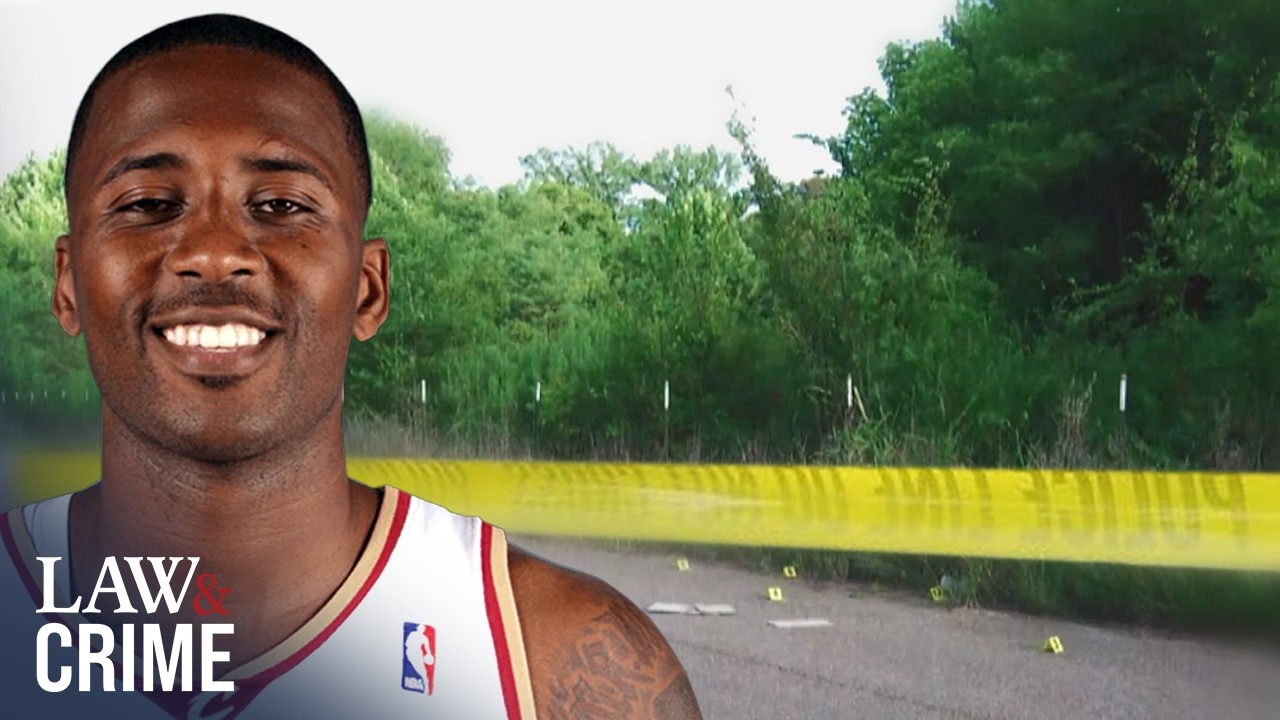
Killer Cases: NBA Star Lured to Execution In Rural Tennessee
"The decade-long cold case of NBA star Lorenzen Wright's murder was cracked through a persistent mother, a jailed informant, and a covert police operation that recovered the murder weapon from a lake and exposed a conspiracy driven by greed."