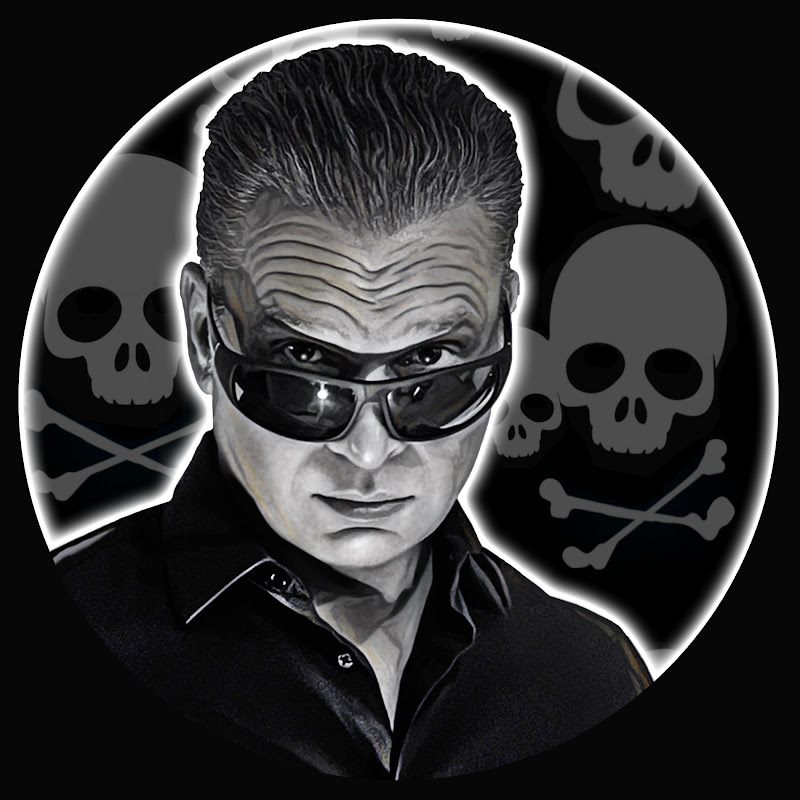
White Guy Hood Survival Guide | Black Label Services
YouTube · YJtn17xwcJc
Quick Read
Summary
Takeaways
- ❖The guest, known as 'Black,' was the only white child in his South St. Pete neighborhood in the 1980s, facing constant abuse and theft.
- ❖He started dealing crack cocaine at 12-13 years old, quickly becoming a successful and powerful figure in the local drug trade.
- ❖His crew, '8 Street Hype,' engaged in violent territorial wars, leading to murder and a reputation for ruthlessness.
- ❖He was arrested in a large federal raid, facing a life sentence, but refused to 'snitch' on his associates, resulting in a 15-year prison term.
- ❖After prison, he leveraged his street name and reputation for loyalty and enforcement to create Black Label Services, a luxury security and transportation company.
- ❖Black Label Services caters to celebrities and high-net-worth individuals, promising image protection, safety, and absolute secrecy, a value proposition directly stemming from his criminal past.
Insights
1Childhood in a Violent, Segregated Ghetto
The guest recounts growing up as the only white child in a poverty-stricken South St. Pete neighborhood in the 1980s. He faced constant bullying, theft, and physical abuse, with no support from a struggling mother or a failing school system. This environment forced him to develop a tough, self-reliant mentality from a very young age.
He describes coming out of his house with a basketball, food, or bicycle, only for it to be stolen. He was regularly beaten by other kids, and teachers offered no guidance. His mother, also struggling, couldn't teach him anything and was miserable, often taking it out on him. He was a latchkey kid, in school from AM to PM, then returning to a crime-ridden environment. He recounts being dragged by dog leashes and beaten with bicycle chains.
2Origin of the Nickname 'Black' and First Act of Defiance
His nickname 'Black' originated from being the only white kid in his predominantly Black neighborhood. Around age 11, tired of constant abuse, he fought back against a 13-year-old bully named JR, severely beating him. This act earned him respect and changed how others perceived him, marking a turning point from victim to enforcer.
He states, 'My name black stems from me being the only white kid in the neighborhood.' He describes beating JR 'all across the yard non-stop,' which made other kids realize 'he got some heart' and 'he could really fight.' This made people 'rethink the situation' when he started fighting back.
3Entry into Drug Dealing and Rapid Ascent
At a young age (around 12-13), he was recruited by older drug dealers, 'OGs,' to sell crack cocaine during the 1986 crack epidemic in St. Pete. He quickly excelled due to his 'A1 business' practices, reliability, and growing reputation for toughness, earning significant money and status in the community.
He describes the OGs, like Wonderman, who owned a car wash that was a hub for drug activity. He was offered a 'package' to sell and started making 'a lot of money really, really fast,' selling 50-packs of crack for $10 each, making $500 per pack. He emphasizes his 'A1 business' approach: being on time and delivering exactly what was promised.
4Confrontation with Mother and Acceptance of Criminal Path
At 14, after acquiring a luxury car from drug money, he confronted his mother, who attempted to discipline him. He asserted his new identity, arguing that her choices had placed him in an environment where crime was the only path to success, leading him to become a drug dealer and, eventually, a killer.
His mother confronted him with a belt about the car and money. He told her, 'What you ain't going to do is continue to abuse me any longer. Now, I may not be the man of this house, but I'm the man of this house.' He blamed her for putting him in that environment, asking, 'Where the [expletive] you thought I was going to get my education? Where the [expletive] you thought I was going to [expletive]?' He stated, 'I'm a drug dealer. And eventually what led me to into a killer.'
5Federal Indictment and Refusal to Cooperate
His extensive drug operation attracted federal attention, leading to a massive raid and indictment. Despite facing a potential life sentence, he steadfastly refused to 'snitch' on his co-conspirators or provide information to federal agents, adhering to a 'street code' of loyalty.
He recounts a detective (Anthony) trying to entrap him with drug and gun purchases over six months, building a federal case. During his interrogation, he was shown video surveillance and told he faced a life sentence. He explicitly told agents, 'I ain't telling you a [expletive] thing. Nothing. [Expletive] you.' He received an initial 10-year sentence, which was increased to 15 years after he continued to refuse cooperation.
6Rebranding 'Black' into Black Label Services
After serving 15 years, he realized his street name 'Black' and his reputation for integrity and enforcement needed rebranding for legitimate business. He founded Black Label Services, a luxury chauffeur and bodyguard company, strategically leveraging his past to offer unparalleled discretion, safety, and image protection to high-profile clients.
He explains, 'I had to figure out how to rebrand this name... to people who mean something other than the life I once lived.' He came up with 'Black Label Services,' defining 'Black Label' as 'top tier.' He states his mission: 'I pride my clients image, safety, and secrecy.' He emphasizes, 'I just did 15 years. Ain't told on nobody. So what the [expletive] I'm going to get here for for $1,000? And sell your soul to to the media. I'm not doing that.'
Bottom Line
The guest's ability to transition from a brutal street enforcer to a luxury service provider highlights the transferable skills of leadership, strategic thinking, and reputation management, even if forged in illicit activities.
This suggests that core entrepreneurial traits and a strong personal brand (even a notorious one) can be incredibly valuable across vastly different domains, provided there's a conscious effort to reframe and apply them ethically.
Entrepreneurs can analyze their own unique, perhaps unconventional, experiences or 'stigma' and explore how those qualities could be rebranded or leveraged to create a distinct competitive advantage in unexpected markets, particularly those valuing authenticity and a 'no-nonsense' approach.
The creation of a 'mobile VIP center' (sprinter van) during COVID-19, when clubs were shut down, demonstrates extreme adaptability and market responsiveness.
This shows a capacity to identify unmet needs during a crisis and rapidly innovate a solution that directly addresses new market constraints, turning a challenge into a business opportunity.
Businesses should actively seek out and empower individuals with a 'street-smart' or unconventional problem-solving mindset, as they may be uniquely positioned to identify and capitalize on disruptive market shifts or create innovative solutions where traditional approaches fail.
Opportunities
Luxury Discretion Services for High-Profile Individuals
A business offering private chauffeur, bodyguard, and event security services specifically tailored for celebrities, athletes, influencers, and business tycoons. The core value proposition is absolute discretion, secrecy, and image protection, leveraging a reputation for loyalty and an uncompromising stance against betrayal, even if that reputation was forged in a past criminal life.
Mobile VIP Event & Transportation Service
Convert luxury sprinter vans into fully equipped mobile VIP centers with bars, drinks, and entertainment, offering private transportation for parties and events. This model is particularly effective during periods when traditional venues are restricted or for clients desiring exclusive, private experiences.
Lessons
- Cultivate a strong personal brand: Even a notorious reputation can be rebranded and leveraged if it signifies desirable traits like integrity, loyalty, or toughness in a new context.
- Adapt rapidly to market changes: Identify unmet needs during crises (e.g., COVID-19) and innovate quickly to create new service offerings that address evolving client demands.
- Understand your true value proposition: Recognize the unique skills and experiences you possess, even if unconventional, and articulate how they solve specific problems for your target audience (e.g., discretion and protection for high-profile clients).
Notable Moments
The guest's first experience with murder involved tracking down and eliminating individuals who attempted to kidnap his girlfriend and steal his car in broad daylight in a white neighborhood, after obtaining their information from a police report.
This event marked a significant escalation in his criminal life, transforming him and his crew from drug dealers to 'drug dealers and killers,' solidifying their reputation for extreme retaliation and protection of their interests.
During his federal interrogation, the guest refused to cooperate with agents, even after being shown video evidence and offered a reduced sentence. He even laid his head on a pillow and tried to sleep, infuriating the agents.
This act of defiance, despite severe consequences (an additional five years on his sentence), cemented his 'stand on business' mentality and reputation for unwavering loyalty, which later became a cornerstone of his legitimate business's value proposition.
While in federal prison, the guest co-taught a six-week business course to other inmates with Steve Madden, the shoe designer, and interacted with various other high-profile inmates.
This highlights an unexpected educational experience within the prison system and demonstrates his inherent entrepreneurial drive and ability to connect with diverse individuals, even in a highly structured and restrictive environment.
Quotes
"I'm the only white guy in the whole neighborhood, bro. Brutal. Brutal. I'm talking about brutal. You understand?"
"My name black stems from me being the only white kid in the neighborhood. So my name black really comes from like I was like two, three years old, four years old, five, and everybody just called me black cuz I was the only white kid in the neighborhood."
"You are despising the sun that you put in a G because you chose not to have more education. You chose not to further and do what you needed to do to ensure that I had, you know, a better accolade of life. You chose that, not me. So now I'm here. We have to deal with this. The entire neighborhood's going to have to deal with this."
"You've created this monster. No doubt about it. And And you don't get to tell me when enough is enough. Cuz when I was asking you to stop doing it, you didn't. So you you didn't give a [expletive] about me. I don't give a [expletive] about you."
"I just did 15 years. Ain't told on nobody. So what the [expletive] I'm going to get here for for $1,000? And sell your soul to to the media. I'm not doing that. And people understand that I did lose 15 years. But those 15 years made a whole lifestyle for me now because everybody can appreciate that I don't sell their secrets on YouTube."
Q&A
Recent Questions
Related Episodes
Killer Cases: NBA Star Lured to Execution In Rural Tennessee
"The decade-long cold case of NBA star Lorenzen Wright's murder was cracked through a persistent mother, a jailed informant, and a covert police operation that recovered the murder weapon from a lake and exposed a conspiracy driven by greed."
TEEN'S DNA REVEALED IN ANNA KEPNER'S R*** KIT
"The investigation into Anna Keaptainner's death on a cruise ship reveals shocking DNA evidence, a previously unknown male minor, and critical questions about evidence handling and family dynamics."

M&M's Employee Steals $26 MILLION (How He Did It)
"This episode details a series of white-collar crimes, from an M&M's sugar expert embezzling $26 million to a fake immigration attorney scamming undocumented immigrants, highlighting vulnerabilities in various systems and the surprising leniency of some sentences."

The Lindbergh Conspiracies | Post Mortem
"Explore the enduring mystery of the 1932 Lindbergh kidnapping, from the compromised investigation and Bruno Hauptmann's unfair trial to Charles Lindbergh's controversial character and the modern resurgence of conspiracy theories."