TOP Iranian Official ASSASSINATED By Israel As 200 US Troops Wounded
YouTube · YWm56nKzgK8
Quick Read
Summary
Takeaways
- ❖Israel's assassination of Ali Larijani, a top Iranian official, is analyzed as potentially strengthening hardline control rather than weakening the regime.
- ❖The US-led effort to control the Strait of Hormuz has largely failed, with Iran maintaining control over shipping and oil exports.
- ❖European and Gulf nations are increasingly unwilling to support US military actions against Iran due to political unpopularity, resource constraints, and perceived lack of US defense.
- ❖The conflict has resulted in over 200 US troops wounded and 13 dead, alongside significant operational challenges for US naval assets like the USS Gerald Ford.
- ❖Iran is refusing US requests for negotiations, aiming to establish long-term deterrence by inflicting pain on the US and its allies.
Insights
1Assassination of Ali Larijani May Centralize Iranian Power
Israel announced the killing of Ali Larijani, a top Iranian official and key civilian figure, in a joint Israeli-American strike. While intended as a 'regime collapse effort' and 'revenge for protesters,' initial analysis suggests this action is more likely to increase the control of the IRGC and the new Ayatollah by removing an independent power base and potential competitor within the security establishment.
Israeli defense minister stated Larijani was targeted and killed (). Financial Times described him as one of the most powerful members of the Iranian regime (). Initial analysis indicates this will likely increase IRGC control and centralize power (, ).
2US Strait of Hormuz Strategy Fails to Contain Iran
The hosts argue that Trump's 'Straight of Hormuz gambit' has failed, as Iran has effectively closed the strait for certain ships while continuing its own oil exports. Despite US assertions of control, Iran has 'taken control and called the shots' regarding passage, demonstrating a significant miscalculation by the US administration.
Trump 'gotten in over his head with the Straight of Hormuz' (). Iran has 'in effect closed the straight of Horbuz' and 'continued to be able to export oil themselves' ().
3International Coalition Against Iran Fractures Amidst US Miscalculations
European nations are reluctant to join the US coalition due to political unpopularity at home, the need to conserve resources for Ukraine, and a lower willingness to accept casualties. Gulf countries, despite being US allies, are 'furious' over the perceived lack of US defense and feel 'thrust into this war,' further isolating the US in its regional strategy.
European nations 'found a backbone' due to political unpopularity and resource husbanding for Ukraine (, ). Gulf countries are 'furious right now over the lack of political and military defense from the United States' ().
4Escalating Human and Operational Costs for US Military
The conflict has resulted in over 200 US troops wounded across seven countries, with 13 Americans dead, matching the casualties from the Afghanistan withdrawal. Concurrently, the USS Gerald Ford aircraft carrier experienced a 30-hour fire, displacing 600 sailors and eliminating laundry facilities, during a record-breaking, prolonged deployment, highlighting severe strain on US forces.
Number of US troops wounded surpasses 200 across seven countries; 13 Americans dead (, ). Fire on the Gerald Ford aircraft carrier battled for 30 hours, displacing 600 sailors, and affecting laundry services during a record-breaking deployment (, , ).
5Iran Rejects Negotiations, Prioritizing Long-Term Deterrence
Iranian officials are 'ghosting' US special envoy requests for talks, stating that the war will only end when Iran believes it has established 'long-term deterrence.' This strategy, predicted before the war, aims to inflict significant pain on the US and Israel to prevent future cycles of aggression.
Iranian officials 'have been ignoring' and 'ghosted Wickoff' (US envoy) who was requesting talks (, ). Tehran states 'the war will end only when Iran believes it has established long-term deterrence' ().
Bottom Line
Modern warfare's asymmetry allows cheap, simple drones to neutralize multi-million dollar defenses and infrastructure, fundamentally altering strategic calculations.
Expensive, high-tech military installations and traditional defenses are increasingly vulnerable to low-cost, readily available technologies, forcing a re-evaluation of defense spending and strategic planning.
Develop and deploy low-cost, distributed, and resilient defense systems specifically designed to counter drone and asymmetric threats, rather than relying solely on expensive, centralized solutions.
The US administration's failure to anticipate Iran's predictable responses, despite public broadcasting of their strategy, reveals a critical intelligence and strategic planning gap.
This miscalculation leads to avoidable escalations, increased costs, and a loss of credibility, as allies and adversaries alike observe the US being 'surprised' by predictable outcomes.
Implement robust, independent analysis channels that prioritize understanding adversary perspectives and publicly stated intentions, rather than relying on internal echo chambers or wishful thinking in foreign policy formulation.
Lessons
- Recognize that military actions, such as assassinations, can have unintended consequences, potentially strengthening an adversary's resolve or centralizing their power rather than destabilizing them.
- Understand that traditional military superiority does not guarantee control over strategic chokepoints or victory against adversaries employing asymmetric warfare and long-term deterrence strategies.
- Evaluate geopolitical situations by considering the stated intentions and vulnerabilities of all parties, as miscalculating an adversary's response can lead to significant and costly escalations.
- Be aware of the compounding effects of prolonged military deployments and engagements on troop morale, equipment readiness, and overall military effectiveness.
Notable Moments
Breaking Points wins 'Best Political Podcast' from iHeart Radio, highlighting their growing influence in independent media.
This award signifies increasing recognition for independent media outlets like Breaking Points, validating their model of direct audience support and critical analysis against mainstream narratives.
The hosts discuss the severe operational issues on the USS Gerald Ford, including a 30-hour fire, displaced sailors, and lack of laundry facilities during a record-breaking deployment.
This incident underscores the significant strain on US military personnel and equipment due to prolonged deployments and escalating conflicts, raising concerns about readiness and morale.
Quotes
"Israel is now announcing that the top Iranian official Ali Larijani and the Bas commander were both killed overnight. According to the Israeli defense minister, they were separate strikes and part of a joint Israeli American effort."
"Initial analysis actually shows that this is likely to increase the amount of control that the IRGC and the new Ayatollah will have because he no longer will have any competitors in the security establishment and that Larjani himself was kind of more of an independent power base and this will roll up into the hardline command that has taken over the country."
"So far they have not been correct about that. That's what Trump thought would happen in the early days with taking out the Ayatollah that the whole thing would just sort of collapse... the way the system has been designed and you know prepared over decades is that even if the top leadership is taken out they're still able to persist and able to continue governing the country."
"The number of US troops wounded in Iran now surpasses 200 across seven different countries. And I think that hits it home. This is not just one attack... You have 13 Americans which are now dead in the conflict, the same number that were killed in Joe Biden's withdrawal from Afghanistan."
"We are in a different era of warfare where yes like you know militarily we are have all of this capacity and obviously we're nuclear armed and they're not and Israel's nuclear armed and they're not etc. and we can bomb them from the air relentlessly. We can target their top leaders and take them out over and over and over. Yes, we can do all of that. But the few things that have really made a difference in terms of tilting this in Iran's favor is the fact that number one, they are willing to take so much more pain than we are. Number two, they understand they thought about us and where all our vulnerabilities were much more much more than Trump certainly thought about them and how they would react."
"Iranian officials say that they have been ignoring, they have basically ghosted Wickoff. Um, he has been privately requesting for them to talk... Tyran says the war will end only when Iran believes it has established long-term deterrence."
Q&A
Recent Questions
Related Episodes

Patrick Henningsen: Hezbollah JUST Fired Back at Israel - Iran Vows to “Crush” All Attacks
"Patrick Henningsen argues that the US and Israel initiated an illegal war against Iran, driven by Trump's incompetence and Israeli influence, leading to an inevitable escalation with severe global economic repercussions."

🚨 TOTAL F*CKING CHECKMATE 😂😂😂
"The host argues that Trump's 'ceasefire' with Iran was a calculated '5D chess' move to orchestrate a global energy market reshuffle, while simultaneously lambasting 'woke' domestic policies and the 'freefall' of anti-Trump conservative figures."

Bibi DEMANDS Ground Troops As Marines Rushed to Iran
"Benjamin Netanyahu is pushing for US ground troops in Iran, framing air strikes as insufficient, while the US rushes Marines to the region and struggles to secure the Strait of Hormuz against surprisingly capable Iranian defenses."
BREAKING: Israel BOMBS Major Iran Gas Site; Top Mullah ELIMINATED; Iran Vows VENGEACE | TBN Israel
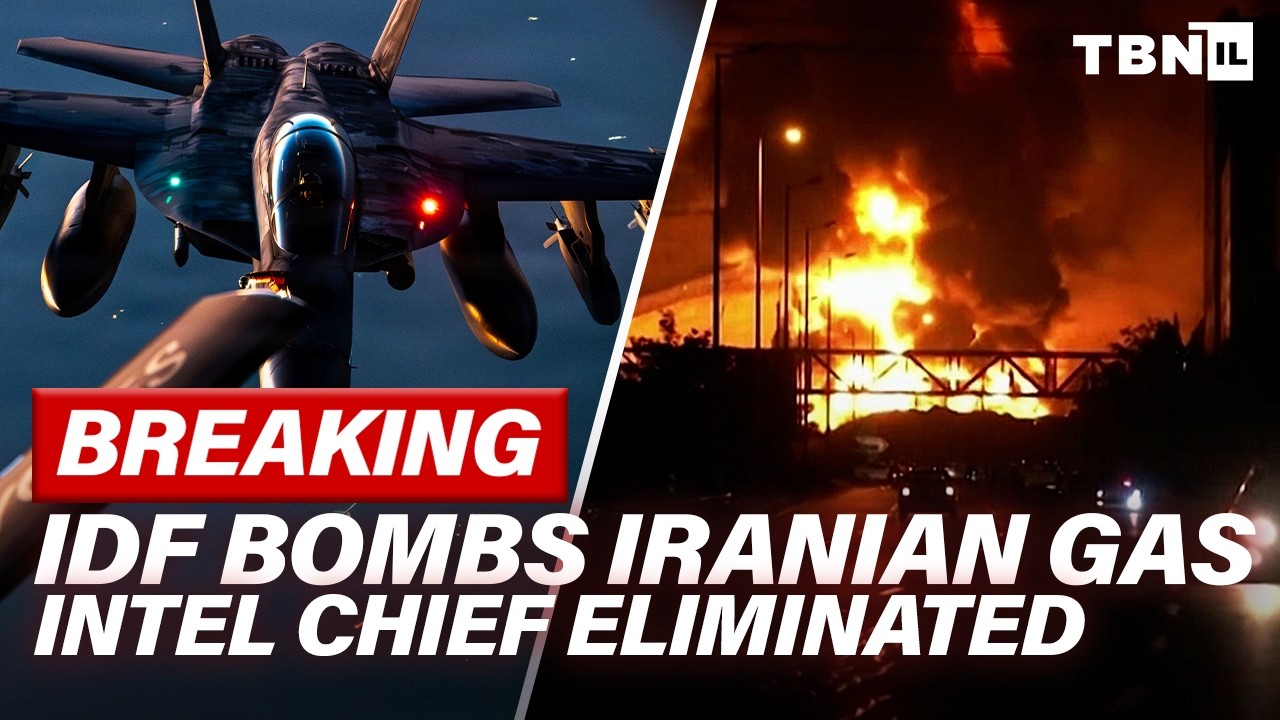
"Israel and the United States have escalated their 'Roaring Lion War' against Iran, striking its largest gas facilities, eliminating key intelligence and military figures, and disrupting missile production, while Iran threatens a broader energy war in the Gulf."