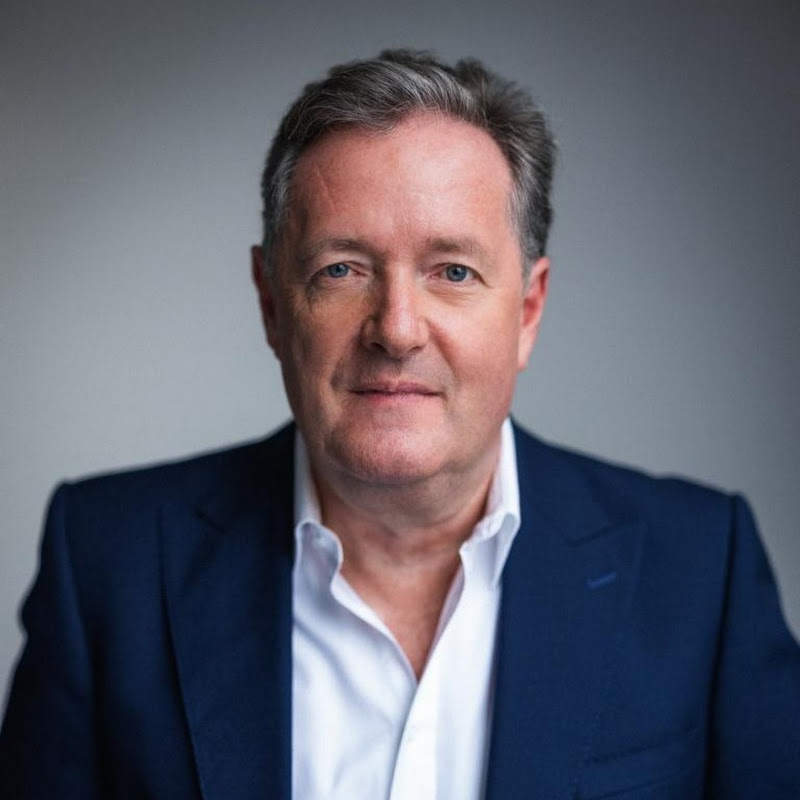
"I'm SICK Of It!" Iran War, Strait Of Hormuz Blockade & Tucker Carlson Row | With Megyn Kelly
YouTube · Z_K22QElzQk
Quick Read
Summary
Takeaways
- ❖Megyn Kelly asserts that pro-Israel figures intentionally conflate anti-Zionism with anti-Semitism to silence critics, leading to a recoil from 'thinking people'.
- ❖Piers Morgan and Megyn Kelly accuse Israeli government figures like Itamar Ben-Gvir of 'psychopathic behavior' that puts Jewish people at risk by conflating their actions with global Judaism.
- ❖The US is perceived as being unable to exit the Iran conflict due to pressure from 'close personal ally' Israel, which reportedly thwarts peace efforts by continuing to bomb Lebanon.
- ❖The 'anti-Semitic' charge is uniquely effective on the American right due to historical pro-Israel alignment and significant financial influence from groups like AIPAC on US politicians.
- ❖The Strait of Hormuz blockade by Iran is causing massive global economic damage, wiping out airline profits and driving up fuel and food prices.
- ❖Anakasparian argues that a military option to open the Strait of Hormuz is not viable due to depleted US missile interceptors and Iran's ability to produce cheap drones, necessitating a diplomatic solution.
- ❖Curtis Slew claims President Trump was 'bamboozled' by Netanyahu into the Iran conflict, which he labels 'BB's war,' despite US intelligence indicating no imminent nuclear threat from Iran.
- ❖Adam Mockler defends his aggressive debate style against Scott Jennings by stating he will not adhere to decorum when opponents 'lie' and 'troll' without factual basis.
- ❖Haraldo Rivera suggests a 'kinetic response' to test Iran's capacity to close the Strait of Hormuz, advocating for aggressive US Navy action.
Insights
1Weaponization of Anti-Semitism Accusations
Megyn Kelly and Piers Morgan argue that prominent pro-Israel figures, like Mark Levin, intentionally conflate criticism of the Israeli government or its policies (anti-Zionism) with anti-Semitism. This tactic is used to silence dissent and deflect legitimate scrutiny, making it difficult for public figures to criticize Israel without being labeled anti-Semitic. Kelly notes that this strategy backfires, causing 'thinking people' to recoil and potentially creating actual anti-Semitism.
Megyn Kelly states, 'Anybody who purports to say I will decide who can speak and who cannot... automatically engenders a sort of revulsion by the thinking west.' She adds, 'It has been the most ardently pro-Israel people like the Commentary magazine people like Mark Levin who have been trying to intentionally make that conflation and it's just not true.'
2Israel's Perceived Influence on US Foreign Policy in Iran
Multiple panelists, including Megyn Kelly, Anakasparian, and Curtis Slew, assert that Israel, particularly under Netanyahu, is a primary driver behind US involvement in the Iran conflict and is actively preventing the US from de-escalating. They claim that Israel's lobbying efforts and financial contributions to US politicians create an undue influence, making it difficult for American leaders to prioritize 'America First' policies.
Megyn Kelly states, 'our truly close personal ally Israel won't let us. Every time he tries to declare a peace, they start bombing Lebanon again.' She later adds, 'Israel through its emissaries like Apac has put dollars into the pockets of virtually all of our politicians left and right here in America.' Anakasparian says, 'President Donald Trump has the leverage... to force this in a diplomatic fashion. He just needs to basically push Israel aside and actually be a leader, not have Israel, you know, dictate our foreign policy.' Curtis Slew claims, 'Trump got bamboozled by BB. This is BB's war.'
3Economic Catastrophe from Strait of Hormuz Blockade
The ongoing blockade of the Strait of Hormuz by Iran is presented as a major economic disaster with global repercussions. The disruption to the world's oil supply is causing significant increases in fuel prices, impacting industries like aviation and eventually consumers through higher gas and food costs.
Megyn Kelly highlights, 'The global fuel supply. Just take a look at the numbers. You've got American European airlines, Middle East airlines now completely revamping their forecast for this year... American Airlines had projected a $4 billion profit... It's all been wiped out... by the rising price of jet fuel.'
4The Ineffectiveness of Military Solutions for Strait of Hormuz
Anakasparian argues that a military solution to open the Strait of Hormuz is not viable for the US. She points to the depletion of US military resources, specifically missile interceptors, and Iran's capacity to produce cheap drones, which would overwhelm US defenses. Therefore, a diplomatic approach is deemed the only realistic path.
Anakasparian states, 'the only way to secure the opening of the straight of Hormuz... is to do so diplomatically. If there were a military option to do so, I believe that that military option would have been used already. But we don't have that military option.' She cites '80% of our missile interceptors' being depleted and the inability to 'withstand the very cheap drones that Iran is able to quickly produce.'
5Shift in Political Alliances and Rhetoric
Piers Morgan observes a 'weird family' of agreement emerging between figures historically on the left (like Anakasparian) and the conservative right (like Tucker Carlson and Megyn Kelly) on issues such as the Iran conflict and Israel's influence. This shift is attributed to a shared 'America First' perspective and a rejection of perceived intellectual dishonesty and censorship tactics, leading to a breakdown of traditional left-right divides on specific foreign policy issues.
Piers Morgan remarks, 'A lot of you have blended now into a weird family of people who have a lot of agreement about a lot of things. Iran, the influence of Israel, Donald Trump, and his mistake as you see it, and so on.' Anakasparian responds, 'it's not really a question of left versus right on this issue. It's a question of good versus evil, America first versus a foreign country first.'
Bottom Line
The 'anti-Semitic' accusation is uniquely potent on the conservative right, causing 'pause' where other labels like 'racist' or 'transphobe' are dismissed, due to the historical pro-Israel stance of the American right and significant pro-Israel lobbying.
This suggests that the conservative movement's internal cohesion is vulnerable to this specific accusation, making it a powerful tool for controlling narrative and silencing internal dissent, potentially leading to a re-evaluation of long-held alliances.
For political strategists, understanding this specific vulnerability could inform how to either challenge or exploit internal divisions within conservative media and political circles regarding foreign policy.
The current political climate sees a 'reciprocal manner' of engagement where traditional decorum is abandoned by some, who argue that if opponents 'lie' and 'troll,' then civility is no longer a requirement.
This indicates a fundamental shift in political debate, moving away from traditional norms towards a more aggressive, 'no rules' approach, which can lead to more direct, albeit 'obnoxious,' questioning of substance when opponents are perceived to lack factual arguments.
Media platforms and commentators can either lean into this new style to gain traction or attempt to re-establish norms, but ignoring the shift risks being perceived as out of touch or ineffective in current discourse.
Lessons
- Critically evaluate accusations of 'anti-Semitism' by distinguishing between criticism of specific government policies (e.g., Israeli government) and genuine hatred towards Jewish people.
- Investigate the financial and lobbying influence of foreign entities on domestic politicians and media narratives to understand potential biases in foreign policy discussions.
- Recognize the economic consequences of geopolitical conflicts, such as blockades, on global supply chains and consumer prices, and advocate for diplomatic solutions where possible.
Notable Moments
Megyn Kelly's passionate declaration that she is 'sick of it' regarding Israel's actions and the accusations of anti-Semitism, stating she doesn't care what she's called.
This moment encapsulates the frustration and defiance felt by some public figures who feel unfairly targeted for their criticisms, highlighting the emotional intensity of the debate and their willingness to risk reputational damage for their stance.
Adam Mockler's viral confrontation with Scott Jennings on CNN, where Mockler aggressively demands 'one political concession' from Iran, leading to Jennings's visibly rattled reaction.
This exchange became a symbol of the frustration among critics of the Iran conflict and the perceived inability of its proponents to provide concrete evidence of success, demonstrating how direct, even 'obnoxious,' questioning can expose weaknesses in arguments.
Haraldo Rivera's advice to Adam Mockler to 'stick to the substance' and avoid being 'obnoxious,' despite acknowledging Mockler's valid points.
This highlights the ongoing tension between effective communication and perceived civility in modern political discourse, suggesting that while substance is key, presentation still impacts how arguments are received, especially in mainstream media.
Quotes
"Anybody misusing anti-semitism to deflect criticism of Israel is leaving Jewish people everywhere to shoulder the blame for the behavior of people like Ben. I can't think of anything more likely to put them in harm's way than that."
"It's not dissimilar entirely from the whole thing with Ben Shapiro going after you, going after me, deciding on his own who can and cannot be within the conservative movement. And then when some of us said, 'What? Who died and made you king of conservatives? Who gets to decide who's in and out?' They they said, 'You're an anti-semite.' Wait, no, no, no, no. What you're saying is creating anti-semite. No, no, no. What he is saying is creating anti-semmites."
"I'm sick of it, and I don't care. And I think Tucker doesn't care. And I think you don't care. And sane people don't care. Call me whatever the hell you want. I don't care."
"Israel through its emissaries like Apac has put dollars into the pockets of virtually all of our politicians left and right here in America. And they will not go down without a fight."
"The only way to secure the opening of the straight of Hormuz so you have transit of incredibly important cargo including um you know energy supply that the globe needs is to do so diplomatically."
"President Donald Trump has the leverage, has the power to force this in a diplomatic fashion. He just needs to basically push Israel aside and actually be a leader, not have Israel, you know, uh, dictate our foreign policy."
"Trump got bamboozled by BB. This is BB's war. We should not be involved in this."
"The reason why they're attacking your tone is because they can't attack your substance."
Q&A
Recent Questions
Related Episodes

Patrick Henningsen: Hezbollah JUST Fired Back at Israel - Iran Vows to “Crush” All Attacks
"Patrick Henningsen argues that the US and Israel initiated an illegal war against Iran, driven by Trump's incompetence and Israeli influence, leading to an inevitable escalation with severe global economic repercussions."

Bibi DEMANDS Ground Troops As Marines Rushed to Iran
"Benjamin Netanyahu is pushing for US ground troops in Iran, framing air strikes as insufficient, while the US rushes Marines to the region and struggles to secure the Strait of Hormuz against surprisingly capable Iranian defenses."

Iran Update: Israel’s Newest Bombing Campaign, the Oncoming War With China and How to Avoid It
"Colonel Wilerson reveals how the US and Israel are actively bombing China's strategic infrastructure in Iran, escalating a covert economic war that Beijing intends to win without direct military conflict by dismantling the dollar's global dominance."

🚨 TOTAL F*CKING CHECKMATE 😂😂😂
"The host argues that Trump's 'ceasefire' with Iran was a calculated '5D chess' move to orchestrate a global energy market reshuffle, while simultaneously lambasting 'woke' domestic policies and the 'freefall' of anti-Trump conservative figures."