SAVE Act Vote Threatens Voting Rights. Bondi Deflects on Epstein. Black Unemployment Still Higher
YouTube · ZmfF1hPHd14
Quick Read
Summary
Takeaways
- ❖The proposed 'SAVE Act' requires proof of U.S. citizenship, a passport or birth certificate in person to vote, potentially disenfranchising 140 million Americans without passports and 69 million married women lacking updated birth certificates.
- ❖The 2024 U.S. economy saw a significant downgrade in job creation, averaging only 15,000 jobs per month, with new jobs primarily in healthcare and social services, not manufacturing.
- ❖Attorney General Pam Bondi's testimony before the House Oversight Committee was characterized by deflection, refusal to apologize to Epstein survivors, and accusations of gutting DOJ sections and hiring a January 6th rioter.
- ❖Black unemployment remains significantly higher at 7.2% (7.3% for Black men) compared to the overall U.S. rate of 4.3%.
- ❖Black leaders advocate for a shift from general political 'resistance' to micro-targeted, community-led voter education and mobilization, emphasizing a 'build and battle' strategy for sustained political power.
- ❖A Pew study indicates white evangelicals remain strong Trump supporters, but confidence in his ethics has slipped by 15 points, contrasting sharply with Black Protestants' views.
Insights
1The 'SAVE Act' as Modern Voter Suppression
Republicans are advancing the 'SAVE Act' in the U.S. House, which would require proof of U.S. citizenship to vote, specifically mandating a passport or birth certificate presented in person. This policy would eliminate convenient voting options (mail, online) for over 90% of Americans and disproportionately impact 140 million Americans without passports and 69 million married women whose birth certificates don't reflect legal name changes, effectively acting as a modern-day poll tax.
The host and Virginia Congressman Jennifer McClellan detail the bill's requirements and impact, drawing parallels to historical poll taxes and literacy tests. ( - )
2Downgraded 2024 Job Growth and Quality Concerns
The January jobs report revealed a significant downgrade in 2024 job creation, with an average of only 15,000 jobs added per month, totaling 180,000 for the year. This figure is 'very low' and contradicts the administration's claims of a booming economy. Furthermore, new jobs are predominantly in the healthcare and social services sectors, not in manufacturing, which is a stated goal of the administration's economic policy.
Morgan Harper, Director of Policy and Advocacy at the American Economic Liberties Project, discusses the revised numbers and job quality, stating, 'only about 15,000 jobs were created every month last year. That is notable.' ( - )
3Attorney General Pam Bondi's Evasive Testimony and DOJ Accusations
During a House Oversight Committee hearing, Attorney General Pam Bondi was accused of deflecting questions, refusing to apologize to Jeffrey Epstein's survivors, and demonstrating a lack of accountability. Congresswoman Jasmine Crockett specifically alleged that Bondi's Department of Justice (DOJ) had 'intentionally done the exact opposite' of its stated goals, 'spending more taxpayer resources arresting journalists than you are prosecuting pedophiles and creeps,' gutting the Public Integrity Section, and eliminating the National Cryptocurrency Enforcement Team while the President profits from crypto holdings. Additionally, Congressman Jon Gates revealed the DOJ hired Jared Weise, a January 6th rioter pardoned by President Trump, who was on video yelling 'kill him' at police officers.
Congresswoman Jasmine Crockett's direct accusations and questions to Pam Bondi regarding Epstein files, journalist arrests, and DOJ cuts ( - ). Congressman Jon Gates's questioning and video evidence regarding Jared Weise ( - ).
4Call for Micro-Targeted Black Community Mobilization
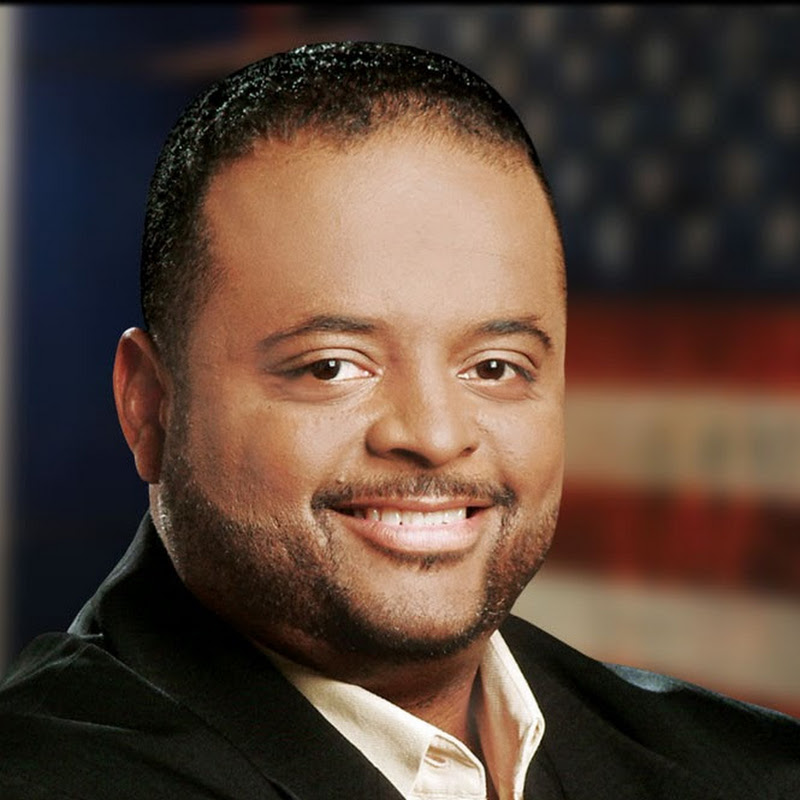
Roland Martin and guests emphasize the critical need for Black community organizations, including Divine Nine fraternities/sororities, churches, and civil rights groups, to move beyond news conferences and general 'resistance' to implement micro-targeted, local voter education and mobilization strategies. This involves holding regular town halls, connecting policy to votes, and providing logistical support like rides to polls, focusing on specific precincts and elections (e.g., school boards, DAs, state legislature) to build sustained political power.
Roland Martin states, 'The organizations need to be driving these discussions locally.' Eugene Craig adds, 'It's the educating, engaging, and then executing.' Reverend Dr. Frederick D. Haynes III uses the metaphor of 'building and battling.' ( - , - )
Bottom Line
The Republican strategy of shrinking the voting population by creating complex voting barriers is a direct response to their fear of losing elections, indicating a perceived weakness rather than strength.
This suggests that high voter turnout, particularly from marginalized groups, is a potent counter to current legislative efforts, as these measures are designed to suppress votes, not win over new ones.
Advocacy groups should frame voter mobilization as a direct challenge to a perceived 'cheating' strategy, empowering voters by highlighting their collective power to overcome these barriers.
The Trump administration's economic policies, including tariffs, are not aligning with the actual job growth sectors (healthcare/social services vs. manufacturing), indicating a disconnect between stated goals and real-world outcomes.
This exposes a vulnerability in the administration's economic narrative, as the 'quality' of jobs and the sectors driving growth do not support their 'bring back manufacturing' rhetoric.
Opposing political campaigns can effectively challenge the administration's economic claims by focusing on the type and stability of jobs created, rather than just headline unemployment figures, to resonate with average Americans' economic realities.
The refusal of Attorney General Pam Bondi to answer basic questions about DOJ functions (e.g., Public Integrity Section, National Cryptocurrency Enforcement Team) during a congressional hearing suggests a deliberate obfuscation of internal operations potentially linked to presidential interests.
This undermines public trust in the justice system and highlights a perceived weaponization of federal agencies for political gain, rather than upholding the law impartially.
Congressional oversight bodies and media should intensify scrutiny on the internal restructuring and resource allocation within the DOJ, particularly where it intersects with the financial interests or political agenda of the executive branch.
Lessons
- Organize and participate in local 'teach-ins' and town halls to educate communities on the specific impacts of proposed legislation like the 'SAVE Act' and how local votes affect public policy.
- Leverage existing community infrastructure (churches, D9 organizations, civic groups) to create a coordinated calendar of voter registration drives, early voting initiatives, and election day transportation support in targeted precincts.
- Demand that political candidates articulate a clear, forward-looking 'vision' and specific policy plans (e.g., 'your healthcare is coming back in 50 days') rather than solely focusing on criticizing opponents, to inspire voter turnout.
- Identify and target specific local, state, and federal seats for change, developing a 'micro-targeted strategy' to elect leaders accountable to the community, rather than relying on broad 'get out the vote' campaigns.
- Actively monitor changes in local voting rules and locations, especially in 'blue counties' or historically marginalized areas, and proactively educate voters on these changes, offering assistance to navigate new requirements.
Community-Led Voter Mobilization for Political Power
**Educate and Inform Locally:** Conduct weekly town halls and 'teach-ins' in local communities (churches, community centers) to explain how specific policies, like the 'SAVE Act' or economic reports, directly impact residents' lives. Connect local issues (school boards, DAs) to broader political power.
**Activate Existing Infrastructure:** Utilize the organizational strength of Black churches, Divine Nine (D9) fraternities/sororities, Prince Hall Masons, Eastern Star, and other civic groups to lead discussions and coordinate voter engagement efforts. Develop a shared calendar of events across states.
**Micro-Targeted Outreach:** Focus on specific precincts and districts. Churches can pull voter data for their precinct, identify registered voters, and organize door-to-door outreach. Provide information on voter registration deadlines, early voting, and election day logistics.
**Provide Logistical Support:** Organize transportation (cars, vans) to polling locations, especially for early voting, and educate voters on their assigned polling sites for election day, anticipating and mitigating new voting barriers.
**Demand Visionary Leadership:** Challenge candidates to present clear, actionable visions and specific policy plans for their first 50-100 days in office, rather than just criticizing opponents. Support leaders who offer transformative solutions to systemic issues like healthcare, living wages, and voting rights.
**Sustain Engagement Beyond Elections:** Plan for continuous engagement beyond a single election cycle, thinking strategically about 2-year, 5-year, and 10-year political goals, similar to how conservative movements have built power over time.
Notable Moments
Congresswoman Jennifer McClellan's personal anecdote about her great-grandfather facing literacy tests and her grandfather paying poll taxes, drawing a direct parallel to the 'SAVE Act' as a modern-day poll tax.
This personalizes the historical struggle for voting rights and underscores the perceived regressive nature of the proposed legislation, making its impact tangible and emotionally resonant.
The panel's critique of the Congressional Black Caucus's press conference on Capitol Hill, suggesting it was 'performance' without a clear 'plan of action' or 'road map' for the midterm elections.
This highlights a perceived gap between symbolic political actions and the need for concrete, grassroots mobilization, challenging traditional approaches to advocacy within the Democratic party.
Reverend Dr. Frederick D. Haynes III's 'build and battle' mantra, inspired by Nehemiah, emphasizing the need to simultaneously build community power and battle against voter suppression.
This provides a powerful, biblically-rooted framework for strategic activism, advocating for a proactive and defensive approach to political engagement.
Pastor Josh Carson's sermon clip denouncing racism in Christianity, asserting that 'whether or not they are your brother or your sister is not based on the tone of their skin.'
This moment offers a contrasting theological perspective to the political alignment of white evangelicals with Donald Trump, suggesting a moral and spiritual disconnect from biblical teachings on equality and love.
Reverend William Barber's 'Selma' march in North Carolina, emphasizing 'vision over resistance' and mobilizing infrequent voters by 'talking to them' about specific policy impacts.
Quotes
"If passed, more than 90% of Americans who currently use online who's you who currently use voting uh by mail online or vote by the owner of the vehicles would lose these convenient options."
"The Save Act is a modernday pole tax because every ID that you would have to use to register and to vote with maybe one exception cost money."
"Donald Trump once asked black America the question, 'What the hell do you have to lose?' The answer is everything under his administration."
"We basically need to be planning to build our communities, build political power, build, and at the same time, we need to battle against voter suppression."
"Whether or not they are your brother or your sister is not based on the tone of their skin."
"The party today that stands with the Confederacy, Republicans. The party today that defends Confederate monuments, Republicans."
"You're spending more taxpayer resources arresting journalists than you are prosecuting pedophiles and creeps."
"Authoritarianism lives on lies... they live on division... they live on hate. But they are afraid of people unified in a transformative love that that is seeking to build a beloved community."
Q&A
Recent Questions
Related Episodes

All Roads Lead To the South: Nat’l Day Of Action For Voting Rights | Mass Rally | Montgomery, AL
"A mass rally in Montgomery, Alabama, ignites 'Freedom Summer 2026' to combat the Supreme Court's decimation of Black political power and demand unprecedented voter mobilization across the South."

MAGA Stooge Freezes After My Question on CNN
"Adam Mockler dissects the Trump administration's claims of 'total victory' in foreign conflicts and its alleged attempts to politicize the Department of Justice, arguing these actions undermine democratic institutions and moral leadership."

Trump RUSHES Election Scheme as Midterms HAUNT HIM
"The hosts and guest expose the SAVE Act as a deceptive voter suppression tactic, drawing a stark contrast between the protection of gun rights and the erosion of voting rights."

HOT TOPICS | BUSTED! DOJ Withheld & Removed Some Epstein Files Related to Donald Trump!
"Don Lemon and legal analyst Simone Redwine expose how the Department of Justice allegedly withheld and removed over 50 pages of Epstein files related to Donald Trump, raising serious questions about obstruction of justice and selective disclosure."