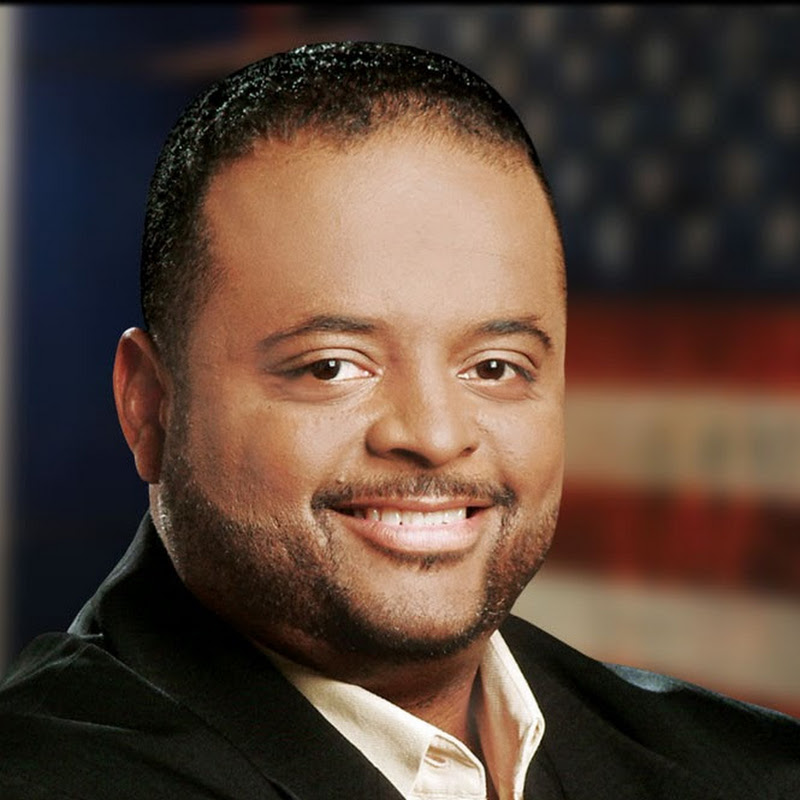
War powers resolution vote forced by Kentucky Republican Rep. Thomas Massie on Iran war
YouTube · ZoS60r8BUtc
Quick Read
Summary
Takeaways
- ❖The War Powers Resolution aims to compel President Trump to seek congressional authorization for military actions against Iran, asserting Congress's constitutional role in declaring war.
- ❖Proponents argue President Trump initiated a 'war of choice' without clear objectives, proper debate, or evidence of an 'imminent threat,' violating Article I of the Constitution.
- ❖Opponents contend President Trump acted within his Article II authority as Commander-in-Chief to defend the U.S. against Iran, which they describe as an 'imminent threat' for 47 years.
- ❖Republicans cited Iran's historical attacks on Americans and its pursuit of nuclear weapons and ballistic missiles as justification for 'Operation Epic Fury.'
- ❖Democrats criticized the administration's shifting justifications for military action and the lack of transparency, contrasting it with past presidential engagements.
- ❖The debate exposed partisan hypocrisy, with each side accusing the other of selectively applying constitutional principles based on who occupies the White House.
Insights
1Congressional Authority vs. Executive Prerogative in War-Making
The central conflict revolves around Article I, Section 8, Clause 11 of the Constitution, which grants Congress the power to declare war, versus the President's Article II authority as Commander-in-Chief to defend the nation. Proponents of the War Powers Resolution argued that President Trump's 'Operation Epic Fury' constituted a 'war of choice' requiring explicit congressional authorization, citing historical figures like James Madison and Abraham Lincoln on the dangers of executive overreach in war. Opponents countered that the President's actions were a legitimate exercise of defensive power against an ongoing, imminent threat from Iran, and that the War Powers Resolution itself is unconstitutional.
Rep. Massie (Kentucky) quotes James Madison on vesting war power in the legislature (). Rep. Meeks (New York) and Rep. Jeffries (New York) cite Abraham Lincoln on preventing one man from holding war power (, ). Rep. Mast (Florida) and Rep. Self (Texas) argue for the President's Article II authority to defend against imminent threats (, ).
2Disputed Definition and Evidence of 'Imminent Threat'
A major point of contention was whether Iran posed an 'imminent threat' justifying unilateral presidential action. Democrats argued that the administration's own war powers notification did not use the word 'imminent' and that a threat existing for 47 years cannot be considered imminent. They demanded concrete intelligence. Republicans, however, defined 'imminent' as an ongoing, persistent threat, citing Iran's decades-long history of attacks against American interests and personnel, its support for terrorist proxies, and its nuclear and missile programs.
Rep. Meeks states the word 'imminent' does not appear in the administration's notification (). Rep. Hines (Connecticut) asserts there was no imminent threat to the U.S. last week (). Rep. Mast (Florida) argues that Iran's 47-year history of attacks makes it an 'imminent threat' (, ). Rep. Fine (Florida) highlights 1,200 Americans killed by Iran-backed actions over 47 years ().
3Partisan Accusations of Hypocrisy and Shifting Rationales
Both sides accused the other of partisan hypocrisy. Republicans pointed out that many Democrats who now oppose Trump's actions had previously voted for resolutions condemning Iran and authorizing 'all means necessary' to prevent it from acquiring nuclear weapons, and did not challenge similar executive actions by previous administrations (e.g., Obama in Libya). Democrats countered that Trump's justifications for 'Operation Epic Fury' were constantly shifting (from protecting demonstrators to nuclear weapons, ICBMs, or pre-empting an Israeli strike), making the rationale unclear and potentially disingenuous.
Rep. Mast (Florida) highlights Democrats' past votes to use 'all means necessary' against Iran's nuclear program (, ). Rep. Jeffries (New York) details Trump's five different, shifting reasons for the war (). Rep. Lawler (New York) and Rep. Muer (Pennsylvania) mention Pelosi and Obama's Libya intervention without congressional authorization (, ).
Quotes
"No one in this chamber doubts the danger posed by the Iranian regime. But recognizing that threat does not mean abandoning our constitution. It does not mean Congress should surrender its responsibility to debate and authorize war."
"There is absolutely nothing that this resolution is going to do to protect any American or any American service member, nor any previous piece of paper, strongly worded letter or anything else that this body has done has been successful in protecting America from the largest state sponsor of terror. It is only two actions. Number one, President Trump putting Kasumsulammani into about five separate pieces on the side of an Iraqi tarmac. And number two, the actions that President Trump has taken in this operation to destroy every single piece of Iranian military hardware that can reach out and touch an American or has reached out and touched an American."
"The Constitution of the United States of America says that only Congress can declare war."
"If every day I walk out of my house and get my tail kicked by somebody, that is the exact definition of in imminent. It will happen tomorrow. It will happen the next day and the next day until you finally step up, grow the spine, and prevent it from happening."
"We don't swear an oath to a king, to a political party, or to a man bent on desecrating the Oval Office. In the Congress, in the courts, and in the military, we swear an oath to the United States Constitution."
"Kings had always been involving and impoverishing their people in wars, pretending generally if not always that the good of the people was the object. This our convention understood to be the most oppressive of all kingly oppressions and they resolved to so frame the constitution that no one man should hold the power of bringing this oppression upon us."
"The administration's case for war makes the Bush administration's weapons of mass destruction story look like a well documented PhD dissertation."
"It was 47 years ago that Iran began chanting death to America. I don't think it's symbolic that the 47th president of the United States is the first to do something about it."
"This is not a war of choice. This is an intervention to prevent a future full-scale war in the Middle East that we must avoid."
Q&A
Recent Questions
Related Episodes
LIVE: DEM SENATORS ADDRESS UNLAWFUL WAR!!
"Democratic Senators, joined by VoteVets, forcefully condemn the administration's 'unlawful war' in Iran, citing constitutional overreach, devastating human and economic costs, and a deliberate lack of transparency and congressional oversight."

Trump Dirt REVEALED: Iran, Zohran, Pardons, Deportations
"Journalists Maggie Haberman and Jonathan Swan reveal how Donald Trump operates in his second term, detailing his inner circle, policy priorities, and the surprising checks on his executive power."
🚨 THEY… F*CKING... FOUND… OUT… 😂😂😂
"The host delivers a fiery, unfiltered commentary on global and domestic political events, framing them as a battle between a 'collapsing globalist order' and a 'resurgent new right' that prioritizes national sovereignty and traditional Western values."

MAGA Stooge Freezes After My Question on CNN
"Adam Mockler dissects the Trump administration's claims of 'total victory' in foreign conflicts and its alleged attempts to politicize the Department of Justice, arguing these actions undermine democratic institutions and moral leadership."