Moral Monday: Stop the War! (Washington, DC) | Rev. William Barber | Repairers of the Breach
YouTube · _7bnmgTGfqo
Quick Read
Summary
Takeaways
- ❖The "Moral Monday: Stop the War!" campaign is mobilizing clergy and activists across 16 states and Canada to advocate for peace and nonviolence.
- ❖The movement defines violence broadly to include denying healthcare, child care, and perpetuating systemic poverty, not just military conflict.
- ❖A key initiative is educating young people on conscientious objection and nonviolent direct action, especially given automatic military draft registration.
Insights
1Broad Definition of Violence
The movement expands the definition of violence beyond warfare to include denying healthcare, child care, food, housing, and perpetuating systemic poverty and racism. This "policy violence" is seen as equally destructive.
Speakers explicitly state that "denying health care is violence," "denying child care is violence," and that "systematic racism, systemic poverty, low wages, and ecological devastation are forms of violence."
2Call for Conscientious Objection Education
With automatic military draft registration for young people, the movement is establishing "Moral Monday" spaces to teach the basics of conscientious objection and provide a platform for young people to publicly declare their opposition to war.
Rev. Barber announces that "in our moral Mondays, we will be teaching the basics of conscientious objection and giving young folk a place they can come and announce their public statement against war."
3Congressional Accountability for War Powers
Speakers highlighted that Congress failed to restrict the President's war powers despite the War Powers Act requiring affirmative action to continue waging war. They call for moral witness at congressional offices and voter mobilization.
It is noted that "Both the US House and Senate have failed to pass... joint resolutions to restrict Trump's war powers in this illegal and unholy war." The War Powers Act requires Congress to act affirmatively by May 1st.
4Nonviolence as Active, Courageous Power
Nonviolence is framed not as passive resistance or opting out, but as an active, courageous, and powerful commitment to struggle against injustice, rooted in love, truth-telling, and justice.
Rev. Barber states, "Nonviolence is not opting out of the struggle against the world's injustice. Nonviolence is opting in the struggle," and emphasizes the need for "real nonviolent moral strength rooted in love and justice and truthtelling."
Bottom Line
The host criticizes the White House Correspondents' Dinner for journalists partying with officials who "consistently berate them," highlighting a perceived conflict of interest and lack of journalistic integrity.
This suggests a breakdown in the adversarial relationship between the press and power, potentially compromising accountability and public trust in media.
Independent media or citizen journalism could fill the perceived gap in critical oversight, offering alternative platforms for unbiased reporting.
The speaker connects political rhetoric that incites division and violence (e.g., Trump's attacks on media, Democrats) to actual acts of violence, such as the White House security breach.
This implies that leaders' words have direct, tangible consequences, potentially unleashing a "bad leaven" of violence that is difficult to control once activated.
Advocates for responsible political discourse could use this connection to push for stricter ethical guidelines for public figures and media, emphasizing the societal impact of inflammatory rhetoric.
Key Concepts
Just War Doctrine
The Catholic Church's theological framework for determining when war is morally permissible. The speakers argue that the current "war of choice" and threats of "total annihilation" violate this doctrine, especially the Second Vatican Council's condemnation of indiscriminate destruction.
Gandhi's Stages of Nonviolent Campaigns
"First they ignore you, then they laugh at you, then they attack you, and then you win." This model is presented to encourage persistence and understanding of the progression of nonviolent struggles.
Lessons
- Sign and send a declaration of nonviolence to every member of Congress, committing to nonviolent direct action against war and policy violence.
- Organize and participate in peace and nonviolent rallies on May 11th in 16 states and Washington D.C., including a planned demonstration in front of the White House.
- Educate young people on conscientious objection and provide spaces for them to publicly declare their opposition to military service, especially given automatic draft registration.
- Mobilize voters around the moral issue of war and policy violence in upcoming elections, targeting congressional members who voted against restricting war powers.
The Nonviolent Vow and Mobilization Strategy
**Commit to the Vow of Nonviolence**: Publicly pledge allegiance to the power of love, reject violence in all forms (including systemic injustices like denying healthcare or food), and commit to active nonviolent struggle.
**Engage in Mass Education and Protest**: Utilize methods like petitioning representatives, nonviolent protests, vigils, marches, mass assemblies, boycotts, strikes, sit-ins, and pray-ins to raise awareness and resist evil.
**Mobilize Voters and Recruit New Activists**: Exercise the nonviolent tool of voting, educate, register, and mobilize alienated voters, and actively recruit a new generation of nonviolent "foot soldiers," particularly young people for conscientious objection.
**Maintain Moral Discipline**: Keep intentions pure through fasting, prayer, meditation, and self-reflection to fight internal violence and ensure the movement's moral high ground.
**Conspicuously Offer Bodies for Resistance**: Be willing to engage in civil disobedience and "lay down my body to resist evil," but refuse to inflict violence on others, demonstrating disciplined love.
Notable Moments
The group collectively recites a "Vow of Nonviolence," affirming commitment to love, justice, and active resistance against all forms of violence, both military and systemic.
This public declaration solidifies the movement's core principles and provides a tangible commitment for participants, emphasizing a holistic approach to nonviolence.
A march to the White House is conducted, with participants walking two-by-two while a saxophone plays, symbolizing a "scream and a mourn" and a prophetic call to tell the nation of its "sin."
This direct action demonstrates the movement's willingness to confront power directly and publicly, using symbolic acts to amplify their moral message and fulfill a biblical mandate.
Quotes
"God of our hearts, God of compassion, God of moral witness, we come together in distress for our nation, for the direction we are going. We come here to stand for those who cannot stand, to speak for those who cannot speak. We come here for the marginalized."
"Any act of war aimed indiscriminately at the destruction of entire cities or of extensive areas along with their population is a crime against God and humanity itself."
"First they ignore you, then they laugh at you, then they attack you, and then you win."
"Nonviolence is not opting out of the struggle against the world's injustice. Nonviolence is opting in the struggle."
"The greatest challenge of the day is how to bring about a revolution of the heart. A revolution which has to start with each one of us."
"Starving a child is violence. Suppressing a culture is violence. Neglecting school children is violence. Discriminating against a working man is violence. Denying housing is violence. Ignoring medical need is violence. Contempt for poverty is violence."
Q&A
Recent Questions
Related Episodes

Black Men Created America’s First Paramedics. Freedom House’s Hidden History
"Discover the untold history of Freedom House, where Black men in Pittsburgh founded America's first paramedic service in 1966, revolutionizing emergency medicine despite facing pervasive systemic racism and institutional sabotage."
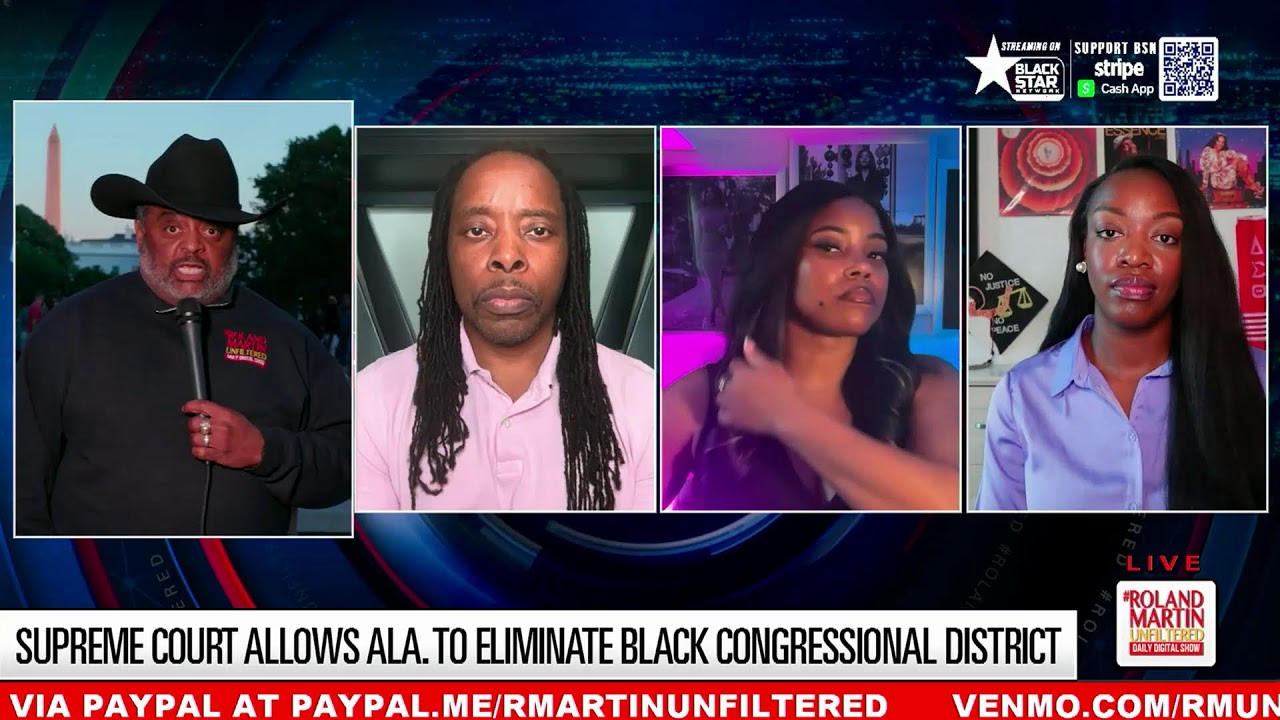
Moral Monday at BLM Plaza. Cleo Fields Sounds Alarm on Louisiana & Gary Chambers Pushes Turnout
"Activists and faith leaders gathered at Moral Monday to denounce 'policy violence' in various forms, from war and budget cuts to voter suppression and healthcare denial, urging sustained mobilization against a 'hijacked' democracy."
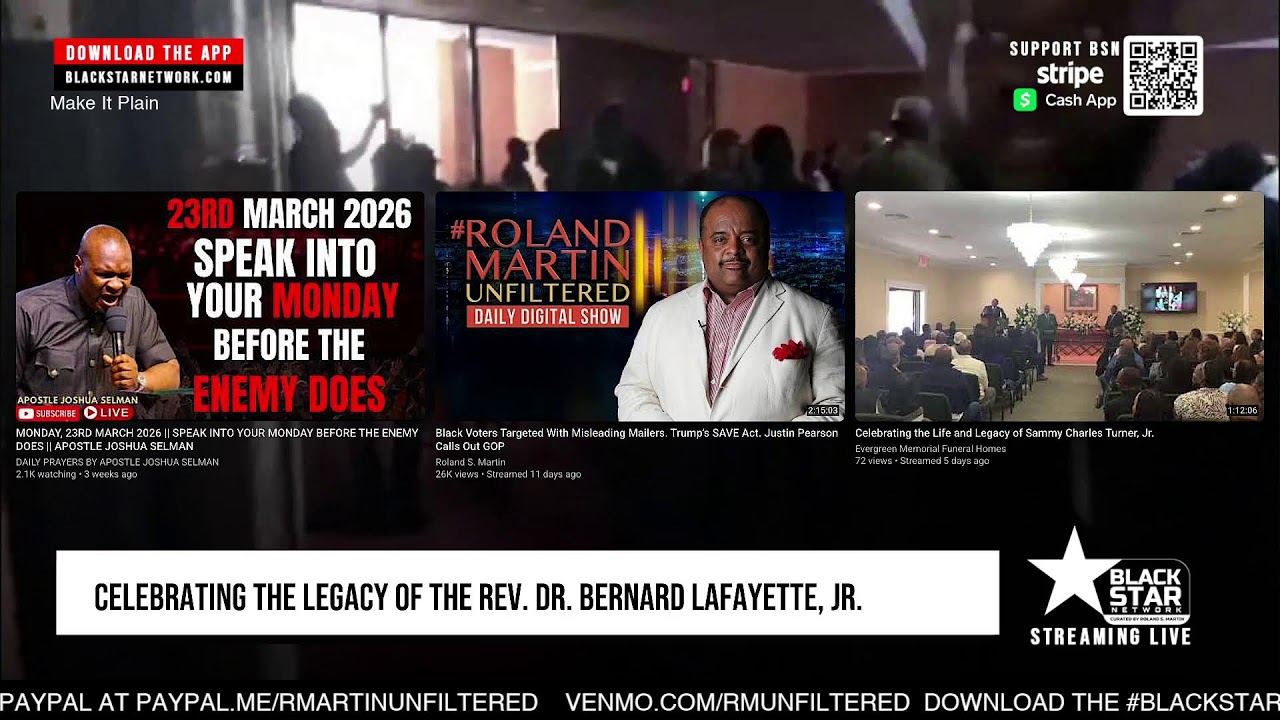
Celebrating the Legacy of the Rev. Dr. Bernard Lafayette, Jr.
"This memorial service celebrates the life and enduring legacy of Rev. Dr. Bernard Lafayette, Jr., a pivotal civil rights leader, nonviolence strategist, and educator whose teachings transformed movements globally."

LIVE! Love Forward Together Mass People’s Assembly & Moral March Mobilization In Raleigh, NC
"Thousands marched across North Carolina in the 'This Is Our Selma' movement, led by Reverend William Barber, to combat gerrymandering, voter suppression, and advocate for a proactive, love-driven vision of social and economic justice."