
Col. Jacques Baud: Trump’s FINAL Play Just COLLAPSED Israel
YouTube · _GNFo2d4c2w
Quick Read
Summary
Takeaways
- ❖The Strait of Hormuz is effectively controlled by Iran, which permits only filtered traffic and prohibits US/Israeli military ships.
- ❖Donald Trump's 'Project Freedom' for ship escort is perceived as an advisory role, as the US Navy is reluctant to engage physically due to Iranian threats.
- ❖US foreign policy, particularly under Trump, is characterized by inconsistency and a lack of strategy, contributing to market chaos rather than stability.
- ❖Iran views its conflict with the US as an 'existential war,' giving it a stronger and more rational strategic position.
- ❖Israel is seen as the primary instigator of regional conflict, with its actions in occupied territories and Lebanon violating international law and fueling resistance movements.
- ❖China's decision to back its refineries against US sanctions on Iranian oil marks a significant challenge to US unilateral economic power.
- ❖The West's 'gunboat diplomacy' is increasingly ineffective in a world where countries like Iran, China, and Russia are asserting their sovereignty and developing independent capabilities.
Insights
1US Inconsistency Fuels Strait of Hormuz Instability
Donald Trump's 'Project Freedom' to escort ships through the Strait of Hormuz is undermined by conflicting signals and the US Navy's reluctance to engage directly. Iran, controlling the northern passage and declaring Omani waters 'privatized,' filters traffic and prohibits US/Israeli military vessels. This erratic US approach, similar to past tariff policies, creates market uncertainty rather than stabilization, as Iran demands 'managed freedom of passage' and a toll for damages.
Trump announced US escort, but an oil tanker was struck by IRGC, and a US destroyer was prevented entry. Colonel Baud states the US Navy's role is advisory, not physical escort, and highlights Trump's shifting positions on tariffs and ceasefires. (, , )
2Iran's Strong Position Against US/Israeli Aggression
Iran views its conflict with the US as an 'existential war,' giving it a strong, rational, and unified strategic position. In contrast, the US and Israel lack clear objectives and rely on 'irrational' narratives, such as labeling Iran the biggest sponsor of terrorism, which Baud refutes by classifying groups like Hezbollah and Hamas as resistance movements against illegal occupation. Iran's 14-point plan, a response to a US 9-point plan, demonstrates its refusal to comply with US demands and its readiness to fight, possessing 'escalation dominance'.
Baud states, 'Iran is in an existential war, but the US is not.' He cites the International Court of Justice decision on illegal occupation and Iran's strong operational and political stance. (, , , )
3Israel's Destructive Role and Disregard for International Law
Israel is identified as the instigator of the conflict, consistently violating international law through its occupation of territories like the Golan, West Bank, East Jerusalem, Gaza, and South Lebanon. Hezbollah's existence is justified as a resistance movement against this illegal occupation. Israel's 'Rafa doctrine' of destroying entire villages in South Lebanon, coupled with targeting medical facilities, exemplifies a destructive approach that brings no added value to the region and reverses the rules of war by making atrocities the norm.
Baud details Israel's presence in territories it 'shouldn't be present' and cites the ICJ decision on Palestinian territories. He describes the 'Rafa doctrine' applied in South Lebanon and the targeting of Red Cross vehicles. (, , , , )
4China Defies US Sanctions, Accelerating Multipolarity
China's decision to back its refineries against US sanctions on Iranian oil signifies a major challenge to US unilateral economic power. This move, consistent with China's stance that only UN-decided sanctions are legal, demonstrates a growing willingness by major powers to neutralize US sanctions. This defiance, combined with the development of independent capabilities by countries like Iran, Russia, and India, marks a fundamental shift towards a multipolar world order where the West's 'gunboat diplomacy' is losing its effectiveness.
The host reports China's government backing refineries against US sanctions. Baud notes China's prior statement about fulfilling contractual obligations and argues that unilateral sanctions are not legal. He emphasizes China's powerful navy and the broader trend of non-Western countries asserting sovereignty. (, , , , )
Key Concepts
Escalation Dominance
The ability of one party in a conflict to increase the intensity of the conflict without being matched or surpassed by the opponent, thereby gaining a strategic advantage. In this context, Iran is described as having escalation dominance over the US and Israel.
Gunboat Diplomacy
The pursuit of foreign policy objectives through the display of naval power or other military force, implying a threat of direct warfare if demands are not met. The speaker argues this approach is outdated and ineffective against modern sovereign states.
Asymmetric Warfare/Dissymmetry of Logic
A conflict between belligerents whose relative military power differs significantly, or whose strategies and tactics differ. Here, Iran's 'existential war' logic is contrasted with the US's less defined objectives, creating an asymmetry in motivation and resolve.
Lessons
- Businesses and investors should monitor the Strait of Hormuz closely for escalating tensions, as disruptions could significantly impact global oil prices and supply chains.
- Policymakers should recognize the diminishing effectiveness of unilateral sanctions and 'gunboat diplomacy,' exploring genuine diplomatic engagement and multilateral solutions in complex geopolitical regions.
- Analysts should re-evaluate geopolitical risk models to account for the increasing assertiveness and independent capabilities of non-Western powers like China, Iran, and Russia, moving beyond a unipolar US-centric view.
Quotes
"Iran is in an existential war, but the US is not."
"Israel must get out of these territories and Hamas, Fata and all these groups are in fact resistance movement against an illegal occupation period. So in that sense they don't fall into the category of a terrorist organization."
"So if you want to destroy Israel, then continue putting ships into the street of if if I can if I take some shortcuts here. And that's that's a dilemma in which uh Trump has put himself."
"Atrocity has become the rule and the good behavior has been the exception."
"The problem is that the ability to enrich uranium is a sovereign right."
Q&A
Recent Questions
Related Episodes

Patrick Henningsen: Hezbollah JUST Fired Back at Israel - Iran Vows to “Crush” All Attacks
"Patrick Henningsen argues that the US and Israel initiated an illegal war against Iran, driven by Trump's incompetence and Israeli influence, leading to an inevitable escalation with severe global economic repercussions."

Bibi DEMANDS Ground Troops As Marines Rushed to Iran
"Benjamin Netanyahu is pushing for US ground troops in Iran, framing air strikes as insufficient, while the US rushes Marines to the region and struggles to secure the Strait of Hormuz against surprisingly capable Iranian defenses."
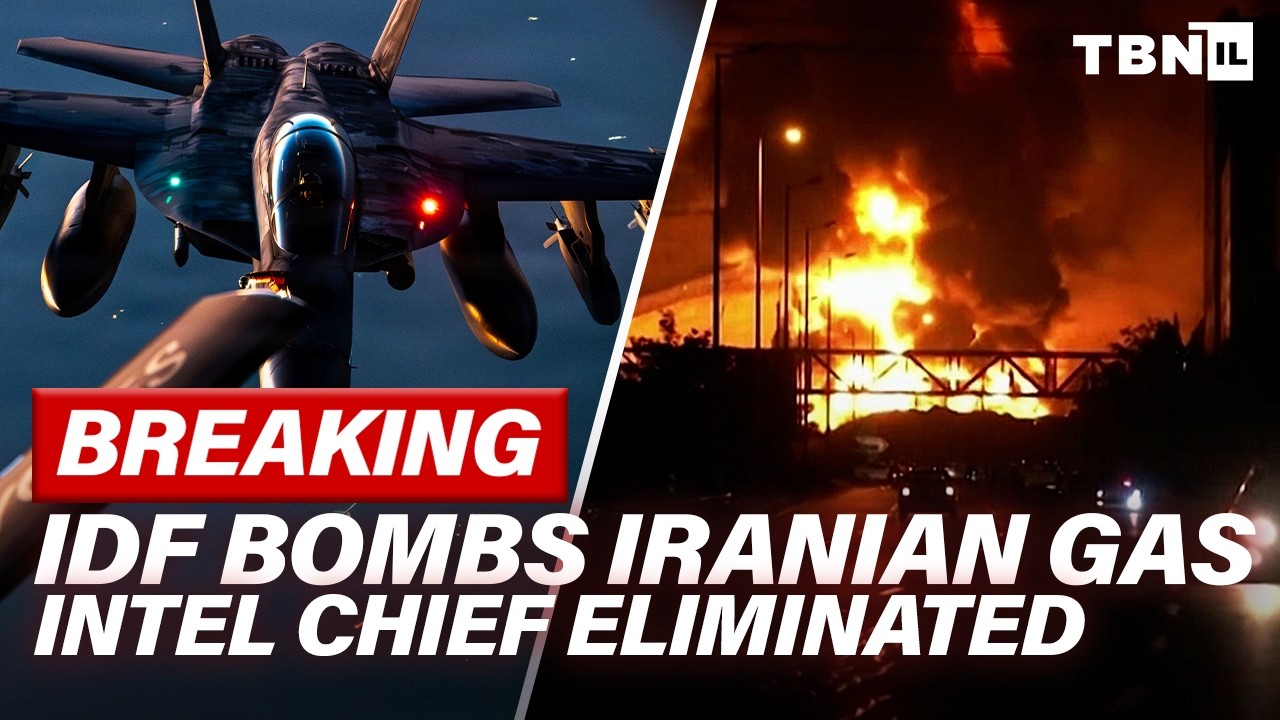
BREAKING: Israel BOMBS Major Iran Gas Site; Top Mullah ELIMINATED; Iran Vows VENGEACE | TBN Israel
"Israel and the United States have escalated their 'Roaring Lion War' against Iran, striking its largest gas facilities, eliminating key intelligence and military figures, and disrupting missile production, while Iran threatens a broader energy war in the Gulf."

Iran Update: Israel’s Newest Bombing Campaign, the Oncoming War With China and How to Avoid It
"Colonel Wilerson reveals how the US and Israel are actively bombing China's strategic infrastructure in Iran, escalating a covert economic war that Beijing intends to win without direct military conflict by dismantling the dollar's global dominance."