WHCD Shooting + Cole Allen's Manifesto | PBD #785
YouTube · _K80a1aGSjs
Quick Read
Summary
Takeaways
- ❖The White House Correspondents' Dinner shooting by Cole Allen was preceded by an anti-Trump manifesto, highlighting political radicalization.
- ❖Secret Service response during the WHCD incident is criticized for prioritizing JD Vance over the President and for overall security lapses.
- ❖California's 'billionaire tax' is framed as a deceptive measure designed to eventually tax all residents' assets without further voter consent.
- ❖Qatar and China are identified as major foreign funders of US universities, influencing youth and educational narratives.
- ❖Philanthropy is critiqued for mission creep, administrative bloat, and the potential for original donor intentions to be subverted, as exemplified by the Ford Foundation.
- ❖The US naval blockade on Iran is creating critical oil storage issues, potentially forcing a shutdown of their oil fields and damaging infrastructure.
- ❖New cars by 2027 may be mandated to include surveillance technology to monitor drivers, raising privacy and control concerns.
- ❖Trevor Bauer's no-hitter with the Long Island Ducks is presented as a significant comeback after his career was derailed by false accusations.
Insights
1Political Radicalization and Media Influence
Cole Allen's anti-Trump manifesto, sent minutes before his assassination attempt at the WHCD, is presented as evidence of political radicalization fueled by mainstream media rhetoric. Obama's subsequent statement questioning the shooter's motives is characterized as 'gaslighting' to obscure the clear ideological motivation.
Cole Thomas Allen sent a 152-word anti-Trump manifesto to his family 10 minutes before the assault. Vinnie argues Obama's statement, 'Although we don't yet have the details about the motives,' was an attempt to 'plant doubt where people already feel clear' and 'gives his side cover.'
2Secret Service Failures at WHCD
The Secret Service is heavily criticized for perceived security lapses at the White House Correspondents' Dinner, including a slow response in evacuating the President compared to other officials, and an overall 'arrogance' that allowed the shooter to check into the hotel with weapons the day before the event.
The Secret Service took 13 seconds to get in front of the President and 20 seconds to get him out, while JD Vance was evacuated in 7-10 seconds. The shooter, Cole Allen, noted 'no damn security, not in the transport, not in the hotel, not the event' and 'this level of incompetence is insane.'
3Deceptive California Wealth Tax Proposal
California's proposed 'billionaire tax' is exposed as a deceptive measure. A 34-page document, rather than a simple three-page bill, contains clauses that would allow the government to convert it into an 'everyone tax' without further voter approval, adjust it to a yearly tax, appraise assets, and subpoena financial records.
Chamath Palihapitiya's tweet details that the 'billionaire tax' applies to 'every Californian resident who currently has assets or ever will.' It explains how the government can convert it to an 'everyone tax' and a yearly tax without voter approval, and includes provisions for asset appraisal and financial record subpoenas.
4Foreign Influence in US Education
Qatar and China are identified as the top foreign funders of US universities, investing billions to influence the youth and shape future narratives. This strategy is seen as a long-term propaganda play, more effective than directly lobbying politicians, echoing Lenin's philosophy on controlling a nation's culture.
A chart shows Qatar as the number one foreign funder of US universities with $6.3 billion, and China as number two. Pat quotes Lenin: 'Give me control of a nation's music, and I care not who makes the laws,' applying it to youth and educational influence.
5Critique of Traditional Philanthropy and Mission Creep
The Ford Foundation is presented as a cautionary tale of how charitable intent can be subverted over time. Henry Ford II initially established it for local Michigan causes, but after democratizing control, the foundation's mission shifted globally, funding programs like forced sterilization in India and later Marxist-Leninist groups and police defunding efforts, entirely divorcing from the founder's original values.
Henry Ford II eventually resigned from the Ford Foundation in protest, stating, 'I should have kept control.' The foundation later funded a large-scale sterilization program in India (6 million men in 1976) and, in recent decades, 'revolutionary Marxist-Leninist group, the World Workers Party' and 'Minneapolis pledge to dismantle the police department.'
6Iran's Oil Blockade Crisis and US Leverage
The US naval blockade is causing Iran to rapidly run out of oil storage space, risking long-term damage to their crude production infrastructure if they are forced to shut down oil fields. This situation gives the US significant leverage in ongoing negotiations, allowing for a patient, 'cool, calm, and collected' approach.
Experts warn Iran could be forced to shut down oil fields as early as April 29 due to the US naval blockade, risking long-term damage to crude production as they run out of storage space. Tom explains that shutting down and restarting oil pumps is difficult and can cause 'certain damage.'
7Mandatory Car Surveillance Technology by 2027
A federal safety initiative mandates that all new cars sold in the US by 2027 must include impaired driving detection technology. This system will actively monitor drivers' eyes and behavior in real-time, raising significant concerns about privacy, data collection, and potential government control over personal vehicles, likened to a 'minority report' scenario.
By 2027, every car sold in the US could be required to 'actively monitor the person behind the wheel,' watching eyes and tracking behavior. Vinnie compares it to the Patriot Act, where 'more surveillance, more control' is justified by a different excuse (unsafe drivers instead of terrorists).
Bottom Line
The 'billionaire tax' is a Trojan horse for universal wealth taxation, disguised by populist rhetoric to gain initial voter approval.
Voters are being manipulated to approve legislation that will eventually impact them directly, not just the ultra-rich, leading to widespread asset monitoring and potential penalties.
Develop and promote educational campaigns that dissect complex legislative bills, highlighting fine print and long-term implications, to empower informed voting and counter deceptive political tactics.
Foreign powers are strategically investing billions in US universities to indoctrinate youth, viewing it as a long-term propaganda play more effective than direct political lobbying.
The ideological battle for America's future is being fought in educational institutions, shaping the next generation's worldview and potentially undermining national values from within.
Fund and support alternative educational platforms or initiatives that promote American civic values, critical thinking, and financial literacy to counter foreign ideological influence among young people.
Leaving large sums to charities in perpetuity risks mission creep and ideological capture, potentially leading to funds being used for causes antithetical to the original donor's values.
Philanthropic legacies can be entirely subverted, as demonstrated by the Ford Foundation's evolution from local development to funding forced sterilizations and Marxist-Leninist groups.
Wealthy individuals should structure their giving to maintain control over their funds' purpose, either through active management during their lifetime or by directing funds to family for direct, values-aligned giving, rather than relying on future boards.
Opportunities
Legislative Fine Print Analysis Service
Develop a platform or consulting service that specializes in analyzing complex legislative bills (e.g., California's 'billionaire tax') and translating their intricate legal language into clear, concise summaries for the average citizen and businesses. This would highlight hidden clauses, long-term implications, and potential impacts on various demographics, empowering informed decision-making.
Youth Ideological Counter-Influence Platform
Create a media and educational platform specifically designed for youth (Gen Z and millennials) that promotes capitalist principles, American civic values, and critical thinking. This platform would offer engaging content (podcasts, videos, social media) to counter foreign propaganda and socialist ideologies prevalent in universities and mainstream media.
Values-Aligned Estate & Philanthropy Management
Offer specialized estate planning and wealth management services for high-net-worth individuals focused on ensuring their philanthropic legacy remains aligned with their original values. This includes structuring trusts and wills to prevent mission creep, ideological capture, and administrative bloat by future charitable boards, potentially advocating for direct family management of charitable endeavors.
Key Concepts
Barbarians to Bureaucrats
This model is applied to charities, where the initial entrepreneurial vision and clear mission (the 'barbarian' phase) of a founder can eventually be diluted or subverted by institutional bloat, mission creep, and ideological capture by subsequent 'bureaucratic' leadership.
Propaganda Machine
The concept that media, educational institutions, and political rhetoric function as interconnected systems to disseminate specific ideologies, control narratives, and influence public opinion, particularly targeting the youth for long-term societal impact.
Control vs. Freedom
An overarching theme that frames various discussions, from government surveillance in cars and wealth taxation to foreign influence in education, as a continuous struggle between state or external control and individual liberty and autonomy.
Lessons
- Scrutinize legislative proposals beyond headlines, focusing on fine print and long-term implications, especially for taxes and privacy, to avoid unintended consequences.
- Re-evaluate charitable giving strategies to ensure alignment with personal values and consider direct, actively managed giving or family-controlled foundations over perpetual, large-scale charities.
- Cultivate critical media literacy by being aware of the sources of information (media, education) and their potential biases, especially concerning political rhetoric and foreign influence.
Notable Moments
The Secret Service's delayed response to the WHCD shooting, prioritizing JD Vance's evacuation over the President's, sparking debate on security protocols.
This incident highlighted potential flaws in presidential security protocols and raised questions about the Secret Service's effectiveness and priorities during a live threat.
Russell Brand's awkward 'Bible study' moment with Piers Morgan, where he struggled to find a specific verse in his Bible during a live interview.
This moment, widely viewed, became a symbol of public figures attempting to align with faith, sometimes without deep knowledge, and sparked discussions about authenticity and public perception.
Quotes
"Although we don't yet have the details about the motives behind last night's shooting at the White House correspondent, I want everybody to understand this. Barack Obama is the most divisive president, ex-president in the history of this country. Him saying we don't know the motive isn't about facts. It's about slowing people down from reacting to what already looks completely obvious."
"Give me control of a nation's music, and I care not who makes the laws."
"I've studied assassinations... the most impactful people, the people that do the most, you take a look at the people... they're the ones that they go after. They don't go after the ones that don't do much because they like it that way."
"After all, children should not have to save up for their parents, but their parents for their children."
Q&A
Recent Questions
Related Episodes
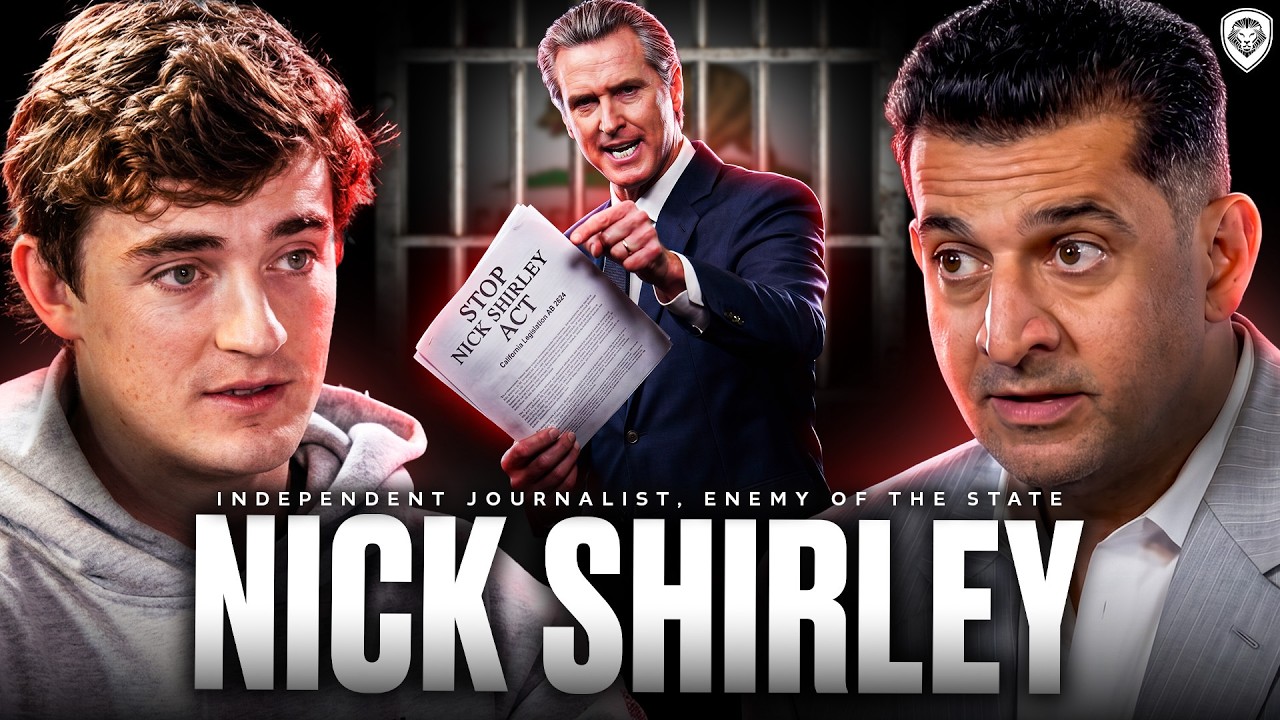
"Planning My Escape From Cuba" - Nick Shirley Returns | PBD #793
"Investigative journalist Nick Shirley details his perilous 24-hour trip to Cuba, where he exposed the harsh realities of communism under government surveillance, and discusses his ongoing efforts to uncover widespread fraud in California."
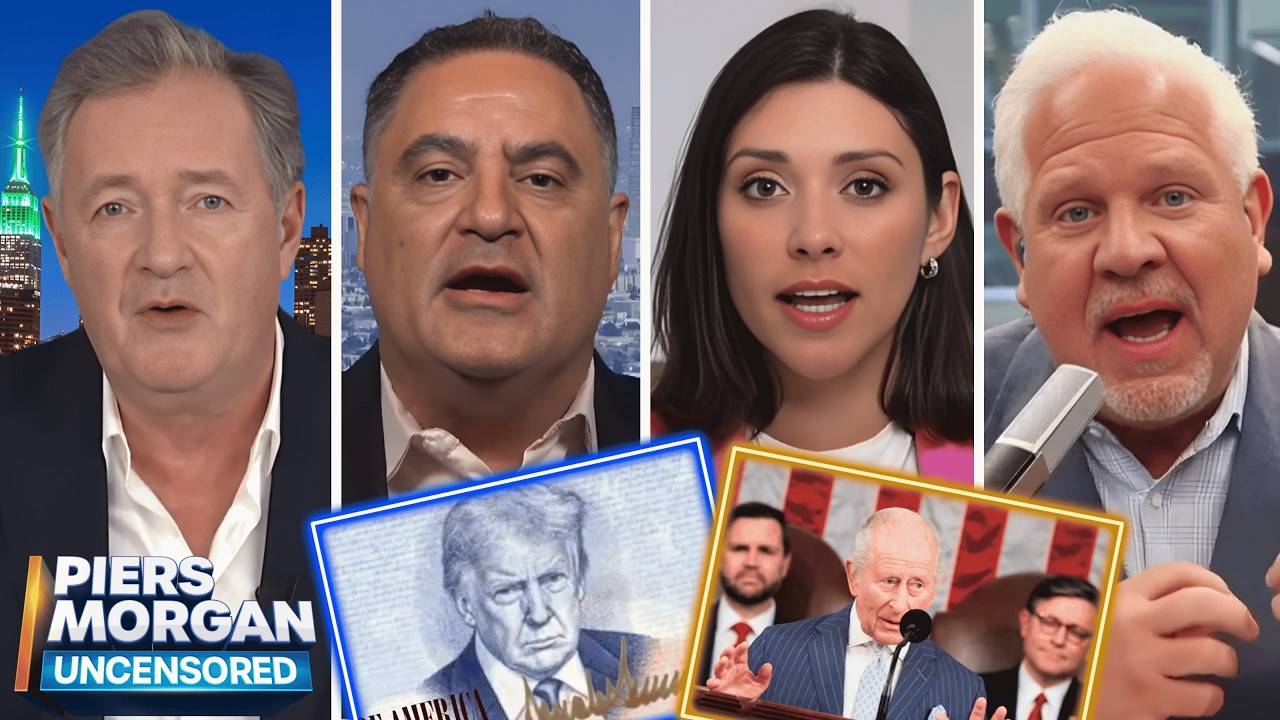
“You’re A JOKE!” Trump Shooting Debate & Free Speech ‘Hypocrisy’ | With Cenk Uygur & Glenn Beck
"Piers Morgan and guests debate the political implications of King Charles's US visit, the Secret Service's failures in protecting Donald Trump, the surge in political violence, and the controversial figure of Tommy Robinson."
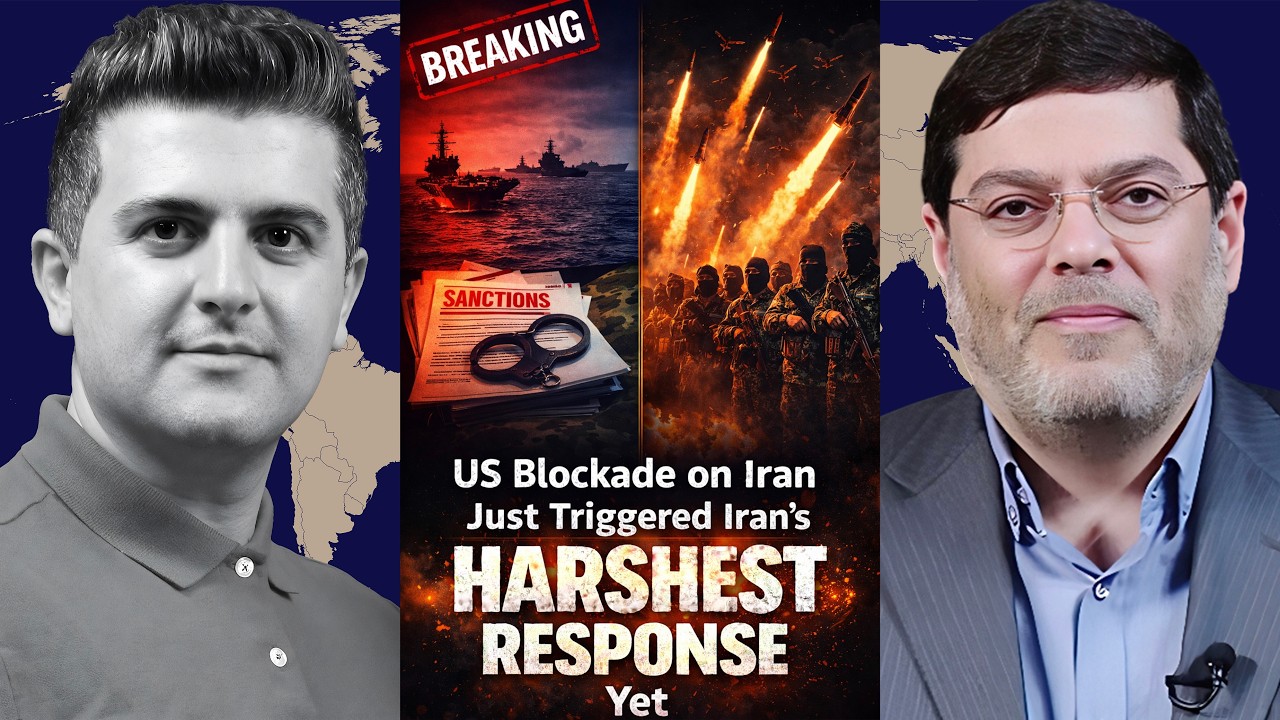
Seyed M. Marandi: US Blockade on Iran Just Triggered Iran’s HARSHEST Response Yet
"An Iranian professor details how US demands and an imposed blockade triggered Iran's harshest response, exposing American strategic missteps and the vulnerability of Gulf Arab states."

Larry Johnson & Col. Wilkerson: 4 US Warships Tried to Enter Strait of Hormuz – Then Iran Launched
"A critical analysis reveals escalating US-Iran military confrontations in the Strait of Hormuz, a stark disconnect in diplomatic rhetoric, and a significant geopolitical realignment in the Middle East away from US influence."