
Matthew Hoh: US Just Burned Through Its Cruise Missiles… Now What?
YouTube · _QG-KeocLF0
Quick Read
Summary
Takeaways
- ❖The US and Israel are escalating the war, including attacks on Iranian oil infrastructure, from a position of desperation, not strength.
- ❖Iran has issued evacuation notices for Gulf State energy facilities, signaling imminent retaliation that could severely disrupt global energy markets.
- ❖The US military is facing a critical shortage of cruise missiles, requiring ships to travel long distances for replenishment, exposing a major logistical oversight.
- ❖The Trump administration is perceived as incompetent, with key officials making contradictory statements and lacking a coherent strategy.
- ❖Iran's strategic patience, effective use of economic warfare, and the coordinated 'Axis of Resistance' have allowed them to maintain the initiative.
- ❖US/Israeli military objectives, such as eradicating Iran's missile program or achieving regime change, are deemed impossible without a World War II-scale occupation force.
- ❖Europe is showing reluctance to fully commit to the US/Israeli war efforts, prioritizing common sense and avoiding further entanglement in a 'quicksand' conflict.
Insights
1Desperate Escalation by US and Israel
The recent attacks on Iranian oil infrastructure and the resumption of assassination attempts against Iranian figures are not signs of US/Israeli dominance but rather desperate measures to regain initiative in a war currently favoring Iran. The objective is to draw Gulf States fully into the conflict, hoping their reaction will be to join the US/Israel rather than pressure for peace.
Israelis made clear the attack on South Pars refinery was with American blessing. The host notes 'so much desperation when you go after oil infrastructure.' Matt Hoh states, 'None of it is because the Israelis and the Americans are dominating in this war.'
2Iran's Strategic Patience and Clear Objectives
Iran has demonstrated remarkable strategic patience, withholding its full military capabilities through prior conflicts and carefully planning its response. It possesses clearly stated, obtainable political objectives (deterrence in the region, pressure on the US) and a coherent strategy to achieve them, unlike the US and Israel.
Hoh notes Iran 'clearly stated and obtainable political objectives and a strategy that they are executing to achieve them.' He highlights Iran's 'strategic patience' through 'two iterations of conflict' without using 'best missile systems' or 'deploying large number of decoys.'
3US Military Logistical Failures and Miscalculations
The US Navy is running critically low on cruise missiles, requiring destroyers and submarines to travel to distant locations like Diego Garcia for replenishment, as in-theater resupply is not feasible. This logistical oversight stems from a 'strategy of hope' that the war would be short and Iran quickly degraded, a miscalculation that has not materialized.
Hoh states, 'the Navy running out of cruise missiles' means ships 'either have to go back to the Mediterranean or they're going to have to go to Diego Garcia to refill their missiles.' He attributes this to 'lack of foresight, the belief that this is all going to be over in a number of weeks.'
4Incompetence and Ideological Vacuum in Trump Administration
The Trump administration is characterized by incompetence, sycophancy, and a lack of ideological core among its officials, contrasting with the 'competent liars' of previous administrations. This leads to erratic decision-making and an inability to control the war's narrative or execution.
Hoh describes the administration as a 'clown show,' led by 'incompetent liars' surrounded by 'sycophants and conmen and opportunists' who have 'no loyalty to anything except their own self-interest.' He cites Tulsi Gabbard's testimony as an example of this.
5Absurdity of US/Israeli War Objectives
Stated US/Israeli objectives, such as preventing Iran from acquiring nuclear weapons (which Iran hasn't pursued since 2003), eradicating its missile program, or achieving regime change, are fundamentally impossible without a massive, World War II-scale physical occupation of Iran. These objectives often create new problems rather than solving existing ones.
Hoh dismisses the nuclear threat claim, stating Iran 'hasn't had one since at least 2003.' He argues eradicating the missile program would require 'soldiers throughout the entire country' of Iran, which is 'four times the size of Colorado,' an impossible task.
6Resilience of the Axis of Resistance
Contrary to some Western assessments, the 'Axis of Resistance' (including Hezbollah, Iraqi militias, and potentially the Houthis) was not neutralized but strategically held in reserve. Its coordinated deployment in the current conflict demonstrates its effectiveness and the depth of Iranian planning.
Hoh admits, 'I got this really wrong and a lot of other people did too was Hzbala and the idea that many of us thought Hezbala had been neutralized.' He notes Hezbollah 'come into this war right away in coordination with the Iranians, in a well organized structured way.'
Bottom Line
The US and Israel view Gulf Arab states as 'expendable buffers' and 'cannon fodder,' willing to absorb Iranian attacks on their infrastructure in the hope of forcing them into the war.
This perspective reveals a transactional and cynical approach to alliances, where regional partners are seen as tools rather than true allies, potentially eroding long-term trust and stability in the region.
For non-aligned nations or those seeking to reduce US influence, this could be leveraged to highlight the risks of close US military alignment and promote alternative security frameworks.
The 'imminent nuclear threat' narrative used by the White House to justify the war is contradicted by US intelligence assessments, which stated Iran's nuclear enrichment program was 'obliterated' and not being rebuilt.
This exposes a significant disconnect between political rhetoric and intelligence realities, suggesting that the stated justifications for war are manufactured rather than fact-based, undermining public trust and international credibility.
Independent media and analytical bodies can highlight these contradictions to challenge official narratives and demand greater accountability from political leaders regarding war justifications.
The destruction of multi-million dollar US radar systems by Iranian forces cannot be easily replaced, leading to emergency evacuations of THAAD systems from South Korea to the Middle East.
This indicates a significant and potentially long-term degradation of US air defense capabilities in the region, creating vulnerabilities and stretching global military resources.
Adversaries could exploit these gaps, while defense industries might see increased demand for rapid deployment and resilient, distributed air defense technologies.
Key Concepts
Strategy of Hope
This model describes a military or political strategy based on optimistic assumptions rather than concrete plans or realistic assessments. In this context, it refers to the US/Israeli belief that attacking Iranian infrastructure will force Gulf States to join their side or that Iran will simply 'break and fall apart,' despite evidence to the contrary.
Hierarchy in the American Empire
This concept posits that within the American sphere of influence, there is a clear pecking order among allies, with Israel occupying the top tier, significantly above European or Gulf nations, whose concerns are often disregarded in favor of Israeli interests.
Control by Fire
This military doctrine suggests that physical occupation or blockades are not necessary to control an area if one can effectively threaten any movement through it with overwhelming firepower (e.g., drones and missiles). Iran's ability to deter shipping in the Straits of Hormuz without mining them exemplifies this model.
Lessons
- Recognize that official justifications for military action, such as 'imminent threats,' may be politically motivated and contradict intelligence assessments. Always seek independent verification.
- Understand that military power, especially conventional force, has significant limitations against adversaries employing strategic patience, economic warfare, and asymmetric tactics.
- Monitor global energy markets closely, as geopolitical escalations in the Middle East directly impact oil prices and supply chains, potentially leading to broader economic instability.
- Evaluate the long-term implications of alliances where one party views others as 'expendable,' as such dynamics can lead to unpredictable regional responses and further conflict.
- Be aware that the 'fog of war' is often compounded by internal political incompetence and a lack of coherent strategy, leading to prolonged conflicts with no clear path to resolution.
Notable Moments
Joe Kent, Director of the National Counterterrorism Center, resigned, citing the war with Iran as a 'war of choice' not based on an imminent threat to the US, but on behalf of Israel.
This high-profile resignation from within the Trump administration underscores internal dissent and validates claims that the war lacks genuine national security justification, instead serving external interests.
The USS Gerald Ford aircraft carrier had to return to port due to a laundry room fire, highlighting the mundane yet critical operational failures within high-value military assets.
This incident symbolizes the broader theme of US military incompetence and inability to manage its own assets and logistics, even as it engages in a complex regional conflict.
Tulsi Gabbard, in a Senate Intelligence Committee hearing, affirmed that US intelligence assessed Iran's nuclear enrichment program was 'obliterated' and not being rebuilt, yet struggled to reconcile this with the White House's 'imminent nuclear threat' justification for war.
This exchange publicly exposed the contradiction between intelligence findings and political rhetoric, demonstrating how the administration uses fabricated threats to justify military action, and how officials like Gabbard adapt their positions to align with power.
Quotes
"The Americans and Israelis don't have that. And so what I think you you have to say as well is that this strike on the natural gas processing facility was done in conjunction with a resumption of decapitation attacks, right, of assassination attacks."
"The Israelis and the Americans view the Arab states involved in this as expendable. They view them as buffers. They view them as cannon fodder essentially."
"There is a hierarchy in the American Empire and Israel is at the top of it and there is a big gap between that top tier in the hierarchy in which Israel is and all the rest of the nations."
"Iran doesn't have a nuclear weapons program. Hasn't had one since at least 2003. But I guess that, you know, facts and reality don't matter to these people."
"In 2003 the United States was led by competent liars and here in 2026 were led by incompetent liars as well as to the the cohort the cadre the people around the president of United States."
"It is not the intelligence community's responsibility to determine what is and is not an imminent threat. That is up to based on a volume. It is precisely that he receives. It is precisely your responsibility to determine what constitutes a threat to the United States. This is the worldwide threats hearing."
"The reality is the quickest way to open the straits for moves would be for other countries to shoot down American planes and Israeli planes."
Q&A
Recent Questions
Related Episodes

Patrick Henningsen: Hezbollah JUST Fired Back at Israel - Iran Vows to “Crush” All Attacks
"Patrick Henningsen argues that the US and Israel initiated an illegal war against Iran, driven by Trump's incompetence and Israeli influence, leading to an inevitable escalation with severe global economic repercussions."
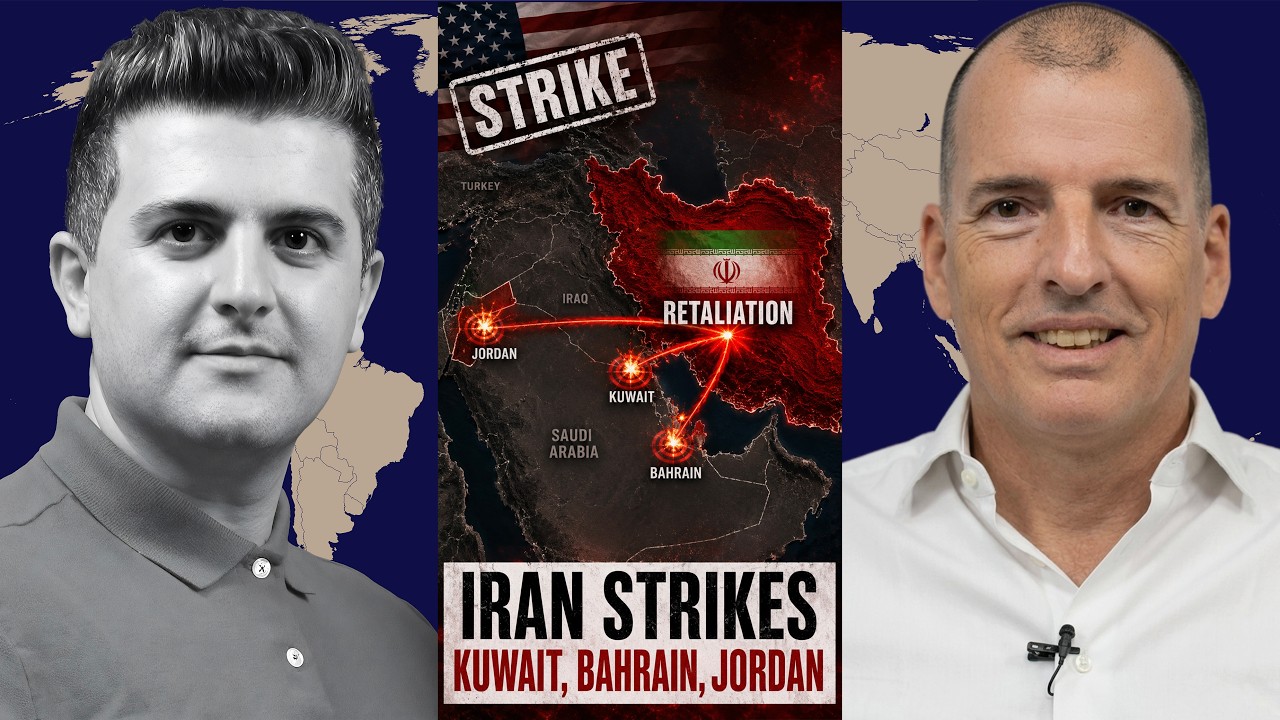
Alex Krainer: US STRIKES Iran – Iran RETALIATES Against Kuwait, Bahrain & Jordan!
"Amidst escalating US-Iran conflict and Iranian retaliation against regional US allies, this episode argues that US foreign policy is deeply controlled by an 'Anglo-Zionist conspiracy' led by the Rothschild banking dynasty, prioritizing Israeli interests over American ones."
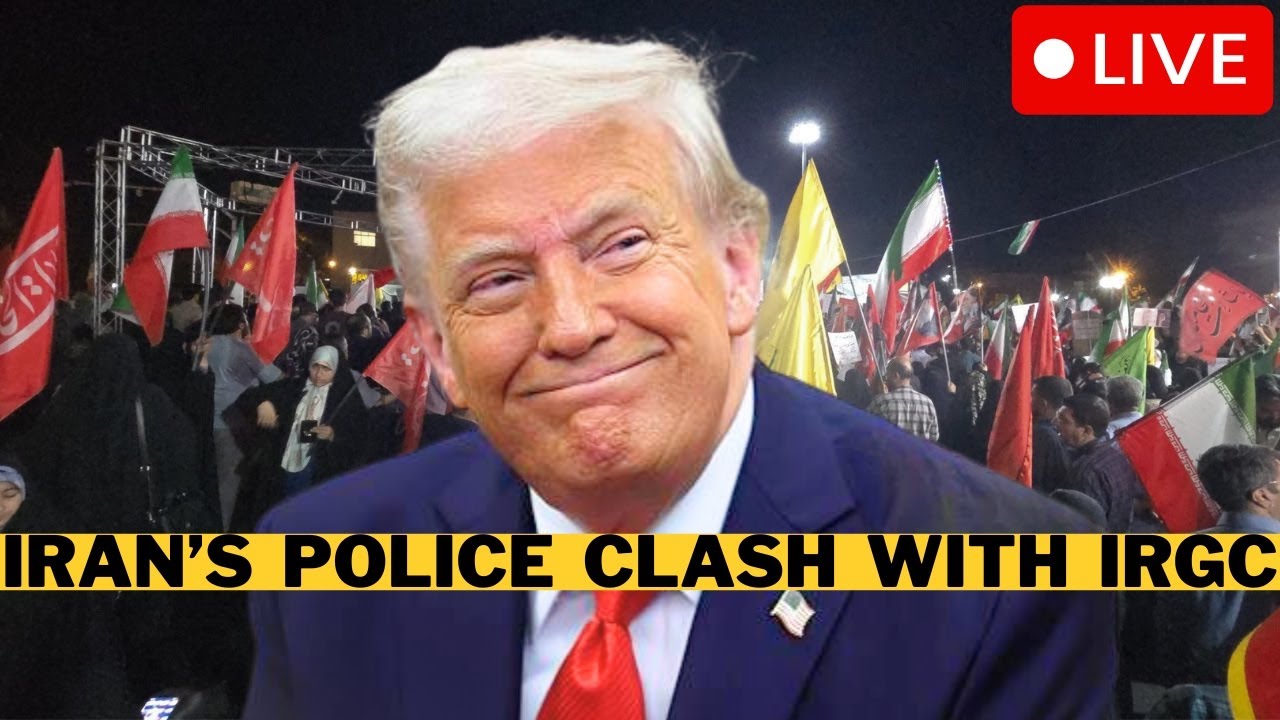
BREAKING: Protests ERUPT In Iran Over IRGC Surrendering To Trump - Infighting Clashes In Tehran
"Iran is experiencing severe internal infighting and protests as hardline IRGC elements clash with government figures over a perceived 'surrender' to the US, while mainstream Western media misrepresents the situation."

LIVE: Trump HIDES FROM PUBLIC as US SOLDIER KILLED!!! 6/2/2026
"The host exposes alleged government cover-ups regarding military casualties, Trump's unexplained public absence, and questionable political appointments, arguing these reflect a 'regime of loser babies' and a failing foreign policy."