Inside the Hearing: Maritime Administration, Federal Maritime Commission and the Fight for Cargo
YouTube · _V0R5x4VsW0
Quick Read
Summary
Takeaways
- ❖The Maritime Administration (MarAd) and Federal Maritime Commission (FMC) are critical to US maritime policy, with MarAd focusing on domestic shipping and FMC on international trade oversight.
- ❖The Maritime Action Plan, with four key pillars, aims to rebuild US shipbuilding, reform workforce training, protect the industrial base, and enhance national/economic security.
- ❖The Tanker Security Program (TSP) is actively supporting US military logistics in real-world contingencies, but the overall US Merchant Marine fleet is small (190 ships, 23rd globally).
- ❖A major challenge for US-flagged ships, especially in the TSP, is a severe shortage of commercial cargo to sustain the fleet, despite record global cargo levels.
- ❖The Ready Reserve Force (RRF) is aging (45-year average) and faces manpower shortages, with its activation sometimes cannibalizing cargo from commercial Maritime Security Program (MSP) carriers.
- ❖The US mariner credentialing system is 'terrible,' with significant delays (6-9 months for reactivation) and an inability to accurately track the number of available mariners.
- ❖The US has completely outsourced the ability to lay and repair critical subsea data cables, creating a significant strategic and economic vulnerability.
- ❖Small Modular Reactors (SMRs) for commercial ships are proposed as a transformative technology that could upend global trade architecture by eliminating fuel costs and enhancing flexibility.
- ❖The Federal Maritime Commission (FMC) has significantly increased its enforcement actions against anti-competitive practices by foreign shipping lines, securing multi-million dollar penalties.
- ❖The Jones Act waiver process (Section 27, 501A) is highly criticized for being approved by the Department of War/Defense and Homeland Security without consultation from MarAd or FMC, often notified only after voyages are completed.
Bottom Line
The US is completely reliant on China for containers and cranes, and has outsourced subsea cable laying and repair capabilities, creating critical strategic vulnerabilities in global trade infrastructure.
This dependence means the US lacks control over essential components of its supply chain and digital infrastructure, posing risks to economic and national security if geopolitical tensions escalate.
Develop domestic manufacturing capabilities for containers and cranes, and invest in US-flagged cable laying and repair vessels to regain strategic autonomy and create high-tech maritime jobs.
Small Modular Reactors (SMRs) on commercial ships could fundamentally re-optimize global trade by eliminating fuel costs, shifting focus to speed and flexibility, and potentially changing optimal ship sizes.
This technology could be as transformative as containerization, offering a path for the US to set new terms in global trade and compete with dominant maritime powers like China.
Aggressively invest in SMR development and integration for commercial maritime applications, leveraging US nuclear expertise to gain a first-mover advantage and establish new global shipping standards.
The current Jones Act waiver approval process is deeply flawed, allowing foreign ships to move domestic cargo without proper assessment of US commercial availability or national defense justification, and without consultation from the Maritime Administration.
This 'batshit crazy' system undermines the very purpose of the Jones Act, harms the US domestic shipping industry, and misses opportunities to provide cargo for US-flagged vessels and stimulate domestic shipbuilding.
Reform the 501A waiver process to mandate MarAd consultation, require rigorous proof of no US commercial availability, and integrate waiver requests with a strategy to build more Jones Act compliant vessels, potentially with advanced technologies like SMRs.
Opportunities
Develop and commercialize Small Modular Reactors (SMRs) for integration into commercial shipping vessels.
This would eliminate fuel costs, enhance speed and flexibility, and potentially revolutionize global trade architecture, offering a competitive edge for US-flagged ships. These nuclear-powered ships could also provide grid backup power when in port.
Invest in building new Jones Act compliant tankers that can operate in both foreign and domestic trade, potentially with SMR technology.
These vessels would address the current shortage of US-flagged tankers for domestic cargo movement (e.g., oil and fuel from Gulf Coast to West Coast) and provide critical support for military logistics, while also being able to generate power for the grid when docked.
Modernize and streamline the US merchant mariner credentialing system.
Address the current 'terrible' delays and inefficiencies in license activation and renewal, and implement a data-driven system to accurately track mariner availability. This would alleviate critical manpower shortages and ensure a ready workforce for the US fleet.
Lessons
- Advocate for reforms to the Jones Act waiver process to ensure transparency, accountability, and proper consultation with the Maritime Administration before foreign vessels are permitted to carry domestic cargo.
- Support increased funding and strategic initiatives for US shipbuilding and mariner training programs to address the aging fleet and critical workforce shortages.
- Explore and invest in innovative maritime technologies, such as Small Modular Reactors (SMRs), to reduce operational costs, enhance competitiveness, and establish US leadership in future global shipping.
Notable Moments
Captain Carmel highlights the critical shortage of cargo for US-flagged ships, stating that a shipbuilding program without consistent cargo access will not produce ships.
This reveals a fundamental flaw in US maritime strategy: even with new ships, without commercial cargo, the fleet cannot be sustained, impacting both economic viability and military readiness.
The host reveals that the Maritime Administration is not consulted on Jones Act waivers until 10 days after a voyage is completed, calling the process 'batshit crazy'.
This exposes a severe systemic dysfunction where the primary agency responsible for US maritime affairs is excluded from critical decisions directly impacting the domestic fleet, undermining national policy goals.
Chairperson DeBello details the Federal Maritime Commission's successful enforcement actions against major global shipping companies (Mediterranean Shipping Company, Maersk) for anti-competitive practices, imposing multi-million dollar penalties.
This demonstrates the FMC's increased power and proactive stance under OSRA 2022 to protect US shippers and consumers from predatory pricing and unfair practices by dominant foreign carriers.
Quotes
"A shipbuilding program without structured access to consistent cargo will not produce ships."
"We have completely outsourced the ability to lay and repair that cable system. Outsourcing only works for as long as the other side stays willing to do it. This is a real strategic and economic vulnerability."
"Take fuel cost out of the equation and the whole network re-optimizes around something else. Speed and flexibility, for example. Optimal ship size will likely change as economies of scale calculations are upended. This could be as transformative as containerization and a real path to compete with China on terms we set."
"Globally, only US shippers benefited from this market stability and protection."
"This would be like allowing a a a foreign airline to operate within the confines of the United States... and the way you get the waiver is by asking the US Air Force and then approved by the Department of Homeland Security and then only afterwards do you tell the FAA. I I mean, no other I I This is a phrase I like to use here recently, and I've been using it quite a bit, is batshit crazy. And And that's exactly what this is."
Q&A
Recent Questions
Related Episodes
PBS News Hour full episode, June 16, 2026
"This episode unpacks the murky U.S.-Iran nuclear deal, the politicization of the Justice Department, rising cancer rates in Iowa, the unprecedented shutdown of powerful AI models, and a new institute reframing the enduring impact of slavery."
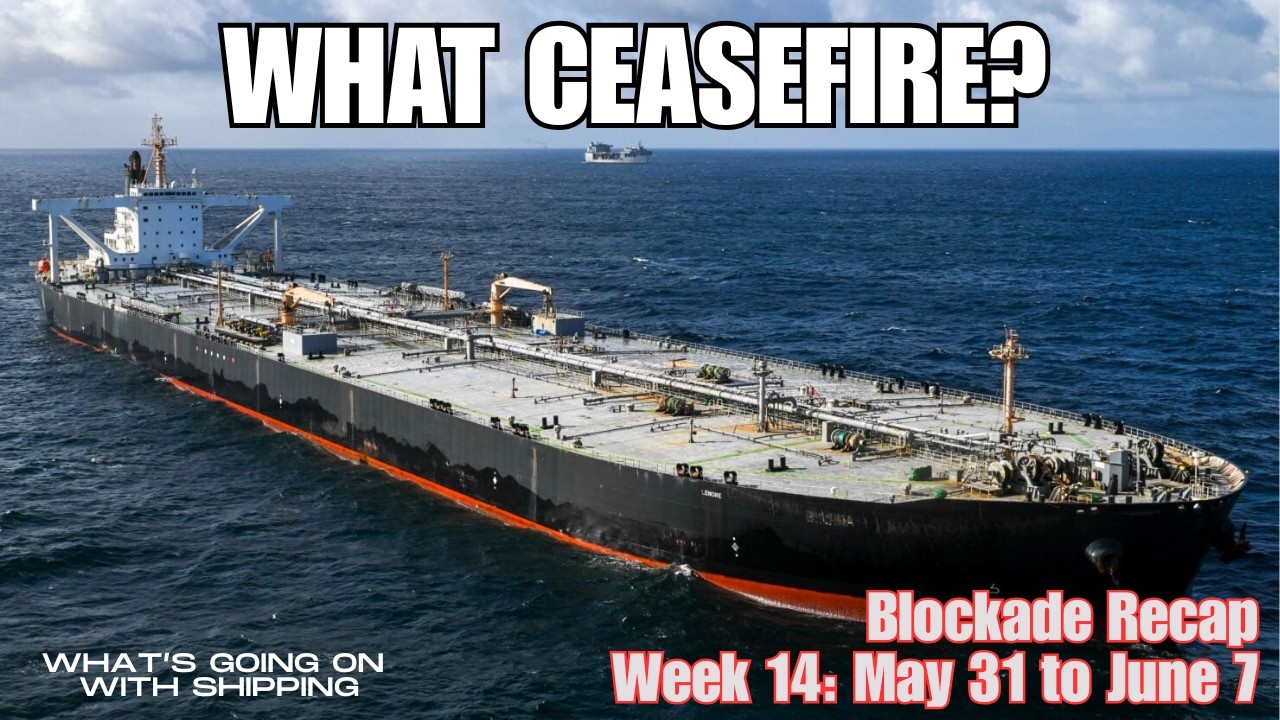
The Global Shipping Crisis: 14 Weeks of the Persian Gulf Blockade
"The ongoing 14-week blockade in the Persian Gulf has severely disrupted global shipping, causing massive spikes in freight rates, collapsing Iranian oil exports, and creating a precarious global energy supply chain."

The Fat Electrician Vs Tactically Acquired | Unsubscribe Podcast 267
"This episode features military content creators discussing current geopolitical hotspots, advanced weaponry, and the surprising psychological warfare tactics of modern conflict, alongside their personal journeys building online communities."

Reckoning With Trump’s Iran Defeat. Plus: The Meaning of Memorial Day (w/ Michael Wood)
"A combat veteran and former Marine officer critically assesses the Trump administration's handling of the Iran conflict as a strategic defeat and expresses deep concern over the politicization of the U.S. military, linking these issues to the solemn meaning of Memorial Day."