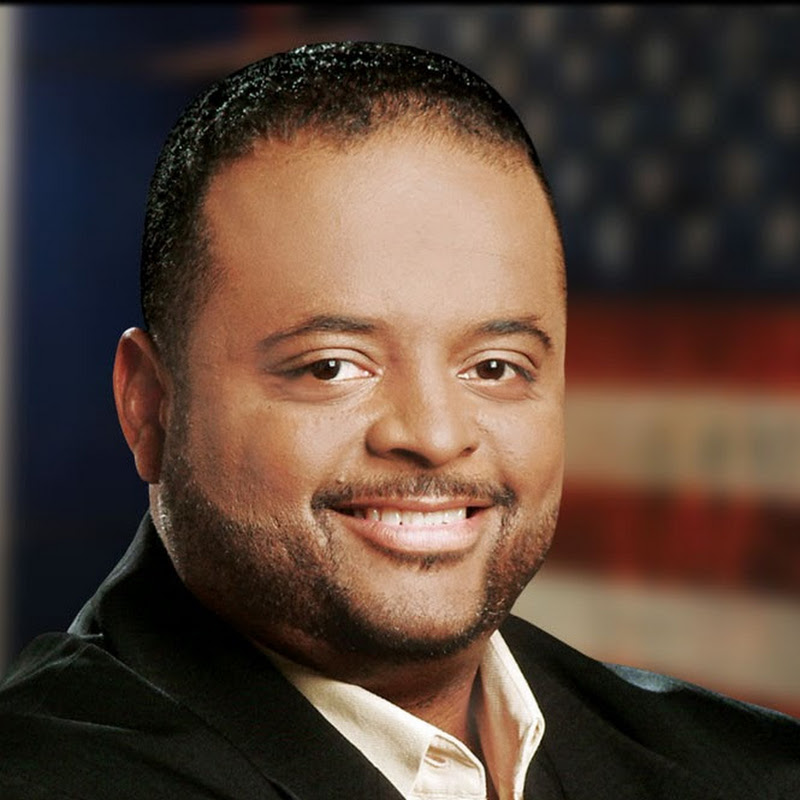
Iyanla Speaks! Black Women, Black Men and Domestic Violence | A BSN Exclusive Presentation
YouTube · _nyqq5k8g1k
Quick Read
Summary
Takeaways
- ❖Domestic violence disproportionately impacts the Black community, with recent cases highlighting a severe problem involving anger, resentment, and mental health issues.
- ❖Black men are often taught to suppress emotions, leading to emotional illiteracy and a lack of vulnerability, while Black women are conditioned to love sacrificially, often at their own expense.
- ❖Unaddressed generational trauma, grief, and sadness contribute to a collective wound that manifests in dysfunctional relationships.
- ❖Hopelessness is a significant disease spreading among Black men, leading to a feeling of having 'nothing to lose' and potentially extreme actions.
- ❖Emotional regulation is a learned skill, not innate, and is crucial for preventing escalation of conflict and modeling healthy behavior for children.
- ❖The 'wound' a person carries must be identified and healed, as merely addressing the 'harm' (behavior) will not resolve the underlying issues.
- ❖Community involvement, including creating safe spaces for men to express vulnerability and for women to love without losing themselves, is vital for collective healing.
Insights
1Unaddressed Generational Trauma Fuels Domestic Violence
Black communities carry deep, unacknowledged wounds from slavery and systemic dehumanization, manifesting as unaddressed grief and sadness. This historical trauma, combined with societal pressures and the breakdown of communal living, creates a fertile ground for anger, resentment, and violence within relationships.
Iyanla Vanzant states, 'All of us are descendants of slaves. All of us carry a wound, a wound that has never been acknowledged. We carry grief that has never had a funeral.' Roland Martin recounts his own family's shift from communal Sunday gatherings to isolated living, noting, 'we now are so isolated that this idea of community has been so fractured.'
2Emotional Illiteracy and Hopelessness in Black Men
Black men are often conditioned to 'suck it up,' 'don't show weakness,' and 'don't ask for help,' leading to emotional illiteracy where they struggle to identify and express complex feelings beyond anger. This suppression, coupled with societal devaluation and economic pressures, can foster deep hopelessness, making men prone to lashing out or self-destruction.
Vanzant notes, 'most men, black men, are emotionally illiterate. They know happy, they know sad, they know angry... they don't know embarrassment, they may not know anxiety, frustration.' She later adds, 'So many brothers are hopeless and when that happens, they don't have anything to lose.' Roland Martin cites cases like Shamar Elkins, who killed his children, as potential examples of this hopelessness.
3Sacrificial Love and Over-Involvement in Black Women
Black women are often taught to love deeply, loyally, and sacrificially, leading them to 'over-give, over-explain, over-excuse, and over-extend' in relationships. This can manifest as accommodating dysfunction, sacrificing their own well-being, and even over-involving themselves in their adult children's relationships, hindering others' growth and accountability.
Vanzant shares her own nine-year experience in an abusive marriage, explaining, 'My wound was remaining loyal to people who treat me badly.' She advises women to 'love without losing yourself' and to 'stand with him, encourage him, offer our presence and hold space and keep our hands in our pocket and our mouth shut' to allow men to take responsibility.
4The Importance of Emotional Regulation and Early Intervention
Emotional regulation is a learned skill critical for preventing conflict escalation and modeling healthy behavior for children. Early intervention, focusing on helping children verbalize their feelings and fostering critical thinking, can disrupt the continuum of violence that begins with suppressed emotions and escalates to verbal abuse, physical assault, and ultimately, murder.
Roland Martin shares an anecdote about his niece's PTSD-induced breakdown from being left alone, highlighting the need to 'put them back together' and 'reprogram.' Vanzant emphasizes, 'Figure out how to help them verbalize what they're feeling. There are books that you can get so that they know the distinction between frustration and gas.'
Key Concepts
Spiritual Hygiene
The practice of actively engaging in self-care for one's inner well-being, mental balance, and emotional regulation. It involves cleaning one's mind, clearing one's heart, and aligning one's body to embrace spiritual truth and law, rather than relying on external coping mechanisms like substances or distractions.
Wound vs. Harm
A framework distinguishing between the underlying emotional or psychological 'wound' (e.g., inherited trauma, feelings of worthlessness) and the resulting 'harm' (e.g., violent behavior, abuse). Healing requires addressing the root wound, not just the symptomatic behavior, to prevent recurrence.
Emotional Illiteracy
A limited emotional vocabulary and inability to identify, name, and process a full range of emotions beyond basic ones like happy, sad, or angry. This often leads to suppressed feelings and an overwhelmed nervous system, which can manifest as aggression, withdrawal, or violence.
Lessons
- Utilize Iyanla Vanzant's 'Spiritual Hygiene' worksheets (available on blackstarnetwork.com) to identify personal 'wounds' and 'harms' for both men and women, fostering self-awareness and accountability.
- Actively create safe spaces for Black men to express vulnerability and emotions beyond anger, encouraging open dialogue and seeking professional help without judgment.
- Practice 'loving without losing yourself' by setting clear boundaries, avoiding over-giving or over-excusing, and allowing partners and adult children to take responsibility for their own healing and choices.
- Support community initiatives and political candidates focused on mental health resources and trauma-informed care, advocating for policies that fund these essential services.
- For those witnessing abuse, offer a safe space and support, but emphasize the need for an exit plan and a commitment to change, rather than enabling prolonged complaining without action.
Iyanla Vanzant's Spiritual Hygiene Worksheets for Healing
**For Men (Wound vs. Harm):** Identify 'What is the wound I carry?' (e.g., abandonment, worthlessness) and 'Where did it come from?' (e.g., inherited trauma, childhood experiences). Reflect on 'What was I taught about being a man and expressing emotion?' and 'What emotions do I avoid or struggle to express?'
**For Women (Love Without Losing Yourself):** Examine 'What am I thinking about my current relationships with the men in my life?' (son, father, husband, lover, brother). Reflect on 'How am I showing up in my relationships?' (e.g., rescuer, leader, victim, martyr) to understand patterns of over-giving and self-sacrifice.
**Commit to Action:** Use these insights to seek appropriate help (therapy, counseling, spiritual guidance) and develop healthier coping mechanisms and communication strategies. The goal is to heal the underlying wound to eliminate the resulting harm.
Notable Moments
Iyanla Vanzant recounts her nine-year abusive marriage, where her husband choked her while her son watched, unable to intervene. This deeply personal story highlights the intergenerational trauma of domestic violence.
This powerful anecdote serves as a stark example of the 'wound' and 'harm' discussed, illustrating how children witness and internalize trauma, and how societal conditioning (like 'remaining loyal to people who treat me badly') can keep victims in abusive situations.
Roland Martin describes his niece's severe emotional breakdown after hearing a lawnmower, triggered by past trauma of being left alone in the house by her father.
This illustrates how childhood neglect and trauma can manifest as PTSD, emphasizing the need for early intervention, emotional literacy, and creating safe, predictable environments for children to heal and develop.
A caller, Karen from Los Angeles, expresses intense anger about children being killed in domestic violence, which Iyanla reframes as 'passion' that should be channeled into service.
This moment highlights the difference between unproductive anger and channeled passion, providing a model for listeners to transform their emotional responses into constructive action within their communities.
Quotes
"Black men are not the enemy of black women, and black women are not the enemy of black men. But that is how it's been set up."
"If you are a man in this country, a black man in the United States of America, you carry a wound."
"You got to learn to feel and then name what you're feeling. Unfortunately, most men, black men, are emotionally illiterate."
"You're not going to leave until it hurts bad enough."
Q&A
Recent Questions
Related Episodes

Sadhguru - Stop Letting Your Mind DESTROY You | SRS #315
"Sadhguru challenges conventional wisdom on 'being in the moment' and stress, arguing that mastering the mind requires understanding its sophisticated design and consciously directing one's internal chemistry for profound well-being."

Every Time You Think This Story Can't Get Weirder—IT DOES | The Trio
"A bizarre tale unfolds in MAGA D.C. as a Students for Trump founder and his associate are arrested, revealing a two-week-long Secret Service impersonation scheme involving fake badges, club entry, and claims of ordering airstrikes."

Mamá me golpeaba, busqué a papá y él me trajo a la cárcel | Yahana #Penitencia 196 #México
"Yahana recounts her harrowing journey from a childhood marred by domestic violence and parental abandonment to drug addiction and eventual incarceration, directly caused by her father's actions."
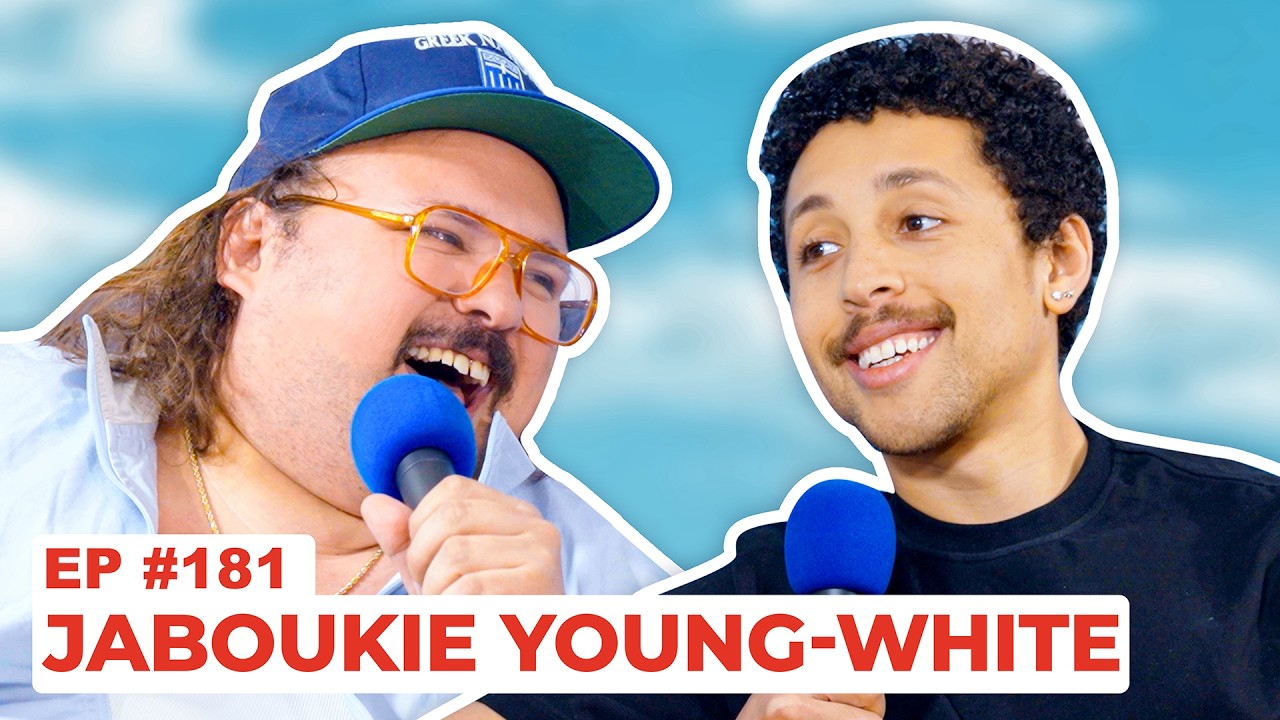
Stavvy's World #181 - Jaboukie Young-White | Full Episode
"Stavros Halkias and Jaboukie Young-White dive into chaotic family histories, modern relationship dilemmas, and the absurdities of celebrity culture, offering unfiltered comedic takes and unconventional advice to callers."