BREAKING: Iran REJECTS Ceasefire Deal; U.S. Amps Threats; IRGC Chiefs ELIMINATED | TBN Israel
YouTube · aBzUgROekBo
Quick Read
Summary
Takeaways
- ❖Iran rejected a temporary ceasefire proposal, demanding a permanent end to hostilities and new Strait of Hormuz protocols.
- ❖U.S. President Trump issued a 'final' ultimatum, threatening to destroy Iranian infrastructure like bridges, power stations, oil facilities, and desalination plants.
- ❖Israel eliminated Majid Khadami (head of IRGC intelligence), Ashgar Bagari (commander of IRGC Unit 840 for overseas terror), and Muhammad Raz Ashrafi Khaki (IRGC oil deal financier).
- ❖Israel is systematically dismantling the IRGC's 'money machine' by striking petrochemical plants and oil networks.
- ❖Iran's Revolutionary Guards allege a recent U.S. pilot rescue mission was a 'sophisticated deception' to remove enriched uranium.
- ❖Saudi Arabia raised its flagship crude oil price to a record high premium, rerouting exports through Yanbu on the Red Sea due to Strait of Hormuz turmoil.
- ❖Jordan and Saudi Arabia publicly support disarming Hezbollah and condemn Iranian aggression.
- ❖North Korea is distancing itself from Iran, avoiding support to improve relations with Donald Trump.
- ❖Israeli air defense systems (Iron Dome, David's Sling, Arrow) achieve high intercept rates but are not hermetic, with some missiles still causing damage and casualties.
Insights
1Iran Rejects Ceasefire, Demands Permanent End to War
After two weeks of discussions, Iran officially rejected a mediator's proposal for a 45-day temporary ceasefire. Iran's counter-demands include a permanent end to the war, national reconstruction, sanctions relief, and new safe passage arrangements in the Strait of Hormuz. This rejection signals Iran's unwillingness to accept a short-term pause that would leave its strategic leverage cards on the table.
Iran returned a 10-point document of demands, rejecting a 45-day ceasefire to advance negotiations on a permanent arrangement, demanding a permanent end to the war and conflicts, and insisting on a new protocol for the Strait of Hormuz.
2U.S. Issues Final Ultimatum, Threatens Critical Infrastructure Strikes
President Trump declared Iran's ceasefire counter-proposal 'not good enough' and stated that the deadline for a deal is final, set for early Wednesday morning. He threatened to disable Iran's state functionality by striking major infrastructure, including power stations, bridges, oil facilities (like Karag Island), and desalination plants, if the Strait of Hormuz is not opened.
Trump said the deadline is final, threatening to leave 'no bridges or power stations left' if no deal. He mentioned striking the Damavand power plant, bridges between Tehran and Karaj, Karag Island, and desalination facilities.
3Israel Eliminates Top IRGC Intelligence, Terror, and Financial Commanders
Israel conducted targeted eliminations deep within Iran's security system. Majid Khadami, the head of the Revolutionary Guards intelligence organization, and Ashgar Bagari, commander of Unit 840 (responsible for planning and executing terror attacks and assassinations outside Iran), were eliminated in Tehran. Additionally, Muhammad Raz Ashrafi Khaki, responsible for billions in oil deals financing IRGC missile, drone, and proxy networks, was also eliminated. These strikes aim to decapitate Iran's operational and financial leadership for terror.
Overnight, Majid Khadami, head of Revolutionary Guards intelligence, and Ashgar Bagari, commander of Unit 840, were eliminated in Tehran. Muhammad Raz Ashrafi Khaki, responsible for billions in oil deals financing IRGC systems and proxies, was also eliminated.
4Israel Systematically Dismantling IRGC's 'Money Machine' and Infrastructure
Prime Minister Netanyahu stated Israel is systematically dismantling the Revolutionary Guards' financial capabilities. This includes destroying Iran's largest petrochemical plant, striking other industrial facilities, and targeting oil networks. The goal is to cut off the funding that fuels Iran's missile, drone, and terror proxy networks (Hamas, Houthis, Hezbollah), alongside broad aerial strikes on missile launchers and air defense systems.
Netanyahu announced 'eliminating the revolutionary guards money machine.' Israel struck the largest petrochemical facility and another plant responsible for 85% of Iran's petrochemical production. The Israeli Air Force struck over 120 air defensive systems and missile launchers.
5Iran Alleges U.S. Pilot Rescue was a 'Uranium Heist' Deception
Iran's Revolutionary Guards are convinced that a recent American rescue mission for a downed pilot was a 'sophisticated deception.' They allege that the true objective was to remove enriched uranium from a suspected site, approximately 60 miles away from the pilot's crash location. While unconfirmed, this suspicion is reportedly feeding internal fears within Iran about losing its remaining enriched uranium stockpile.
Iran's revolutionary guards are convinced the American rescue mission was a 'sophisticated deception' to remove enriched uranium. They claim special forces operated 60 miles away at a suspected uranium site.
6Regional Alignment Shifts Against Iran; North Korea Distances Itself
Saudi Arabia and Jordan publicly announced support for Lebanon's efforts to disarm Hezbollah and condemned Iranian aggression, signaling a growing regional consensus against Iran's destabilizing actions. Furthermore, North Korea has reportedly distanced itself from Iran, avoiding weapon transfers or official condolences, to preserve chances of improving relations with Donald Trump, indicating Iran's increasing isolation even among its broader allies.
Jordan and Saudi Arabia are supporting Lebanese efforts to disarm Hezbollah and condemning Iranian aggression. North Korea is avoiding support for Iran and maintaining a cautious line to improve relations with Donald Trump.
Lessons
- Stay informed on the rapidly evolving geopolitical situation in the Middle East, particularly regarding U.S.-Iran tensions and Israeli military actions.
- Consider the potential global economic impacts, especially on energy markets, given threats to Iranian oil infrastructure and Saudi Arabia's oil pricing adjustments.
- Support organizations like Magen David Adom (savealifeisrael.com) that provide emergency medical response in Israel, as they operate under constant threat of missile attacks.
Quotes
"If there is no deal, they will have no bridges or power stations left."
"We eliminated the head of the Iranian intelligence. We will continue hunting them down one by one."
"The fact that we're so good at defending ourselves is what saves the lives of people in our enemy states."
Q&A
Recent Questions
Related Episodes
Seyed M. Marandi: US Blockade on Iran Just Triggered Iran’s HARSHEST Response Yet
"An Iranian professor details how US demands and an imposed blockade triggered Iran's harshest response, exposing American strategic missteps and the vulnerability of Gulf Arab states."

Bibi DEMANDS Ground Troops As Marines Rushed to Iran
"Benjamin Netanyahu is pushing for US ground troops in Iran, framing air strikes as insufficient, while the US rushes Marines to the region and struggles to secure the Strait of Hormuz against surprisingly capable Iranian defenses."
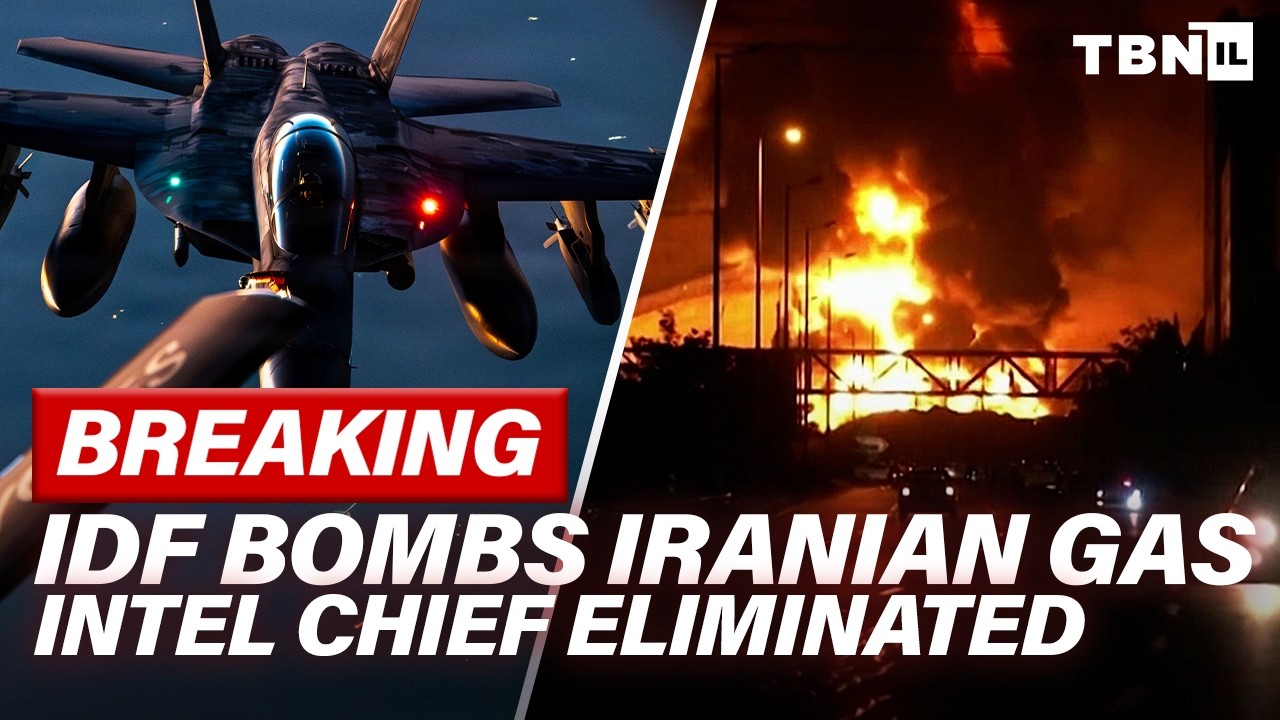
BREAKING: Israel BOMBS Major Iran Gas Site; Top Mullah ELIMINATED; Iran Vows VENGEACE | TBN Israel
"Israel and the United States have escalated their 'Roaring Lion War' against Iran, striking its largest gas facilities, eliminating key intelligence and military figures, and disrupting missile production, while Iran threatens a broader energy war in the Gulf."

Mohammad Marandi & Larry C. Johnson: U.S. & Iran on the Brink as Critical Negotiations Unfold LIVE
"Two geopolitical analysts argue that the US and Israel are on the brink of a catastrophic war with Iran, driven by irrationality and miscalculation, which would lead to global economic collapse and US instability."