Trump Creates HIS OWN CRISIS on the WORLD STAGE
YouTube · abJfuTHMcEo
Quick Read
Summary
Takeaways
- ❖Putin is an ideological leader who believes the West is decadent and seeks to establish a Russian sphere of influence, a view shared by Trump.
- ❖Trump's special envoy, Steven Witko, has engaged in ineffective diplomacy with Putin, making concessions from Ukraine without securing any from Russia, which Putin perceives as weakness.
- ❖The US is actively dismantling its 'soft power' instruments (USAID, Voice of America) while China and Russia are expanding theirs, leading to 'unilateral disarmament'.
- ❖Trump's 'spheres of influence' policy has alienated close allies like Canada and failed to achieve objectives in regions like Venezuela, pushing countries towards China.
- ❖Internal polarization and attacks on democratic institutions within the US further weaken its global image and strategic position, providing a 'gift' to adversaries.
- ❖Historically, US internal democratic improvements (e.g., Civil Rights Movement) boosted its foreign policy influence, a lesson being reversed today.
Insights
1Putin's Ideological Drive vs. Transactional Perception
Western leaders, including those in the Obama administration, often misjudged Putin as a purely transactional leader. McFaul asserts Putin is a deeply ideological leader whose 'Putinism' believes the West is decadent and Russian civilization is independent. He actively invests billions in promoting this ideology globally, financing NGOs and media like Russia Today.
McFaul states, 'We always thought of Putin as some transactional leader... we always underestimated what an ideological leader he is... he basically believes the West is this decadent liberal place and Russian civilization is independent of that.' He mentions Putin's investment of 'hundreds of millions, maybe billions of dollars' in this project.
2Trump's 'Spheres of Influence' Aligns with Putin's Worldview
Trump's national security strategy, emphasizing 'spheres of influence' for great powers, directly aligns with what Putin and Medvedev advocated in 2009. This worldview tragically implies that countries like Ukraine do not deserve independent sovereignty but should be subjugated to the Russian Empire.
McFaul explains, 'When the president came in and then he codified it in his national security strategy talking about spheres of influence... That's exactly almost word for word what Putin and President Medvedev at the time were saying to us in 2009.'
3Ineffective Diplomacy and Unilateral Concessions to Russia
Trump's diplomatic strategy, particularly through special envoy Steven Witko, has involved listening to Putin's demands and then pressuring Ukraine's President Zelensky to concede. This approach has not yielded any concessions from Putin, who perceives it as weakness, while Zelensky has made 'all sorts of concessions,' leading to no progress in ending the war.
McFaul states Witko's strategy 'has been to go to Moscow... listen to what Putin wants and then go to Zalinski... and say this is what you got to do to get peace. That had didn't work because Putin... saw weakness and he said, "Okay, I'm going to pocket these concessions and I'm going to ask for more."' He adds, 'I can't think of a single concession where Putin has changed his position... at the same time that Zalinski has given all sorts of concessions.'
4Dismantling US Soft Power and Alliances
The Trump administration has actively undermined US soft power by defunding USAID, Voice of America, and reducing State Department staff, including experienced ambassadors. This 'unilateral disarmament' occurs while competitors like China (Belt and Road Initiative) and Russia (Russia Today) are doubling down on their own influence investments. This also alienates allies, as seen with Canada's Prime Minister giving a harsh speech against the US.
McFaul notes, 'As we unilaterally dismantled USAID last year, the Chinese didn't do that. They have something called the Belt and Road Initiative... Blew up Voice of America, Radio Free Europe... eliminated 10% of some of the best and brightest people in the State Department.' He also mentions Canada's Prime Minister giving 'one of the harshest speeches against the United States in the history of our bilateral relationship.'
5US Internal Chaos as a Strategic Gift to Adversaries
Internal polarization and conflict within the United States, such as events in Minneapolis, are viewed by adversaries like Putin and Xi Jinping as a 'gift.' When the US is fighting amongst itself, it is not united or focused on managing adversarial relations externally, allowing China and Russia to advance their interests without direct confrontation.
McFaul states, 'What bigger gift to to Putin and you know to Xi Jinping too for that matter that if we're fighting amongst ourselves we're not focused on how to manage these adversarial relations with China and Russia. And I would say the same thing about polarization here at home.'
Bottom Line
The US is engaging in a 'conscious decline' by actively dismantling its instruments of power and alienating allies, a historical anomaly for a dominant global power.
This self-inflicted weakening creates a power vacuum and emboldens revisionist powers, leading to a less stable and more dangerous international order.
Rebuilding and modernizing soft power institutions, strengthening alliances, and addressing internal divisions are critical to reversing this decline and restoring US influence.
Putin's praise for Trump is not a sign of affection for the US, but a strategic endorsement of a leader whose policies directly contribute to the disintegration of the liberal international order, which Putin desires.
This highlights that perceived 'friendliness' from adversaries can be a tactic to weaken a rival, rather than a genuine desire for cooperation, and should be analyzed for its strategic implications.
Policymakers must understand adversaries' long-term ideological goals, not just immediate transactional interests, to avoid misinterpreting actions and inadvertently aiding their objectives.
Key Concepts
Spheres of Influence
The concept that great powers should have exclusive control or dominant influence over specific geographic regions, often at the expense of smaller nations' sovereignty. McFaul notes Trump's policy aligns with Putin's desire for such a world, contrasting with a rules-based international order.
Soft Power
The ability to attract and co-opt rather than coerce, using cultural and political values, foreign aid, and public diplomacy. The discussion highlights how the US is 'unilaterally disarming' its soft power instruments (USAID, Voice of America) while adversaries like China and Russia are expanding theirs, leading to a loss of influence.
Transactional vs. Ideological Leadership
The distinction between leaders who primarily seek practical deals and those driven by a coherent set of beliefs and a long-term vision. McFaul argues Putin is fundamentally ideological, a point often misunderstood by Western leaders who view him as purely transactional.
Lessons
- Prioritize understanding the ideological motivations of adversaries like Putin, rather than solely viewing them through a transactional lens, to anticipate their long-term strategies.
- Strengthen and modernize US soft power instruments, such as USAID, Voice of America, and the State Department, recognizing them as vital tools of national power, not expendable expenses.
- Rebuild and reinforce alliances, particularly in the Western Hemisphere, by demonstrating consistent support for democratic values and mutual interests, rather than pursuing 'spheres of influence' that alienate partners.
- Address internal political polarization and democratic erosion, as domestic instability is perceived by adversaries as a strategic advantage, diverting US focus and weakening its global image.
Notable Moments
Walter Mondale's interaction with Russian democrats in 1991, where former gulag prisoners expressed hope from hearing his voice on Radio Liberty.
This anecdote powerfully illustrates the profound impact of US soft power and its commitment to human rights on inspiring democratic movements abroad, a stark contrast to the current erosion of these instruments.
Quotes
"Putin is slaughtering Ukrainians every single night. Putin is kidnapped 20,000 Ukrainians. He started the biggest war in Europe for no reason. You can call him a lot of things, but he is not a good guy."
"You don't have to check your values at the door to do so [engage with adversaries]."
"Of course we're tired. Of course, you know, if we look at the data, why should we keep fighting? It looks like there's no hope. But then he said, I want to quote that great grand strategist Mike Tyson, the boxer. And Tyson once was asked the same question, aren't you tired when you get to the 12th round and you just want to quit? And Tyson said, 'Of course I'm tired. Of course, I want to quit. I can barely stand. But I know the consequences of quitting are going to be a lot worse for me than to keep fighting.' And that's why I keep fighting. And I think that's the spirit in Ukraine. And I think for all small D democrats in the world, that should be our spirit, too."
"We're destroying the country, destroying the country at home and abroad at the same time."
Q&A
Recent Questions
Related Episodes

Iran Update: Israel’s Newest Bombing Campaign, the Oncoming War With China and How to Avoid It
"Colonel Wilerson reveals how the US and Israel are actively bombing China's strategic infrastructure in Iran, escalating a covert economic war that Beijing intends to win without direct military conflict by dismantling the dollar's global dominance."

Col. Jacques Baud: The World Is Entering a Lawless Era
"Colonel Jacques Baud details his personal experience with arbitrary EU sanctions and argues that the world has shifted from a law-based international order to a dangerous, rules-based system dictated by powerful actors, exemplified by US actions in Venezuela and the EU's 'teenager decision-making'."

BREAKING: Iran Threatens To END Talks; U.S. Vows Retaliation; Hezbollah Collapsing? | TBN Israel
"Iran is leveraging Hezbollah and the Strait of Hormuz to manipulate US negotiations, while Israel asserts its right to dismantle Hezbollah's eroding but still dangerous infrastructure in Lebanon, independent of international talks."
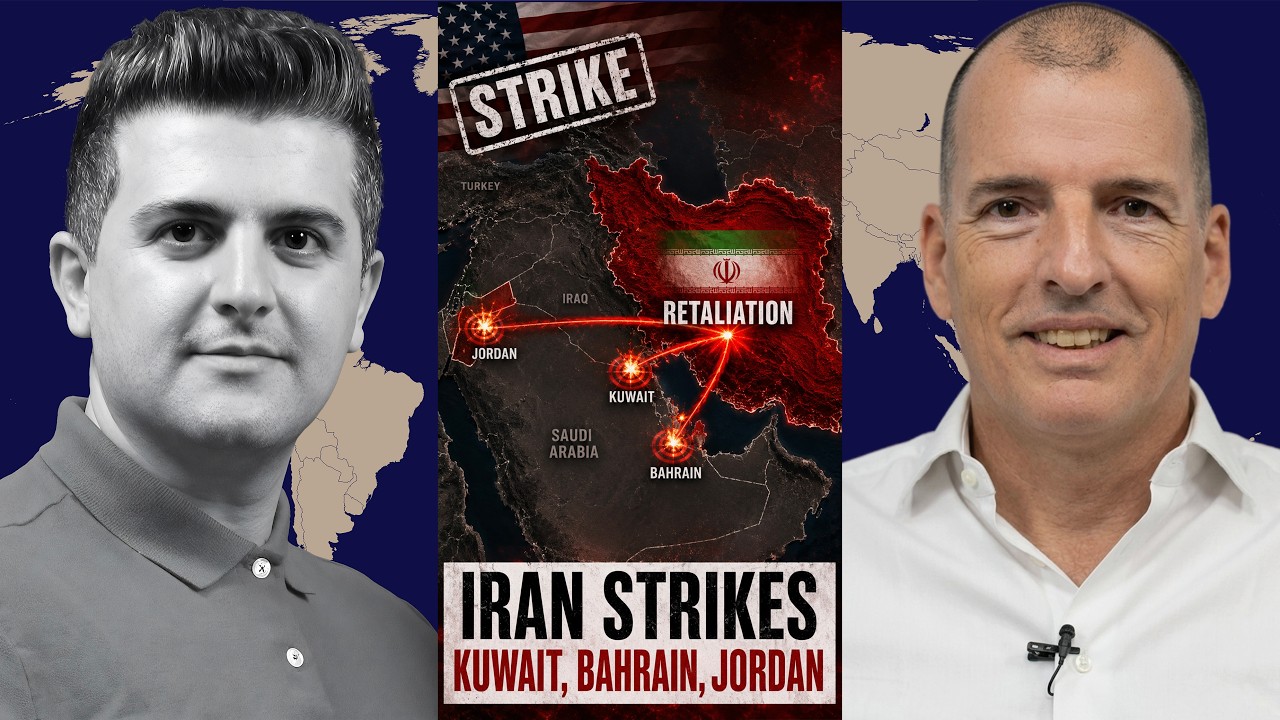
Alex Krainer: US STRIKES Iran – Iran RETALIATES Against Kuwait, Bahrain & Jordan!
"Amidst escalating US-Iran conflict and Iranian retaliation against regional US allies, this episode argues that US foreign policy is deeply controlled by an 'Anglo-Zionist conspiracy' led by the Rothschild banking dynasty, prioritizing Israeli interests over American ones."