
LIVE COURT | Nick Reiner Arraignment Hearing. Alan Jackson Withdraws as Counsel, what happens now?
YouTube · bILFgB6kFo4
Quick Read
Summary
Takeaways
- ❖Alan Jackson withdrew from Nick Reiner's double homicide case, citing 'circumstances beyond our control' and 'beyond Nick's control,' strongly implying financial reasons for the multi-million dollar defense.
- ❖The Los Angeles Public Defender's Office was appointed, with attorney Kimberly Green taking over and immediately securing a continuance for the arraignment.
- ❖Jackson's press conference statement, "pursuant to the laws... Nick Reiner is not guilty of murder," signals an anticipated 'not guilty by reason of insanity' (NGI) defense.
- ❖The Reiner family's estate will likely be tied up in complex probate proceedings for years, regardless of prior estate planning, due to the murder charges against an heir.
- ❖The court issued and held 'body attachments' for 8 of 10 defense subpoenas, a procedural move to maintain jurisdiction over witnesses without requiring re-service.
Insights
1Alan Jackson's Withdrawal Driven by Financial Constraints
Alan Jackson's statement that his firm had 'no choice' but to withdraw, citing 'circumstances beyond our control' and 'beyond Nick's control,' strongly indicates a failure to secure the necessary multi-million dollar retainer. A special circumstance double homicide case with an anticipated NGI defense requires extensive resources for experts, investigators, and trial support, costs that private counsel cannot absorb without payment.
Jackson stated, "circumstances beyond our control, but more importantly, circumstances beyond Nick's control have dictated that sadly, it's made it impossible for us to continue our representation of Nick." Emily D. Baker explains this as the most probable reason, noting the cost of NGI defenses can reach millions of dollars. (, , )
2Public Defender Appointed for Complex Case
The Los Angeles Public Defender's Office, specifically attorney Kimberly Green, was appointed to represent Nick Reiner. This appointment occurred swiftly after Jackson's withdrawal, with the public defender's office receiving notice the evening prior and having an attorney ready in court. This ensures Reiner's constitutional right to counsel, regardless of his financial status, for a case that is expected to be lengthy and complex.
Jackson stated the public defender's office 'has been notified... they are here they're staffed they're ready to take over.' Kimberly Green confirmed she spoke 'briefly this morning' with Reiner and requested a continuance. (, , )
3Defense Signals 'Not Guilty by Reason of Insanity' (NGI) Plea
Alan Jackson's public statement, "pursuant to the laws of this state, pursuant to the law in California, Nick Reiner is not guilty of murder," is a strong indicator of an anticipated 'not guilty by reason of insanity' (NGI) defense. This defense, known as 'legally not guilty because of mental disease or defect' in other jurisdictions, involves a bifurcated trial where guilt is determined first, followed by a phase on criminal responsibility due to mental state.
Jackson stated, "pursuant to the laws of this state, pursuant to the law in California, Nick Riner is not guilty of murder. Print that." Emily D. Baker interprets this as a clear signal for an NGI defense, noting the distinction between 'facts' and 'law' in Jackson's phrasing. (, , )
4Probate Complications for the Reiner Estate
The Reiner family's estate will face significant and complex probate issues due to Nick Reiner being charged with the murder of his parents. California's 'slayer statute' prevents an individual from inheriting if found responsible for the death. This will tie up the entire estate, potentially for years, and complicate financial access for other family members, even if comprehensive estate planning was in place.
Emily D. Baker explains that if someone who may inherit is responsible for a death, they will not have access to funds until thoroughly probated. She states, "probate is going to tie up the entire estate of the Riners... even if Nick would have inherited, that's not going to happen until all the criminal stuff is done." (, , )
5Body Attachments Maintain Subpoena Jurisdiction
The court issued and held 'body attachments' for 8 of the 10 subpoenas issued by the defense. This procedural mechanism extends the validity of the subpoenas to the next court date, preventing them from expiring and eliminating the need for the defense to re-serve witnesses. It ensures the court maintains jurisdiction over those individuals, allowing the newly appointed public defender to decide how to proceed with the investigative efforts.
Alan Jackson requested 'body attachments be issued and held' for outstanding subpoenas. Emily D. Baker clarifies this means the subpoena 'is essentially rolling over to the next court date. We don't have to serve you a new subpoena. This one is still active.' (, , )
Bottom Line
The public defender's office taking over a high-profile, multi-million dollar defense case early on is a strategic advantage, allowing them to control the narrative and investigative process from a more informed position, rather than inheriting a case after a preliminary hearing.
This early transition benefits the defense by preventing a fragmented legal strategy and ensuring continuity, which is often not the case when private counsel 'dumps' cases later in the process.
For public defender offices, early case assignment in complex matters can optimize resource allocation and defense strategy, potentially leading to better outcomes for defendants and more efficient use of public funds compared to later-stage handoffs.
Key Concepts
Financial Realities of High-Stakes Defense
Mounting a defense in a special circumstance double homicide case, especially one involving a 'not guilty by reason of insanity' (NGI) plea, requires millions of dollars for legal fees, expert witnesses, and investigators. Private firms cannot ethically or practically proceed without a substantial retainer, leading to withdrawals when funds are insufficient. This highlights the critical role of public defenders in ensuring access to justice for all, regardless of wealth.
Transparency in Court Proceedings
Public access to court proceedings is essential for clarifying misconceptions and holding the justice system accountable. Sealing entire days of motions, even if for 'overly cautious' reasons, can foster public suspicion and prevent direct observation of evidence and arguments, as exemplified by past media misrepresentations of trial events.
Iterative Nature of Legal Defense
A criminal defense is an ongoing, iterative process. Initial client statements may not be fully truthful or comprehensive, and defense attorneys must continuously investigate, gather discovery, and communicate with their client. Early-stage 'lies' or inconsistencies from a client are not uncommon and typically do not lead to attorney withdrawal unless a clear conflict of interest arises.
Lessons
- Approach high-profile criminal cases with skepticism towards early media reports, especially those citing anonymous sources, and prioritize information directly from court proceedings or official statements.
- Understand that a 'not guilty by reason of insanity' (NGI) plea is a complex legal strategy, not an immediate declaration of innocence, and involves a separate determination of criminal responsibility.
- Recognize the immense financial burden of private legal defense in complex criminal cases, which can lead to attorney withdrawals and the critical role of public defenders in ensuring legal representation.
Quotes
"My team and I remain deeply, deeply committed to Nick Reiner and to his best interests. In fact, we know, we're not just convinced, we know that the legal process will reveal the true facts of the circumstances surrounding this case, Nick's case... Pursuant to the laws of this state, pursuant to the law in California, Nick Reiner is not guilty of murder. Print that. Print that."
"We are fully confident that a jury will convict Nick Reiner beyond a reasonable doubt of the brutal murders of his parents, Rob Reiner and Michelle Singer Reiner, and do so unanimously."
"If you are worried about a misperception, let people see what the evidence is that they're arguing over and then they can say, 'Oh, no, that's not an evidence.'"
Q&A
Recent Questions
Related Episodes
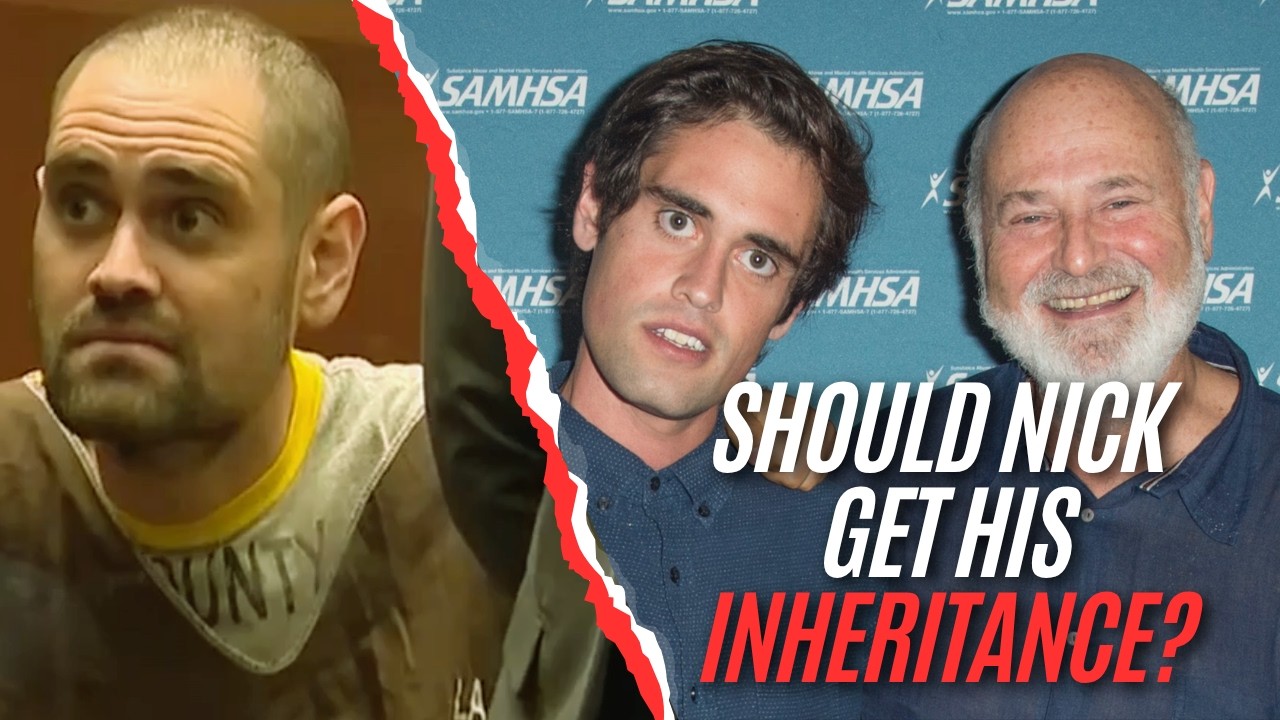
Nick Reiner demands his trust fund money — will he get it despite allegedly killing parents?
"Nick Reiner, accused of brutally murdering his parents, is demanding access to his multi-million dollar trust fund to finance his high-profile legal defense, sparking a complex legal and moral battle."

LIVE | Kouri Richins - The Defense tries again. New Ruling changes everything!
"Kouri Richins' defense seeks another extension for a new trial motion with vague justifications, while a civil court ruling disinherits her from Eric Richins' estate, effectively nullifying her financial claims."

LIVE | Kouri Richins Legal Troubles Grow. Slayer Statute, Sanctions, New Lawyer?
"Kouri Richins faces a cascade of civil lawsuits, mounting attorney's fees, and the withdrawal of her legal counsel across multiple cases, further complicating the financial future of Eric Richins' children."

BOMBSHELL: STATE V. D4VD AKA DAVID ANTHONY BURKE
"A new court document reveals David Anthony Burke is formally named as the defendant in the death of Celeste Rivas, escalating the legal battle as his family appeals grand jury subpoenas."