
Reiner death records sealed — Why? And Nick Reiner could be found incompetent — latest developments
YouTube · eXsr_c3VWAU
Quick Read
Summary
Takeaways
- ❖LAPD has sealed the death records for Rob and Michelle Reiner, an unusual move termed a 'security hold,' which is not common practice.
- ❖Nick Reiner's defense may pursue a competency challenge, which pauses criminal proceedings to assess his ability to understand the trial and assist his attorney.
- ❖The brutality of the stabbings could be a central point for both the prosecution (demonstrating rage/premeditation) and the defense (indicating severe mental health issues/loss of control).
- ❖The legal standards for 'competency to stand trial' and 'not guilty by reason of insanity' are entirely separate and involve different evaluations and outcomes.
Insights
1Unusual Sealing of Death Records
The LAPD has placed a 'security hold' on the death records of Rob and Michelle Reiner, preventing public access to autopsy specifics. This is considered highly unusual by legal experts, who speculate it might be to protect the family's privacy during a difficult time or to ensure detectives gain critical information before public disclosure. These records will eventually become public at the preliminary hearing.
Host Brian Entin states LAPD sealed reports (). Defense attorney Ambrosio Rodriguez confirms he's 'never heard of that term' () and discusses the potential reasons (-).
2Strategic Use of Attack Brutality
The nature and brutality of the stabbings will be a central point for both the prosecution and defense. The prosecution may use multiple stab wounds to argue premeditation, deliberation, and extreme rage, aiming for a first-degree murder conviction. The defense, conversely, could argue that the brutality reflects the defendant's severe mental health issues and drug addiction, indicating a loss of control rather than premeditation, potentially aiming for a lesser charge like manslaughter.
Rodriguez explains how brutality impacts 'degree' of crime (-) and how prosecution (-) and defense (-) would frame it.
3Competency Challenge vs. Insanity Plea
A competency challenge (Penal Code 1368 evaluation) assesses if the defendant currently understands the proceedings and can assist their attorney. If found incompetent, proceedings pause, and the defendant is sent for treatment until competency is restored. An insanity plea (Not Guilty by Reason of Insanity, NGI) asserts that at the time of the crime, the defendant did not know right from wrong. These are separate legal paths, with NGI typically entered after a preliminary hearing.
Rodriguez details the 'completely separate legal proceedings' () for competency (-) and NGI (-).
4Defense's Counter-Narrative Strategy
The defense attorney, Alan Jackson, may choose to issue a public statement at the arraignment to establish a counter-narrative for Nick Reiner. This would aim to shift public perception from a 'rich kid who took two lives' to a 'victim of his addiction and mental health problems,' especially given the public's affection for the victims.
Rodriguez discusses the importance of a 'counternarrative' () and the two competing narratives (-).
Bottom Line
The 'security hold' on death records, while unusual, suggests a strategic maneuver by law enforcement or the family to control the narrative and information flow in a high-profile case, potentially influencing public opinion and jury pool formation.
This highlights the tension between public transparency and the desire to manage sensitive information, especially when celebrities are involved, potentially setting precedents for future high-profile cases.
Journalists and legal transparency advocates could investigate the legal basis and frequency of such 'security holds' to ensure accountability and public access to information.
The defense's potential use of the crime's brutality to argue mental illness, rather than premeditation, is a high-risk, high-reward strategy that requires careful jury selection and desensitization tactics.
This approach challenges conventional perceptions of violent crime, forcing a jury to consider underlying psychological factors over immediate emotional reactions to gruesome details.
Legal defense teams could further research and refine strategies for presenting evidence of extreme violence in a way that supports mental health defenses without alienating juries.
Key Concepts
Competency vs. Insanity
Competency to stand trial assesses a defendant's current mental state and ability to understand legal proceedings and assist their defense. Insanity (Not Guilty by Reason of Insanity, NGI) assesses the defendant's mental state *at the time of the crime* to determine if they knew the difference between right and wrong. These are distinct legal processes with different implications for the trial and potential incarceration.
Jury Desensitization
The psychological phenomenon where repeated exposure to shocking or gruesome evidence can diminish its emotional impact on a jury. The defense may strategically present brutal details frequently to desensitize the jury, while the prosecution might limit such exposure to maintain the emotional impact.
Malingering Detection
The legal and psychiatric systems are designed with built-in mechanisms and testing to detect individuals who are faking or exaggerating mental illness to avoid legal consequences. This makes it difficult to manipulate competency or insanity evaluations.
Quotes
"I've never heard of that term... 'security hold' on the death records."
"The only thing I can think of is that given at the level that of the people that we're talking about that their requests were made in order to try to keep this at bay for as long as possible for the privacy of the family during a very difficult time."
"Homicide is not a crime... Whether it's a crime and what kind of crime it is, it's up to the jury."
"You have to take what the worst part of the case against them is to flip it and make it a center of the defense."
"Human, we are built to survive and when you show us something that shocks us, that shock will wear off if we see it over and over and over again. It becomes normalized."
"Competent means that you cannot participate in your defense and you cannot aid in your defense. That means you don't understand what's going on."
Q&A
Recent Questions
Related Episodes

LIVE COURT | Nick Reiner Arraignment Hearing. Alan Jackson Withdraws as Counsel, what happens now?
"Attorney Alan Jackson withdrew from representing Nick Reiner in his double homicide arraignment, likely due to financial constraints for a multi-million dollar NGI defense, leading to the public defender's appointment and a delayed legal process."

'Skeleton Bridge' Fatal Rope Jump Takes Shocking Turn — Everything We Know
"A 21-year-old woman's fatal rope jump from Brazil's 'Skeleton Bridge' sparks a complex legal battle, revealing a shocking lack of safety protocols, murder charges against operators, and a civil lawsuit against the federal government for negligence."

LIVE COURT | O'Keefe v. Read Motion to Compel Hearing
"A key witness in the Corey Richens murder trial, Robert Croier, was arrested in an internet crimes against children sting operation, while the Karen Reed civil lawsuits grapple with complex discovery disputes and overlapping legal actions."
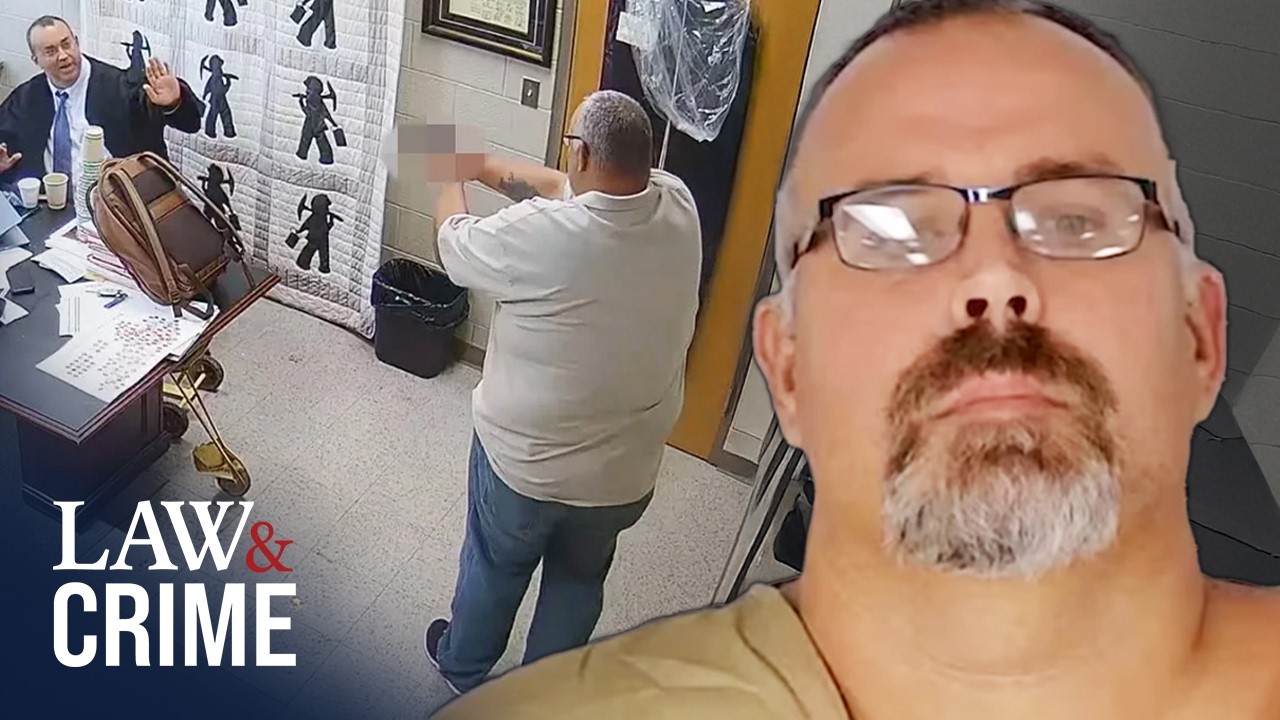
Dark New Details Uncovered in Sheriff Mickey Stines Judge Killing
"A former sheriff's defense team argues he was in a severe mental health crisis, experiencing paranoia and delusions, leading up to the shooting of a judge, as revealed through his aunt's testimony and legal analysis."