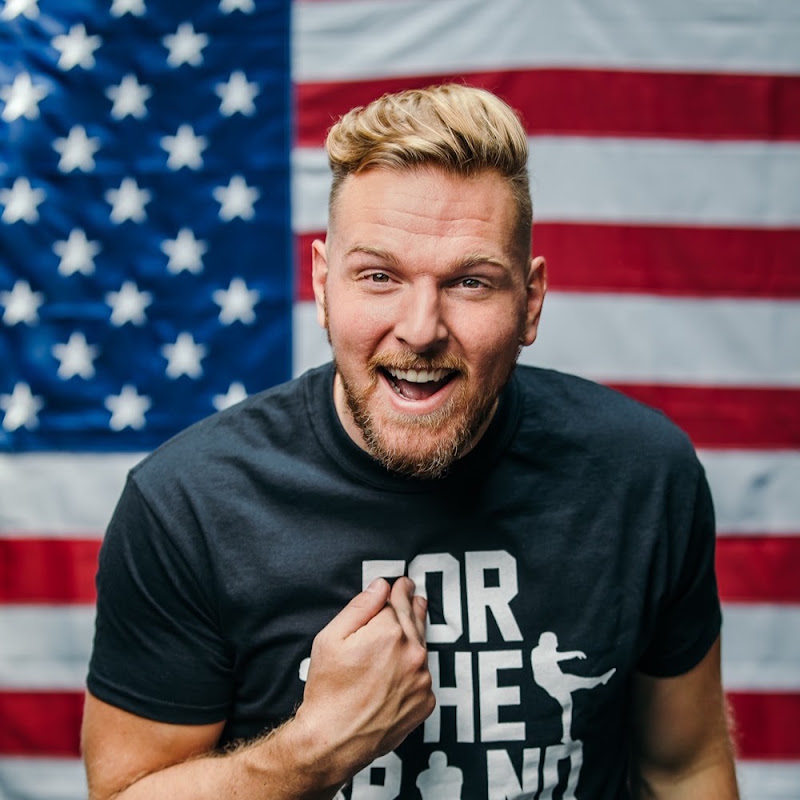
Tony Romo Might Be Our Favorite NFL Commentator After This Interview | Pat McAfee Show
YouTube · bOuPADgGr8U
Quick Read
Summary
Takeaways
- ❖Tony Romo's athletic resume extends beyond football, including potential professional careers in golf and basketball.
- ❖He believes his legacy will ultimately be defined by his announcing career, a prediction made by Jim Nantz.
- ❖Romo approaches game preparation by soaking in film early in the week to understand team identities, strengths, and problematic matchups.
- ❖He emphasizes the importance of authenticity and rooting for players who demonstrate deep care and effort for the sport.
- ❖Romo identifies Mike Vrabel's smartest move as hiring Josh McDaniels, highlighting the critical role of staff selection for a head coach.
- ❖He advocates for head coaches who teach defensive concepts rather than just plays, citing Mike McDonald as a prime example.
- ❖Romo believes the Cowboys are one or two players away from a playoff run, emphasizing the need for a strong defensive scheme.
- ❖He perfected his throwing mechanics through a decade of daily practice, driven by a need to compensate for lacking natural talent early on.
- ❖Romo distinguishes between quarterbacks like Tom Brady (perfect spiral) and Aaron Rodgers (unbelievable arm strength) based on unique mechanical gifts.
Insights
1The Commentator's Preparation: A Coach's Mindset
Romo details his extensive game preparation, which mirrors a coach's approach. He spends the early week watching games to understand each team's identity, strengths, weaknesses, and potential matchup problems. This allows him to predict game flow and identify critical strategic elements, a skill that became known as 'Romo-ing'.
He describes analyzing the Bills-Broncos game, identifying Denver's build to beat Kansas City but their poor matchup against Buffalo's run game and size, ultimately leading to a prediction of a tough game for Denver. ()
2Navigating Public Opinion in High-Stakes Broadcasting
Romo addresses the challenge of being a commentator for games watched by millions, where reactions range from incredibly positive to negative. He views online criticism as 'noise' and prioritizes genuine fan interactions, focusing on being authentic and rooting for players who give their all.
He states, 'the noise is the noise. It's part of being in this job... you don't really listen to things unless to me it's like all the fans come up to me and say how much they love us.' ()
3Philosophy on Head Coaching Hires: Concept, Staff, and Fit
Romo advises GMs and owners on head coaching hires, emphasizing that the person and their teaching philosophy are paramount, not just their offensive or defensive background. He highlights the importance of a coach's ability to teach concepts (not just plays) and strategically hire a complementary staff.
He cited Mike McDonald as the 'best hire' due to his conceptual defense teaching (five fronts, five coverages that look the same) and instincts. He also praised Mike Vrabel's 'smartest thing' as hiring Josh McDaniels, recognizing the importance of a strong offensive coordinator for a defensive-minded head coach. (, )
4Cowboys Roster Strategy and Defensive Turnover
Romo analyzes the Dallas Cowboys' strategy, particularly their philosophy of hiring former head coaches as defensive coordinators and the trade of Micah. He views the Micah trade as a potential 'win-win' for both teams, allowing Dallas to acquire multiple players to address defensive needs, especially against the run, which has been a playoff weakness.
He notes the Cowboys' pattern of hiring ex-head coaches like Dan Quinn and Zimmer as D-coordinators. He explains that trading Micah, despite his talent, could allow Dallas to acquire 'four or five guys' to build out the roster, especially given the financial commitment to other star players. ()
5The Art and Science of Quarterback Mechanics
Romo shares his deep understanding of quarterback mechanics, stemming from his personal journey to perfect his throwing motion. He contrasts the unique talents of elite quarterbacks, such as Tom Brady's 'pure' spiral and Aaron Rodgers's incredible arm strength, which allowed the ball to 'keep going and going' beyond its apex.
He describes practicing throwing 'a decade without ever missing a day' to catch up. He details Brady's spiral, where 'the ball doesn't it's almost not spinning it just stays and it's so pure.' He recounts seeing Rodgers launch a pass 80 yards in the air that 'just kept going and going and going.' (, , )
Bottom Line
The biggest difference between Bill Belichick and Mike Vrabel as coaches lies in their personal connection with players.
While both are excellent strategists, Vrabel's ability to connect personally with players at different career stages fosters a different team dynamic than Belichick's more detached approach.
Organizations can learn that leadership styles, even within the same industry, can achieve success through different means, emphasizing personal connection as a powerful tool for team cohesion and development.
Coaches taking a year off after being fired is often influenced by financial considerations (still being paid by their previous team) and the need for a positive media narrative.
This reveals a practical, often overlooked, aspect of coaching career transitions beyond burnout or strategic planning, highlighting the financial and reputational management involved.
For aspiring coaches or those in similar high-stakes, high-turnover professions, understanding these underlying factors can inform career planning and negotiation strategies.
Lessons
- Cultivate deep, analytical preparation in your field, dissecting components like a coach studying game film to anticipate outcomes and identify leverage points.
- Prioritize authentic connections and feedback from your core audience over the 'noise' of widespread criticism, maintaining your genuine approach.
- When building a team, focus on hiring individuals who can teach conceptual understanding rather than just executing tasks, and strategically select staff to complement leadership strengths.
Notable Moments
Pat McAfee and his crew are surprised to learn Tony Romo is not Italian, despite McAfee frequently calling him 'paisano'.
This lighthearted moment highlights the common assumptions people make based on names and appearances, and Romo's willingness to play along for team cohesion early in his career.
Tony Romo describes his chronic back pain and the daily routine of exercises he must perform, even on a golf course.
This humanizes Romo and illustrates the long-term physical toll of an elite athletic career, even for someone who transitioned to a less physically demanding role.
Quotes
"I think when you're all said and done, you're going to actually be remembered for announcing."
"The noise is the noise. It's part of being in this job. And to me it's like it's up, it's down. But at the end of the day, I mean, you don't really listen to things unless to me it's like all the fans come up to me and say how much they love us."
"It's not me choosing the worst places. It's my back choosing me."
"I went a decade without ever missing a day of throwing because I felt like I had to catch up. I was so behind as a youngster."
"I'm telling you, this is the best hire in this cycle if anybody cares."
Q&A
Recent Questions
Related Episodes

Unc, Ocho, & Iso Joe BEST OF NFL! Garrett to the Rams, OBJ to NYG, & AJ Brown SNITCHING! | Nightcap
"Former NFL players break down blockbuster trades, controversial player statements, and contract disputes, offering unfiltered insights on the Rams' 'Super Bowl or bust' strategy, AJ Brown's media leaks, and the true meaning of a franchise tag."

The Arena Reacts To The Pro Bowl LIVE From Radio Row
"NFL analysts dissect Shadur Sanders' Pro Bowl debut, the contentious departures of Micah Parsons and George Pickens from the Cowboys, and the league's push for an 18-game season, all while debating the NFL's top wide receiver."

Unc & Iso Joe DRUG TEST TWOLVES for only willing to TRADE McDaniels for Jokić or Giannis! | Nightcap
"The hosts dissect bold NBA trade demands, debate whether Victor Wembanyama's height is a disadvantage, and critique player development strategies amidst salary cap pressures."

Gil's Arena CELEBRATES The Knicks NBA Championship
"The Gil's Arena panel, featuring former NBA players, erupts in celebration over the New York Knicks' first NBA championship since 1973, dissecting Jalen Brunson's MVP performance and sharply criticizing Victor Wembanyama's perceived arrogance and clutch-time struggles."