Hells Angels Boss Opens Up - George Christie | PBD Podcast #723
YouTube · bZUXtmPQZNw
Quick Read
Summary
Takeaways
- ❖The Hells Angels originated from WWII veterans, many suffering from undiagnosed PTSD, who formed motorcycle groups and embraced the '1%er' label after being called out by the American Motorcycle Association in 1948.
- ❖George Christie maintained a top-secret security clearance with the Department of Defense while serving as a Hells Angels leader, choosing the club over his government career when given an ultimatum.
- ❖Sonny Barger viewed the Hells Angels as his personal property, often prioritizing his ego and personal dislikes over the club's collective benefit, even ordering 'hot shots' for members who 'outshined' him.
- ❖Christie advocated for peace and strategic decentralization to protect the club from legal vulnerabilities, directly clashing with Barger's aggressive, centralized leadership style.
- ❖The Hells Angels successfully defended against a major 1980 RICO case, prosecuted by Robert Mueller, by demonstrating a decentralized structure where chapters operated autonomously.
- ❖FBI informants, including Sonny Barger's wife Noelle, deeply infiltrated the Hells Angels, leading to convictions and internal strife.
- ❖Christie left the Hells Angels in 2011, predicting that without external enemies, the 'empire' would turn inward and self-destruct, a prophecy he claims was fulfilled by subsequent internal murders.
Insights
1Origins in Post-War Dislocation and the '1%er' Identity
The Hells Angels and other outlaw motorcycle clubs were founded by World War II veterans, many of whom experienced undiagnosed PTSD and felt displaced upon returning home. The '1%er' label emerged from a 1948 Hollister event where the American Motorcycle Association (AMA) disavowed the '99% wholesome riders,' leading the rebellious minority to embrace the '1%er' title as a badge of honor and defiance.
Christie's father was a WWII veteran, and he states, 'that was the birth of the outlaw bikers... these are guys that came back from World War II... most likely suffering from undiagnosed PTSD.' He details the AMA's '1%' statement at Hollister in 1948.
2Sonny Barger's Ego-Driven, Centralized Leadership
Sonny Barger, a legendary Hells Angels leader, was characterized by an extreme ego and a belief that the club belonged to him personally. His decisions were often based on personal preference rather than collective benefit, leading to prolonged conflicts and the elimination of members who 'outshined' him. This centralized, autocratic style created fear and instability within the club.
Christie states, 'if it wasn't Sonny's idea, it wasn't a good idea. No matter if it benefited everybody or not.' He recounts Barger's refusal to end a war with the Bandidos because 'I just don't like them' and the alleged 'hot shot' murder of Terry the Horse for being too flamboyant in a movie.
3George Christie's Strategic, Peace-Oriented Leadership
In contrast to Barger, Christie adopted a strategic and peace-oriented approach, applying his military tactical training to the outlaw world. He prioritized de-escalation, internal stability, and legal protection for the club, even taking unpopular stances to end wars or prevent unnecessary conflict. His leadership was built on calculated risks and putting the club's long-term interests before personal glory.
Christie states his philosophy: 'to be an effective peacemaker, you have to be willing to go to war.' He describes retrieving a planted bomb and showing up unannounced to rival Outlaws leader Taco Bowman's motel room to negotiate peace.
4Infiltration by FBI Informants and Internal Betrayal
The Hells Angels faced constant threats from FBI informants who deeply infiltrated the club, leading to significant legal repercussions for members. This internal betrayal highlighted the vulnerability of even highly secretive organizations and the complex moral dilemmas faced by members.
Anthony Tony Tate, an FBI informant, rose in power and led to Sonny Barger's conviction for conspiring to commit murder. Later, Sonny's own wife, Noelle, was revealed to be a paid FBI informant. Chester Green, a former Hells Angel, became a Mongol and testified against the Hells Angels.
5The Role of Fear in Outlaw Leadership
In the outlaw world, fear is considered a more potent tool for maintaining respect and control than mere likeability. Leaders cultivate a reputation for ruthlessness and a willingness to act, ensuring compliance and deterring challenges, even if specific actions remain unspoken or become legend.
When asked if he was more feared, respected, or liked, Christie states, 'Probably fear. Fear? Number one? Yeah, I think so.' He explains that unspoken words and a reputation for following through on threats build this fear.
Opportunities
Decentralized Organizational Structure for Legal Shielding
Structure an organization with autonomous units to minimize the risk of being classified as a single, unified criminal enterprise under laws like RICO. This allows individual members or sub-groups to engage in activities without implicating the entire entity.
Diversified Legal Business Portfolio for Outlaw Leaders
For individuals operating in legally ambiguous or 'outlaw' environments, establishing multiple legitimate businesses (e.g., bail bonds, t-shirt shops, tattoo parlors, concert promotion) can provide income, a public facade, and a means to justify assets, even if scrutiny persists.
Pharmacy Supply Chain Exploitation
Illegally divert large quantities of prescription drugs from a controlled source (e.g., military pharmacy) for black market sale, leveraging low acquisition costs for high profit margins.
Key Concepts
Decentralized Autonomy for Legal Protection
The Hells Angels, under George Christie's influence, adopted a decentralized structure where individual chapters operated autonomously. This model was crucial in defeating federal RICO (Racketeer Influenced and Corrupt Organizations) charges, as it made it difficult for prosecutors to prove a unified, top-down criminal enterprise. This contrasts with more centralized organizations like the Outlaws, whose leader Harry Bowman was convicted under RICO.
The 'Outlaw, Not Criminal' Distinction
Christie consistently differentiates between being an 'outlaw' (living outside societal norms, embracing freedom) and being a 'criminal' (engaging in illegal activities for profit). While the club had criminals, the core identity was rooted in a rebellious, non-conformist spirit rather than solely criminal enterprise. This distinction was a philosophical anchor for many members.
Lessons
- Cultivate a reputation for decisive action and follow-through, as 'unspoken words are louder than people screaming it' in establishing influence and deterring opposition.
- Prioritize the long-term stability and collective interests of your organization over personal ego or short-term conflicts to ensure its survival and growth.
- Be wary of internal politics and potential betrayals, as even close associates or family members can become informants or rivals in power struggles.
Notable Moments
George Christie, while a Hells Angel member and DOD employee, was ordered to retrieve an unexploded bomb planted by his club, demonstrating his willingness to take extreme risks for the organization.
This act solidified his reputation for courage and commitment, contributing to the fear and respect he commanded within the club, despite his initial opposition to the bombing strategy.
Christie confronted Outlaws leader Taco Bowman unannounced in a motel room, surrounded by Bowman's men, to negotiate peace between the rival clubs.
This bold, high-risk move showcased his dedication to ending a brutal war and prioritizing the club's welfare over personal safety, earning him significant respect.
Christie left the Hells Angels, predicting that without external enemies, the club would turn inward and self-destruct, a prediction he claims was fulfilled by subsequent internal murders.
This moment highlights a critical leadership decision based on foresight and a refusal to participate in what he saw as the organization's inevitable decline due to internal strife, demonstrating a principled exit.
Quotes
"Always wanted to be an outlaw, not a criminal. And there's a distinct difference, and people get the outlaw and the criminal confused."
"To be an effective peacemaker, you have to be willing to go to war. That was kind of my philosophy. I was strictly for peace, which was a very unpopular position in the outlaw."
"How can you have respect without fear? I think it, you know, you got to have a little fear. Do you think's more important between the three, especially in that world? Probably fear. Fear? Number one? Yeah, I think so."
"If it wasn't Sonny's idea, it wasn't a good idea. No matter if it benefited everybody or not."
"Sonny saw the club as something that belonged to him. Other members saw themselves as part of the club."
"I burn every bridge I cross. And I said, well, you know, as a military man and an ex-Department of Defense worker, I said I think I would leave at least one bridge for supplies or for retreat depending on the situation."
Q&A
Recent Questions
Related Episodes
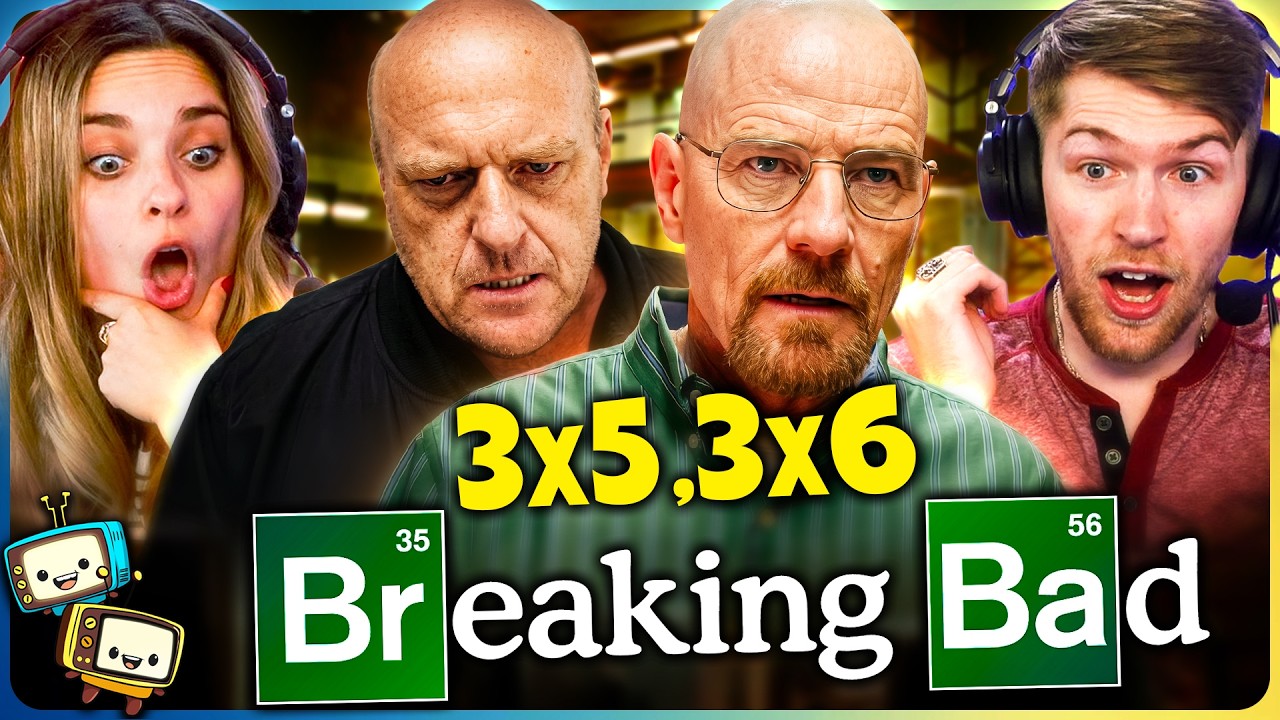
BREAKING BAD Season 3 Episodes 3x5 & 3x6 Reaction! | First Time Watch | Bryan Cranston | Aaron Paul
"Hosts Kristen and Michael react to Walter White's escalating criminal enterprise, the introduction of a state-of-the-art superlab, Hank's relentless pursuit of the RV, and the complex, often toxic, relationship dynamics between Walt, Jesse, Skyler, and Gus."

The Pat McAfee Show Live | Wednesday June 17th 2026
"This episode covers the global impact of the World Cup, the Carolina Hurricanes' Stanley Cup victory, the controversial NFL supplemental draft, and the UFC's historic Freedom 250 event at the White House, highlighting sports' unifying power and star performances."

Shannon Sharpe OFFERS FREE SHIPPING to whomever will take De'Aaron Fox from the Spurs! | Nightcap
"Shannon Sharpe and Chad Ochocinco sharply criticize De'Aaron Fox's late-game decision-making and the Spurs' inability to close out games, arguing for greater player accountability and the need for veteran leadership in modern basketball."

Unc & Iso Joe COOK De'Aaron Fox PRETENDING he doesn't hear the CHOKING noise after GM4! | Nightcap
"The hosts dissect NBA player De'Aaron Fox's mental state after a critical Game 4 loss, sparking a broader discussion on how professional athletes truly handle public criticism and the impact of old-school coaching methods."