
Larry Johnson: The Strait of Hormuz Is a Ticking Time Bomb – The U.S. & Iran Just THREW DOWN
YouTube · bgmx1Uz_QT0
Quick Read
Summary
Takeaways
- ❖Iran has ceased indirect talks with the United States, demanding an end to Israeli attacks on Lebanon and Gaza before any further negotiations.
- ❖Larry Johnson predicts an imminent escalation of conflict, including Iranian attacks on Israeli airfields and US naval vessels in the Persian Gulf.
- ❖China has reportedly supplied Iran with advanced supersonic anti-ship and solid-fuel ballistic missiles, enhancing Iran's offensive capabilities.
- ❖US Patriot and Israeli Iron Dome missile defense systems are considered ineffective against modern supersonic/hypersonic threats and are in limited supply.
- ❖The potential closure of the Strait of Hormuz and Bab el-Mandeb would cut off 20% of global oil, 10% of LNG, and 44% of helium, leading to severe global stagflation.
- ❖Israel's actions in Lebanon and Gaza are framed as war crimes, with the US enabling this behavior by absorbing the costs.
- ❖US allies like Kuwait and the UAE are becoming direct targets for Iran due to their perceived facilitation of US military operations against Iran.
- ❖Donald Trump's claims about US energy independence and military victories are dismissed as false or misleading, particularly regarding diesel imports.
- ❖The 'old world order' and the credibility of institutions like the United Nations are seen as collapsing, paving the way for a new international system.
Insights
1Iran Halts US Talks, Links to Israeli Aggression
Iran has officially ceased indirect negotiations and message exchanges with the United States, stating that talks will not resume as long as attacks on Lebanon and Gaza continue. This marks a significant hardening of Iran's position, directly linking regional conflicts to bilateral relations with the US.
The host reports, 'Iran halts indirect talks and message exchanges with the United States siding. They're talking about Lebanon and they said that as long as they have these sort of attacks on Lebanon and Gaza, there will be no talk between Iran and the United States.'
2Threat of Choke Point Closure and Regional Escalation
Iran has threatened to close the Strait of Hormuz and Bab el-Mandeb, critical global shipping lanes. This move, potentially involving Yemen's Houthis, would severely disrupt global energy and commodity markets. Larry Johnson predicts this will lead to increased attacks on shipping and US naval vessels in the Persian Gulf, alongside more aggressive Iranian attacks on Israeli and Jordanian airfields.
The host states, 'Iran said about they're going to close all the these choke points the straight of formos and bubble manab all together.' Johnson adds, 'The attacks are going to step up on both shipping and in the in the Persian Gulf. There will be attacks I think on US naval vessels and we're going to see uh I think more aggressive attacks by Iran on the airfields in Israel and in Jordan.'
3China's Advanced Missile Supply to Iran
Iran has significantly bolstered its military capabilities with advanced weaponry, including supersonic anti-ship missiles and solid-fuel ballistic missiles, reportedly supplied by China. This enhances Iran's ability to project power and defend against potential attacks.
Johnson states, 'I have been told by someone who has access or let's call it a knowledgeable it'll be referred to as a knowledgeable source with access that China has provided uh Iran with uh at a minimum a supersonic anti-ship missile but also apparently some other significant ballistic missiles that were not previously you know, they're solid fuel.'
4Ineffectiveness and Shortage of US/Israeli Air Defense
Both Israel's Iron Dome and the US Patriot missile system (PAC-3) are deemed ineffective against supersonic or hypersonic ballistic missiles. Furthermore, the United States has a limited inventory of Patriot missiles, with a significant portion already allocated to foreign governments and Ukraine, leaving insufficient numbers to effectively defend Israel.
Johnson explains, 'The Iron Dome is designed to intercept let's call them subsonic uh rockets. It is not designed to deal with uh supersonic or hypersonic uh ballistic missiles. The fact of the matter is neither is the Patriot missile pack 3. It it's not uh it's proven ineffective.' He adds, 'The United States doesn't have enough. They will they have effectively run out.' and details how thousands of PAC-3 missiles were sent to other countries.
5Unprecedented Global Supply Chain Disruption and Stagflation
The potential closure of the Strait of Hormuz and Bab el-Mandeb represents an unprecedented disruption to global supply chains, cutting off 20% of the world's oil, 10% of liquid natural gas (LNG), and 44% of helium. This will lead to a global inflationary spike and economic slowdown, a phenomenon known as stagflation, with no historical precedent in modern times.
Johnson states, 'We have never had a situation where 20% of the world's oil supply got cut off... 10% of liquid natural gas... 44% of [helium] is off the market.' He concludes, 'The world has never seen a disruption in the supply chain like this in modern history... we're going to see a major inflationary spike globally... and a slowdown in the economy or go what's known as stagflation.'
6Israel's Disregard for Economic Consequences
Israel is perceived as indifferent to the global economic consequences of its actions because the United States consistently covers its costs and provides unwavering support, effectively giving Israel a 'blank check' for its military operations.
When asked if Israel cares about the economic impact, Johnson responds, 'No. in Israel. You know, they're on, you know, they're like, they're like your teenage kid. You know, when your kids get old enough to go to college and you give them a credit card... you just let them spend whatever and you pick up the bill. That's Israel with the United States. Israel can do whatever the hell it wants. United States picks up the bill. Israel never has to pay.'
7US Allies Become Direct Targets
Countries like Kuwait and the UAE, which facilitate US military operations against Iran, are becoming direct targets for Iranian retaliation. This increases the risk of significant damage to their infrastructure and forces them to choose between supporting the US or facing severe consequences.
Johnson states, 'Kuwait is [allowing active combat support operations] and now Kuwait's getting hit. And I I think the intensity of those hits against Kuwait are going to increase. Same for UAE.' He adds, 'If this if this now continues to heat up and expand... you're going to see more damage in the UAE, particularly in Dubai and Abu Dhabi.'
Bottom Line
The current global supply chain disruption, particularly from the Persian Gulf, is unprecedented in modern history (last 126 years), meaning there's no historical playbook for its full economic consequences.
Policymakers and businesses lack historical models to predict or mitigate the full impact of simultaneous cuts in oil, LNG, helium (critical for computer chips), and fertilizer supplies. This creates extreme uncertainty and risk.
Developing new economic models and risk assessment frameworks that account for unprecedented, multi-commodity supply shocks. Investing in diversified, localized supply chains for critical resources to reduce reliance on vulnerable choke points.
The continuous narrative from the US that Iran is developing nuclear weapons, despite evidence to the contrary, may ultimately push Iran to actually acquire them as a deterrent, similar to North Korea.
US foreign policy, by consistently creating a 'problem' (Iranian nukes) and then claiming to 'solve' it through aggression, could inadvertently incentivize Iran to pursue nuclear weapons for self-preservation, escalating global proliferation risks.
Re-evaluating US diplomatic strategies to avoid self-fulfilling prophecies in nuclear proliferation. Exploring non-military, multilateral security guarantees for non-nuclear states to reduce the perceived need for WMDs.
The current geopolitical shifts, including the perceived collapse of the UN's credibility and the rise of blocs like BRICS, signal the birth of a new, multipolar world order, replacing the post-WWII system.
The existing international institutions and norms are losing relevance, leading to a less predictable global landscape. The power dynamics are shifting away from traditional Western dominance, with emerging powers demanding greater representation.
Anticipating and adapting to a multipolar world by engaging with new power centers (e.g., India, Brazil, African continent) and contributing to the design of more equitable and effective international governance structures.
Lessons
- Global leaders must pressure Israel to cease attacks on Lebanon and Gaza to de-escalate the immediate conflict and reopen diplomatic channels with Iran.
- Businesses reliant on global supply chains, especially for energy, technology components (like computer chips requiring helium), and agriculture (fertilizer), should immediately assess and diversify their sourcing strategies to mitigate the impact of potential choke point closures.
- Governments should prepare for significant global stagflation by implementing economic policies that address both inflationary pressures and potential economic slowdowns, given the unprecedented nature of the anticipated supply shocks.
Notable Moments
Iran's decision to halt indirect talks with the US, linking it to Israeli actions in Lebanon and Gaza.
This marks a critical turning point, indicating Iran's hardened stance and a likely escalation of conflict, moving beyond previous ceasefire attempts.
Discussion of China supplying Iran with advanced supersonic anti-ship and solid-fuel ballistic missiles.
This significantly upgrades Iran's military capabilities, posing a greater threat to US and Israeli forces and regional stability.
The analysis of US and Israeli air defense systems (Iron Dome, Patriot) as ineffective and in short supply against modern threats.
This highlights a critical vulnerability that could lead to substantial damage and casualties in any renewed conflict, challenging conventional military assumptions.
The detailed explanation of how the closure of the Strait of Hormuz and Bab el-Mandeb would cause an unprecedented global economic crisis.
This outlines the severe, multifaceted economic consequences (stagflation, commodity shortages) that would impact every nation, far beyond the immediate conflict zone.
Larry Johnson's comparison of Israel's financial relationship with the US to a teenager with a credit card, spending without consequence.
This illustrates the perceived lack of accountability for Israel's actions and why it might disregard global economic or diplomatic pressures.
The host and Johnson's critique of Donald Trump's claims regarding US energy independence and military victories.
This challenges a prominent political narrative, suggesting a disconnect between official statements and geopolitical realities, particularly concerning US vulnerabilities.
The discussion about the collapse of the 'old world order' and the UN's credibility, advocating for a new, more representative international system.
This frames the current crises as symptoms of a broader systemic shift in global governance, with long-term implications for international law and power structures.
Quotes
"Iran halts indirect talks and message exchanges with the United States siding. They're talking about Lebanon and they said that as long as they have these sort of attacks on Lebanon and Gaza, there will be no talk between Iran and the United States."
"The Iranians now are linking what goes on in Lebanon and in Israel to the any kind of agreement with the United States. You can't separate him."
"China has provided uh Iran with uh at a minimum a supersonic anti-ship missile but also apparently some other significant ballistic missiles."
"The Iron Dome is designed to intercept let's call them subsonic uh rockets. It is not designed to deal with uh supersonic or hypersonic uh ballistic missiles. The fact of the matter is neither is the Patriot missile pack 3. It it's not uh it's proven ineffective."
"We have never had a situation where 20% of the world's oil supply got cut off."
"Israel can do whatever the hell it wants. United States picks up the bill. Israel never has to pay."
"Don't don't you love how they trot out international law when it's convenient for them?"
Q&A
Recent Questions
Related Episodes

Patrick Henningsen: Hezbollah JUST Fired Back at Israel - Iran Vows to “Crush” All Attacks
"Patrick Henningsen argues that the US and Israel initiated an illegal war against Iran, driven by Trump's incompetence and Israeli influence, leading to an inevitable escalation with severe global economic repercussions."
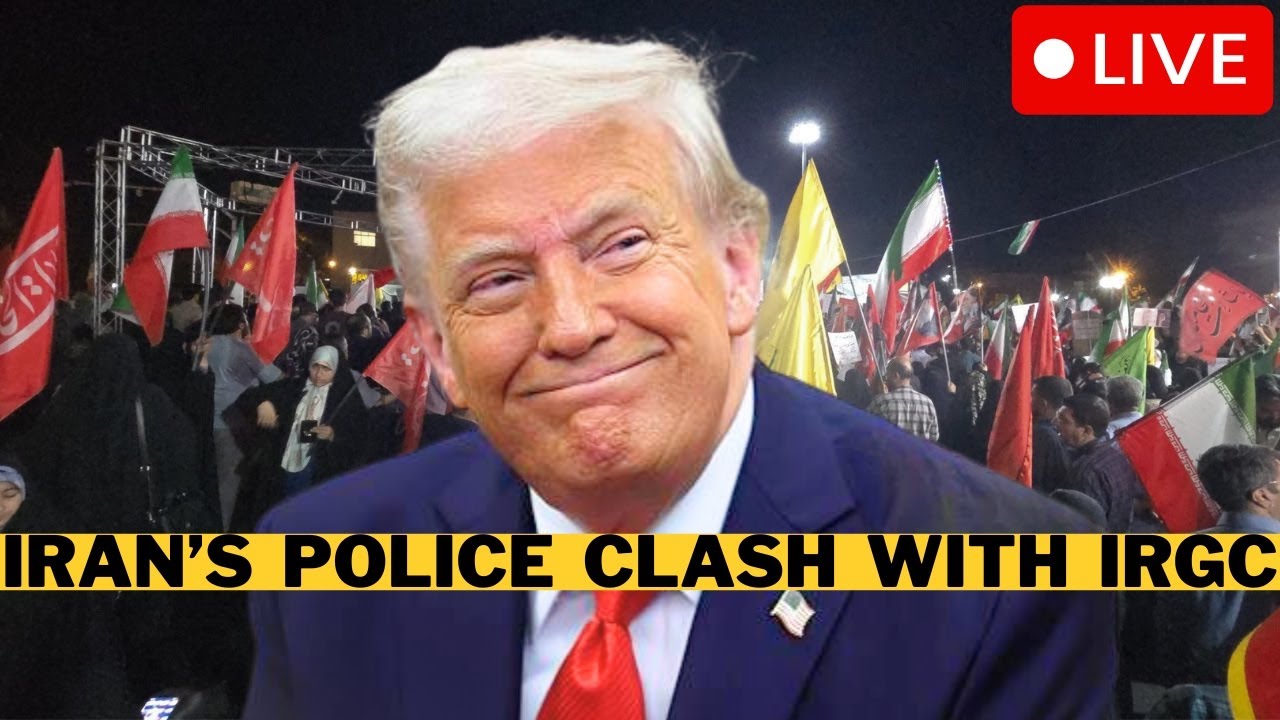
BREAKING: Protests ERUPT In Iran Over IRGC Surrendering To Trump - Infighting Clashes In Tehran
"Iran is experiencing severe internal infighting and protests as hardline IRGC elements clash with government figures over a perceived 'surrender' to the US, while mainstream Western media misrepresents the situation."

🚨 TOTAL F*CKING CHECKMATE 😂😂😂
"The host argues that Trump's 'ceasefire' with Iran was a calculated '5D chess' move to orchestrate a global energy market reshuffle, while simultaneously lambasting 'woke' domestic policies and the 'freefall' of anti-Trump conservative figures."

Col. Jacques Baud: What a US Ground Invasion of Iran Would REALLY Look Like
"Colonel Jacques Baud dissects the strategic futility of a US ground invasion of Iran, arguing that current troop levels are insufficient and such an action would backfire, exposing US allies and potentially leading to Iran's nuclearization."