
Trump gets BAD NEWS amid effort to use military at polls
YouTube · cEaWa5FzDOI
Quick Read
Summary
Takeaways
- ❖Illinois Governor Pritzker is actively planning state-level defenses against anticipated federal election interference, including potential deployment of ICE/National Guard at polls and attempts to seize ballot boxes.
- ❖Illinois' decentralized election system (102 county clerks) is seen as a key advantage against statewide interference.
- ❖Strategies include deputizing poll watchers, deploying regional legal teams, and sharing legal talent with higher-risk states.
- ❖The 'Save America Act' is framed as a Republican effort to suppress votes through voter roll purges and strict ID requirements, potentially by nuking the filibuster.
- ❖States can establish 'state guards' under federal law, which are solely controlled by governors and cannot be federalized, offering a potential tool for election protection.
- ❖Illinois is addressing a 'middle housing' crisis (for incomes $80k-$180k) by proposing legislation to remove development barriers, streamline permits, and allow accessory dwelling units (ADUs).
- ❖The Midwest anticipates a reversal of migration patterns, attracting people and industry due to its abundant fresh water resources, necessitating increased housing readiness.
Insights
1State-Level Election Defense Strategy Against Federal Interference
Governor Pritzker outlines a multi-faceted approach to protect Illinois' elections from anticipated federal attempts to interfere. This includes leveraging the state's decentralized election system, deploying deputized poll watchers, establishing regional legal teams, and sharing legal resources with other states. The goal is to counteract any efforts to intimidate voters or seize ballot boxes.
Pritzker states, 'I don't want to share with you everything that we're talking about. I've talked to a number of governors about what their plans are. I can say that all of us have thought long and hard about how do we protect the elections.' He mentions Illinois' 102 county-based election system, poll watchers, and attorneys on call.
2The State Guard as a Gubernatorial Tool for Election Protection
Pritzker reveals a little-known federal law allowing states to create 'state guards' which are exclusively under gubernatorial control and cannot be federalized. This provides governors with a potential, non-federalized force that could be used for various state purposes, including, hypothetically, protecting polling places or ensuring election integrity without federal intervention.
Pritzker explains, 'A state guard is something that was created during World War II... they gave states the ability to create a state guard which does not have any federalizing associated with it. So just under the control of governors.' He notes Florida and New York have existing state guards.
3Addressing the 'Middle Housing' Crisis Through Regulatory Reform
Illinois is proposing legislation to tackle a housing affordability crisis for middle-income earners ($80,000-$180,000 annually) who are increasingly unable to buy or rent homes. The strategy focuses on removing local regulatory barriers, streamlining permitting processes, and encouraging the use of existing housing stock like accessory dwelling units (ADUs) to increase supply.
Pritzker states, 'We have to solve the problem not just for people who don't have any housing at all... but here we've got people who are you know average working folks who are making 80 to 180. They can't buy or find a home.' He emphasizes removing 'barriers to the development of new house' and allowing renting of 'an apartment over a garage'.
4Midwest's Future as a Water-Rich Migration Destination
Contrary to historical trends of outward migration, the Midwest is projected to see a reversal, attracting people and industries due to its abundant fresh water resources. This demographic shift will place increased pressure on housing and infrastructure, requiring states like Illinois to proactively prepare for growth.
Pritzker notes, 'if you look at the latest data, what you're seeing is that there is an expectation that there will be a reverse of that migration back to the Midwest. You know why? Because we have all the water. I mean, literally 80% of the nation's fresh water is here in the Midwest.'
Bottom Line
The strategic use of state guards, a non-federalized military force, could become a critical tool for governors seeking to assert state sovereignty and protect local interests against perceived federal overreach, particularly in areas like election administration.
This capability provides states with an independent means of defense or enforcement, potentially escalating state-federal tensions but also offering a powerful lever for state autonomy in critical situations.
States could explore establishing or expanding their state guard programs, defining clear mandates for their use in scenarios like election protection, disaster response, or infrastructure security, thereby reducing reliance on federalized National Guard units.
The impending 'water migration' to the Midwest represents a significant, long-term demographic and economic shift, transforming traditionally 'blue' states into future growth centers driven by resource availability.
This shift will fundamentally alter political landscapes, infrastructure needs, and housing markets in the Midwest, creating both immense challenges and opportunities for regional development and policy-making.
Midwestern states can proactively invest in sustainable housing, water infrastructure, and urban planning to accommodate anticipated population growth, positioning themselves as leaders in climate-resilient development and attracting industries reliant on fresh water.
Key Concepts
Decentralized Resilience
The concept that a highly dispersed system, like Illinois' county-based election administration, is inherently more resistant to centralized attempts at interference or manipulation, as attacking one point does not compromise the whole.
Strategic Resource Allocation (Inter-State)
The idea that states with lower direct risk or greater resources (e.g., legal talent) can strategically deploy those resources to assist higher-risk states in defending shared interests, such as election integrity.
Regulatory Barrier Reduction
The framework that identifies excessive local regulations and red tape as primary impediments to economic development and housing affordability, advocating for state-level intervention to streamline processes and unlock supply.
Lessons
- Advocate for or support state-level legislation that streamlines housing development, reduces local red tape, and encourages diverse housing types (e.g., ADUs) to address affordability and supply issues.
- Research your state's election laws and consider becoming a deputized poll watcher or volunteer with legal teams to help safeguard election integrity at the local level.
- Understand the concept of 'state guards' and their potential role in your state's emergency preparedness and election security, and engage with local officials on their plans.
State-Level Election Integrity Playbook
Decentralize election administration to county or municipal levels to create a more resilient, distributed system against centralized interference.
Establish and fund robust poll watcher programs, including deputized officials and volunteer networks, to monitor polling places and report irregularities.
Organize regional legal teams with attorneys on call to respond swiftly to election challenges, voter intimidation, or attempts to overturn results.
Explore the creation or expansion of a 'state guard' under federal law to provide a non-federalized, governor-controlled force for state-specific security needs, including election protection.
Foster inter-state cooperation and resource sharing, allowing states with greater capacity (e.g., legal talent) to assist higher-risk states in election defense.
Notable Moments
Governor Pritzker reveals the existence and potential utility of state guards, a non-federalized military force under gubernatorial control.
This is a little-known federal provision that could empower states to independently protect their interests, including election integrity, without federal intervention, offering a significant tool for state sovereignty.
The discussion highlights the projected reversal of migration patterns, with people and industries moving to the Midwest due to water scarcity in other regions.
This long-term trend signifies a fundamental shift in demographics and economic power, making Midwestern states critical hubs for future growth and resource management.
Quotes
"A state guard is something that was created during World War II... they gave states the ability to create a state guard which does not have any federalizing associated with it. So just under the control of governors."
"I mean, literally 80% of the nation's fresh water is here in the Midwest."
"We have to solve the problem not just for people who don't have any housing at all... but here we've got people who are you know average working folks who are making 80 to 180. They can't buy or find a home."
Q&A
Recent Questions
Related Episodes
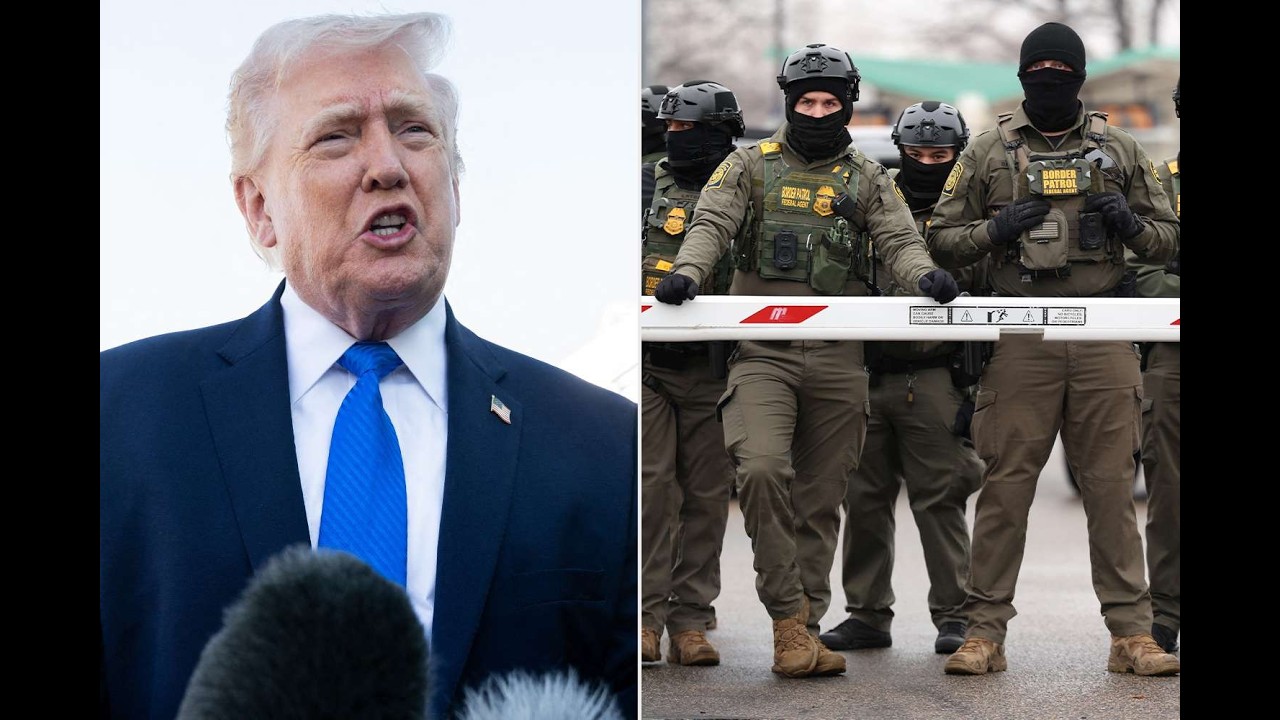
Trump team confession STUNS THE COUNTRY ahead of election
"Steve Bannon's public statements about using current ICE airport deployments as a 'test run' for future election interference reveal a deliberate strategy by the Trump team to deploy ICE agents to polling places for voter suppression."

Warnock UNLOADS on Trump SAVE Act. Calls It a Power Grab to Block Voters
"Senator Raphael Warnock vehemently opposes the 'SAVE Act,' framing it as a politically motivated voter suppression tactic that disproportionately disenfranchises eligible citizens under the false pretense of preventing non-existent voter fraud."

Judge Orders Fulton Ballot Docs Unsealed. NC Voting Blocked. Trump Melts Down. MAGA Loses It
"This episode dissects multiple instances of alleged Republican voter suppression and hypocrisy, from unsealed election documents in Fulton County to the backlash against a Spanish-speaking Super Bowl performer, alongside a host's personal account of being scammed by a Black-owned business."
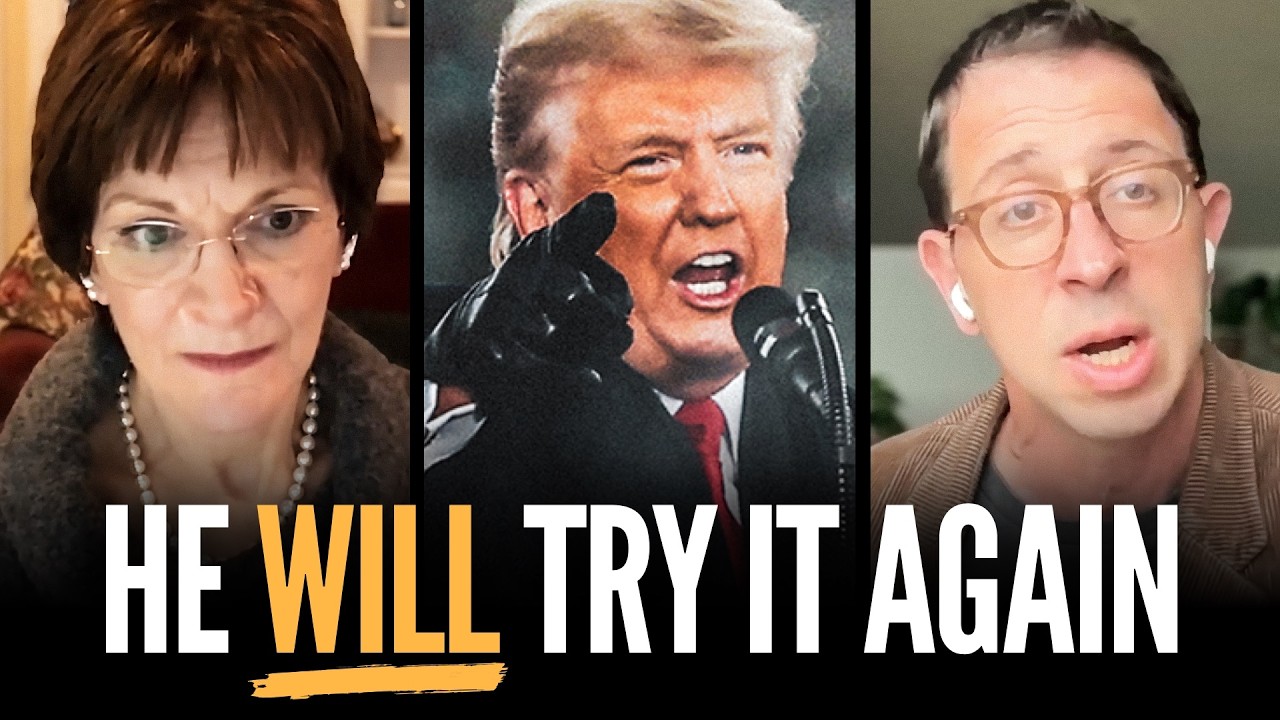
Trump’s Blueprint for Breaking Elections (w/ Ian Bassin) | Mona Charen Show
"Ian Bassin, founder of Protect Democracy, details how Trump's predictable playbook to subvert elections and undermine democratic institutions can be countered through strategic litigation, state-level reforms, and robust citizen engagement."