Maduro Capture & Iranian REVOLT Expose The COLLAPSING Axis Of Evil | TBN Israel
YouTube · cMBbt69mdh0
Quick Read
Summary
Takeaways
- ❖Iran is experiencing a massive wave of demonstrations fueled by a decade-long economic decline, hyperinflation (1.3 million Iranian Rial to 1 USD), and shortages of water, electricity, and commodities.
- ❖Unlike previous protests, current Iranian demonstrations involve not just students but also 'bazaris' (major business owners), indicating broader societal discontent.
- ❖The Iranian regime is weakened internally and externally, with perceived military humiliation and international sanctions exacerbating its challenges.
- ❖Venezuela is characterized as a narco-terrorism state, exporting narcotics and terrorism to North America and Europe with an anti-Western agenda.
- ❖Iran and Venezuela are 'partners in crime,' sharing dictatorial rule, economic sanctions, and a common goal to undermine Western influence.
- ❖Both countries circumvent international sanctions by using 'shadow fleets' – ships that turn off transponders, change flags, and sell illicit oil or goods at deep discounts to countries like China, Russia, and India.
- ❖The US's alleged action in Venezuela is presented as a legal move against a narco-terrorist organization, not a violation of sovereignty, and is seen as a template for future actions against hostile leaders.
- ❖Israel views the US's assertive stance against leaders of hostile regimes as a positive development, potentially giving Israel more 'tailwind' for its own targeted operations against terror leadership.
Insights
1Iran's Deepening Economic Crisis and Widespread Protests
Iran is experiencing a severe economic collapse, marked by a decade of mismanagement, hyperinflation (1.3 million Iranian Rial to 1 USD), and critical shortages of water, electricity, and basic commodities. This has fueled a massive wave of demonstrations across many cities, involving not only students and youth but also the 'bazaris' (major business owners), a demographic historically instrumental in past revolutions. The regime's weakened state, both in public perception and military capability, makes these protests particularly significant.
The Iranian currency (Rial) is valued at 1,300,000 to 1 USD. Protests involve 'bazaris' who were key to the Islamic Revolution. Shortages of water, electricity, and commodities are widespread. The 'Midnight Hammer' operation and perceived military humiliation have weakened the government.
2The Iran-Venezuela 'Axis of Evil' and Illicit Networks
The podcast asserts a strong correlation between Iran and Venezuela, labeling them as 'partners in crime' within an 'Axis of Evil.' Both are dictatorial regimes, not democratically elected, facing international sanctions, and actively working to undermine Western values. Venezuela, a narco-terrorism state with vast oil and gold reserves, exports drugs and terrorism, destabilizing its region. Both nations engage in illicit trade, using 'shadow fleets' to bypass sanctions by turning off transponders, changing ship identities, and selling discounted oil or other goods to adversarial countries like China, Russia, and India, often in exchange for weapons or gold.
Venezuela is a 'narco-terrorism country' exporting terrorism and narcotics. Both countries are run by dictators, face international sanctions, and try to circumvent them. The 'shadow fleet' mechanism involves turning off GPS, changing flags, and selling oil illegally. Exchanges involve drugs, missile systems, weapons, gold, or counterfeit cash.
3US Strategic Shift: Targeting Leadership and Redefining International Law
The alleged US capture of Venezuelan President Maduro is presented as a pivotal strategic move, demonstrating a new willingness by Western powers to directly target the leadership of hostile regimes. The hosts argue this action was legal under international law, as Venezuela is deemed a 'kleptocracy' and a narco-terrorist organization rather than a legitimate sovereign state. This approach, which includes legal indictments and DEA involvement, signals a broader shift from tactical responses to eliminating the 'head of the organization,' providing a template for future actions against figures like Iran's Ayatollah or Hamas leaders.
The US 'abducted and took over an enemy country in our neighborhood' (). Maduro is being tried for crimes, not just held. DEA agents were involved in the 'capture.' Venezuela is described as a 'kleptocracy' and a 'narco-terrorist organization' (). The action is framed as 'legal according to international law' (, ).
Bottom Line
International law is presented not as a fixed moral code, but as a political tool wielded by powerful nations to weaken adversaries, with its application often selective and politicized.
This perspective suggests that nations like the US can strategically interpret and apply international legal frameworks to justify interventions against regimes deemed hostile, challenging conventional understandings of sovereignty.
Understanding this dynamic allows for a more cynical, yet potentially realistic, assessment of global power plays and the justifications for international actions, enabling better anticipation of future geopolitical moves.
The US is shifting its foreign policy to directly target the 'head of the organization' (e.g., Maduro, Ayatollah) rather than just tactical field commanders, using both military and legal actions.
This aggressive posture aims to dismantle hostile regimes from the top down, potentially leading to more decisive outcomes but also risking higher-stakes confrontations.
For allied nations like Israel, this approach provides 'tailwind' and validation for their own strategies of leadership targeting, potentially fostering greater coordination in countering shared threats.
Lessons
- Pray for the Iranian people, supporting their aspirations for a better government and future, as explicitly called for by the hosts.
- Actively seek out multiple, diverse sources of information to form a comprehensive understanding of complex geopolitical events, rather than relying on single, short-form media.
- Recognize that global conflicts often involve a 'tectonic plate level clash' between forces seeking to build and stabilize versus those aiming to destabilize, influencing trade, cyber warfare, and international treaties.
Quotes
"Venezuela is the backdoor that funds all of Iran proxies in the Middle East."
"The Iranian currency is called the real and this currency you can buy it if you want. You can buy 1,300,000 rails for one United States dollar. This is how bad the currency is."
"It shows all the dictators around the world that if you're doing something that's against the US or against the western ideology and threaten the security of huge powers, you're not safe. No matter where you are, you can be extracted."
"The Iranian people are not our enemies. No, we have many Iranians watching us and we are playing for you and we call for our viewers to pray for the Iranian people to have a better leadership, a better future."
"International law is a very long series of treaties with a very complex political relationship between different countries. It has to do with UN different assemblies in the UN uh different governing bodies, different international treaties and on and on."
Q&A
Recent Questions
Related Episodes
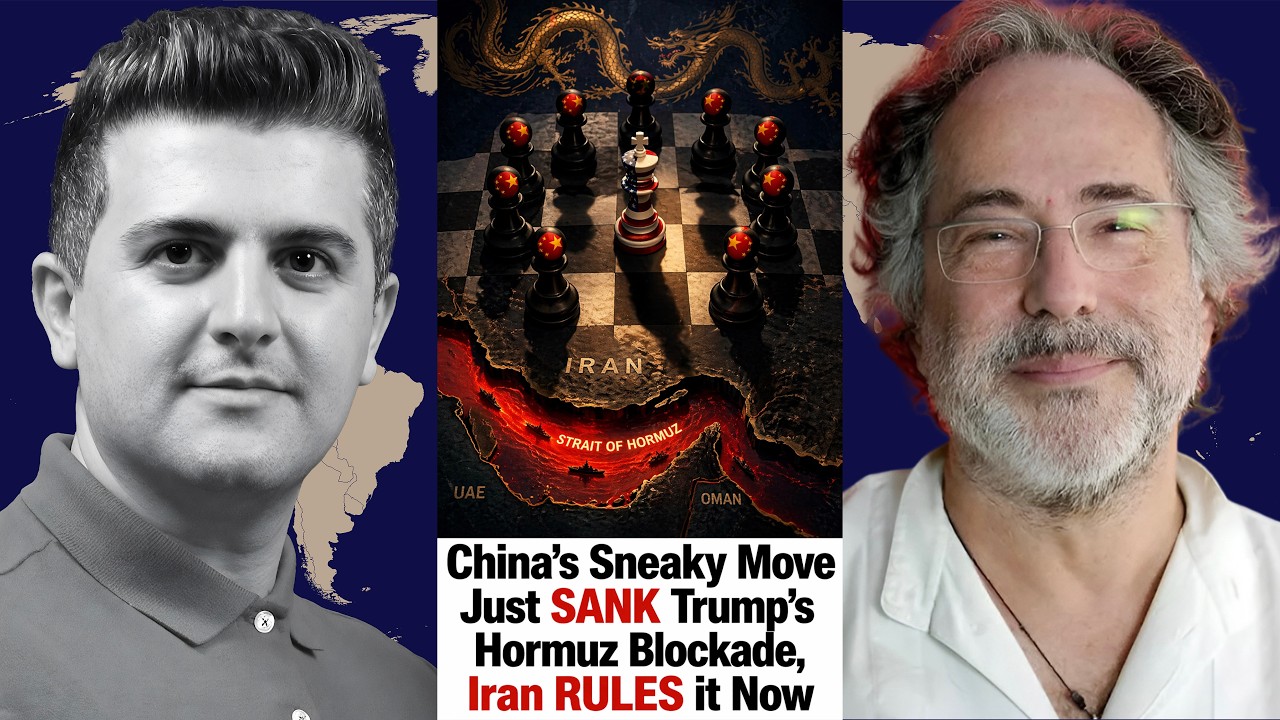
Pepe Escobar: “Total Failure”: Trump’s Blockade Just Backfired Disastrously
"Pepe Escobar argues that the US blockade against Iran, spearheaded by Donald Trump, has utterly failed and backfired, accelerating global economic chaos and challenging US geopolitical dominance."
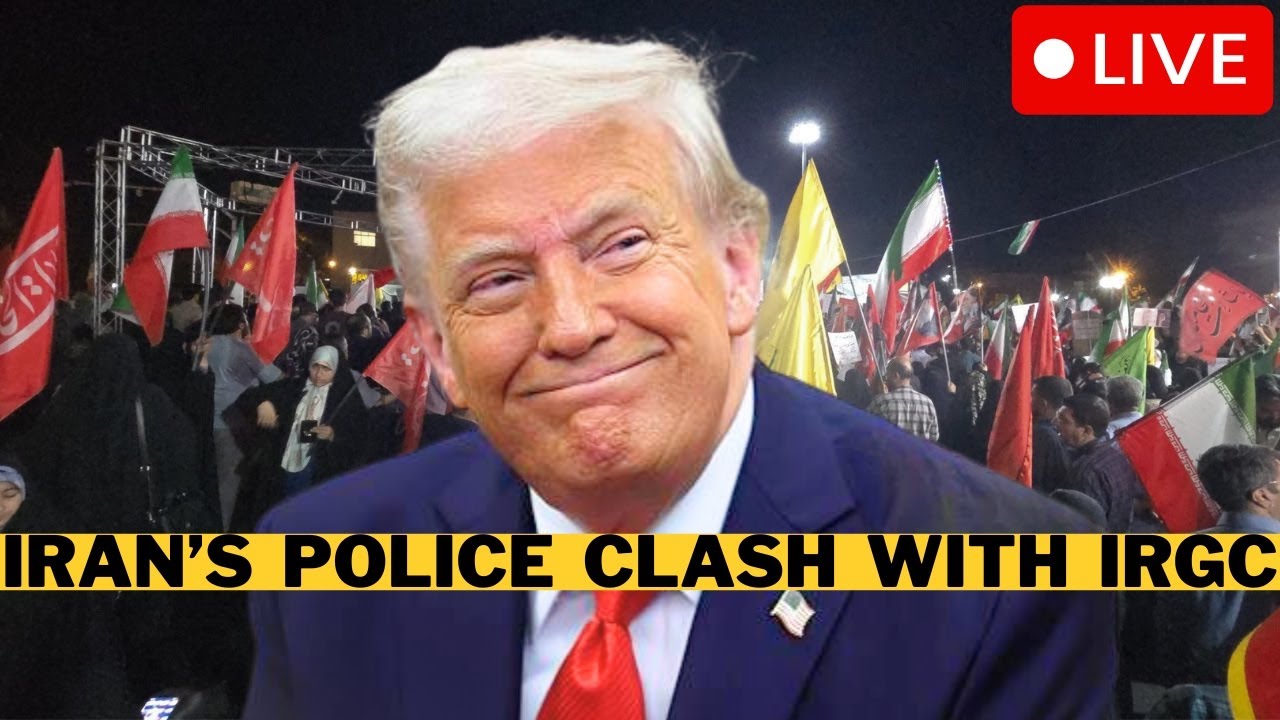
BREAKING: Protests ERUPT In Iran Over IRGC Surrendering To Trump - Infighting Clashes In Tehran
"Iran is experiencing severe internal infighting and protests as hardline IRGC elements clash with government figures over a perceived 'surrender' to the US, while mainstream Western media misrepresents the situation."

Alex Krainer: US STRIKES Iran – Iran RETALIATES Against Kuwait, Bahrain & Jordan!
"Amidst escalating US-Iran conflict and Iranian retaliation against regional US allies, this episode argues that US foreign policy is deeply controlled by an 'Anglo-Zionist conspiracy' led by the Rothschild banking dynasty, prioritizing Israeli interests over American ones."

LIVE: Trump HIDES FROM PUBLIC as US SOLDIER KILLED!!! 6/2/2026
"The host exposes alleged government cover-ups regarding military casualties, Trump's unexplained public absence, and questionable political appointments, arguing these reflect a 'regime of loser babies' and a failing foreign policy."