
Prices up, chaos up, tragedy up, logic down
YouTube · dNqa5bsmXKY
Quick Read
Summary
Takeaways
- ❖Former President Trump's public statements on the Iran conflict were contradictory, oscillating between claims of completion and ongoing military action.
- ❖Trump consistently attacked female reporters who pressed him on factual discrepancies, resorting to personal insults.
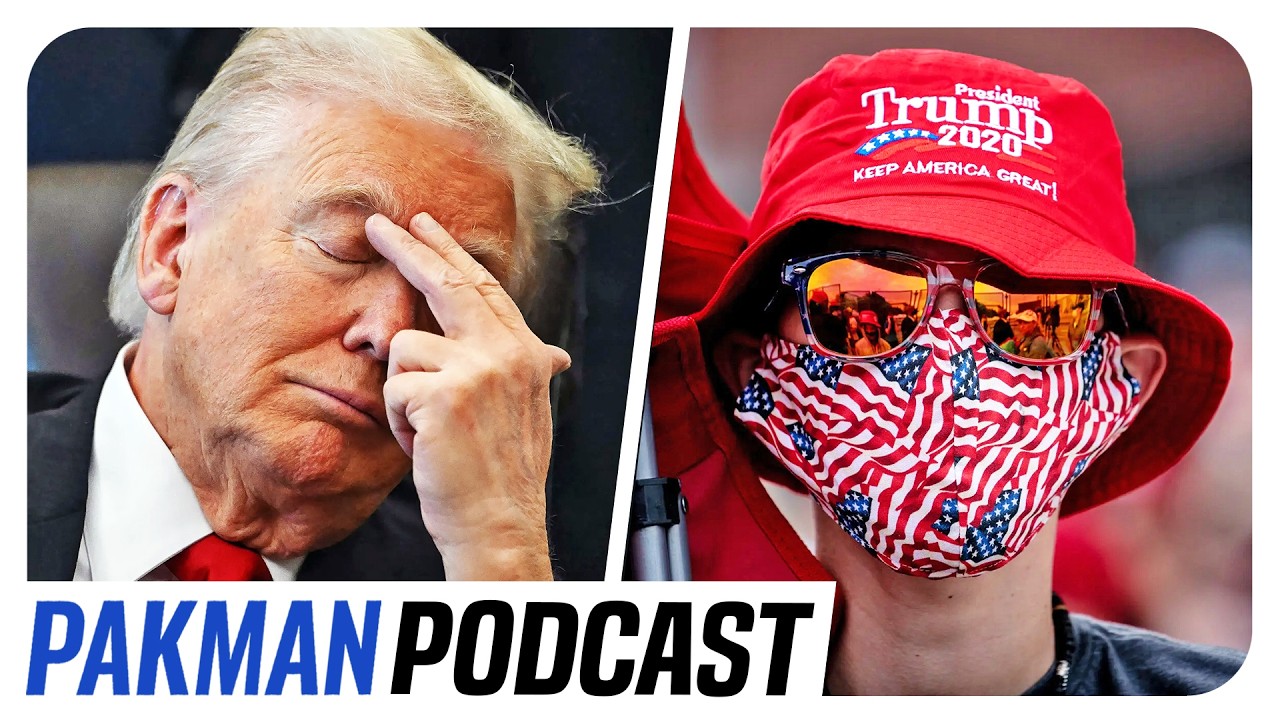
- ❖A Kentucky rally featured rambling speeches, fabricated economic figures, and Trump admitting to falling asleep during war planning.
- ❖Steve Bannon indicated that the Iran war contradicts Trump's 'anti-war' brand, causing internal friction within his movement.
- ❖Interviews with Trump supporters revealed low information and a disconnect between their stated values and the practical outcomes of policies.
Insights
1Trump's Inconsistent Messaging on Iran War
Former President Trump demonstrated a profound lack of coherent strategy regarding the Iran conflict, simultaneously claiming the goals were 'substantially complete' while also stating 'more of the same' was needed militarily. He denied responsibility for a US strike on a school, despite previous claims, and admitted to falling asleep during war planning sessions.
Trump's 'more of the same' comment (), denial of responsibility for school strike (), and admission of falling asleep during war planning ().
2Pattern of Attacking Female Reporters
Trump exhibited a consistent pattern of becoming combative and personally insulting towards female reporters who challenged him with facts. This behavior was observed with Liz Landers, Caitlyn Collins, and Ouija Yang, where he would pivot from the substance of their questions to criticizing their demeanor or professionalism.
Trump calling Liz Landers a 'rotten reporter' () after she cited his own attorney general, and the host's reference to similar interactions with Caitlyn Collins and Ouija Yang ().
3Internal Discontent Over Iran War Strategy
Steve Bannon, a key architect of Trumpism, expressed significant concern that the 'freedom isn't free' narrative for the Iran war was not resonating with Trump's base. This highlights a critical branding mismatch, as Trump's core appeal included an 'anti-endless wars' stance, which the current military actions contradict, creating a split within his coalition.
Bannon stating 'freedom isn't free' isn't landing () and the host's interpretation that 'the branding that Trump sold us, doesn't match the product' ().
4Low-Information Voter Base and Propaganda Effectiveness
Interviews with Trump supporters at a Kentucky rally revealed a low-information electorate often repeating talking points without critical understanding. Supporters cited vague reasons for support like 'genuine' or 'family values,' while simultaneously endorsing policies like the Iran war, which could contradict those values (e.g., sending kids to war).
A supporter stating the Iran war 'should help' Trump () and repeating the 'needed to be done for 47 years' talking point (), alongside others giving generic reasons for support like 'great person' or 'family values' ().
Lessons
- Analyze political rhetoric for inconsistencies and contradictions, especially when leaders discuss complex issues like foreign policy or economic data.
- Recognize patterns in how political figures engage with the media, particularly when challenged on factual matters, to discern communication strategies.
- Engage in electoral processes and support candidates who offer clear, consistent policy positions, rather than relying on vague or contradictory messaging.
- Critically evaluate the motivations and information sources of political supporters to understand the broader landscape of public opinion.
Quotes
"What more do you need to do militarily for this operation to end? More of the same. And we'll see how that all comes out."
"Your own attorney general in 2020 said that there was not measurable voter fraud to change the outcome of the election. You're a rotten reporter."
"I'm not happy that we're in it, but you're in it. So, you got to figure out how you have victory cuz victory is what matters here. Uh, it would be catastrophic for us to not have victory in this."
"What matters is that the people who are selling these ideas to the American public as candidates are authentic about it and they the conviction is real."
Q&A
Recent Questions
Related Episodes

Patrick Henningsen: Hezbollah JUST Fired Back at Israel - Iran Vows to “Crush” All Attacks
"Patrick Henningsen argues that the US and Israel initiated an illegal war against Iran, driven by Trump's incompetence and Israeli influence, leading to an inevitable escalation with severe global economic repercussions."
What happens to Trump voters when Trump is gone?
"The David Pakman Show explores the contentious path forward for Trump voters after his political era, exposing alleged corruption, economic misrepresentation, and the necessity of media literacy."

Will Venezuela Be Trump's Vietnam?
"An expert breaks down three perilous pathways for Venezuela under potential US intervention, from a 'Panamanian model' to a 'Libyan-style civil war,' and the broader geopolitical fallout for Latin America."

Iran Deal Skepticism. Whoopi Vs Vance. Potomac Park Invasion. Racist Hurls Slurs At Black Boy.
"This episode dissects multiple instances of alleged anti-Black policies and racial injustice, from the Trump administration's legal challenges to reparations and the Iran deal, to police brutality and the erasure of Black history."