
Andrei Martyanov: Iran & Russia Just Changed War Forever – Here’s How
YouTube · dRJv1THu1uI
Quick Read
Summary
Takeaways
- ❖China's energy security relies heavily on the Strait of Hormuz, leading it to pressure Iran for stability, despite Iran's increasing pro-Russian alignment.
- ❖Russia has demonstrated a complete disregard for Western sanctions, forging robust military and economic ties with Iran, unlike China which remains cautious.
- ❖The US military lacks the industrial capacity and arsenal to sustain a prolonged conflict, especially against a capable adversary like Iran, exposing a 'mythology' of strength.
- ❖Internal divisions within China, including pro-Western elites and reliance on Western commercial aviation technology, complicate its geopolitical maneuvering.
- ❖Israel's military is portrayed as a 'gendarm force' with pathetic performance, reliant on bombing civilians and controlling corrupt Arab governments.
Insights
1China's Energy Vulnerability and Strategic Pressure on Iran
China is in a precarious position due to its high energy demand, with up to 25% of its energy transiting the Strait of Hormuz. This dependency led China to pressure Iran for a settlement with the United States to ensure open trade routes, despite Iran's growing pro-Russian alignment.
China needs a lot of energy, and 25% of it comes through the Strait of Hormuz. China was pressuring Iran to conclude an agreement with the United States to open the Strait of Hormuz.
2Russia's Defiance of Sanctions and Strengthening Alliance with Iran
Russia has completely disregarded Western sanctions, establishing a robust military and economic alliance with Iran. This contrasts sharply with China's cautious approach to sanctions, highlighting a divergence in their strategies against Western pressure.
Russians don't care about sanctions. They just broke through. Iran is a neighbor, Iran is an ally. Russia is supplying updated MIG-29s, MI-28s, and SU-35s to Iran. China still abides by many things related to sanctions.
3US Military's Industrial Incapacity and Strategic Weakness
The United States military is critically short on key munitions like Tomahawk missiles, producing only about 70 per year, and lacks the industrial capacity to replenish arsenals quickly. This severe limitation makes it incapable of sustaining a major war, particularly against a capable adversary like Iran.
United States produces about 70 Tomahawks a year. They have very little left and American commanders are saying they don't have enough bunker-busting bombs. It would take years to create a required force.
4Internal Divisions and Western Dependencies within China
China faces significant internal challenges, including a powerful pro-Western and liberal elite, particularly in southern provinces, who admire the West. Furthermore, China remains dependent on Western technology, such as commercial jet engines, which limits its autonomy and makes it vulnerable to Western leverage.
Part of the Chinese party elite, especially southern elites, are very pro-Western and liberal. China doesn't have modern jet engines for commercial aircraft, leading them to ask Russia for PD-14s. The COMAC C919 project is grounded due to lack of Pratt & Whitney engines.
5Israel's Military Performance and Control over Arab States
Israel's military is characterized as a 'gendarm force' with a 'pathetic performance,' primarily effective at bombing civilians. Its control over corrupt Arab governments is a key factor in its survival, and preventing rapprochement between Iran and Arab states was a major reason for recent conflicts.
Everybody saw a pathetic performance of Iron Dome. Israel's military is a 'gendarm force with heavy equipment.' Israel doesn't want to lose control over Arabs. They control corrupt Arab governments.
Bottom Line
China's Belt and Road Initiative (BRI) is facing foundational challenges because its primary intended terminus, Europe, is becoming economically poorer, forcing China to shift its economic focus towards a developing Eurasia.
This suggests a significant reorientation of global trade and economic development away from the traditional East-West axis towards an intra-Eurasian one, potentially accelerating Europe's relative decline.
Investors and businesses should look for emerging opportunities in Eurasian markets and infrastructure, as China redirects its economic expansion and investment away from a declining European consumer base.
Iran plans to generate more revenue from charging tolls for passage through the Strait of Hormuz than from selling its oil, indicating a strategic shift towards leveraging its geographical control.
This signifies Iran's confidence in its ability to control a vital global chokepoint and its intent to monetize this control, potentially impacting global energy prices and shipping costs.
Companies reliant on shipping through the Strait of Hormuz should factor in potential increased costs and geopolitical risks, exploring alternative routes or supply chain diversification where feasible.
The 'American way of war' is primarily a media and public relations construct, with actual military action often lacking substance or sustained capability, leading to a 'demolition of American military mythology' in recent conflicts.
This implies that assessments of US military power based on official narratives or past interventions against weaker foes are fundamentally flawed, and real-world engagements expose severe limitations.
Geopolitical analysts and military strategists should critically re-evaluate US military capabilities based on empirical evidence from recent conflicts, rather than relying on official statements or historical reputation, to inform more accurate strategic planning.
Lessons
- Re-evaluate geopolitical risk models by factoring in the declining capacity of the United States to project sustained military power and enforce sanctions, especially against determined adversaries.
- Monitor the strengthening economic and military ties between Russia and Iran, as their combined defiance of Western sanctions creates new trade routes and military capabilities outside traditional Western influence.
- Analyze China's internal political dynamics and technological dependencies (e.g., commercial jet engines) to understand the constraints and motivations behind its cautious, yet strategic, engagement with both Western and Eastern blocs.
Notable Moments
The host mentions a meeting between Xi Jinping and Donald Trump, focusing on agricultural products and the Strait of Hormuz, with Trump wanting China to act on the Strait's demilitarization.
This sets the stage for the discussion on China's strategic interests and its role in regional stability, particularly concerning vital energy routes.
Andrei Martyanov reveals that China was pressuring Iran to reach a settlement with the US regarding the Strait of Hormuz due to China's significant energy reliance on the route.
This highlights China's pragmatic national interest in energy security, even if it means influencing its strategic partners, and reveals a potential point of tension within the broader Eastern alliance.
Martyanov notes a significant shift in Iranian rhetoric, becoming 'increasingly pro-Russian,' and an activation of the Caspian Sea route between Russia and Iran.
This indicates a deepening strategic alignment between Russia and Iran, potentially forming a more cohesive bloc that can bypass Western influence and sanctions.
Martyanov states that China still 'is afraid of the United States militarily,' despite its advancements, and is aware it's 'not as strong as it tries to portray itself' compared to the US.
This offers a critical, less commonly heard perspective on China's military self-assessment, suggesting that its caution in challenging US hegemony is rooted in a realistic appraisal of its own capabilities.
Discussion of China's reliance on Western commercial jet engines (e.g., Pratt & Whitney for COMAC C919) and the project being 'totally grounded' after US delivery stops.
This illustrates a critical technological vulnerability for China, showing how Western leverage can significantly impede its industrial and commercial ambitions, impacting its long-term strategic independence.
Martyanov asserts that the US military produces only about 70 Tomahawk missiles a year and has 'very little left' in its arsenals, making it 'pretty much dead in the water' for a major conflict.
This provides a stark assessment of US military industrial capacity, suggesting a severe limitation in its ability to sustain prolonged high-intensity warfare, contrary to common perceptions.
Martyanov claims that the US is 'ungovernable' and 'not run by competent and honorable people,' and that the US Congress is 'Knesset 2.0,' heavily influenced by Christian Zionists and Israel.
This offers a highly critical view of US political integrity and sovereignty, suggesting that internal dysfunction and external influence compromise its decision-making and national interest.
Quotes
"Russians don't care about sanctions. Russians broke through. They don't care."
"United States is ungovernable. Simple as that. It's not run by competent and honorable people."
"Vietnam will look like the easiest stroll in the park compared to what would respect them [in Iran]."
Q&A
Recent Questions
Related Episodes
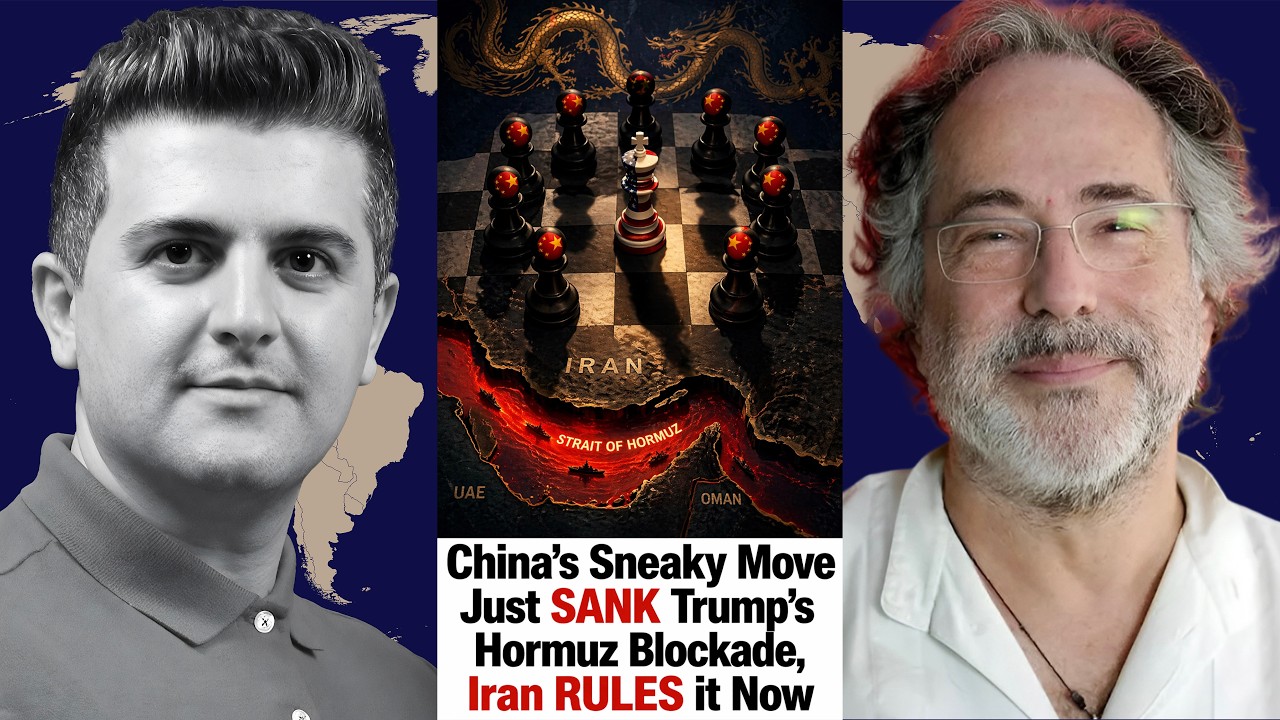
Pepe Escobar: “Total Failure”: Trump’s Blockade Just Backfired Disastrously
"Pepe Escobar argues that the US blockade against Iran, spearheaded by Donald Trump, has utterly failed and backfired, accelerating global economic chaos and challenging US geopolitical dominance."
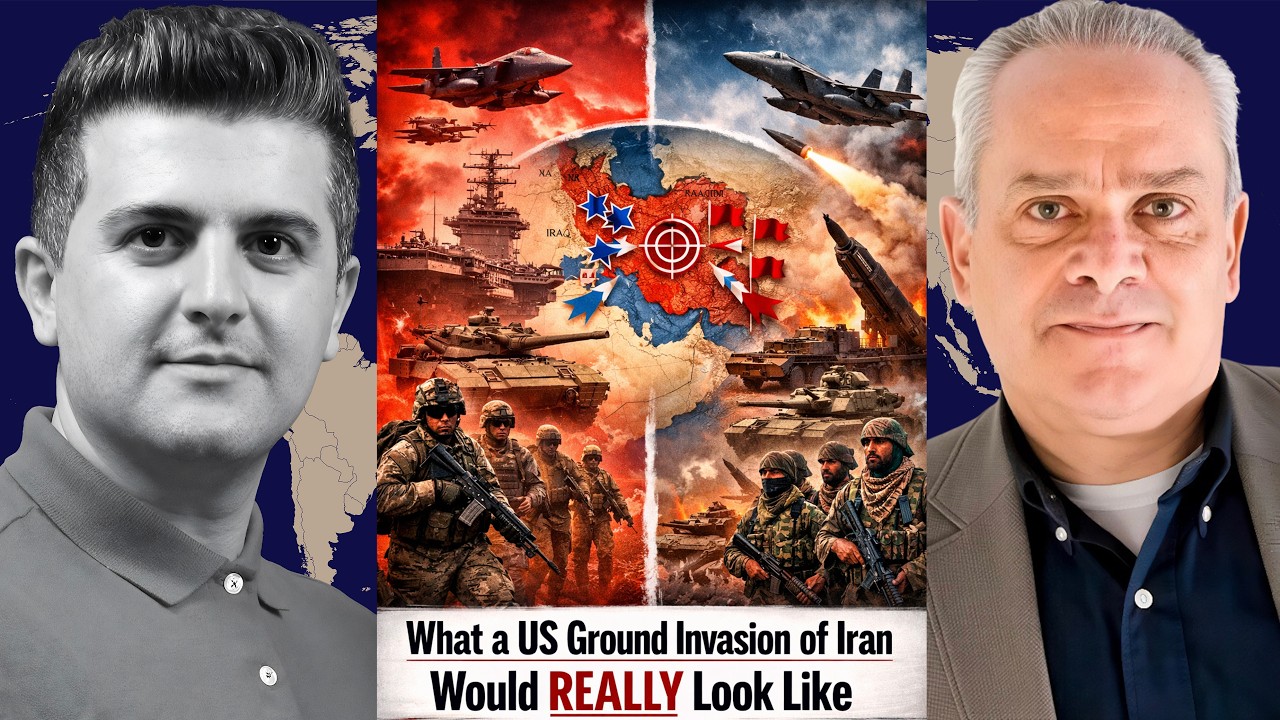
Col. Jacques Baud: What a US Ground Invasion of Iran Would REALLY Look Like
"Colonel Jacques Baud dissects the strategic futility of a US ground invasion of Iran, arguing that current troop levels are insufficient and such an action would backfire, exposing US allies and potentially leading to Iran's nuclearization."

Patrick Henningsen: Hezbollah JUST Fired Back at Israel - Iran Vows to “Crush” All Attacks
"Patrick Henningsen argues that the US and Israel initiated an illegal war against Iran, driven by Trump's incompetence and Israeli influence, leading to an inevitable escalation with severe global economic repercussions."

Iran Update: Israel’s Newest Bombing Campaign, the Oncoming War With China and How to Avoid It
"Colonel Wilerson reveals how the US and Israel are actively bombing China's strategic infrastructure in Iran, escalating a covert economic war that Beijing intends to win without direct military conflict by dismantling the dollar's global dominance."