Quick Read
Summary
Takeaways
- ❖US and Israeli forces launched a massive bombing campaign against Iran, killing 787 people and striking over 500 sites.
- ❖Iran responded by closing the Strait of Hormuz, threatening to set fire to any crossing ships, and attacking Gulf oil and gas infrastructure.
- ❖Global energy prices are climbing due to Iranian attacks on oil and gas facilities in Saudi Arabia, Qatar, and Iraqi Kurdistan.
- ❖Israeli forces invaded southern Lebanon and conducted airstrikes on Beirut, causing 51 deaths and 154 injuries.
- ❖The UN Agency for Palestinian Refugees accuses Israel of reinstating a 'starvation policy' in Gaza despite a border crossing reopening.
- ❖President Trump unilaterally entered the US into war with Iran, awarding Medals of Honor while the US military death toll rose to six.
- ❖Secretary of State Marco Rubio stated the US joined Israel's planned war to preemptively strike Iranian forces and avoid higher US casualties.
- ❖FBI Director Cash Patel reportedly fired a dozen FBI personnel from an elite counter-espionage unit specializing in Iran, linked to the Trump classified documents investigation.
- ❖The US military allegedly used Anthropic's AI tools for targeting in Iran, despite the company's policy against military use.
- ❖Prediction markets, including PolyMarket (invested in by Donald Trump Jr.'s firm), saw $529 million traded on contracts tied to the timing of US strikes on Iran, with allegations of insider trading.
- ❖Iraqi human rights defender Yanar Muhammad was murdered in Baghdad after returning from Canada, having founded Iraq's first women's shelter and receiving death threats for her activism.
- ❖Minnesota's Justice Department indicted 30 people for a peaceful protest, including journalists and civil rights activists, while federal officials face contempt charges for immigration violations.
Bottom Line
The US military reportedly used AI tools from Anthropic for targeting in Iran, despite the company's explicit rejection of its AI model for mass surveillance or autonomous weapons systems.
This highlights a significant ethical and policy gap between AI developers' stated use restrictions and military application, raising questions about accountability and the future of AI in warfare.
Develop robust, legally binding frameworks and international treaties governing the military use of AI, ensuring transparency and adherence to ethical guidelines, or invest in AI auditing and compliance solutions for defense contractors.
Prediction markets, specifically PolyMarket, saw hundreds of millions of dollars traded on contracts tied to the timing of US military strikes on Iran, with one account making over half a million dollars just an hour before public news broke.
This suggests potential insider trading and raises serious ethical and national security concerns about individuals profiting from foreknowledge of military actions, especially given Donald Trump Jr.'s advisory role and investment in PolyMarket.
Implement stringent regulatory oversight and enforcement for prediction markets, particularly those involving geopolitical events, to prevent market manipulation and insider trading that could compromise national security or exploit human suffering. This could involve new legislation or enhanced powers for financial regulatory bodies.
Lessons
- Monitor global energy markets closely, as the closure of the Strait of Hormuz and attacks on oil infrastructure signal sustained volatility and potential supply chain disruptions.
- Scrutinize the ethical implications and regulatory gaps surrounding the use of AI in military operations and the potential for insider trading on prediction markets tied to geopolitical events.
- Support human rights organizations and independent journalism, particularly in conflict zones, given the reported murder of Yanar Muhammad and the indictment of journalists covering protests in Minnesota.
Notable Moments
A missile strike hit a girls' school in Minab, Iran, killing 165 schoolgirls and staff on the first day of US-Israeli strikes.
This event underscores the severe civilian toll and humanitarian crisis resulting from the escalating conflict, highlighting the devastating impact on vulnerable populations.
President Trump, in his first public remarks since unilaterally entering the US into war with Iran, dedicated a few moments to fallen service members before launching into a lengthy monologue about White House renovations and a new ballroom.
This moment illustrates a perceived disconnect between the gravity of the ongoing war and the President's public focus, potentially signaling a lack of seriousness or a prioritization of personal projects over national crisis management.
Quotes
"Iran, unlike the United States, has prepared itself for a long war."
"We knew that there was going to be an Israeli action. We knew that that would precipitate an attack against American forces and we knew that if we didn't preemptively go after them before they launched those attacks, we would suffer higher casualties."
"After more than two years of unspeakable suffering and a spreading man-made famine, people still lack the most basic supplies despite increases in aid since the ceasefire."
"It's as if I'm living the days of Saddam Hussein all over again where everybody is scared of a single person and nobody dares to say anything."
Q&A
Recent Questions
Related Episodes
Palestinian Evangelical Analyst REACTS To U.S-Israeli War In Iran!
"The Young Turks dissect the US-Israeli war in Iran, alleging it's driven by Israeli expansionist goals, fueled by US political and media subservience, and resulting in devastating civilian casualties and economic fallout, while a Palestinian Christian analyst details the brutal realities of Israeli occupation and humiliation."
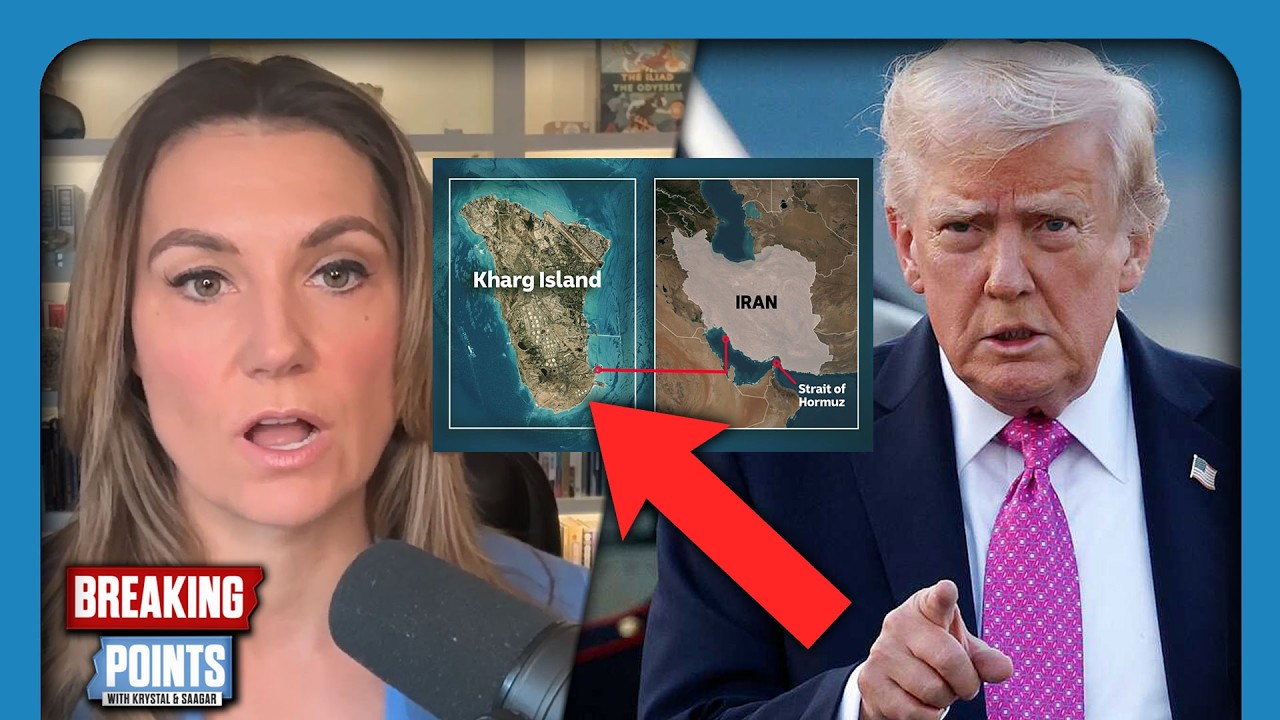
BREAKING: TRUMP ATTACKS OIL ISLAND, MARINES CALLED IN, 5 US PLANES HIT
"The US-Iran conflict escalates with a Trump-ordered strike on Iran's Karg Island, triggering Iranian retaliation against UAE oil facilities and US military assets, while the US deploys Marines and Israel plans a ground invasion of Lebanon."

TRUMP PANICS AS FINANCIAL APOCALYPSE HITS; TRILLIONS LOST; TEHRAN IN ‘NUCLEAR WINTER’ & CHAOS ERUPTS
"The host details a catastrophic global economic and humanitarian crisis stemming from the US-Israel war on Iran, framing Trump as an incompetent, lying leader whose actions are escalating the conflict and destroying the world."
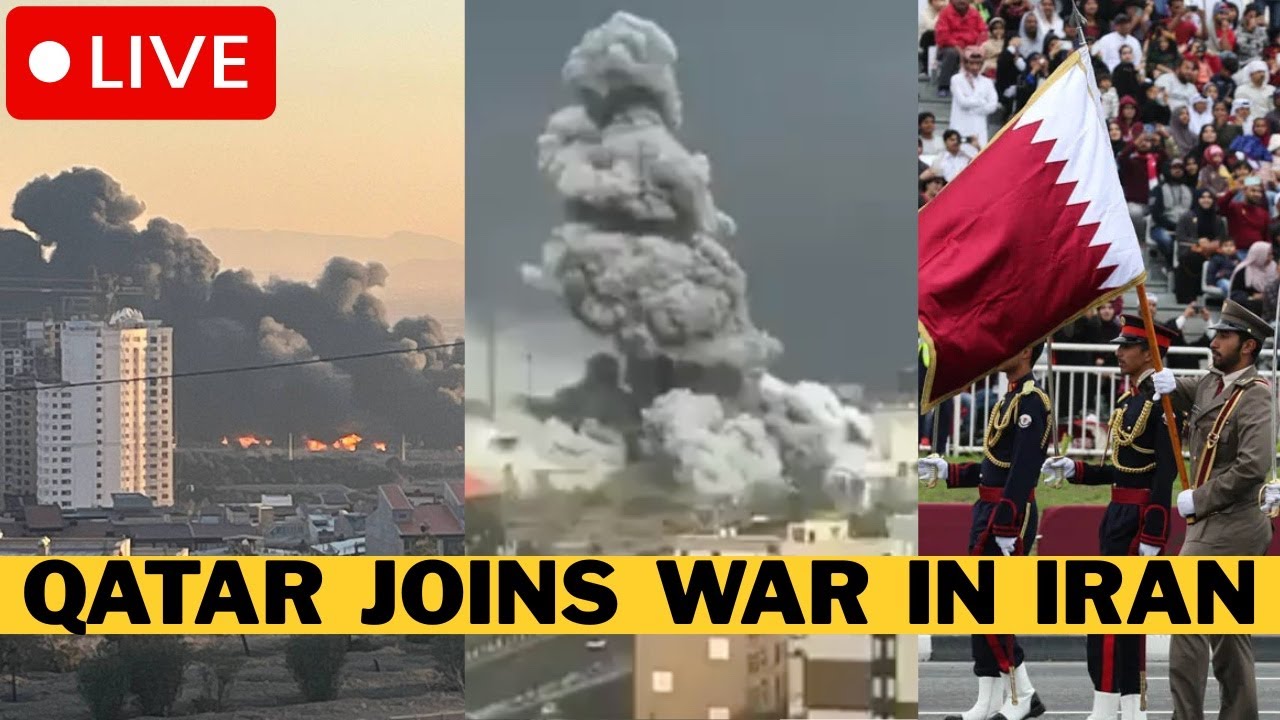
🚨 BREAKING: Qatar Launch WAR In Iran - IRGC Running Out Of Missile Launchers - LIVE Coverage
"Amidst escalating conflict, Qatar and Pakistan have aligned with Saudi Arabia against Iran, while the US and Israel execute 'Operation Epic Fury' to dismantle the IRGC's military and leadership, leading to widespread destruction of Iranian strategic sites."