
John Helmer: Russia Issues URGENT Warning as US–Israel Strikes Escalate
YouTube · dfAcNkHEdWY
Quick Read
Summary
Takeaways
- ❖President Trump's public statements on the Iran conflict are described as increasingly inconsistent, indicating a loss of 'cognitive control' (01:01).
- ❖The US-Israel strategy for a 'short, ruthless decapitation war' against Iran was a 'strategic enormity' of miscalculation, failing to destroy Iranian leadership or defense capabilities (12:01).
- ❖Trump's administration is signaling a retreat from forcing the opening of the Strait of Hormuz, driven by domestic disapproval and military setbacks (09:45).
- ❖European allies like Poland, Spain, and Italy are refusing to provide offensive military support or allow their bases for US attacks against Iran (21:17).
- ❖Russia, through Foreign Minister Lavrov, is publicly criticizing the US's reliability as a negotiator and its disregard for international law, while strengthening its strategic partnership with Iran (29:05, 34:20).
- ❖Iran has demonstrated a capacity to 'win by counterattack' against the US, Israel, and Arab monarchies, fundamentally altering regional power dynamics (38:38).
- ❖The Arab monarchies, particularly Saudi Arabia and UAE, are seen as having 'hugely miscalculated' by complicity in the US-Israel attack, potentially facing Iranian demands for reparations (46:13).
- ❖The concept of a 'multipolar world' is challenged by India's perceived alignment with the US-Israel side, undermining BRICS as a collective (41:26).
Insights
1Trump's Cognitive Decline and Policy Inconsistency
John Helmer asserts that President Trump is 'cracking up,' exhibiting significant cognitive control issues, leading to contradictory statements on consecutive days. This volatility, labeled 'insanity' by the host and 'psychopathological' by Helmer, is causing market reactions and influencing policy shifts, particularly regarding the Strait of Hormuz.
Trump's statements in the Financial Times interview () and an airplane press conference () show him mixing up target numbers () and claiming credit for Iranian concessions that were actually Pakistan-negotiated (, ).
2US-Israel's Catastrophic Strategic Miscalculation in Iran War
The US and Israel launched the war with a profound miscalculation, expecting to 'destroy the Iranian leadership' and its military capabilities within three to seven days. This 'strategic enormity' failed rapidly, with Iran demonstrating unexpected defensive and retaliatory strength, leading to a collapse of Israeli air defense and a desperate search for exit strategies.
Helmer states he 'cannot remember a miscalculation as strategically large' () and that the US/Israel 'totally miscalculated' () Iran's capabilities, failing to achieve war goals in an 'incredibly short period of time' ().
3European Allies Refuse Offensive Support, Prioritize Economic Interests
European nations, including Poland, Spain, and Italy, are refusing to allow their bases or assets to be used for offensive actions against Iran. Their primary motivation is to avoid being part of a 'losing empire' and to protect their own bilateral economic and financial relationships, particularly concerning oil and gas, which they don't want damaged by a prolonged, losing war.
Poland refused to send Patriot missiles to Israel (), and Italy stated US cannot use its bases for attacks (). Helmer explains Europeans 'don't want Trump to run wars which he will lose' () and want to protect their 'special relationship with oil from Iran or oil through the Hormos' ().
4Russia Critiques US Negotiating Reliability and Shifts Stance on Iran
Russian Foreign Minister Lavrov is openly attacking the US's capacity to be a 'serious, consistent, honorable negotiator,' implicitly criticizing those within Russia (like Kirill Demetri) who advocate for negotiation with Trump. Russia's stance towards Iran has become 'far more supportive' after observing Iran's effective defense and counter-attacks, and the perceived complicity of Arab monarchies.
Lavrov's speech highlights US disregard for international law (). Helmer interprets this as an attack on 'Vitkov and Kushner' and their 'so-called goodwill' (). Lavrov stated Russia's 'primary focus was on upholding the international law, not so much on defending Iran, which is more than our ally, but is our strategic partner' ().
5Iran's Demonstrated Strength Reshapes Regional Security
Iran's successful defense and counter-attack capabilities against a powerful US-Israel coalition have fundamentally altered the regional security landscape. This performance demonstrates that a 'relatively weak state can defend itself effectively against such a powerful coalition,' providing a new lesson for the Global South and potentially leading to new security arrangements in the Persian Gulf without US bases.
Helmer states Iran 'demonstrated the capacity to win by counterattack, by defense and counterattack' (). The host and guest discuss Iran potentially forcing Arab states to pay reparations through control of the Strait of Hormuz ().
Bottom Line
Iran may leverage its control over the Strait of Hormuz to impose a 'toll system' that effectively functions as a reparations mechanism for the damages incurred during the conflict, specifically targeting Arab monarchies that were complicit in the US-Israel offensive.
This would fundamentally alter the economic and security landscape of the Persian Gulf, forcing Arab states to directly fund Iran's recovery and potentially leading to a new, Iran-centric regional security architecture, with significant implications for global energy markets and shipping.
Companies involved in shipping, insurance, and energy trade through the Strait of Hormuz will need to anticipate and model potential new costs and regulatory frameworks. Investors could explore opportunities in Iranian reconstruction or alternative energy supply chains that bypass the Strait.
The US may be forced to withdraw its military bases from Arab Gulf states (Saudi Arabia, UAE, Qatar, Bahrain, Iraq) and consolidate its presence in Jordan and Israel as a result of Iran's demonstrated counter-attack capabilities and the Arab monarchies' miscalculation.
This withdrawal would fulfill a key Iranian demand and align with Russia's long-standing 'Lavrov plan' for mutual security in the Persian Gulf, dramatically reducing US influence in the immediate Gulf region and shifting the balance of power towards Iran and its allies. It would also necessitate a re-evaluation of US force projection capabilities in the Middle East.
Defense contractors and regional security providers might see shifts in demand as host nations reassess their defense needs. Regional powers like Russia and China could expand their security partnerships in the Gulf, creating new market opportunities for their military-industrial complexes.
Key Concepts
Strategic Miscalculation
The guest highlights how the US and Israel fundamentally misjudged Iran's defensive capabilities and resolve, leading to a rapid and costly failure of their 'short, ruthless decapitation war' strategy. This miscalculation had immediate and severe political and military consequences.
Cognitive Control and Policy Volatility
The discussion frames President Trump's public statements as increasingly erratic and contradictory, suggesting a loss of 'cognitive control.' This perceived instability directly translates into policy volatility, impacting financial markets and international trust, forcing a retreat from initial aggressive stances.
War Weariness and Domestic Pressure
Despite the short duration of the conflict, both the US and Israel are experiencing significant 'war weariness' and declining public approval for their leaders. This domestic pressure is identified as a key factor driving policy changes and the search for an exit strategy, even if it means abandoning initial war aims.
Lessons
- Monitor President Trump's public statements and policy shifts for inconsistencies, as they may signal significant changes in US foreign policy, particularly concerning the Middle East and energy security.
- Evaluate the stability of existing alliances and supply chains in the Middle East, recognizing that European and Arab partners may prioritize their own economic and security interests over full alignment with US military objectives.
- Assess the implications of Iran's demonstrated military capabilities for regional stability and energy markets, considering potential shifts in control over critical chokepoints like the Strait of Hormuz and the possibility of new reparations demands.
Notable Moments
The host and guest discuss Trump's perceived 'insanity' and 'psychopathological' state, linking it directly to his inconsistent public statements and policy shifts.
This frames the US leadership's approach to a major conflict as unstable, impacting both market confidence and the credibility of US foreign policy.
Helmer highlights the 'strategic enormity' of the US-Israel miscalculation in attempting a quick war against Iran, comparing it to the Vietnam and Korean wars in terms of strategic error but noting its unprecedented speed of failure.
This emphasizes the scale of the military and intelligence failure, suggesting a fundamental misunderstanding of Iran's capabilities and resolve, with long-term implications for future military engagements.
Lavrov's subtle 'biblical cruelty' reference, interpreted as a critique of Israel's actions without directly naming it, and his internal Russian political maneuvering against Kirill Demetri.
This reveals the nuanced and multi-layered nature of Russian diplomacy, simultaneously addressing international audiences, internal political factions, and strategic partners like Iran, while subtly criticizing adversaries.
Quotes
"The man is now cracking up... he changes what he says and doesn't appear to understand the difference between what he says on day two from what he said the day before."
"I cannot remember a miscalculation as strategically large as the United States has made in this particular short war."
"The United States people have lost patience with their leader. He has begun to fail in their eyes."
"They don't want to be members of a losing empire."
"Our primary focus was on upholding the international law, not so much on defending Iran, which is more than our ally, but is our strategic partner."
"Iran has demonstrated the capacity to win by counterattack, by defense and counterattack. The Arab monarchies, Israel and the United States have demonstrated the capacity to lose."
"We are in the middle of a reshaping of new world of the world order that will hopefully lead to the formation of a stable and fair multi-bolo world. But right now this restructuring looks more like disruption."
Q&A
Recent Questions
Related Episodes
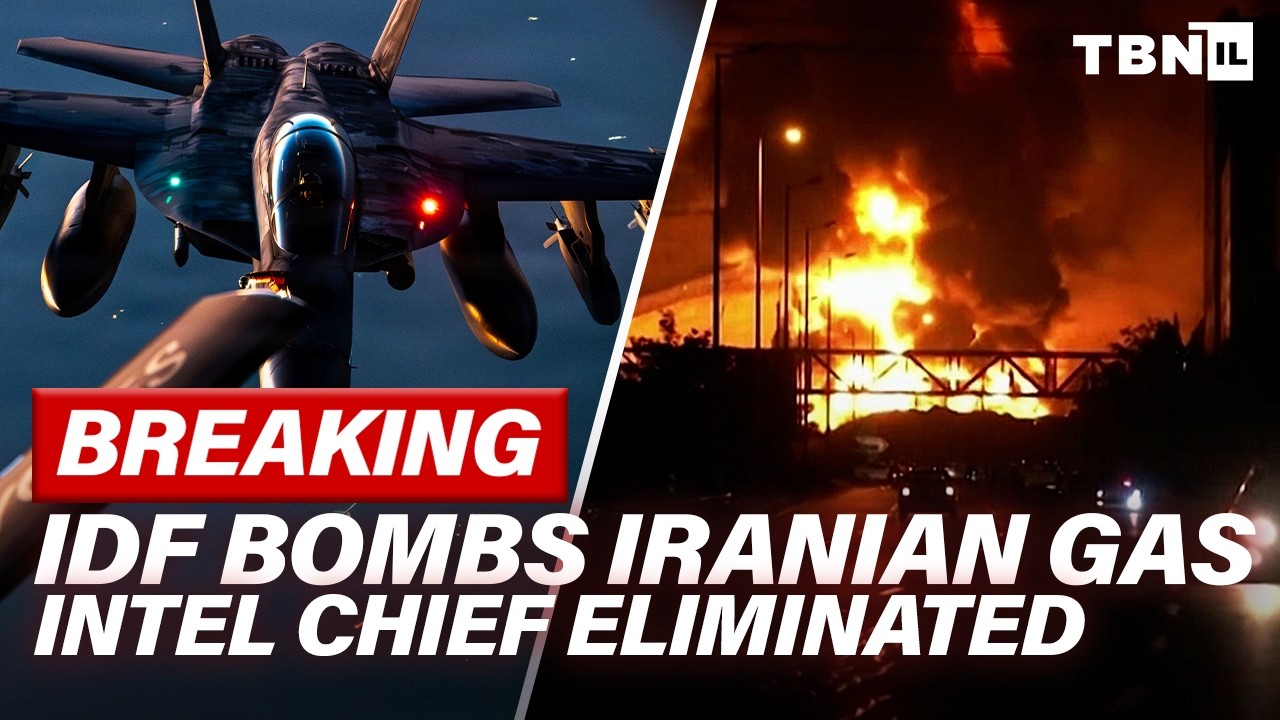
BREAKING: Israel BOMBS Major Iran Gas Site; Top Mullah ELIMINATED; Iran Vows VENGEACE | TBN Israel
"Israel and the United States have escalated their 'Roaring Lion War' against Iran, striking its largest gas facilities, eliminating key intelligence and military figures, and disrupting missile production, while Iran threatens a broader energy war in the Gulf."

Patrick Henningsen: Hezbollah JUST Fired Back at Israel - Iran Vows to “Crush” All Attacks
"Patrick Henningsen argues that the US and Israel initiated an illegal war against Iran, driven by Trump's incompetence and Israeli influence, leading to an inevitable escalation with severe global economic repercussions."

🚨 TOTAL F*CKING CHECKMATE 😂😂😂
"The host argues that Trump's 'ceasefire' with Iran was a calculated '5D chess' move to orchestrate a global energy market reshuffle, while simultaneously lambasting 'woke' domestic policies and the 'freefall' of anti-Trump conservative figures."

Bibi DEMANDS Ground Troops As Marines Rushed to Iran
"Benjamin Netanyahu is pushing for US ground troops in Iran, framing air strikes as insufficient, while the US rushes Marines to the region and struggles to secure the Strait of Hormuz against surprisingly capable Iranian defenses."