BREAKING: U.S. HITS Iran Oil Lifeline; Kharg Shaken; Uranium Hunt | TBN Israel
YouTube · dgsXZECzxIs
Quick Read
Summary
Takeaways
- ❖U.S. and Israel have conducted nearly 1,500 strikes in Iran, targeting military infrastructure, drone arrays, and command centers.
- ❖Kharg Island, vital for Iran's oil exports, had its military and security infrastructure bombed, but oil terminals were intentionally untouched to prevent global oil price spikes.
- ❖Iran's Supreme Leader, Muchapa Kamuni, is reportedly injured or unconscious, with the Revolutionary Guards now making key decisions.
- ❖The hunt for Iran's 450 kg of 60% enriched uranium is a top priority, but its concealability makes it a complex challenge.
- ❖Iran is engaging in regional attrition, including missile attacks on Turkey and threats to Gulf States, to pressure the U.S. to end the war.
- ❖Western military technology (US/Israel) demonstrates clear superiority over Russian and Chinese defense systems in current conflicts.
- ❖Israeli Air Force employs 'hunting warfare,' tracking and eliminating Iranian drone operators in real-time after striking their sites.
Insights
1Strategic Strike on Kharg Island's Military Envelope, Not Oil Terminals
The U.S. bombed Kharg Island, Iran's primary oil export hub, hitting over 90 military targets, including naval mine storage, missile bunkers, and airport bases. However, the oil terminals and pipelines themselves were deliberately avoided. This decision was made to prevent a catastrophic disruption to global oil supply and subsequent price spikes, which would destabilize the world economy and impact elections in the U.S. and other countries. The island's deep waters make it crucial for supertankers, and damaging its oil infrastructure would have severe global repercussions.
Trump boasted his army bombed the island where Iran's oil export center is located (). A CIA document revealed these facilities are vital to Iran's economy (). The US and Israel could have destroyed oil facilities but didn't, to avoid global economic damage (). More than 90 military targets were hit on the island while avoiding direct damage to oil infrastructure ().
2Iran's Leadership Vacuum and Revolutionary Guard Consolidation
Reports from Israeli intelligence suggest Iran's Supreme Leader, Muchapa Kamuni, is suffering severe injuries, possibly unconscious, and his body may be disfigured. This alleged incapacitation has led to the Revolutionary Guards personnel taking over the management of the country. This shift implies a transition from a theocratic regime run by a single cleric to one where power is increasingly concentrated in military-security hands, with significant implications for Iran's future actions and stability.
Iran's leader Mua is suffering from injuries, possibly disfigured and not conscious, with Iran being run by Revolutionary Guards personnel (). Trump stated he hears the new supreme leader may not be alive (). Latest assessments attribute to Israeli intelligence officials speak of Muchapa suffering from injuries, perhaps even unconscious, and that those surrounding him and actually managing the arena are the Revolutionary Guards personnel ().
3The Hunt for Iran's Enriched Uranium: A Complex Challenge
A critical objective of the war is to locate and secure Iran's stockpile of 440-450 kg of uranium enriched to 60%, which is near the threshold for a nuclear weapon. This material is highly concealable, unlike centrifuges or factories, and could be hidden in bunkers, damaged underground sites, or split across multiple locations within Iran's vast territory. A 'Hollywood rescue operation' is deemed impractical; physically securing the uranium would require extensive ground control, excavation, engineering, and a prolonged presence for days or weeks, making it a full military operation rather than a quick raid.
The war moves to the question: Where is the uranium? (). 440-450 kg of uranium enriched to 60% is close to the nuclear weapon threshold (). Material is easy to hide in sealed containers, bunkers (). Physically getting hold of uranium requires ground control, excavation, security, experts, and weeks ().
4Western Military Technology's Superiority Over Eastern Systems
The ongoing conflicts in Iran, Ukraine, and South Asia are serving as a battle-testing ground, consistently demonstrating the superior effectiveness of American and Israeli-made defense systems and integrated intelligence capabilities against Russian and Chinese technologies. Russian air defense systems (S300s, S400s) have repeatedly failed against Western aircraft and even makeshift drones. This performance gap is leading to canceled orders and humiliation for Russia's defense industry, foreshadowing outcomes in potential future conflicts like those in the South China Sea.
Russian and Chinese weapons are failing against Western technologies (). American aircraft flown by Israeli pilots knocked out every air defense in Iran (). Russian air defenses failed in Ukraine against drones (). Israeli-American systems top defense contracts lists (). S300s/S400s have seen humiliation in battle ().
5Israel's 'Hunting Warfare' Doctrine Against Dynamic Targets
The Israeli Air Force has adopted a 'hunting warfare' method, which goes beyond striking static targets. After hitting a drone storage site, for example, aircraft tracked and eliminated fleeing Iranian regime soldiers in real-time through multiple separate strikes. This approach, enabled by UAVs like Squadron 200's Shval, emphasizes patience and prolonged surveillance to identify and neutralize dynamic targets and their operators, even thousands of kilometers away, making it harder for the enemy to regroup or escape.
Unusual footage of Iran's drone array soldiers fleeing and being eliminated after launch (). Air force tracked soldiers after strike and eliminated them in separate strikes (). Not only to hit the assets, also to hit the crew that is operating it while in motion, while fleeing in real time (). UAVs offer patience to track, study patterns, and wait for the exact moment ().
Bottom Line
The U.S. is using the threat of hitting Iran's oil infrastructure as an 'escalation switch,' maintaining pressure while avoiding immediate global economic collapse.
This strategy allows Washington to dictate terms and maintain leverage, signaling that more severe economic consequences are possible if Iran escalates, particularly regarding the Strait of Hormuz.
Analysts and policymakers can study this 'calibrated escalation' model for managing conflicts with global economic implications, balancing military objectives with broader market stability.
The alleged incapacitation of Iran's Supreme Leader and the Revolutionary Guards' rise to power transforms Iran into a military-security-dominated regime.
This shift could lead to more aggressive, less predictable, and potentially less diplomatically inclined actions from Tehran, as military hardliners gain unchecked authority.
Intelligence agencies and geopolitical strategists must reassess Iran's decision-making calculus and potential future trajectories, adapting engagement or containment strategies accordingly.
The performance of weapon systems in current conflicts is directly influencing global defense contracts and alliances, creating a clear market advantage for Western manufacturers.
Countries previously reliant on Russian or Chinese defense technology may pivot towards Western suppliers, leading to significant shifts in global military procurement and geopolitical alignment.
Western defense companies can leverage this proven superiority to secure new contracts and strengthen alliances, while non-aligned nations face pressure to choose sides based on demonstrated military effectiveness.
Key Concepts
New Cold War
The conflict is framed as a proxy battle between a Western bloc (US, Israel) and an Eastern bloc (Russia, China, Iran), characterized by economic, geopolitical, and technological alignment, reminiscent of the original Cold War dynamics.
Hunting Warfare
A military strategy focused not just on destroying static assets but on dynamically tracking and eliminating the personnel operating those assets, even as they flee, using real-time intelligence and persistent surveillance (e.g., UAVs).
Lessons
- Monitor global oil markets closely for any shifts in U.S. policy regarding Iran's energy infrastructure, as this could trigger significant price volatility.
- Track the internal power dynamics within Iran, particularly the influence of the Revolutionary Guards, to anticipate potential changes in regional aggression or diplomatic stance.
- Support initiatives that spread accurate information about geopolitical conflicts, as misinformation campaigns are actively used to manipulate public perception.
Notable Moments
The Israeli Air Force tracked and eliminated Iranian drone array soldiers fleeing a bombed storage site in real-time.
This demonstrates a sophisticated 'hunting warfare' capability, targeting not just assets but also the human operators, significantly degrading the enemy's ability to regroup and operate.
The U.S. bombed military targets on Kharg Island, Iran's main oil export hub, but deliberately avoided the oil terminals.
This highlights a strategic balancing act: inflicting military damage on Iran while preventing a global economic catastrophe that would result from disrupting Iran's oil exports.
Quotes
"The US and Israel could have destroyed the oil facilities on uh on the island but didn't. And the question of why that is has a very simple answer is because aside from causing a huge amount of damage to Iran, it would also cause a huge amount of damage to the global economy."
"The war isn't just the US, Israel against Iran. It's the US and Israel and the block that represents the Western countries against the block that Iran represents. That block is China. That block is Russia."
"Not only to hit the assets, also to hit the crew that is operating it while in motion, while fleeing in real time."
"If Iran harms the free passage in the straight of Hummus, he will reconsider his position even regarding the energy infrastructure itself. In other words, Washington is currently holding the hammer in one hand and the escalation switch in the other."
Q&A
Recent Questions
Related Episodes
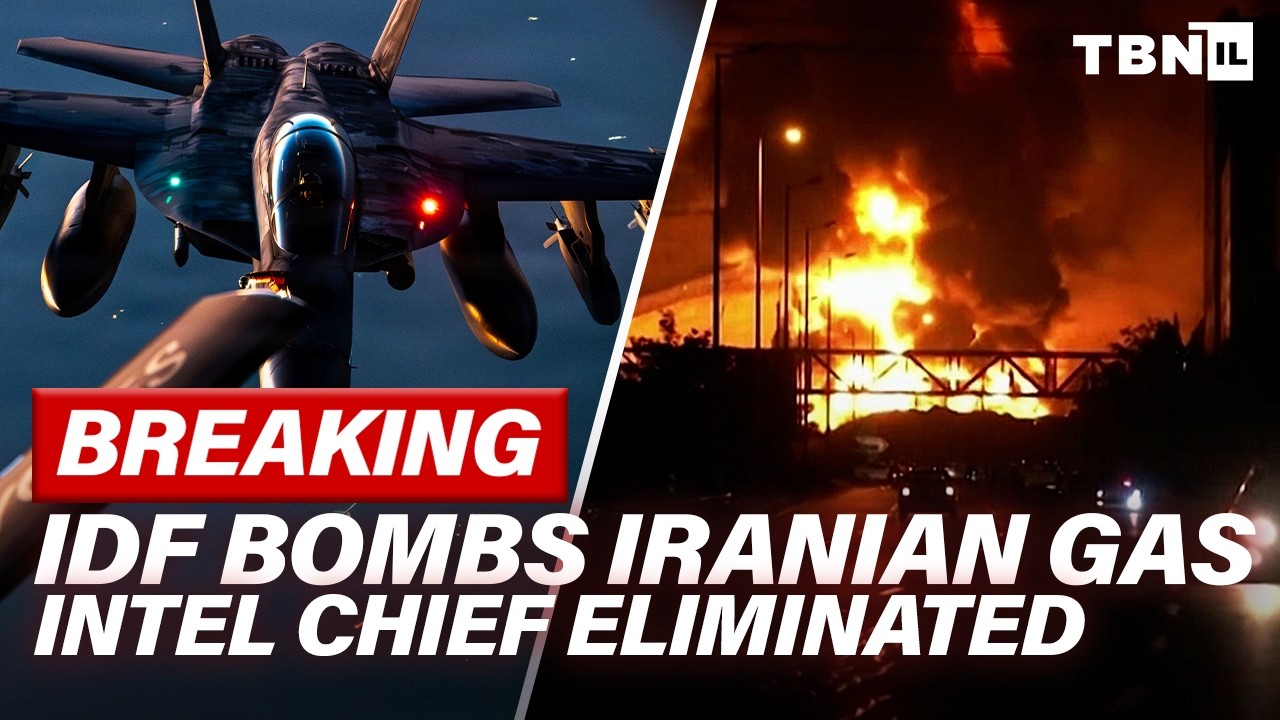
BREAKING: Israel BOMBS Major Iran Gas Site; Top Mullah ELIMINATED; Iran Vows VENGEACE | TBN Israel
"Israel and the United States have escalated their 'Roaring Lion War' against Iran, striking its largest gas facilities, eliminating key intelligence and military figures, and disrupting missile production, while Iran threatens a broader energy war in the Gulf."
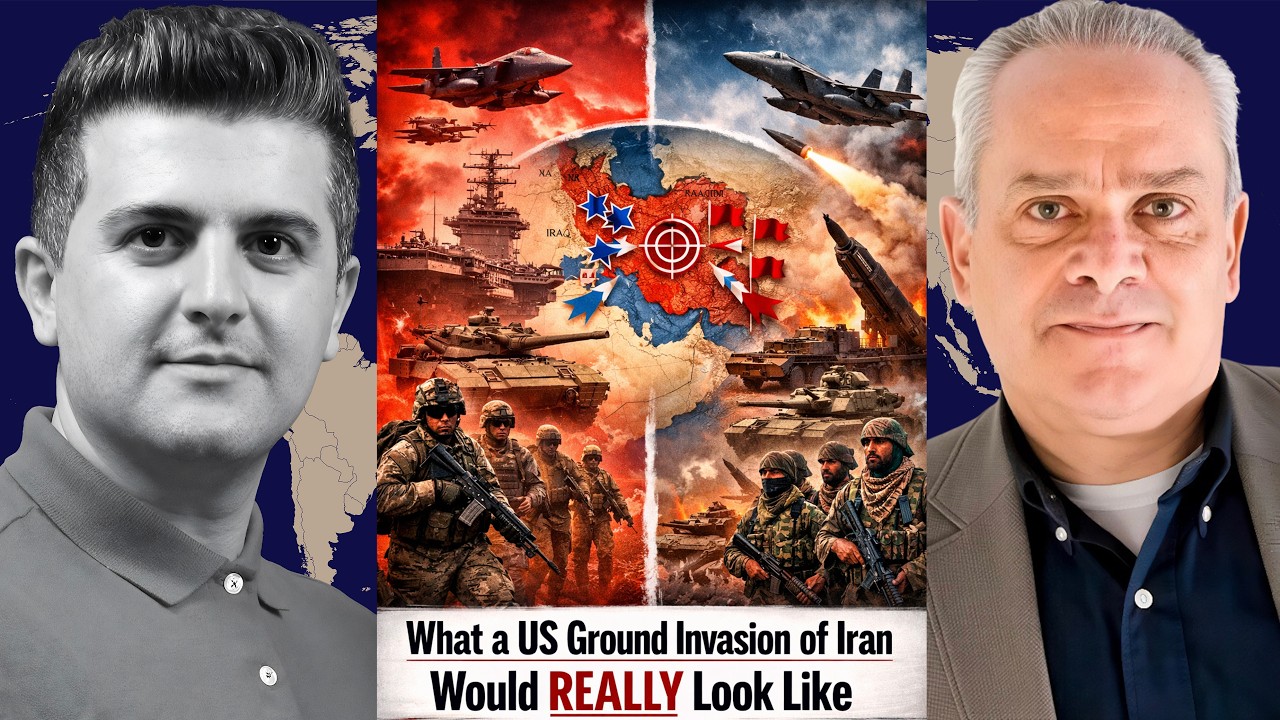
Col. Jacques Baud: What a US Ground Invasion of Iran Would REALLY Look Like
"Colonel Jacques Baud dissects the strategic futility of a US ground invasion of Iran, arguing that current troop levels are insufficient and such an action would backfire, exposing US allies and potentially leading to Iran's nuclearization."

Alex Krainer: US STRIKES Iran – Iran RETALIATES Against Kuwait, Bahrain & Jordan!
"Amidst escalating US-Iran conflict and Iranian retaliation against regional US allies, this episode argues that US foreign policy is deeply controlled by an 'Anglo-Zionist conspiracy' led by the Rothschild banking dynasty, prioritizing Israeli interests over American ones."

Patrick Henningsen: Hezbollah JUST Fired Back at Israel - Iran Vows to “Crush” All Attacks
"Patrick Henningsen argues that the US and Israel initiated an illegal war against Iran, driven by Trump's incompetence and Israeli influence, leading to an inevitable escalation with severe global economic repercussions."