Ayatollah Khamenei’s TYRANNICAL Rule Under Threat As Revolt Spreads Across Iran | TBN Israel
YouTube · e0EWWV94qk8
Quick Read
Summary
Takeaways
- ❖Iran's internal unrest is broader and more dangerous for the regime than previous protest waves, involving diverse demographics like students, merchants, and ordinary citizens.
- ❖The Iranian currency has collapsed from 72 rials to 1.5 million rials per dollar, making economic activity unprofitable and fueling public anger.
- ❖A cornered Iranian regime may export its internal crisis by blaming external enemies (Israel, America) and escalating regional conflicts via proxies.
- ❖The Revolutionary Guard (IRGC) is showing signs of fear and withdrawal in response to growing protests, a significant shift from past brutal crackdowns.
- ❖Decades of corruption and mismanagement by the Iranian leadership have destroyed the country's infrastructure, including its vital water systems, leading to widespread environmental and social crises.
- ❖Western foreign policy often misinterprets Middle Eastern negotiation, viewing it as compromise rather than a winner-dictates-terms dynamic.
- ❖The Iranian people, historically survivors, are becoming less afraid of the regime and more willing to openly challenge it, with some calling for the return of the exiled Crown Prince, Reza Pahlavi.
- ❖Iran possesses a strong national identity, distinct from radical Islam, which could serve as a unifying force for an inclusive society after a potential regime change.
Insights
1Escalation of Internal Unrest and Regime Vulnerability
The current wave of protests in Iran is significantly different from previous ones, encompassing a broader demographic (students, bazaar merchants, ordinary people) and directly targeting the Supreme Leader with chants like 'Death to the dictator.' This indicates a deeper level of discontent and a reduction in public fear. The Revolutionary Guard (IRGC), traditionally brutal, is observed to be withdrawing in some instances, suggesting internal uncertainty or fear of escalating violence that could trigger stronger international pressure.
Reports describe strikes, student activity, bazaar closures, and crowds in multiple areas. Protesters are yelling 'Death to the dictator' (). The IRGC is seen withdrawing as protests grow (-).
2Economic Collapse as a Catalyst for Revolution
Iran's economy is in freefall, marked by a catastrophic currency devaluation (from 72 rials to 1.5 million rials to the dollar) and rampant inflation. This renders economic activity unprofitable for merchants, leading to bazaar closures and widespread financial hardship. This economic devastation, coupled with decades of corruption and mismanagement (e.g., draining aquifers, destroying infrastructure), compounds public anger and fuels the revolutionary sentiment.
The currency of Iran has collapsed; a rug merchant can lose 5-10% of profit by evening due to devaluation (-). The rial went from 72 to 1.5 million to the dollar (-). Corruption leads to destruction of water infrastructure (-).
3Regime's Strategic Dilemma: Internal Crackdown vs. External Diversion
A cornered regime like Iran's faces a critical choice: either suppress internal dissent, risking mass casualties and international condemnation, or divert attention by escalating external conflicts. Iran has invested heavily in a 'ring of fire' doctrine around Israel, arming proxies. The regime is reportedly accelerating military programs and preparing proxies for violence, suggesting a potential move to 'export the crisis' as a survival strategy, even as its internal stability deteriorates.
When a regime like this one feels cornered, it tries to export the crisis, blaming the outside world (-). Reports say the regime is accelerating key military programs and preparing proxies for violence (-). Israel is watching for Iran to divert attention from internal unrest by creating an external confrontation (-).
4The Role of a Unifying Figure in Post-Revolution Iran
In the event of regime collapse, the question of leadership is critical. Protesters are increasingly heard chanting 'Long live the Shah' and mentioning Reza Pahlavi, the exiled Crown Prince. He is seen as a potential unifying figure for diverse Iranian ethnic groups due to his known identity and perceived decency, which could prevent post-revolutionary infighting and lead to a more inclusive system, similar to how the UAE manages its diverse population.
Protesters are yelling 'Long live the Shah' and talking about Reza Pahlavi, son of the last Shah (-). He is described as the 'glue that can keep Iranian society together' because everyone knows him and he is a 'decent man' (-).
5Iranian Identity vs. Radical Islam
Iran possesses a strong, ancient national identity that predates Islam and has historically resisted Arabicization. Unlike other Middle Eastern countries where the pre-Islamic period is deemed 'jahilia' (ignorance), Iranians cherish their pre-Islamic heritage. This deep-rooted identity creates a fundamental tension with radical political Islam, suggesting that a post-revolutionary Iran could revert to a secular, nationalistic framework, detaching itself from the current regime's ideology and its destructive regional influence.
Iran is one of only two countries in the Middle East with a 'real identity' and 'loyalty to the land' (-). There is a war between Islam and the Iranian identity, which existed as an empire for thousands of years before Islam (-). Pre-Islamic Iran is what they are, and they 'hate the Arabs' for making them Muslim, desiring to be Iranian, not Muslim (-).
Bottom Line
The children of many senior Grand Ayatollahs in Iran reside in Los Angeles, indicating a potential escape route and financial hedging by the regime's elite, despite their public anti-Western stance.
This reveals a profound hypocrisy within the Iranian regime, where leaders publicly condemn the West while securing their families' futures and assets abroad. It suggests a lack of genuine commitment to their own ideology when personal survival is at stake.
International intelligence agencies could leverage this information to understand the regime's true vulnerabilities and motivations, potentially influencing defection or internal power struggles by targeting these external assets or family members.
The US foreign policy approach of seeking 'moderate Muslims' often misinterprets the Middle Eastern context, where a 'serious Muslim' is often one who hates America, and those who speak good English might be the most difficult to deal with due to fears of cultural loss.
This highlights a critical flaw in Western diplomatic strategy, where cultural nuances are overlooked, leading to ineffective engagement and misidentification of allies or adversaries. It suggests that superficial indicators like language proficiency do not equate to ideological alignment or moderation.
Policymakers should invest in deeper cultural and historical understanding, prioritizing genuine ideological alignment over superficial markers. This could lead to more effective engagement with true reformers and a better understanding of regional power dynamics, avoiding past pitfalls like the Iran nuclear deal negotiations where Iran ran 'circles around the US.'
Key Concepts
Exporting the Crisis
When an authoritarian regime feels cornered by internal pressure (e.g., protests, economic collapse), it often attempts to divert attention and consolidate power by creating an external confrontation, blaming foreign enemies, and escalating regional conflicts.
Middle Eastern Negotiation vs. Western Compromise
In many Middle Eastern cultures, negotiation is not about mutual concession or 'win-win' outcomes. Instead, it's a power dynamic where the stronger party dictates terms to the weaker, and 'compromise' can be perceived as 'being compromised' or humiliated. This fundamental difference often leads to Western misinterpretations in diplomatic engagements.
Kleptocracy as a Dictatorship Mechanism
Dictatorships often function as kleptocracies, where rulers and their inner circle systematically steal national wealth and resources. This corruption, cloaked in ideological terms (e.g., religious figures), serves to enrich the elite and maintain their power, ultimately destroying the nation's economy and infrastructure while the populace suffers.
Lessons
- Recognize that the Iranian regime, when cornered, may lash out externally; monitor regional proxies and potential flashpoints for preemptive action.
- Understand the fundamental cultural differences in negotiation and power dynamics in the Middle East to avoid misinterpretations in diplomatic and strategic engagements.
- Support initiatives that foster inclusive societies and national identity in the Middle East, as exemplified by the UAE, as a long-term strategy for regional stability and countering extremist ideologies.
Notable Moments
The shift in Iranian protests from general discontent to direct calls for 'Death to the dictator' and the observed hesitation of the Revolutionary Guard.
This indicates a significant erosion of fear among the populace and a potential weakening of the regime's internal security apparatus, signaling a more advanced stage of revolutionary sentiment.
The dramatic collapse of the Iranian currency and its impact on the 'bazaaris' (merchants).
The economic devastation directly impacts a key segment of society historically influential in Iranian revolutions, demonstrating that the regime's mismanagement is hitting core economic pillars and fueling widespread discontent.
Quotes
"When a regime like this one feels cornered, it doesn't always calm down. Sometimes it does the exact opposite. Sometimes it tries to export the crisis. It blames the outside world. It blames Israel. It blames America. It blames foreign agents. And then it looks for a target."
"The protests are becoming bigger and bigger. The people are moving and the guards are withdrawing. Why? Because they're afraid and don't know what to do."
"My mentor who was probably the greatest Middle Eastern scholar of the 20th century was Bernard Lewis. And he used to say, you take power in the Middle East to make money."
"The more that they feel strong and they become less afraid of the regime which is exactly what is happening, the more they're willing to I'm either at your feet or at your throat. I'm bowing down to you because you got power or I'm going to kill you."
"Iran is one of only two countries in the Middle East which has a real identity. A loyalty to the land. You could be whatever minority. But most of the minorities don't want to break away. They just want to be part of this empire."
"Let the Iranians be Iranian. Let them from themselves figure out a way. They did it in the time of the Bible. They can do it now."
Q&A
Recent Questions
Related Episodes

BREAKING: Iranians DEFIANT As Regime Escalates BRUTAL Crackdowns | TBN Israel
"Iran's regime faces intensifying protests and international pressure, escalating brutal crackdowns while the US and Israel consider decisive actions, potentially leading to a historic regime change."

BREAKING: Iran Nuclear Stockpile DISAPPEARS; Hezbollah Strikes Troops, REJECTS Ceasefire| TBN Israel
"Iran's nuclear material status is uncertain post-strikes, its economy is collapsing under sanctions, and Hezbollah rejects a ceasefire, while the US and Israel pursue differing strategic goals in the region."

🚨 BREAKING: Civil War Erupts In Iran - IRGC Lose Control Of Capital
"The host declares a civil war in Iran, asserting that anti-Islamic protesters have seized control of multiple neighborhoods in Tehran and other major cities, pushing back against the IRGC and calling for the return of the Crown Prince."
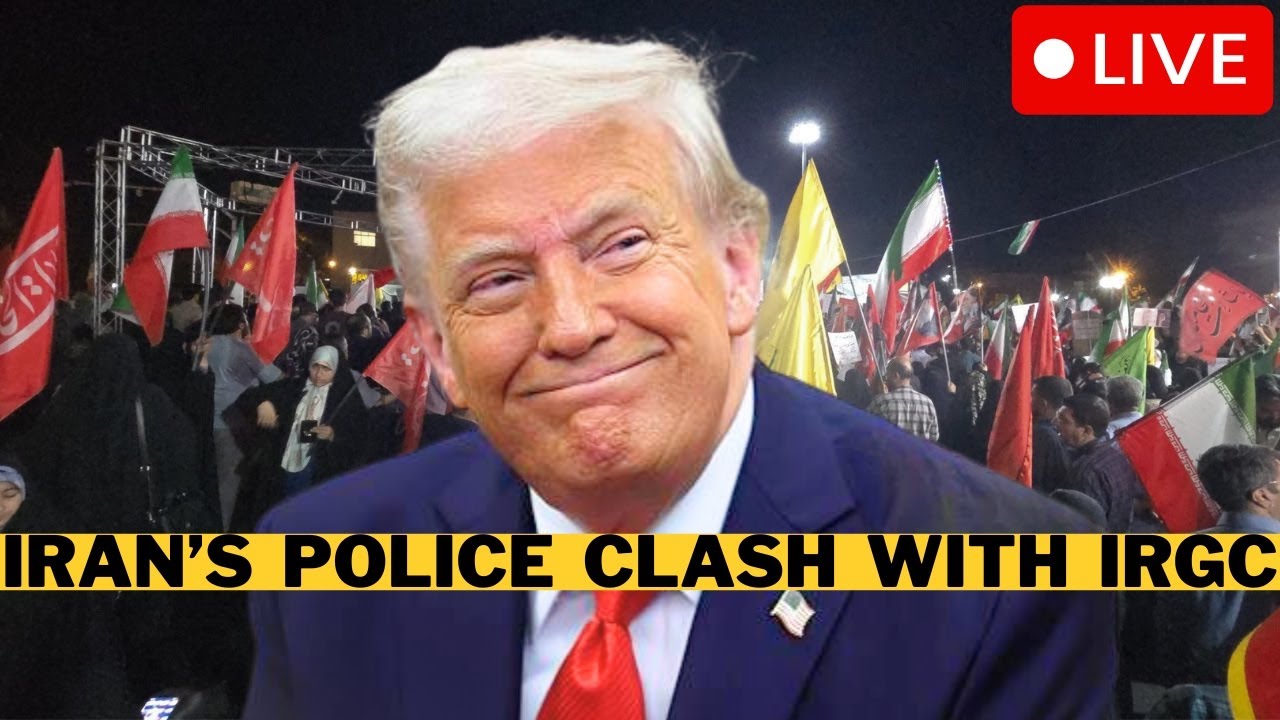
BREAKING: Protests ERUPT In Iran Over IRGC Surrendering To Trump - Infighting Clashes In Tehran
"Iran is experiencing severe internal infighting and protests as hardline IRGC elements clash with government figures over a perceived 'surrender' to the US, while mainstream Western media misrepresents the situation."