BREAKING: Iran ATTACKS U.S.; Hormuz Burns; Hezbollah Threatens Lebanon Deal | TBN Israel
YouTube · eJdVbVpktBE
Quick Read
Summary
Takeaways
- ❖Iran initiated attacks on American targets in the Middle East following U.S. airstrikes, escalating tensions in the Strait of Hormuz.
- ❖The U.S. responded to Iranian attacks on cargo ships by striking military targets within Iran, including drone bases and command centers.
- ❖Iran's Revolutionary Guards are attempting to assert control over the Strait of Hormuz, demanding ships coordinate routes and pay fees, which the U.S. rejects.
- ❖Israel and Lebanon signed a framework agreement for a new security arrangement on their northern border, involving the Lebanese army taking responsibility for areas cleared by the IDF.
- ❖Hezbollah's Secretary General Naim Kasim sharply attacked the Israel-Lebanon agreement, declaring his organization is not bound by it and prefers the Iranian-U.S. memorandum.
- ❖Concerns are rising in Lebanon over internal confrontation and potential civil war due to Hezbollah's opposition to the agreement.
- ❖The Lebanese army, weakened by low salaries and Shiite community representation, is the 'central unknown' in its ability to counter Hezbollah and implement the agreement.
- ❖The U.S. and Israel maintain a strong, resolute stance, responding to every violation from Iran or its proxies with military force, often targeting Iranian home bases.
Insights
1Iran's Escalating Control Over Strait of Hormuz
Iran's Revolutionary Guards are actively attempting to establish control over the Strait of Hormuz, a critical global shipping route. They demand that all ships coordinate their sailing routes and effectively pay fees for passage, directly violating existing agreements. This challenge has led to direct military responses from the United States.
Iran has launched a renewed attempt to establish control over the most important shipping route in the world for energy transport. The IRGC says it is open, but all you need to do is coordinate with us your passage through the straight if you want to move any goods. Let me translate that to you to English or to banking. That means pay them to travel through the straight of Humus. But the agreement is clear on this. There is no payment to Iran to cross through the straight of Hummus. There is no tax to cross through the straight of Hummus. This is one of the core tenants of this agreement and Iran, as usual, is important to say, is once again violating it.
2U.S. and Israeli Resolute Response to Iranian Aggression
The United States and Israel are demonstrating a strong, unified front against Iranian violations. The U.S. has launched retaliatory strikes against Iranian military targets, including drone bases and missile storage sites, in response to attacks on commercial shipping. Israel has publicly stated it will respond to any Iranian or proxy attack with strong military force, targeting Iran's home base.
The United States refused to remain silent over the attack by the forced suicide drones of the revolutionary guards... American fighter jets and also cruise missiles struck military targets inside the territory of the Islamic Republic of Iran... Israel has made public its policy to say to the Iranians that every attack that they carry out, regardless of it, it's its direct or via proxies, will be responded to with strong military response, but not in Lebanon for a for a proxy attack. To make sure they understand the prices is you're getting at least what you've launched at us, but on your home base.
3Hezbollah's Opposition Threatens Israel-Lebanon Agreement
A newly signed framework agreement between Israel and Lebanon, intended to create a new security arrangement on the northern border and empower the Lebanese army, faces immediate and sharp opposition from Hezbollah. The organization's Secretary General, Naim Kasim, declared it humiliating and void, asserting that Hezbollah is not bound by it and prefers the Iranian-U.S. memorandum. This stance threatens to destabilize Lebanon internally and potentially lead to civil conflict.
Secretary General Naim Kasim expressed sharp opposition to the agreement. He attacked the Lebanese government for signing with Israel and made it clear that the terrorist organization is not bound by this agreement. According to him, Lebanon must fully adopt the memorandum of understanding between Iran and the United States... concern is growing in Lebanon over an internal confrontation and even a civil war.
4Lebanese Army's Weakness as a Critical Unknown
The success of the Israel-Lebanon agreement hinges on the Lebanese army's ability to assume responsibility for border areas and counter Hezbollah. However, the Lebanese army is described as weak, facing low salaries, recruitment difficulties, equipment shortages, and a significant portion (30-40%) of its soldiers being Shiite, making its mission against Hezbollah especially complicated.
The Lebanese army is now the central unknown in this agreement. low salaries, difficult recruiting, and about 40% of the soldiers coming from the Shiite community. All of these make its mission especially complicated. Now, it is required to deal not only with a sensitive border with Israel, but also withbala from within... It's better to be a terrorist operative than to be a soldier in Lebanon financially.
Bottom Line
Hezbollah's primary existential threat is not military but the removal of its 'liberator' narrative, which the Israel-Lebanon agreement directly targets by empowering the Lebanese state.
This agreement aims to dismantle Hezbollah's political and social legitimacy by demonstrating that the Lebanese government, with international backing, can secure its borders and provide stability, thereby removing Hezbollah's purported reason for existence.
International efforts focused on strengthening legitimate state institutions in Lebanon, coupled with cutting off external funding to Hezbollah, could be more effective in neutralizing the group than purely military operations, fostering long-term stability.
Iran's negotiation strategy involves projecting different messages in diplomatic rooms versus on the ground, creating a 'great contradiction' to test international resolve.
This dual approach means that verbal agreements with Iran cannot be trusted without immediate and forceful enforcement on the ground, as Iran will exploit any perceived weakness or lack of follow-through.
Any future diplomatic engagements with Iran must be coupled with robust, real-time monitoring and an immediate, pre-agreed response mechanism for any on-the-ground violations, making it clear that 'talks' do not equate to 'tolerance' for aggressive actions.
Key Concepts
Testing the Resolve
Iran consistently tests the resolve of the U.S. and its allies by violating agreements shortly after they are signed, observing how much the other side is willing to enforce the terms. This pattern is evident in their actions in the Strait of Hormuz, where they immediately challenged the principle of free navigation.
Price Tag Strategy
The U.S. and Israel are employing a 'price tag' strategy, ensuring that every attack or violation by Iran or its proxies is met with a direct and painful military response, often targeting the aggressor's home base or capabilities. This aims to deter further aggression by making the cost of violation clear and immediate.
Proxy Warfare and State Sovereignty
Iran utilizes proxies like Hezbollah to extend its influence and project power without direct state-on-state conflict. This dynamic undermines the sovereignty of states like Lebanon, where the proxy organization's allegiance to an external power (Iran) overrides its commitment to its own government's agreements.
Lessons
- Understand that geopolitical stability in the Middle East is highly volatile, with direct military exchanges and proxy conflicts shaping the region.
- Recognize Iran's consistent strategy of testing international agreements and the resolve of opposing powers through immediate violations.
- Support initiatives that strengthen legitimate state institutions in conflict zones, such as the Lebanese army, as a means to counter non-state armed actors like Hezbollah.
Notable Moments
U.S. President Donald Trump described the Iranian attack on a cargo ship as a 'stupid violation of the ceasefire agreement' and ordered a powerful retaliatory strike.
This statement and subsequent military action by the U.S. underscore a firm stance against Iranian maritime aggression and a commitment to enforcing international navigation freedom, signaling that violations will not go unpunished.
Hezbollah's Secretary General Naim Kasim called the Israel-Lebanon agreement 'humiliating, void and dangerous,' preferring the Iranian track over the Lebanese track.
This declaration highlights Hezbollah's allegiance to Iran over the Lebanese state and its intent to actively sabotage any agreement that diminishes its power or legitimacy, directly threatening Lebanon's internal stability and sovereignty.
Quotes
"Iran time and time again does the same thing. They say they're going to do something. They commit to some kind of process in a ceasefire and a dismantling of a nuclear plan and then immediately, sometimes within days, start slowly violating that agreement and testing what you, the US, what us, Israel are willing to do to stop them."
"This is not a routine statement from an army. This is a statement from an institution that understands that it may be facing a test that it is not sure it can win."
"In the negotiations rooms, Iran says one thing in front of the ships in the Gulf, it does something completely different. And before we continue, it's important to say this very way in a simple way. If you want to understand what's really happening here in the Middle East, do not settle for a short headline and do not listen all to the noise on social media."
Q&A
Recent Questions
Related Episodes

BREAKING: Iran Threatens To END Talks; U.S. Vows Retaliation; Hezbollah Collapsing? | TBN Israel
"Iran is leveraging Hezbollah and the Strait of Hormuz to manipulate US negotiations, while Israel asserts its right to dismantle Hezbollah's eroding but still dangerous infrastructure in Lebanon, independent of international talks."
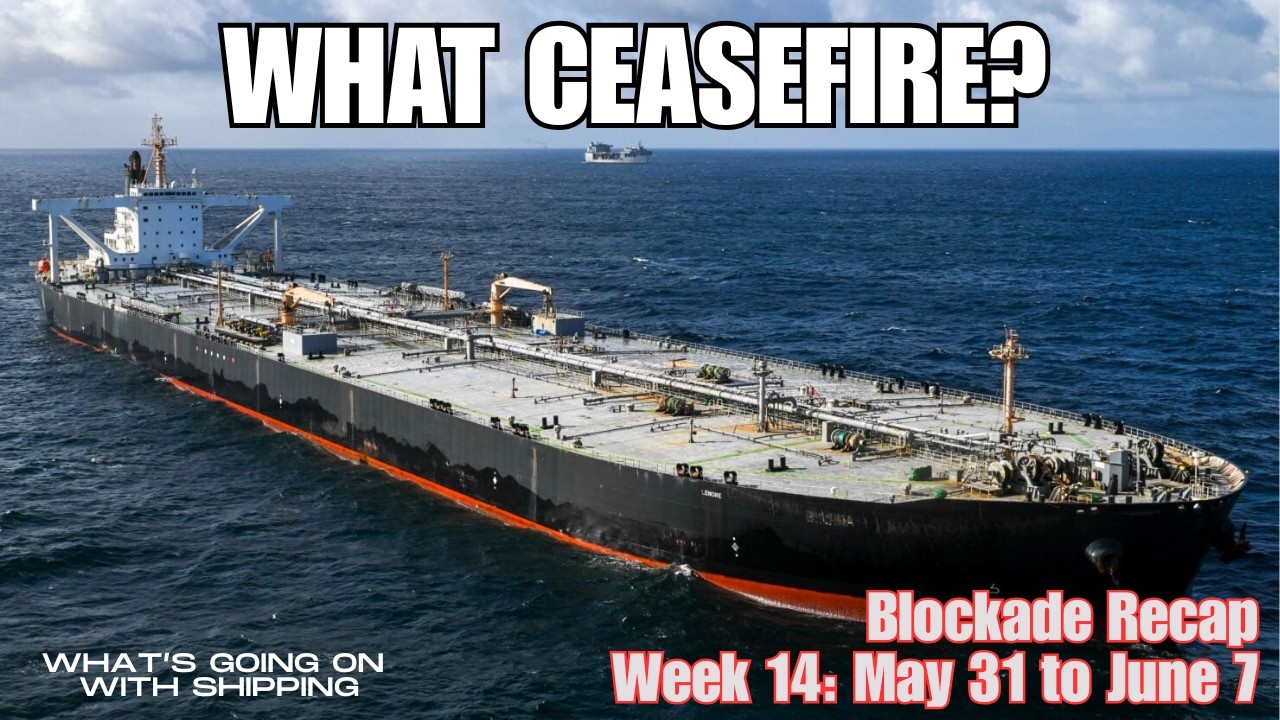
The Global Shipping Crisis: 14 Weeks of the Persian Gulf Blockade
"The ongoing 14-week blockade in the Persian Gulf has severely disrupted global shipping, causing massive spikes in freight rates, collapsing Iranian oil exports, and creating a precarious global energy supply chain."
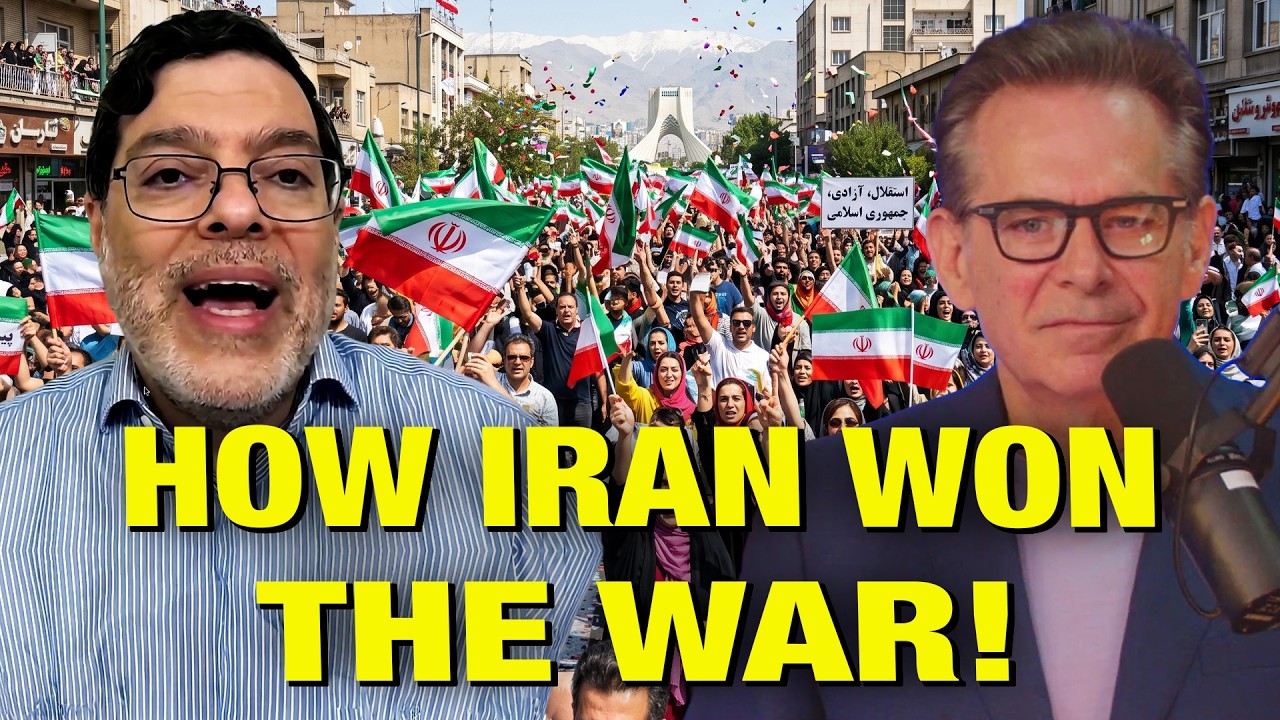
The REAL Story About The War From INSIDE IRAN! – Jimmy Interviews Prof. Marandi
"Professor Marandi, an Iranian academic, details how Iran emerged stronger from recent conflicts, now controlling the Strait of Hormuz and possessing a credible deterrent against its adversaries, despite facing economic siege and Western-backed regional proxies."

Larry Johnson & Col. Wilkerson: 4 US Warships Tried to Enter Strait of Hormuz – Then Iran Launched
"A critical analysis reveals escalating US-Iran military confrontations in the Strait of Hormuz, a stark disconnect in diplomatic rhetoric, and a significant geopolitical realignment in the Middle East away from US influence."